Update: A report states that Patrick Stewart has died at age 86 at his Los Angeles home following a brief battle with Alzheimer’s disease and Lewy body dementia. However, the public status of the claim requires caution: independent confirmation has remained unclear. This article therefore distinguishes the reported death from the well-established record of Stewart’s work and career.
Whatever further confirmation establishes, Stewart’s cultural footprint is unusually broad. He was a major classical stage actor long before American television made him globally recognizable as Captain Jean-Luc Picard in Star Trek: The Next Generation. He then became inseparable from another towering genre role: Professor Charles Xavier in the X-Men films. The shared thread was not simply authority. Stewart could make intelligence, restraint and moral conviction feel dramatically active, whether he was seated in a starship captain’s chair, running Xavier’s school, inhabiting Shakespeare, or lending that unmistakable voice to comedy and games.
For gaming audiences, his importance also runs beyond simple celebrity association. Stewart lent his voice to several videogames connected to the Star Trek and X-Men franchises, helping carry characters audiences knew from television and film into an interactive medium. Voice performance in a licensed game can be a major continuity marker: it gives players the sound and identity they associate with a character, even when the game’s mechanics, plot and visual presentation differ from its screen counterpart.
Picard: a captain defined by deliberation
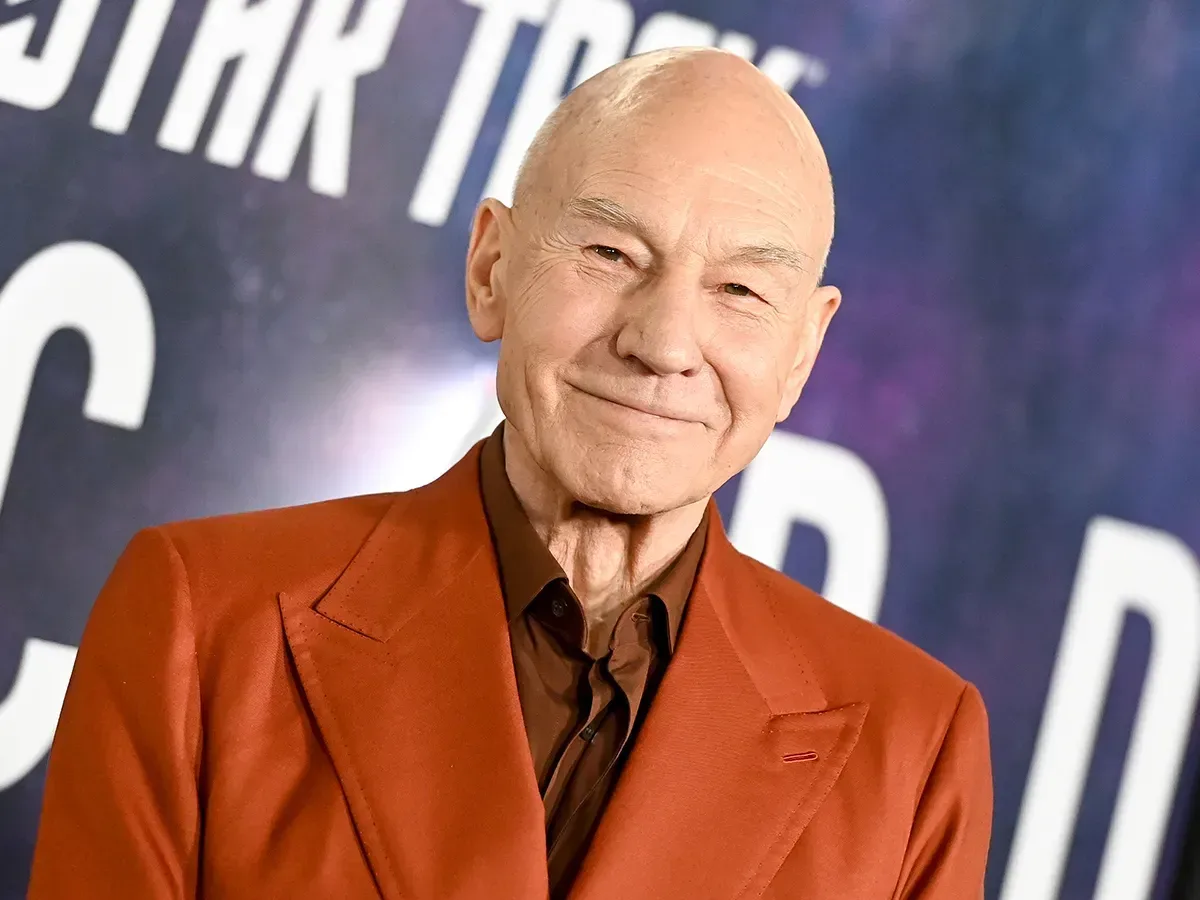
Stewart played Picard through all seven seasons of Star Trek: The Next Generation, which ran from 1987 to 1994. He subsequently brought the character to four feature films: Star Trek: Generations, Star Trek: First Contact, Star Trek: Insurrection and Star Trek: Nemesis. In Generations, he also appeared alongside William Shatner, who played Captain James T. Kirk in the earlier Star Trek series.
Picard’s enduring appeal rests in an interpretation of command that did not depend on bluster. The character’s seriousness gave the series a stable center while its stories moved among diplomacy, exploration, scientific problems and conflict. Stewart’s training and presence made a captain weighing an ethical or strategic decision compelling before any phaser fired. That is a valuable quality in a science-fiction lead: the performance suggests that thoughtfulness is part of the action, rather than a pause before it.
The role radically expanded Stewart’s public profile. Before joining The Next Generation, he had spent roughly two decades as a central figure at the Royal Shakespeare Company, appearing in more than two dozen productions. His stage credits there included Astrov in Uncle Vanya in 1974, Oberon in A Midsummer Night’s Dream in 1977, Shylock in The Merchant of Venice in 1978 and the title part in Titus Andronicus in 1981.
That grounding helps explain why Picard could feel formal without becoming remote. A heightened, highly disciplined theatrical style can be a perfect match for science fiction’s invented institutions and vocabulary. It gives a performer the tools to make a command structure, an alien civilization or an immense ethical idea feel intelligible to an audience. Stewart’s work was never confined to that one register, but it became a key ingredient in Picard’s screen identity.
He later returned to the franchise in Star Trek: Picard, which ran from 2020 through 2023. The return mattered because it gave the character a new television life after the original series and films, rather than leaving Picard solely as an artifact of an earlier era of franchise storytelling.
Professor X and the force of stillness
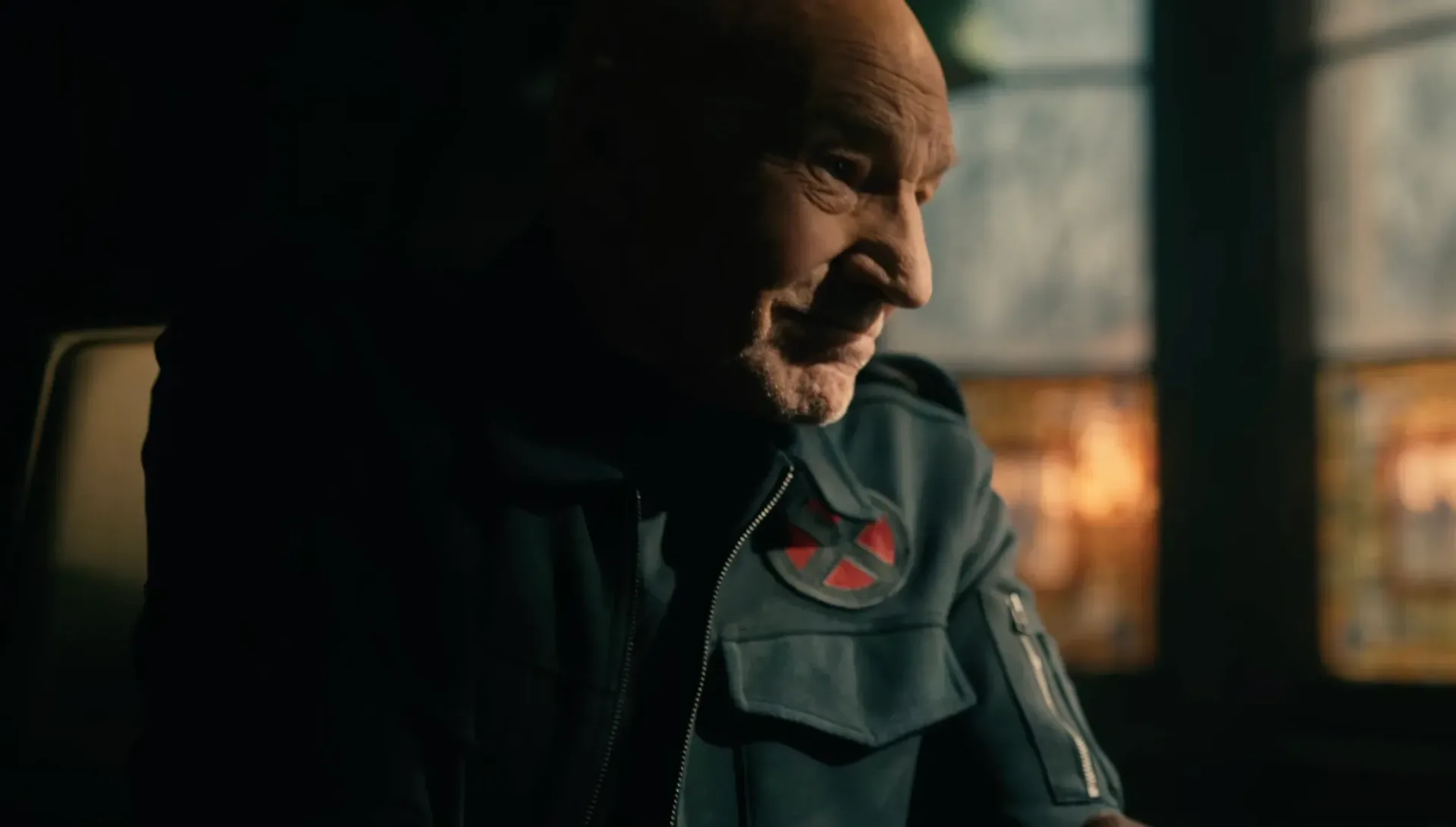
In 2000, Stewart took on Professor Charles Xavier in X-Men, launching a second defining franchise role. Xavier is the founder and leader associated with the X-Men, a group of mutants whose abilities put them at the center of fear, conflict and political debate. Stewart played him opposite Ian McKellen’s Magneto, the antagonist with whom Xavier has one of popular superhero fiction’s most consequential ideological relationships.
Stewart returned as Xavier in X-Men 2, X-Men: The Last Stand, X-Men Origins: Wolverine, The Wolverine and X-Men: Days of Future Past. A report also says he reprises the part with McKellen in December’s Avengers: Doomsday.
Xavier and Picard are often grouped together because both are intellectual leaders played by the same actor. But they are not the same kind of authority figure. Picard’s position is institutional and operational: he commands a starship and its crew. Xavier’s is personal, philosophical and protective, shaped by his relationship to a community targeted for what it is. Stewart gave both men gravity, but he allowed the roles to work in their own worlds.
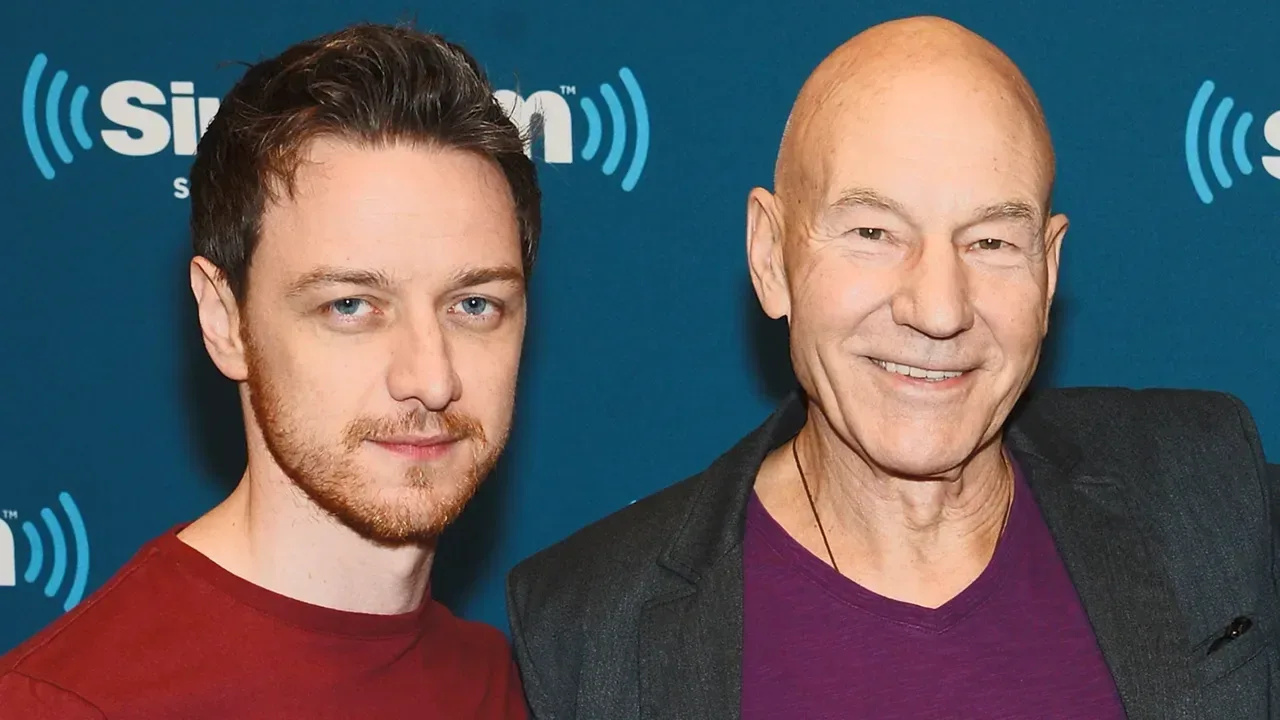
McKellen was more than a co-star. The two developed a close friendship during the X-Men films and collaborated extensively onstage. They appeared in the West End production of Samuel Beckett’s Waiting for Godot in 2009, then performed it in repertory on Broadway in 2014 alongside Harold Pinter’s No Man’s Land. Repertory means alternating more than one production during the same engagement, an especially demanding format that highlights the pair’s shared theatrical roots.
From Yorkshire to the Royal Shakespeare Company
Patrick Hewes Stewart was born in Mirfield, Yorkshire. He performed with regional amateur dramatic groups when he was young, left school at 15 and briefly worked as a newspaper reporter before pursuing acting. His professional career began at Manchester’s Library Theatre, followed by membership in the Royal Shakespeare Company in 1966.
His Shakespeare work continued well beyond his ascent to television fame. During the run of The Next Generation, Stewart played George in Who’s Afraid of Virginia Woolf? at the Young Vic in 1987. He also repeatedly performed a one-man adaptation of Dickens’ A Christmas Carol in Los Angeles and on Broadway, adapting the piece himself. A one-person performance is an exacting form: a single actor must establish every voice, shift and emotional rhythm without an ensemble to absorb the task.
After The Next Generation ended, he played Prospero in Broadway’s 1996 production of The Tempest, took the title role in a “photo-negative” Othello at Washington, D.C.’s Shakespeare Theatre in 1997, and appeared on Broadway in The Ride Down Mt. Morgan in 2000. The phrase “photo-negative” described a production choice that inverted conventional racial casting expectations for the play.
Later work in Britain included Antony and Cleopatra, The Tempest and Macbeth. In 2008 he played Claudius in Hamlet, with David Tennant in the title role, and won an Olivier Award for best supporting actor. Across his career, Stewart received four Emmy nominations, three Olivier Awards and a Tony Award nomination.
A genre career with room for comedy, horror and animation
Stewart’s career was far larger than his two best-known characters. His early film visits to fantasy and science fiction included Leondegrance in John Boorman’s 1981 Arthurian film Excalibur and Gurney Halleck in David Lynch’s 1984 adaptation of Dune. On British television, he appeared in the 1975 miniseries North & South, played Sejanus in I, Claudius, and starred as a hospital psychiatrist in Maybury, which ran from 1981 to 1983.
His later choices consistently pushed against the idea that he existed only to deliver solemn genre speeches. He played a waiter in Steve Martin’s L.A. Story, King Richard in Mel Brooks’ Robin Hood: Men in Tights, and hosted Saturday Night Live in 1994. His voice work included The Simpsons, Family Guy and American Dad. He narrated Seth MacFarlane’s Ted and its sequel, and recently voiced Sir Ritchfield in the animated Sheep Detectives.
Other major contrasts included the 1995 comedy Jeffrey; Match, a 2015 film based on Stephen Belber’s play, in which he played a flamboyant dance instructor; and Jeremy Saulnier’s thriller Green Room, where he portrayed the leader of a group of neo-Nazis. He also led Blunt Talk, playing an English newscaster in Los Angeles whose substance abuse complicates his life and work.
For fans of games and genre media, this versatility is the useful lens through which to see Stewart’s legacy. A famous voice is one thing; a performer capable of moving between Shakespearean tragedy, broad comedy, animation, horror and two of the most recognizable figures in screen science fiction and superhero storytelling is another. His videogame voice roles belong to that wider pattern of treating major franchise characters as performances worth carrying across formats.
Reported statement, family and charitable requests
The statement attributed to Stewart’s Instagram account describes advocacy and philanthropy involving human rights, survivors of domestic violence, refugees, veterans’ mental-health services and animal welfare. It also notes his enthusiasm for motor sport and lifelong support of Huddersfield Football.
Stewart was married three times: first to choreographer Sheila Falconer, then to Wendy Neuss, a producer on Star Trek: The Next Generation, and later to Sunny Ozell. Stewart and Ozell married in 2013, in a ceremony presided over by McKellen. The reported survivors include Ozell, Stewart’s daughter Sophie and his son Daniel, both from his marriage to Falconer.
The report directs those wishing to donate to the Johns Hopkins Alzheimer’s Disease Research Center Fund and Alzheimer’s Foundation of America Caregiver Resources. Given the present uncertainty around independent confirmation of the death report, readers should continue to seek verified updates before treating memorial claims or related social-media posts as definitive.