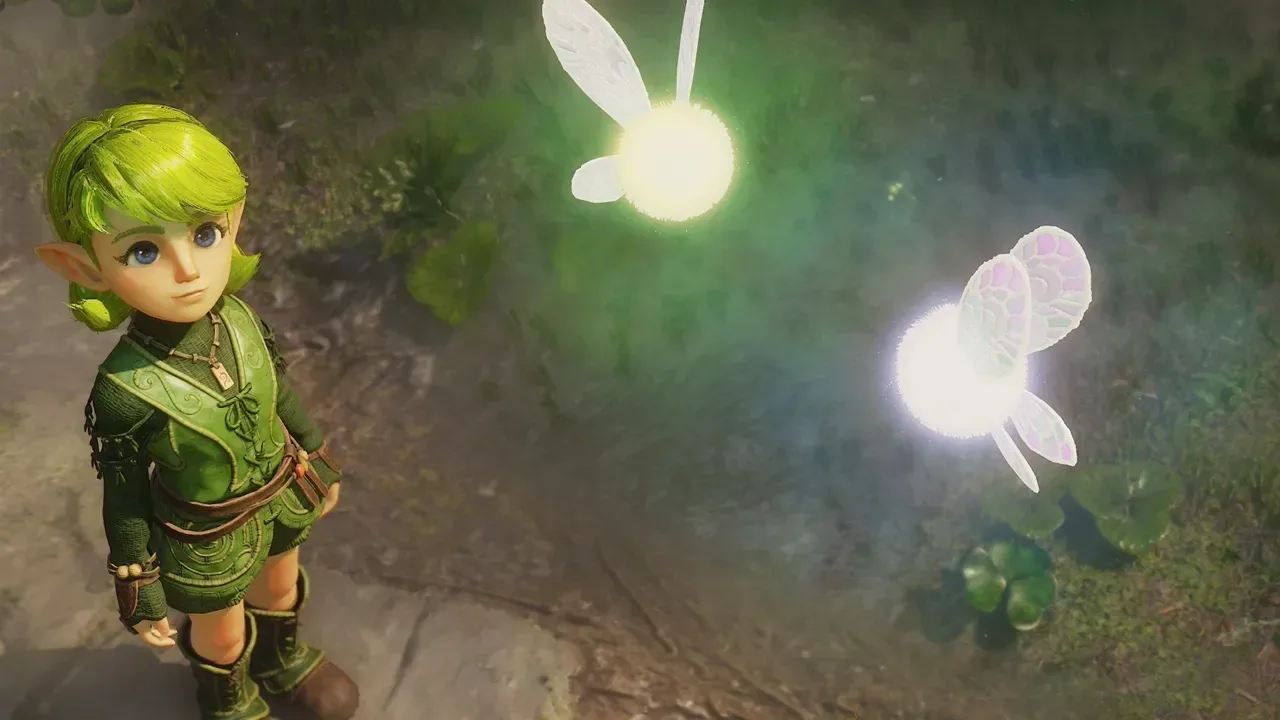
The newly released Switch 2 remake of The Legend of Zelda: Ocarina of Time is prompting an unusually specific kind of nostalgia crisis: players are discovering that some of Hyrule’s most familiar inhabitants may not look quite as they remembered.
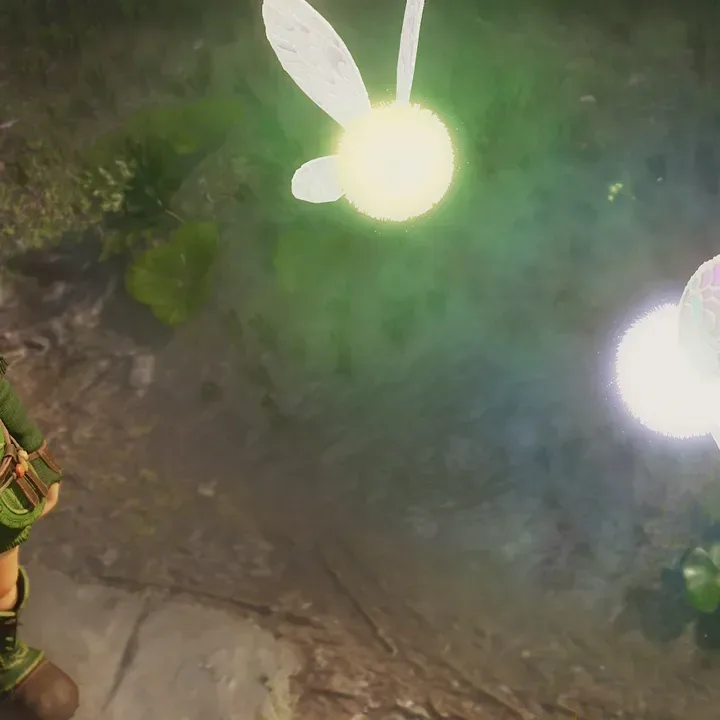
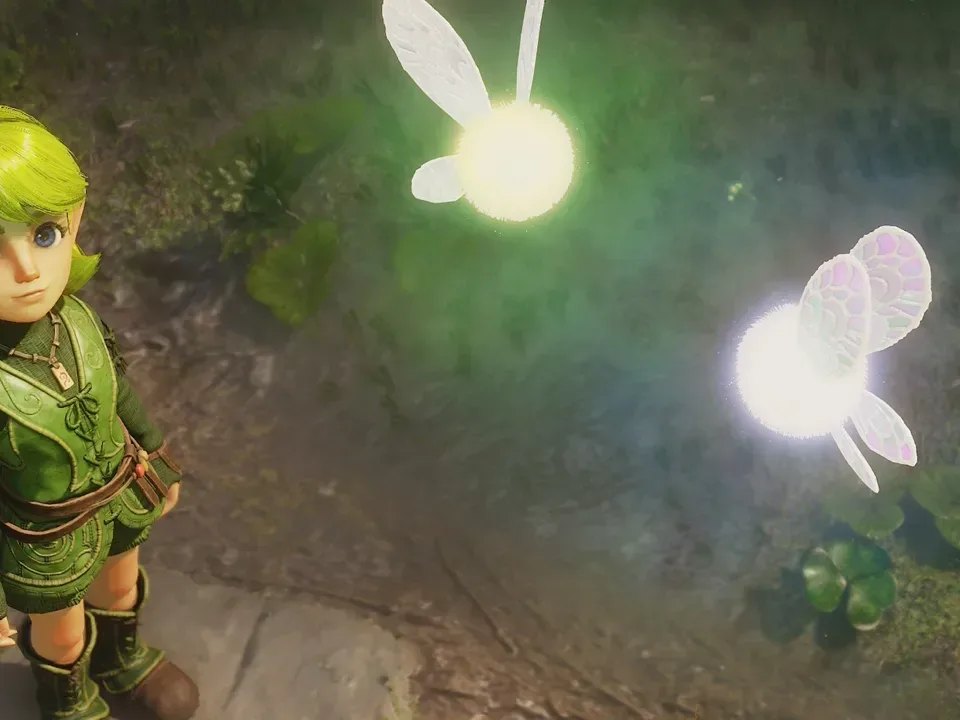
The biggest early surprise is not a newly found dungeon trick, a dramatic story change or an elaborate secret. It is the fairies. The small companions of Kokiri Forest, including the instantly recognizable Navi, were long understood by many players as glowing balls of light with wings—an impression shaped by the visual limits of the Nintendo 64 original. At close range in the remake, however, they appear to be fuzzy, luminous puffballs.
That clarification, or perhaps reinterpretation, has proven wonderfully disruptive. For nearly three decades, the glow around the fairies left enormous room for the imagination to fill in their physical form. Some players evidently pictured tiny humanoid beings hidden within a bright aura; others saw them as essentially pure magical light. The updated visuals point toward a stranger and more tactile answer: fluff.
The remake’s tiny visual details have become a major topic of player discussion, precisely because they sit at the intersection of memory and technology. They do not necessarily overturn what the 1998 game communicated. Instead, they make visible things that the older hardware and presentation could not clearly express.
For more context, explore Roland Martin Unfiltered Takes Its Election Coverage on a 12-City Road Run.
A fairy is no longer just a light effect
In game-art terms, a silhouette is the immediately readable outer shape of a character or object. The original fairies had an extremely simple one: a brilliant point of light, with small wings occasionally distinguishable around it. That visual shorthand did its job. Players could instantly identify a magical guide without needing to see fur, skin, facial features or a more detailed body.
But shorthand creates ambiguity. A bright, small object can be interpreted in many ways, especially when it belongs to a fantasy world whose lore has attracted close scrutiny for decades. The Switch 2 version appears to retain the familiar radiance while giving the creatures a discernible fuzzy surface underneath. The result is not merely a higher-resolution version of an old model; it changes the mental image players carry away from the scene.
It is also a useful reminder that “better graphics” is not only about sharper edges or smoother lighting. Greater visual fidelity can add physical qualities—texture, material, layering and depth—that alter how an audience reads a design. A light effect can obscure a character model. Once that model becomes clearer, a viewer may discover that their confident recollection was built as much from inference as from what the screen actually showed.
The fairies’ newfound fuzziness has landed as a charming revelation rather than a major point of dispute. The old reading still makes sense within the original game’s look: they appeared as radiant orbs because that is largely what players could perceive. The remake simply supplies a more concrete answer to a question that many people did not know they had been carrying around.
The Hyrule guard uniform apparently includes jorts
Not every fresh observation is mystical. Players taking a closer look at Hyrule’s guards have noticed a feature that was easier to overlook in the Nintendo 64 release: beneath their conventional fantasy armor, the guards seem to be wearing denim shorts.
Yes, jorts.
The sight of a royal guard in armor paired with what appear to be jean shorts has generated the kind of affectionate online disbelief reserved for details that are both absurd and, on inspection, apparently right there. Rather than reading as an entirely new gag inserted for the remake, the denim-like element seems to have been part of the guard design all along, only now rendered plainly enough to stop blending into the broader costume.
This is where the distinction between a remake and a player’s recollection matters. A remake can revise, add or reinterpret material, but an upgraded presentation can also expose an original design decision that older technology communicated poorly. The available reaction suggests the guards fall into the second category more than the first: their outfits have become newly legible, not necessarily newly invented.
That does not make the revelation any less funny. Fantasy armor is generally meant to project order, duty and a degree of medieval seriousness. Denim shorts are an unmistakably modern association. Put them together and Hyrule’s security force suddenly looks less like a solemn military institution and more like a group that has been issued a dress code by someone with extremely personal opinions about casual Friday.
There is a small but meaningful lesson in the joke. Character costumes are made from many visual signals: color, shape, fabric, accessories and proportion. When resolution is limited, players often register the general idea—“guard armor”—and discard the smaller signals. With clearer models, those signals stop being background noise. In this case, the result is a reappraisal of Hyrule’s most underappreciated uniform policy.
ReDeads become even harder to look at
The remake’s clearer details are not all cute creatures and unexpected denim. ReDeads, the mummified enemies remembered for grappling Link, are also receiving close examination. In the Nintendo 64 version, their apparent empty eye sockets were already an effective piece of horror design: the face covering implied something human-shaped without offering much reassuring evidence that a living person was underneath.
Out-of-bounds footage from Boundary Break host Shesez has focused attention on what appears behind the ReDead mask in the Switch 2 version. Although the enemies may initially still seem eyeless, closer viewing reveals skull-like eyeballs or distinctly human skull details beneath the mask. The added anatomy makes the creature substantially more disturbing once seen.
Out-of-bounds viewing means looking at a game from camera positions or angles that are not normally available during regular play. It can reveal portions of character models that are intentionally concealed by framing, animation or geometry. This perspective does not necessarily change what a standard player sees while fighting a ReDead. It does, however, show how much unsettling detail may sit behind a visual design that was already memorable in ordinary gameplay.
The ReDead discovery also demonstrates why higher-fidelity remakes invite such forensic attention. When models include more geometry and texture detail, players can inspect not just the intended front-facing image but also the construction behind it. A mask is no longer simply a dark surface with two hollow spaces; it becomes a layer over something with a much more specific and uncomfortable form.
For players who would rather preserve the older impression of blank sockets, the original image has not vanished. It remains the version that defined these enemies for years. But the newer, closer view adds an unnerving footnote: what was once read as absence may have been hiding something much worse.
Why these little discoveries matter
None of these observations changes the central journey of Ocarina of Time. They are not a replacement for discussions of how the remake handles quests, dungeons, combat or its newly noted jump button. Yet the response to fairies, guards and ReDeads shows why tiny artistic details can dominate conversation after a remake arrives.
For a game with a long-lived cultural memory, players do not return only to mechanics and major plot moments. They return to places, sounds, shapes and impressions: the first glimpse of Kokiri Forest, the way Navi hovered beside Link, the ominous posture of a ReDead, the broad outline of a castle guard. Those impressions are often durable, but they are not always precise. New rendering power can expose the gaps.
The Switch 2 remake has been examined intensely in its first days. Beyond the visual details, dataminers have identified possible hints of additional content, though hints are not confirmation of what may ultimately appear. Speedrunners have also found glitches with potentially significant consequences for routing, producing some notably strange results. These are different forms of close reading: one inspects game files for clues, while another tests the systems for shortcuts and unexpected behavior.
The fairy, jort and ReDead conversations are something else again. They are about perception. They ask whether a person remembers the original asset, or remembers the image their mind constructed from it. In a game where magic, time and shifting perspectives are foundational ideas, it feels appropriate that the remake’s smallest visual upgrades are making players question their own past.
For now, the clearest practical takeaway is simple. Returning players may want to slow down occasionally rather than rushing directly toward the story beats they already know. Look closely at companions, enemies and background characters. The remake’s most surprising changes may not always be announced as changes at all. Sometimes they are details that were quietly present in the design, waiting decades for the hardware to make them impossible to miss.