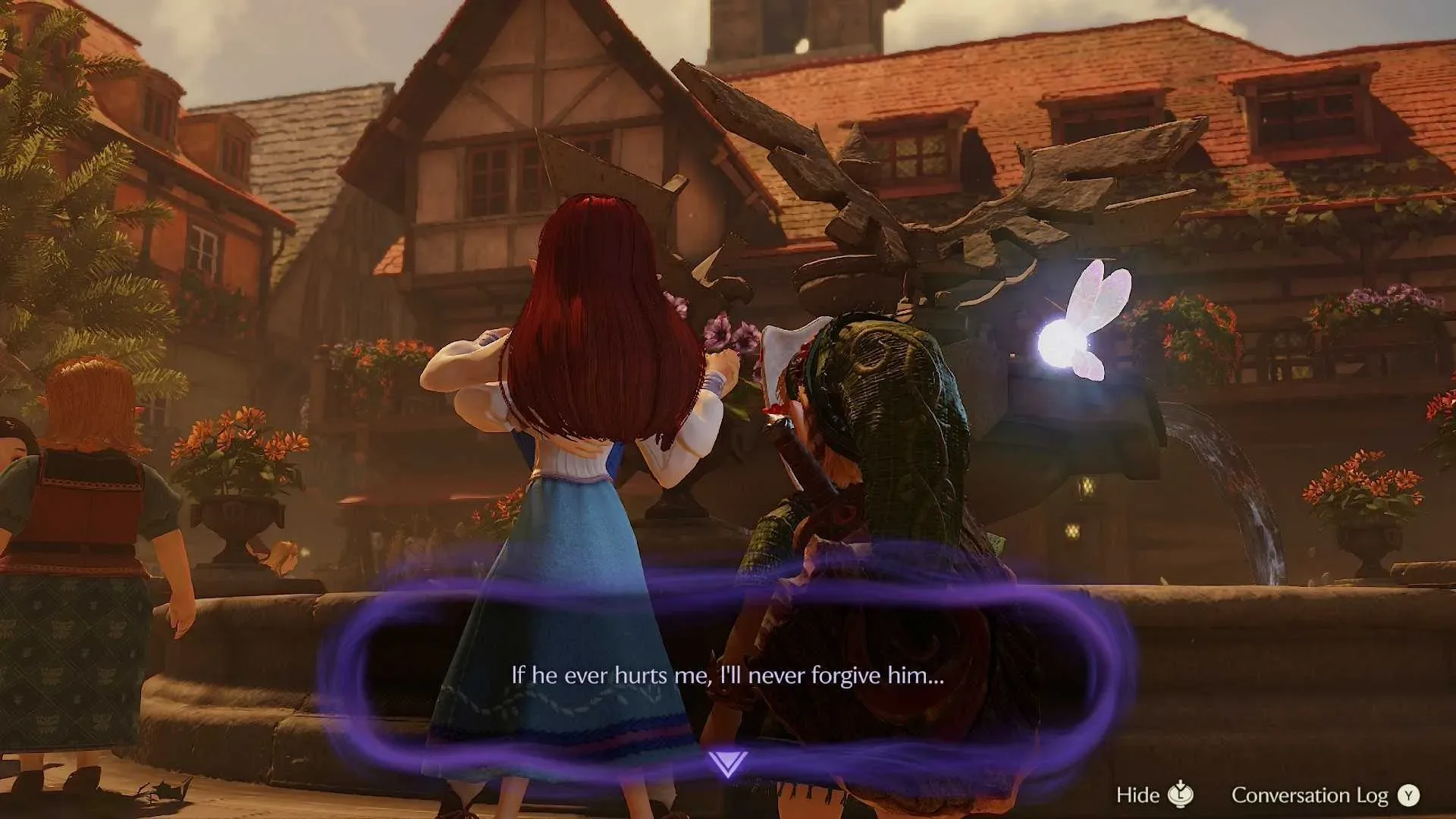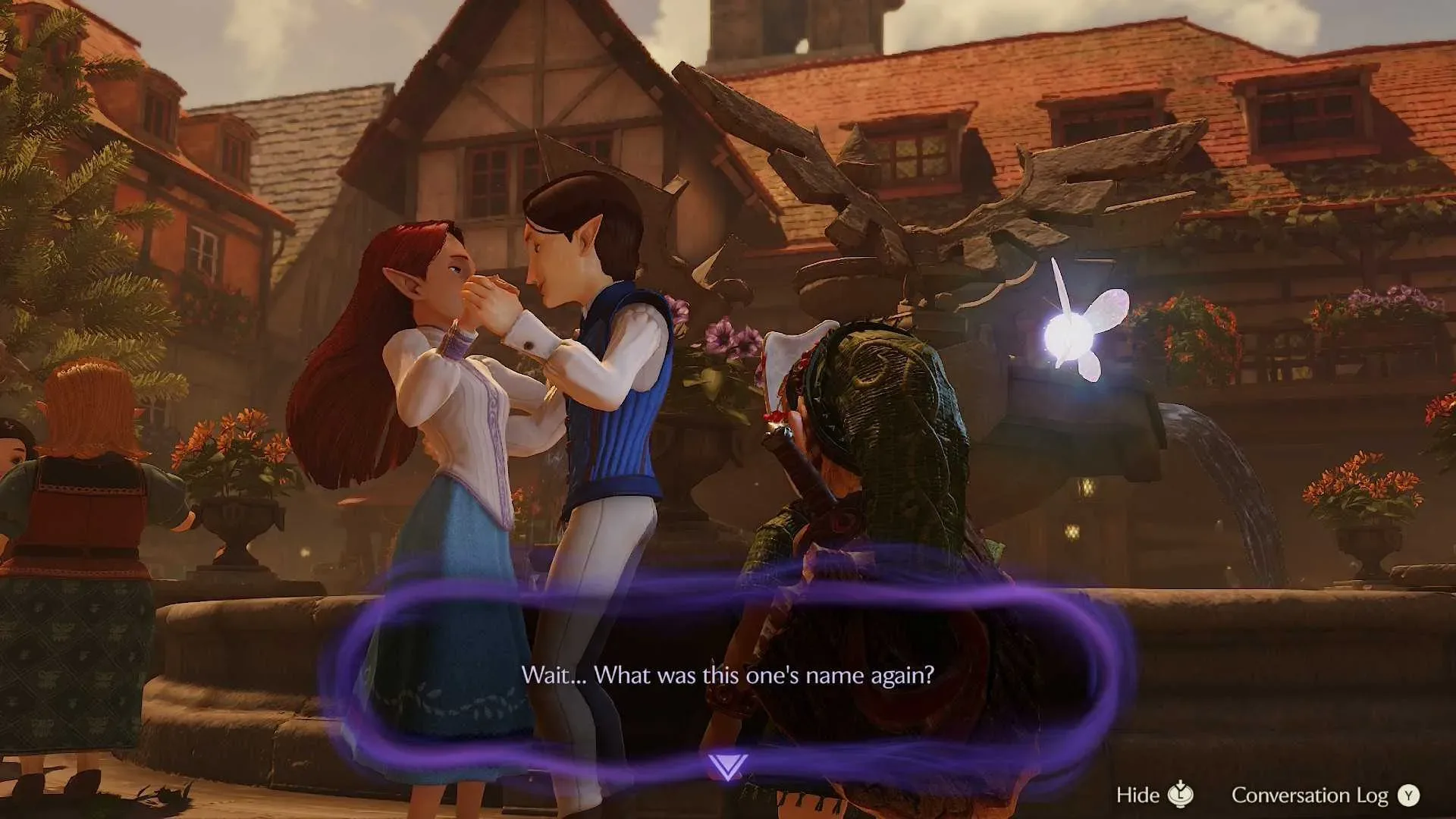
Hyrule Castle Town has plenty of urgent concerns: royal intrigue, lurking danger, a kingdom on the brink of calamity. Yet among its most enduring mysteries may now be a pair of dancers who seem professionally committed to public displays of affection.
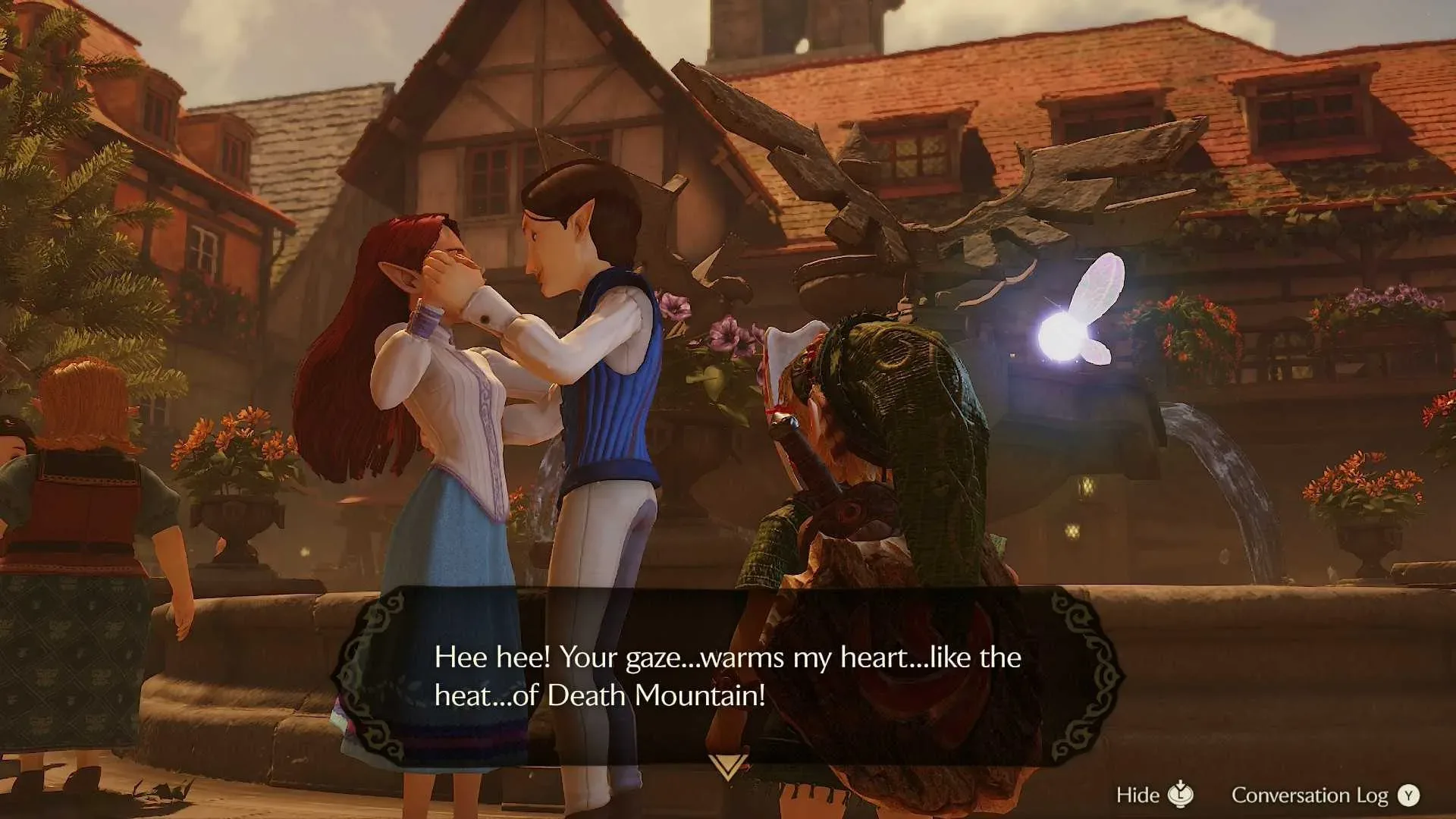
Honey and Darling, the relentlessly twirling couple associated with The Legend of Zelda: Ocarina of Time, have long been easy to read at a glance. They adore one another, they are not interested in Link’s problems, and they intend to keep dancing where everyone can see them. But reported new internal dialogue in an Ocarina of Time remake complicates that simple portrait considerably. The Mask of Truth appears to expose a problem involving forgotten names, hurt feelings and, possibly, a younger twin who has not otherwise shown up.
It is a tiny NPC detail, not a confirmed new quest or a stated revision to the series timeline. That is exactly why it is so entertaining. The Zelda series is full of dramatic secrets, but this one seems to be a deliberately mundane, deeply strange bit of character comedy hidden behind a mask that lets Link hear what people are thinking.
The couple who never stops spinning
Honey and Darling are the conventional names used for the woman and man in this dancing pair. In the original Ocarina of Time, they were unnamed, although their counterparts in Majora’s Mask established Honey and Darling as the familiar labels. They use those nicknames for one another in Ocarina of Time, making the shorthand useful even if their actual names remain an open question.
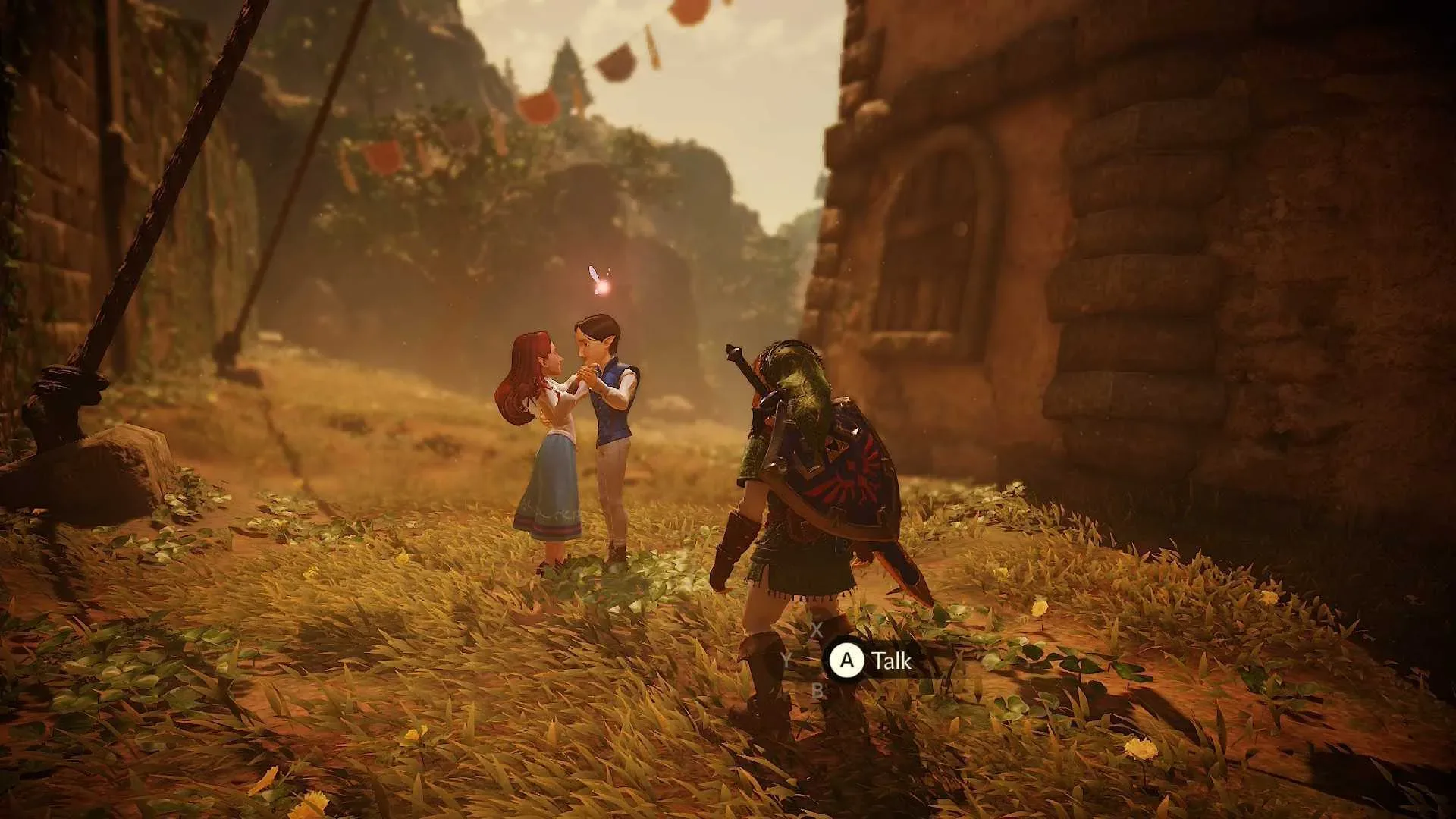
As child Link, players can find them dancing in the central square of Hyrule Castle Town. After the game’s seven-year jump, they are still together, now located on the hill behind Kakariko Village’s windmill. The move does not appear to have diminished their energy or their appetite for romance.
In the original game, their public conversation paints a loud but straightforward picture. Honey compares Darling favorably with Hyrule’s king, while Darling says Honey surpasses Princess Zelda in beauty. They continue their dance through the day and night. When adult Link meets them in Kakariko, they still offer very little practical help; instead, they respond as though he is intruding on their personal space. Masks do not make the exchange warmer.
That creates a familiar kind of Zelda townsperson: a small environmental gag who makes a location feel inhabited without being especially useful to the player. Honey and Darling do not direct Link toward a dungeon, sell a vital item, or explain a puzzle. They are there to be unavoidably, almost aggressively, in love.
The Mask of Truth changes the genre from romance to suspicion
The reported remake dialogue matters because of how the Mask of Truth functions. It is obtained through Happy Mask Salesman sidequests and allows Link to read the thoughts of many characters while wearing it. In other words, it provides a contrast between what an NPC says aloud and what they privately think.
Related coverage includes Ocarina of Time's Honey and Darling Have a New Relationship Mystery.
That contrast is the whole joke. Public dialogue can be theatrical, polite, evasive or repetitive. The Mask of Truth turns passing NPCs into miniature character studies by revealing thoughts that may be less polished, more anxious or simply sillier. It is not a universal truth machine in the sense of resolving every question in Hyrule. It is a device for adding context and humor to people Link otherwise meets only briefly.
In the reported remake version, masks can be worn by both child and adult Link. That expands the number of occasions when players can check on a character’s internal monologue across the game’s two time periods. For Honey and Darling, that extra access appears to transform an affectionate looping animation into a relationship riddle.
Darling’s private thought reportedly indicates that he cannot remember the name of the woman he is dancing with. On its own, that is an alarming punchline: a man publicly declaring devotion while apparently blanking on a basic detail about his partner. Beside Honey’s apparent worry that she would never forgive him if he hurt her, the material takes on a more uneasy flavor.
The game does not, on the evidence available, establish why Darling is confused, whether he is hiding anything, or whether Honey knows exactly what is happening. Those are interpretations, not confirmed plot points. But the dialogue is designed to invite them.
Why the twin reference makes everything messier
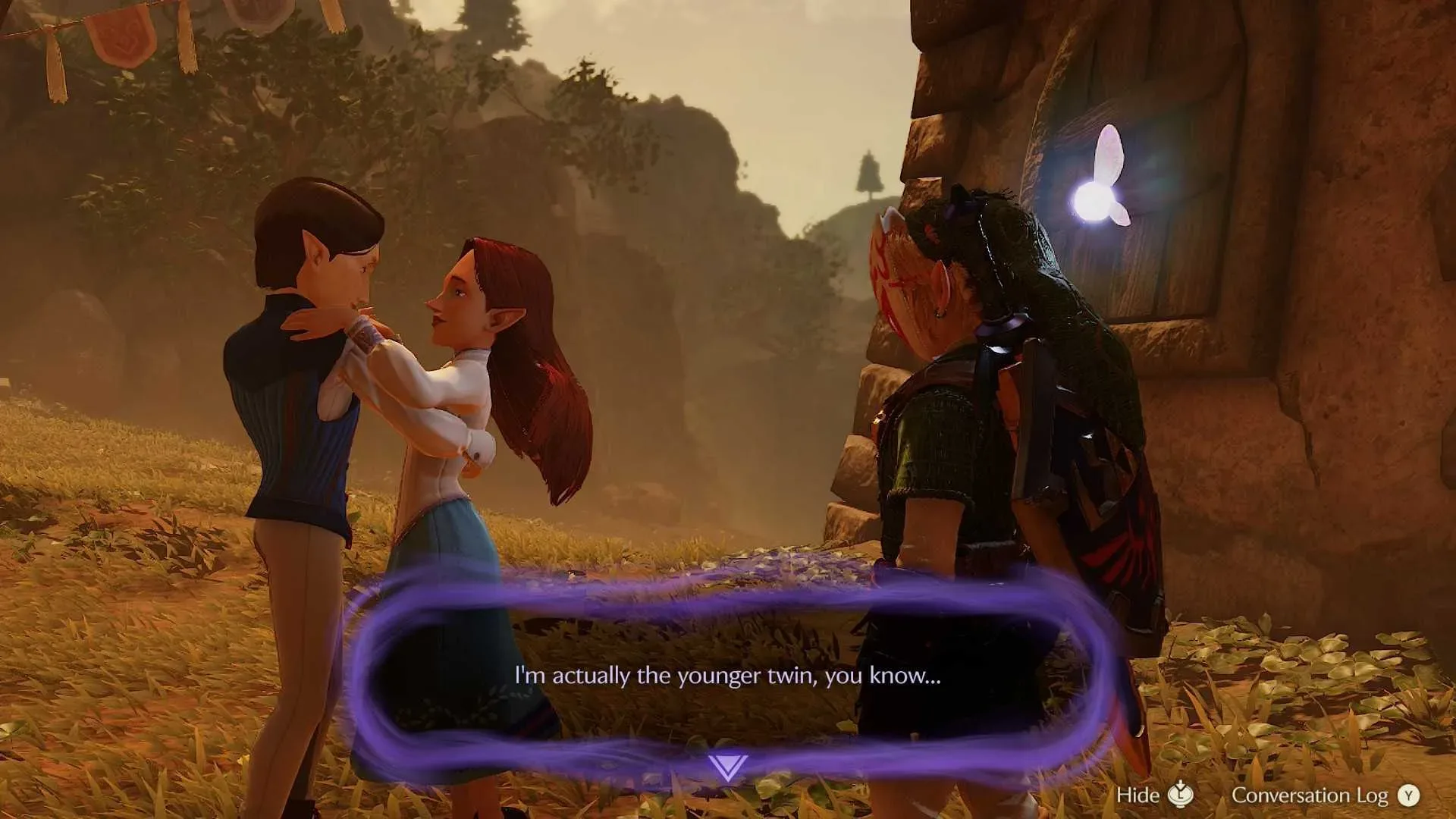
The adult-era exchange is where the mystery escalates. Seven years later, Honey and Darling are still dancing near Kakariko’s windmill, apparently as inseparable as before. Yet Honey’s internal dialogue reportedly refers to being the younger twin.
That phrasing raises immediate questions. A twin sibling for Honey has not otherwise been identified in the supplied material. No duplicate of Honey was found in either Castle Town or Kakariko Village during a search for a second sister, and checking nearby characters with the Mask of Truth did not produce an explanation.
The most mischievous possible reading is that Darling may be involved with twin sisters and has difficulty distinguishing them, while the sisters are at least partially aware of the situation. It would account for the forgotten name and the younger-twin comment, but it remains a theory built from suggestive fragments rather than a confirmed narrative reveal.
There are less scandalous possibilities, too. Darling’s lapse could be a one-off joke unrelated to the twin comment. Honey’s line could be deliberately absurd flavor text with no visible sibling intended. Or the unseen twin may simply be elsewhere in Hyrule, unremarked upon by everyone standing around the couple. The available evidence does not settle the issue.
Still, uncertainty is what makes the bit work. Zelda NPC writing frequently gives players enough material to construct a story, then declines to supply the one sentence that would actually solve it. The question is not necessarily whether there is a complete hidden explanation. The question is whether the game wants players to enjoy the act of over-investigating two dancers who otherwise appear to have no importance at all.
A tiny detail with a practical implication for players
For anyone exploring the reported remake, the useful takeaway is simple: revisit familiar NPCs with the Mask of Truth, and do it in both the child and adult periods where possible. The item is not merely a novelty for a few isolated jokes. Its value is in revisiting characters whose ordinary dialogue initially seems exhausted.
That does not mean every thought will unlock a quest, a reward or a lore revelation. Honey and Darling are a good reminder that optional dialogue often exists for texture rather than progression. Their scene appears to offer no stated gameplay payoff beyond the discovery itself. But that sort of discovery has long been part of the appeal of densely built Zelda towns: Link may be saving a kingdom, yet players can pause to investigate the emotional logistics of the square’s most committed dancers.
The seven-year structure is particularly important here. The couple’s continued presence after the time jump makes their routine feel like a small constant within a changed Hyrule. The new thoughts, if interpreted as connected, use that constancy to create an odd tension. They look exactly as devoted as ever. Their private words may suggest that their arrangement is much more complicated than their synchronized spinning admits.
What is fact, what is theory, and what remains a joke
There is a temptation to treat obscure dialogue as a major lore clue, especially in a series that rewards close attention. At present, restraint is warranted.
- Established background: Honey and Darling are the commonly used names for the dancing pair’s counterparts; they appear in Castle Town as child Link and near Kakariko’s windmill in the adult era.
- Reported remake detail: The Mask of Truth provides additional internal dialogue, and it can reportedly be used by both child and adult Link.
- Reported implication: Darling’s thought suggests he does not know, or cannot recall, Honey’s name; Honey’s adult-era thought references being a younger twin.
- Unresolved theory: Darling is dating both twins, the second twin exists somewhere offscreen or hidden, and everyone involved understands the arrangement.
That last point is the entertaining one, but it should stay in the theory column until the game supplies more. No identified second Honey, explanatory NPC comment or explicit statement has been established here.
For now, the couple’s real achievement is turning a familiar bit of Hyrule scenery into an argument board for players. They began as two people dancing and praising each other too loudly. The Mask of Truth may have revealed that they are two people dancing, praising each other too loudly, and possibly carrying enough unspoken baggage to power the windmill.
It is also a neat example of why small remake additions can matter without altering a game’s central plot. New optional dialogue does not need to rewrite the fate of Hyrule to change how players see a location. Sometimes it merely makes an old NPC interaction worth another visit. Sometimes it gives that NPC an inexplicable twin reference. And sometimes it leaves players with the deeply unserious task of determining whether the kingdom’s most visible couple is actually a very confused trio.
For more Nintendo-related coverage, see Nintendo’s GitHub DMCA sweep targeting Switch emulator forks and mod-chip firmware.