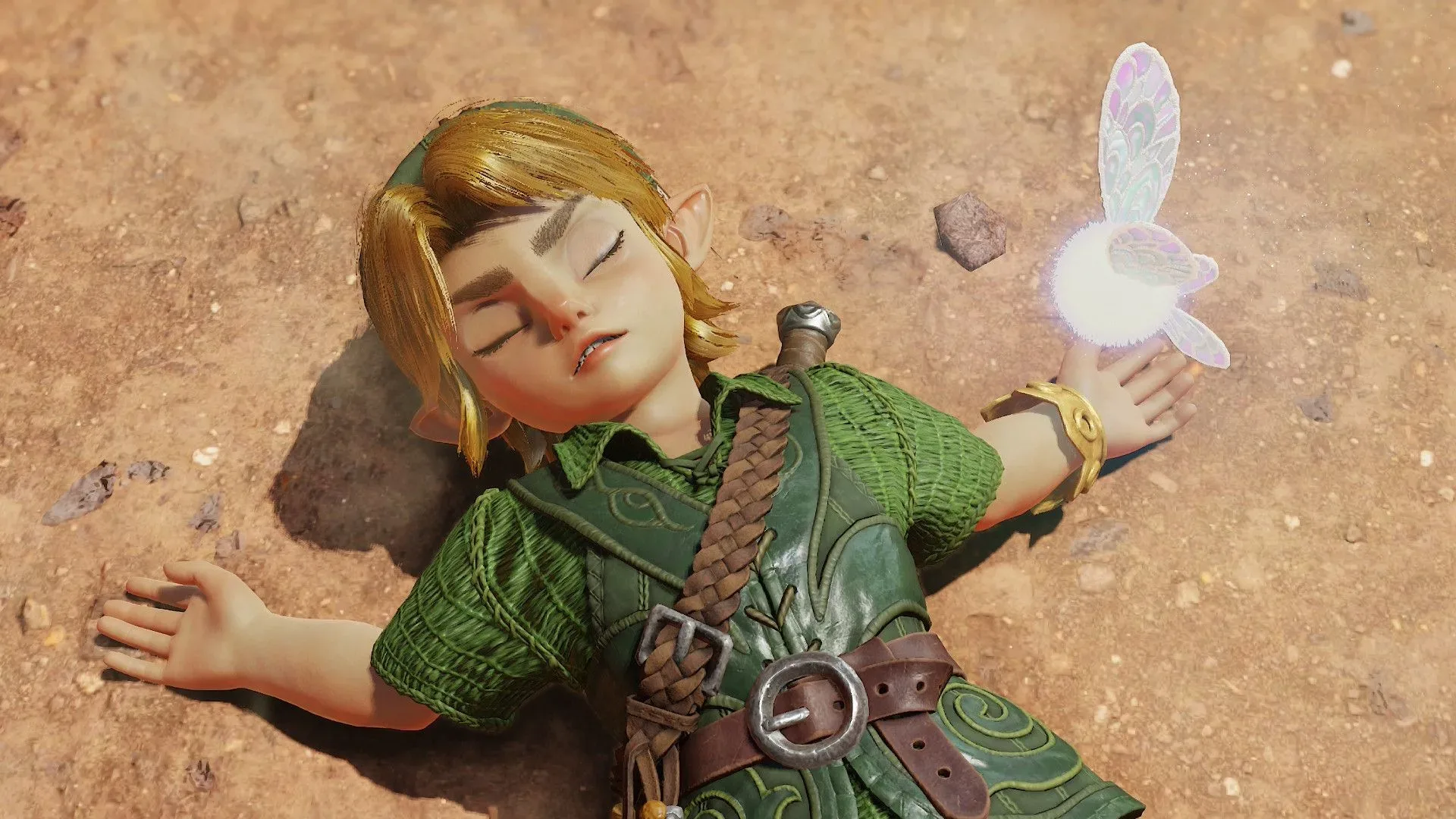
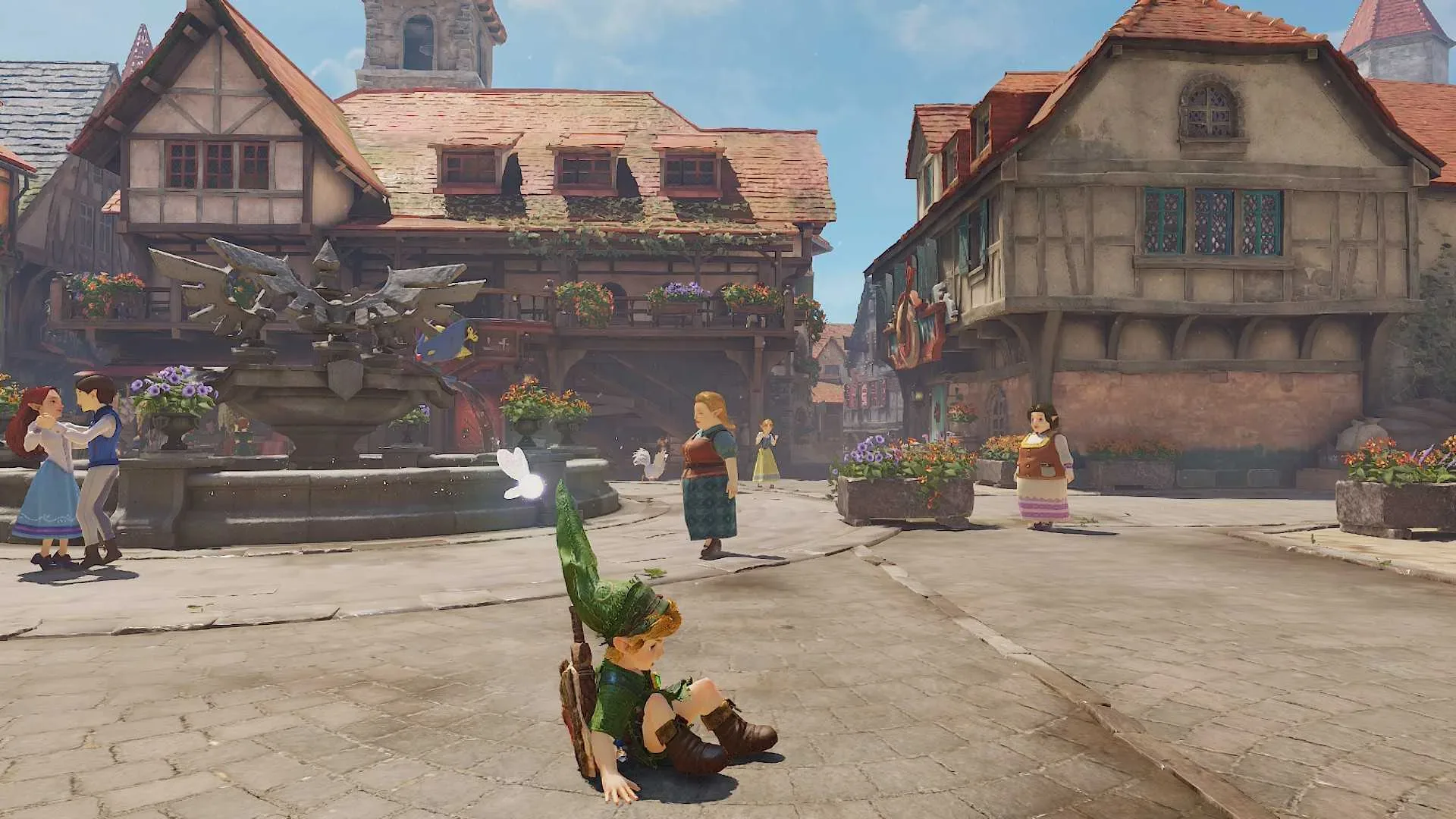
Link has a new sprint in the Legend of Zelda: Ocarina of Time remake, but the community’s oldest movement habit may have survived its most direct challenge. Early timing tests by speedrunners indicate that repeatedly dodge-rolling is still faster than sprinting. More pointedly, players have already identified a front-hop-then-roll sequence that appears to be quicker again.
That result is amusing because the sprint was explicitly presented as an answer to how players moved through the original game. During a September gameplay demonstration, Eiji Aonuma recalled that players rolled to travel faster in the original, then demonstrated the new input: holding the A button makes Link roll and transition into a dash. He recommended the dash for longer journeys.
The recommendation remains sensible for ordinary play. But it is not the same thing as a record-setting route. Aonuma’s new dash looks to have significantly narrowed the practical gap between normal travel and roll-based movement. For players who would rather keep the camera steady, read the environment and avoid a constant parade of somersaults, sprinting could be the more comfortable choice even if it loses a pure speed comparison.
Why rolling became the old movement meta
In the original Ocarina of Time, Link had one standard running pace. Epona later gave players a quicker way across suitable terrain, but she was not an answer to every early-game journey or every route on foot. Players consequently learned that the dodge-roll was not merely defensive or evasive: repeated rolls could carry Link forward faster than regular running.
That discovery did not require a formal speedrun. Anyone retracing a route, heading toward the next objective, or simply impatient to reach a destination could notice the benefit. Yet it was especially valuable to speedrunners, whose routes turn small time advantages into major decisions when an action is repeated throughout an entire run.
A speedrun is an attempt to complete a game or a defined category of it as fast as possible under a chosen set of rules. Movement techniques matter enormously in that setting because travel is unavoidable. A maneuver that saves only a little time over a short stretch can become a preferred method if it is reliable and used again and again.
That is the distinction facing the remake. Sprinting may be a modern, legible solution to a very old player behavior: it gives Link a movement mode that looks like purposeful travel rather than an endless chain of evasive animations. But tests concerned with maximum pace do not reward how natural an option looks. They reward which sequence covers distance most efficiently.
The new sprint solves a usability problem, not necessarily a timing one
There is no contradiction in the two ideas that have emerged so far: rolling is apparently faster, and sprinting is still a worthwhile addition. The original gulf was between Link’s ordinary run and repeated rolls. The remake’s sprint appears close enough to rolling that players who are not chasing a timer have a credible alternative.
Related coverage includes Ocarina of Time Remake Speed Tests Show Rolling Still Beats Link's New Sprint.
That matters because the best control scheme for most people is rarely the one that extracts every last fraction of speed. Repeated rolling can be visually busy and mechanically demanding over long stretches. A sustained dash is easier to understand: hold the designated button and Link moves quickly. It also better communicates what the player is trying to do, which is travel—not dodge an attack that is not there.
In this sense, the sprint is an improvement in player affordance. Affordance is a design term for how readily an object, interface or action suggests its use. A button-held dash clearly signals “move quickly over distance.” A dodge-roll that doubles as transportation is useful, but it is a less obvious solution because its nominal purpose is evasive movement.
There is also a meaningful difference between a developer making the fastest option available and a developer making a convenient option available. The former targets competitive optimization. The latter serves the far larger group of players who want responsive traversal without adopting a technique that can feel silly, tiring or disruptive to the adventure’s rhythm.
Speedrunners will optimize the remake on its own terms
The front-hop-and-roll finding is the clearest sign that the remake is already developing its own movement vocabulary. A movement tech is a player-discovered technique that uses a game’s movement rules, animation timing or input interactions to gain speed, control or access. It does not need to be a bug. Sometimes it is simply the result of two intended actions combining more effectively than expected.
Here, the reported advantage comes from linking a front hop with a roll rather than treating the roll as the final answer. That is classic speedrunning logic: once a faster baseline is found, the next question is whether entering or exiting it differently improves the result. The discovery also suggests that the remake’s speedrunning conversation will not stop at “sprint versus roll.” Players will test transitions, slopes, terrain, directional inputs and route-specific situations as they learn the game.
None of that should be read as a failure of the new sprint. It instead illustrates an enduring truth about games with responsive movement: dedicated players will interrogate the system more closely than a broad design recommendation can anticipate. A dash may be intended for long-distance travel, while a particular hop-and-roll rhythm becomes the top choice in a timed route.
For the average player, the practical takeaway is much simpler. Sprint when it feels good and when a stable, straightforward burst of speed is what you want. Roll if you enjoy the faster technique or are trying to trim a journey. And expect the fastest known method to keep changing as runners test the remake’s rules in greater detail.
A familiar design conversation returns
Aonuma’s comment gives this small movement result a little extra personality. He did not state that he disliked roll-spamming, but he singled out a decades-old player habit while unveiling the sprint intended for longer-distance movement. It is hard not to see the moment as an acknowledgement that players had long found a more efficient answer than standard running.
He has similarly framed the remake’s Water Temple work as “overdue homework,” an apt phrase for revisiting a game whose memorable strengths and notorious pain points have both been discussed for years. A remake can preserve the identity of a beloved game while trying to sand down friction that previous players accepted, mastered or mocked.
The roll result shows the limits of controlling that process. Design can introduce a clearer intended behavior, but players ultimately decide what is optimal through experimentation. If a dodge animation remains a quicker way to cross Hyrule, then Hyrule’s most committed time-savers will keep tumbling—however persuasive Link’s new sprint may be for everyone else.
That wider tension is part of why revisiting established game design is so interesting: a new version can refine old assumptions, only for expert players to build fresh habits around the revised systems. For a separate example of creators looking back at earlier game-design priorities, see this look at Kouji Okada revisiting Persona’s smaller-scale roots.
What this means for players
- For casual exploration: The new sprint should offer a much more intuitive alternative to repeatedly rolling, particularly over longer stretches.
- For time-focused play: Current tests place rolling ahead of sprinting, with front hop into roll reported as faster still.
- For speedrun routes: The first movement verdict is unlikely to be the last. The useful measure will be how techniques perform in real routes, not only in isolated travel tests.
- For remake design: A convenient new feature can succeed at improving play feel without becoming the absolute fastest option.
For now, the scoreboard has delivered a delightfully Zelda-like answer. Link received a proper sprint to make long-distance movement cleaner and more approachable. The roll remains faster anyway. And because speedrunners are speedrunners, they have apparently found an even quicker way to chain movement together.