The reported remake of The Legend of Zelda: Ocarina of Time is making a deliberate break from a pair of long-running crossover nods. Mario imagery associated with the original release and The Legend of Zelda: Skyward Sword references added to the Nintendo 3DS version have reportedly been removed, with Zelda series producer Eiji Aonuma framing the decision as one of player immersion rather than a rejection of playful in-jokes.
In a discussion about the remake’s changes, Aonuma explained that a player spotting an unmistakably unrelated character—he used Yoshi as the example—can be pulled out of Hyrule for a moment. The team’s current view is that such a moment risks interrupting the experience of moving through the game’s world and expressing oneself within it.
“We don't want that moment to interrupt their experience of the world in that way,” Aonuma said of a player looking up and asking why Yoshi is present.
It is a small environmental revision with a revealing design principle behind it. Easter eggs can reward observant players, prompt a smile and preserve traces of a development team’s personality. They can also work against a remake’s effort to make an older fictional space feel cohesive to players encountering it anew. For this version of Ocarina of Time, the reported priority is the latter.
The Mario connections being left behind
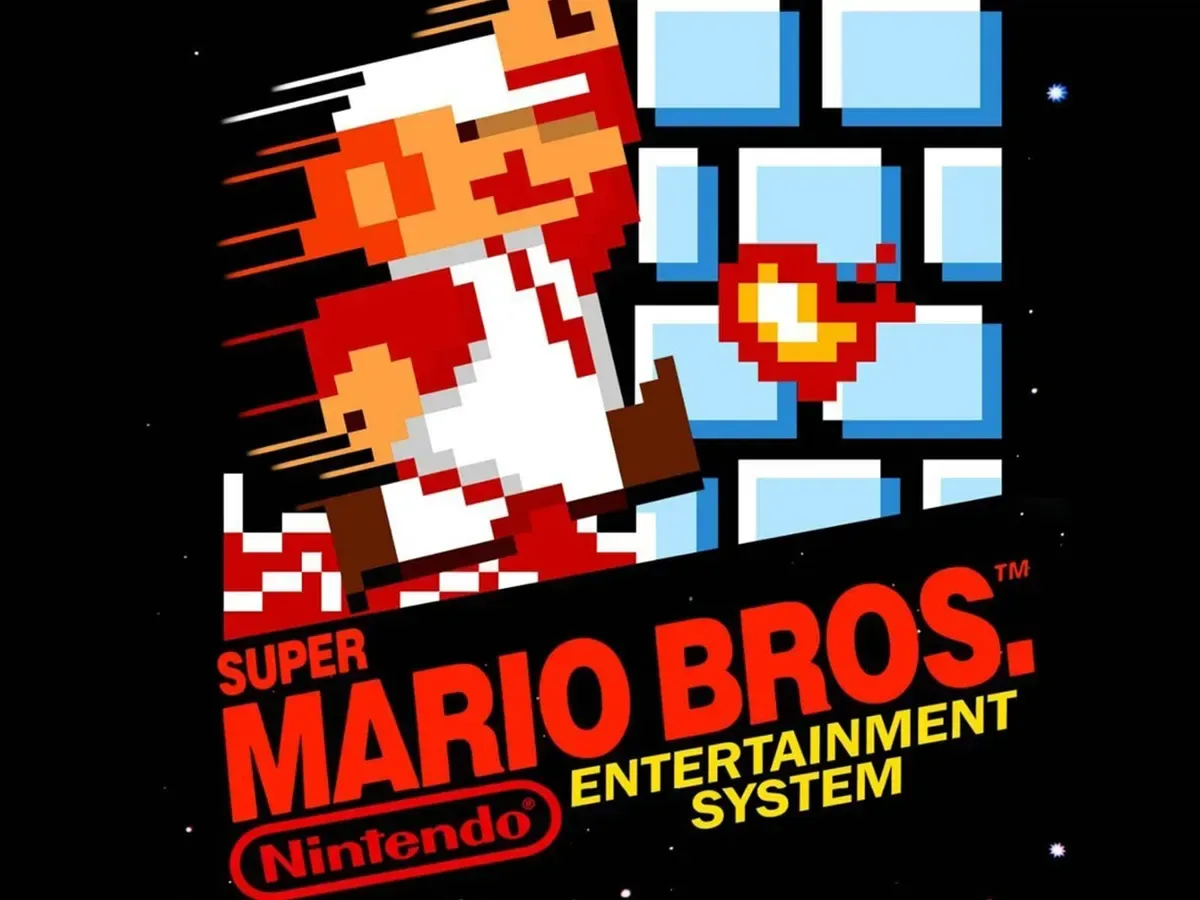
The original Ocarina of Time contained several Mario-related touches. These included character portraits, while Talon, Malon and Ingo have conspicuous visual similarities to Mario, Princess Peach and Luigi respectively. Those character designs remain part of the game’s familiar texture, but the reported change concerns the more explicit portrait references.
The timing helps explain why those nods existed in the first place. Ocarina of Time and Super Mario 64 were made during the same period, a circumstance that made the shared imagery feel more like a casual studio-era wink than a puzzle demanding an answer. Aonuma described the earlier approach as comparatively carefree or comfortable.
A remake arrives under different conditions. It is separated from the original by roughly three decades, and its relationship to Super Mario 64 is not the same as the relationship shared by two projects developed side by side. In that context, a Mario portrait is no longer simply a contemporary reference. It can become a conspicuous artifact that asks the player to step outside the fiction, recognize a different Nintendo series and mentally account for the connection.
That does not make the older gag a mistake. It reflects the circumstances and sensibilities of its version of the game. The distinction matters because a remake is not merely preservation through reproduction. It is an act of selection: developers decide which details are essential to a game’s identity, which details need reinterpretation, and which have become distractions within the new presentation.
Related coverage includes Ocarina of Time Remake Removes Mario and Skyward Sword Easter Eggs to Protect Immersion.
What “immersion” means here
In game design, immersion is the sense that a player is absorbed in a game’s setting, actions and internal logic. It does not mean a world must be realistic. Hyrule plainly has its own fantastical rules. Instead, immersion depends on the game giving players a consistent enough frame that they can accept what they see and do as belonging to that particular world.
An Easter egg can support immersion when it reinforces that frame: a hidden visual detail that expands a location’s mood, hints at its history or rewards close attention without demanding a new explanation. A crossover cameo works differently. Its purpose is usually recognition. The player is meant to notice that an element comes from somewhere else. That recognition can be enjoyable, but it is also a brief invitation to think about the developer, the wider corporate catalogue, or another game entirely.
Aonuma’s reasoning suggests the remake treats that invitation as an unnecessary detour. The practical implication is modest but clear: references that were once considered harmless decoration may now be evaluated by whether they serve the immediate journey through Hyrule.
The 3DS-era Skyward Sword references also change
The same logic reportedly applies to art connected to Skyward Sword that appeared in the Nintendo 3DS version of Ocarina of Time. The two titles released around the same time, making the 3DS team’s decision to add a contemporary Zelda reference understandable. Aonuma recalled that designers working on that edition were enthusiastic about placing Easter eggs throughout the game, and he approved the inclusion at the time.
For the remake, however, the reference is said to be gone. The justification is not that Skyward Sword is somehow incompatible with Zelda as a whole. Rather, it is that the artwork is unrelated to what the player is doing in that moment of Ocarina of Time. A series reference can still be a detour when it calls attention to another installment instead of the scene, place or task directly in front of the player.
“You don't want to interrupt the player's experience by seeing something that's unrelated to what they're currently doing in the game,” Aonuma said.
Skyward Sword director Hidemaro Fujibayashi, who participated in the same discussion, indicated there were no hard feelings. He characterized the decision as consistent with the concept underlying the remake.
That response underscores a useful point about cameo removal: it need not be treated as a referendum on the referenced game or the people who made it. In this case, the stated concern is coherence. The remake’s designers appear to be asking whether each visible element contributes to this version of Ocarina of Time on its own terms.
A faithful remake can still make editorial choices
The reported changes also show why “faithful” should not be confused with “identical.” A faithful remake can preserve the core shape, characters and identity of a game while revising elements that no longer fit its intended experience. The portrait and art changes sound narrow, but they are still editorial decisions about what the game should foreground.
For players who value every eccentric corner of an older release, removed references may feel like a loss. Easter eggs are often remembered precisely because they are strange, easily missed and tied to a specific period in a series’ history. They can make an older version feel like a time capsule. Meanwhile, players approaching the remake without that history may never miss a reference they did not know existed—and may benefit from a world with fewer signals pointing away from its own story.
Neither reaction is inherently wrong. One values version-specific texture and development history; the other aligns with the remake team’s stated goal of minimizing distractions. The important detail is that the new version is not presented as blindly copying every environmental detail that preceded it.
That distinction also makes the earlier releases worth documenting accurately. The original and 3DS versions preserve choices shaped by their own moments: one by proximity to Super Mario 64, the other by proximity to Skyward Sword. As game versions change, those details become part of the record of how developers used cross-series references at different points in time. The broader preservation challenge extends beyond game code to the contextual material that explains why variants exist, a concern echoed by efforts around organizing legacy game and hardware records.
Why the decision matters beyond two hidden nods
The removal of a Mario portrait or a piece of Skyward Sword art will not, by itself, redefine Ocarina of Time. Yet these are the kinds of choices that communicate a remake’s philosophy. The stated philosophy here favors a self-contained Hyrule over references that ask players to acknowledge Nintendo’s larger universe.
It is also a reminder that Easter eggs perform different jobs depending on the audience. At the time of an original release, they may feel like a friendly aside for players already following several games at once. Decades later, they can read as an interruption in a work that is being newly packaged for people with very different expectations and levels of series knowledge.
For longtime Zelda players, the practical takeaway is simple: the reported remake may retain recognizable character echoes in Talon, Malon and Ingo, but it will not retain every overt crossover detail from previous editions. For newcomers, the intended benefit is equally straightforward: fewer visual prompts to wonder why another franchise has intruded on Hyrule.
Whether that trade is worthwhile will ultimately be a matter of taste. The design rationale, though, is unusually direct. The remake is choosing continuity of place over the quick spark of recognition—and treating even a beloved in-joke as expendable if it breaks the spell.