The first wave of global player data for The Legend of Zelda: Ocarina of Time remake has delivered a reassuring message to anyone who has been scream-locked, grabbed, and unceremoniously defeated by a ReDead: it is not just you.
In the Zelda Notes app’s Global Play Data, ReDeads and Gibdos are collectively responsible for 18% of recorded deaths. That makes the undead pair the deadliest listed threat in the remake’s early community stats, ahead of both Iron Knuckles and the apparently timeless danger of setting Link on fire.
Fire and Iron Knuckles are tied at 7% apiece. One is a formidable armored opponent; the other is fire. The equality is a small but wonderful reminder that Hyrule’s most hazardous force is sometimes a monster built to flatten heroes, and sometimes a player deciding that the hot part of Death Mountain surely cannot be that hot.
The figures come just over a week after the remake’s release, so they are a snapshot of an audience at very different points in its adventures. That context matters. Early global data will include newcomers taking their first tentative steps across Hyrule, returning players moving quickly through familiar quests, and completion-minded explorers delaying progress to search every corner. It is useful as a picture of shared habits, not a definitive ranking of every danger in the game.
The undead remain Hyrule’s most efficient panic machine
ReDeads and Gibdos being connected to 18% of deaths is striking, but it is not hard to understand why they have earned that reputation. Their menace is more than raw damage. They are creatures designed to disrupt control: an encounter can shift from manageable to disastrous when Link is caught, immobilized, or unable to create the space needed to respond.
That distinction helps explain why statistics about deaths do not necessarily mirror a simple enemy-strength chart. A foe can be dangerous because it has a huge attack, but it can also be dangerous because it creates confusion, interrupts movement, or punishes players who are already under pressure. ReDeads and Gibdos clearly continue to excel at the latter.
The combined 18% figure also means it should be read carefully. It measures the pair together rather than establishing which of the two is individually more lethal. Still, the result confirms that their shared brand of horror remains unusually effective, even after decades of players learning the rhythms of Hyrule’s combat and dungeon challenges.
There is a long-running cultural truth embedded in the number: some enemies are memorable because they are difficult, while others are memorable because they make players dread hearing them before they are even on screen. ReDeads and Gibdos belong emphatically in the second group, and the early data indicates that fear is not merely theatrical.
Related coverage includes Ocarina of Time Remake Stats Reveal ReDeads and Gibdos Are Still Link's Deadliest Foes.
Fire shares the podium with Iron Knuckles
The 7% tie between fire and Iron Knuckles gives the stats their best comic contrast. Iron Knuckles are described by the data as hard-hitting, so deaths attributed to them fit the expected shape of a major combat obstacle. Fire, meanwhile, is environmental danger: the kind of threat that can be ignored for a moment, underestimated during exploration, or encountered while a player is focused on something else.
Death Mountain is the obvious area to consider when looking at that fire tally. The Goron Tunic is specifically relevant to surviving its heat, and the early numbers suggest at least some players have tested the consequences of traveling without the appropriate protection. Link’s resilience has limits. Lava-adjacent tourism is one of them.
There is a practical lesson in the joke. Before pushing farther into an area that is visibly hostile, players should pause to consider whether the game has already provided a tool, item, or equipment upgrade intended for that environment. In adventure games, a conspicuous environmental hazard is often not merely scenery; it can be a signal that preparation matters.
That is not the same as saying every fire death stems from Death Mountain or a missing tunic. The available data does not break the category down that far. But the connection is plausible enough to make the tie feel like a communal public-safety notice for Hyrule: armored enemies may swing axes, yet an unprepared stroll through extreme heat can be just as terminal.
What Zelda Notes is tracking
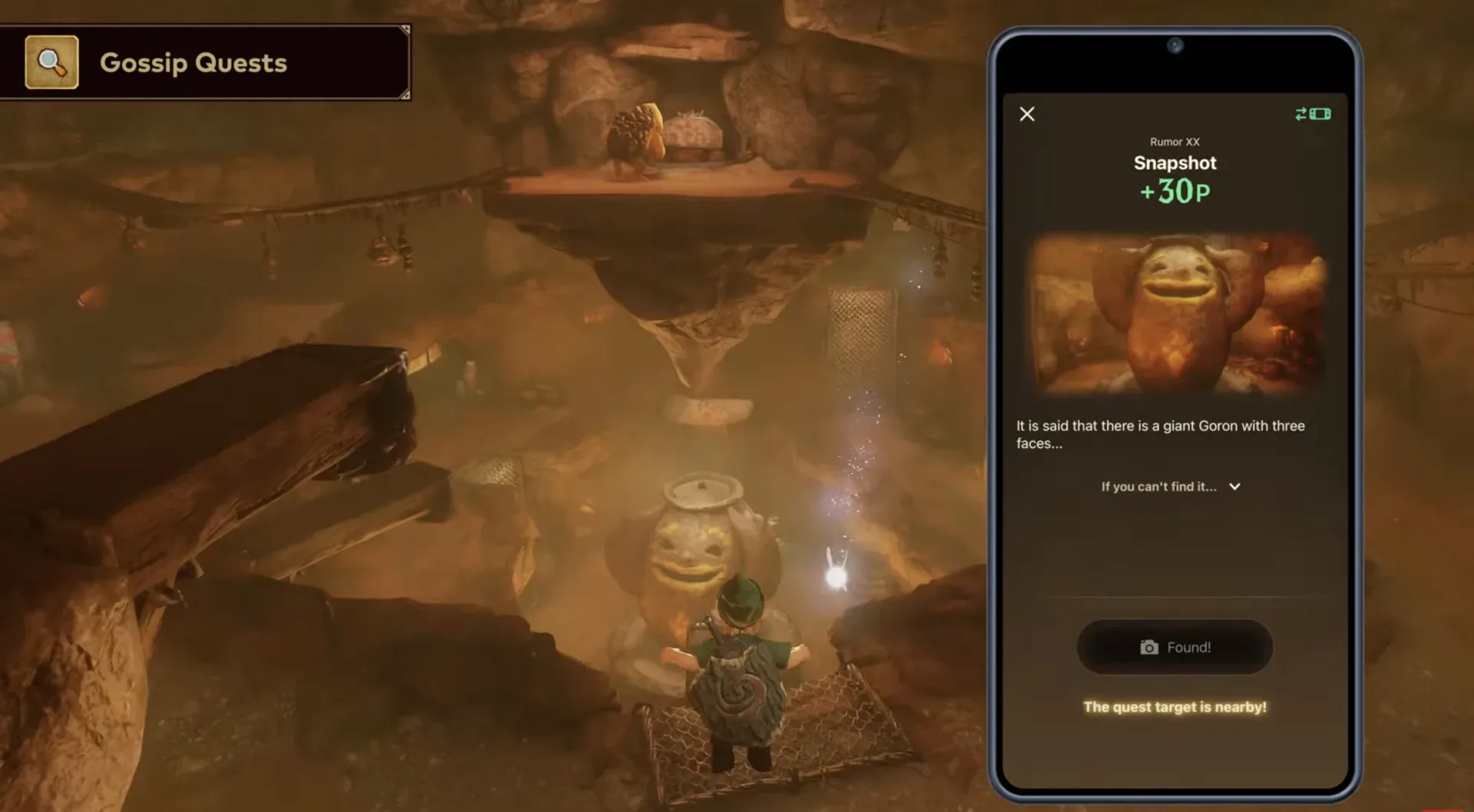
Zelda Notes is available within the Nintendo Switch App and supports the remake with an interactive map, area-by-area completion information, and tracking related to secrets such as Gold Skulltulas and Pieces of Heart. For players who want to clean up remaining objectives without blindly scouring every location, that turns the app into a progress companion rather than simply a ledger of numbers.
Gold Skulltulas and Pieces of Heart are examples of optional discoveries that can turn a straightforward playthrough into a broader completion project. The app’s map and completion information can help identify unfinished areas while leaving the player to decide how much direct assistance they actually want. Someone can use it only after finishing a dungeon; someone else can check constantly to keep a running list of outstanding finds.
The Global Play Data layer adds a separate appeal. Rather than showing only an individual player’s record, it offers aggregate community patterns: which enemies are defeated most often, what deaths are being logged, how far people travel, and how they spend their time. Aggregate means that the figures combine activity across the participating player base. They can reveal trends, but they cannot tell us why any one player died, took a detour, or caught a fish.
Skulltulas are currently the most commonly defeated enemy. That stat does not automatically mean they are the most challenging opponent; it more likely reflects their widespread presence and the attention players give to finding them. A count of defeats measures frequency, not difficulty. The ReDead and Gibdo death statistic, in contrast, measures a particular kind of costly encounter. The two categories answer different questions.
For a fuller look at why the remake has attracted attention, see Yoko Taro’s comments on Ocarina of Time’s influence on NieR and its new remake.
Early numbers reveal two very different Hyrules
Travel-distance data shows how uneven the player base remains at this stage. Most players have traveled roughly one kilometer in Hyrule, while a smaller segment has gone beyond 200 kilometers. This is exactly what an early snapshot should look like: a large group is still beginning, and a smaller but committed group is roaming extensively.
Those differences affect almost every other category. A player who has just started will have had little opportunity to encounter advanced areas, optional activities, or late-game magic. A player who has already completed the adventure, revisited regions, searched for secrets, and chased personal goals will naturally accumulate a radically different record.
Grass-cutting illustrates the point especially well. The majority of players have cut more than 1,000 pieces of grass. That sounds absurdly industrious until it is viewed as a measure of how people interact with an adventure world: players frequently test the environment, look for pickups, take familiar routes, and indulge the satisfying reflex to clear every patch of grass in sight. It is a behavior stat as much as an exploration stat.
The app also tracks completion times. The most common result currently falls in the 20-hours-or-more bracket, although some players have finished in a little over 10 hours. Neither figure establishes a universal “correct” duration. Time to clear can vary based on route knowledge, amount of exploration, pursuit of optional collectibles, comfort with combat, and whether a player pauses to engage with side activities.
A faster clear therefore indicates efficiency, familiarity, or a more direct route—not necessarily a more complete journey. Likewise, a longer run is not evidence of failure. In a game with secrets, maps, collectibles, fishing, and substantial travel, taking time can be the point.
The Lens of Truth stat hints at later progress
One of the more revealing figures is that 40% of players list the Lens of Truth as their most-used form of magic. That is a notable number because it points toward a cohort that has progressed far enough to use it, including players who have moved through the Shadow Temple.
The Lens of Truth is particularly interesting as a usage statistic because it is a utility rather than a simple damage-focused tool. It exists to help reveal what is otherwise concealed, making it naturally attractive to players working through areas where perception and hidden information matter. When it becomes a player’s most-used magic, that can reflect both story progression and a willingness to use the game’s systems beyond direct combat.
It also emphasizes why global stats need careful interpretation. Forty percent is not a statement that the Lens is universally the best magic. It is a record of what this player population has used most, at this moment, across a group containing both people still at the beginning and others far enough along to make substantial use of it.
Hyrule needs more anglers
Amid death charts, grass-cutting, and magic use, fishing provides the gentlest indictment in the entire report. The average player has caught only one to four fish. By comparison with the enthusiasm shown for mowing down grass, the community’s angling effort is modest.
Fishing is a useful counterpoint to the broader data because it represents voluntary time spent outside the critical path. It does not need to be optimized into a race or treated as a missed checklist item. For players who have been rushing from dungeon to dungeon, the low average is simply a nudge that Hyrule contains room for quieter distractions too.
The Zelda Notes figures cannot yet settle every legendary question. They do not identify how many people became tangled in the Water Temple’s puzzles, for example. But they do establish a few early facts: Skulltulas are being defeated in enormous numbers, grass is losing a war of attrition, a meaningful portion of the community has put the Lens of Truth to serious use, and ReDeads and Gibdos are still collecting victims with alarming efficiency.
As more players move past their opening kilometer and more completionists push toward 200, the rankings may change. For now, though, the first verdict is clear. Equip what the mountain requires, respect Iron Knuckles, take an occasional fishing break, and never assume the screaming undead in the corridor are merely there for atmosphere.