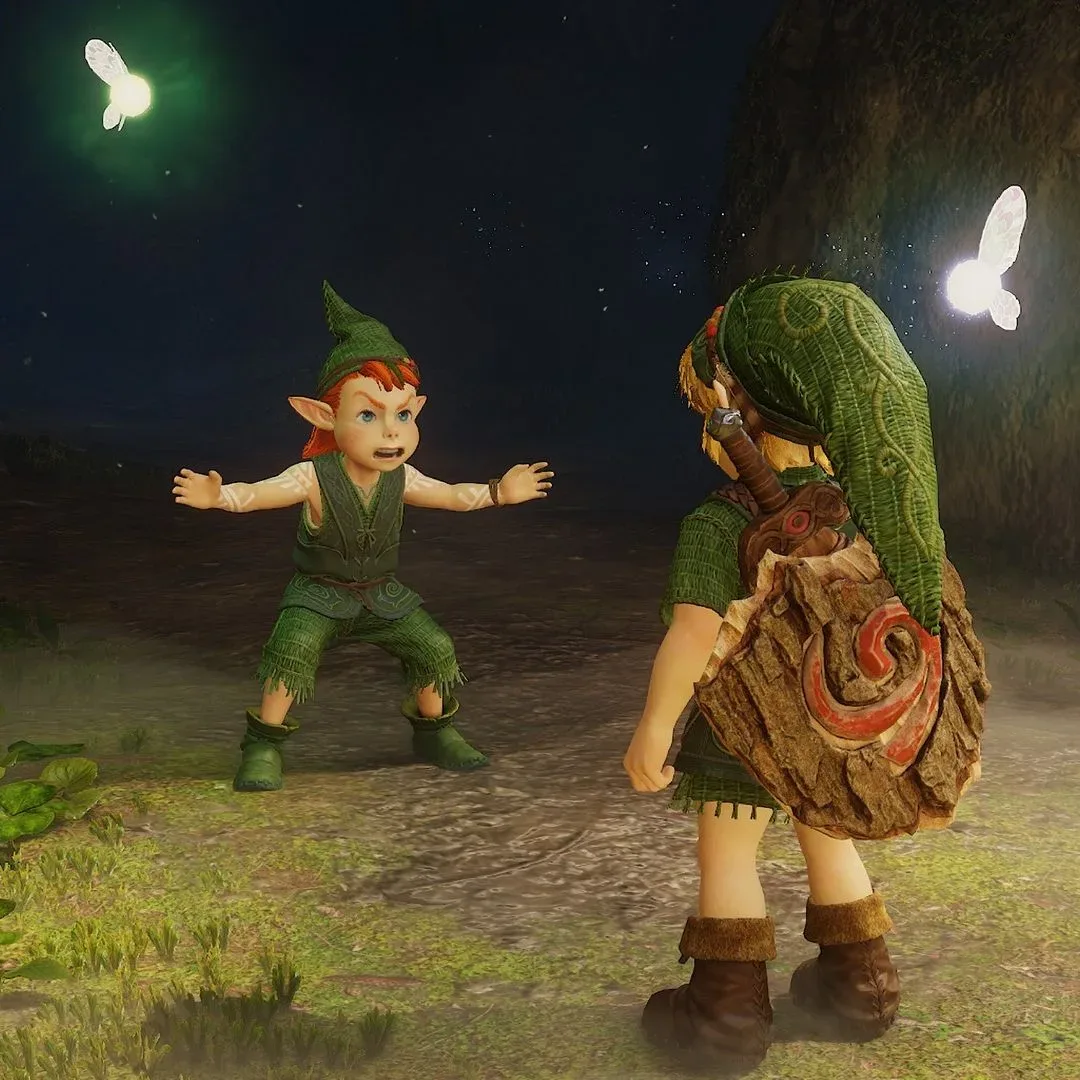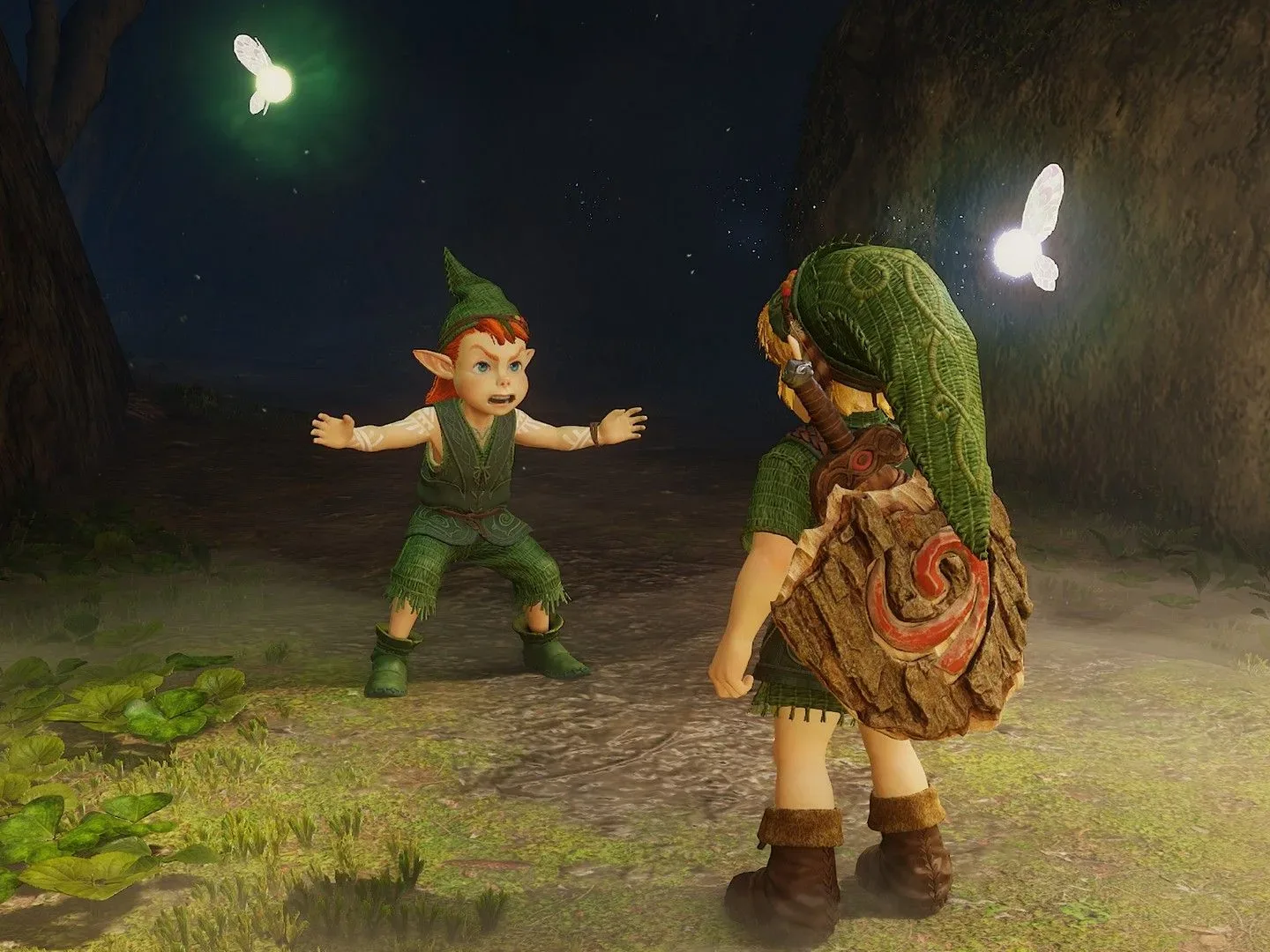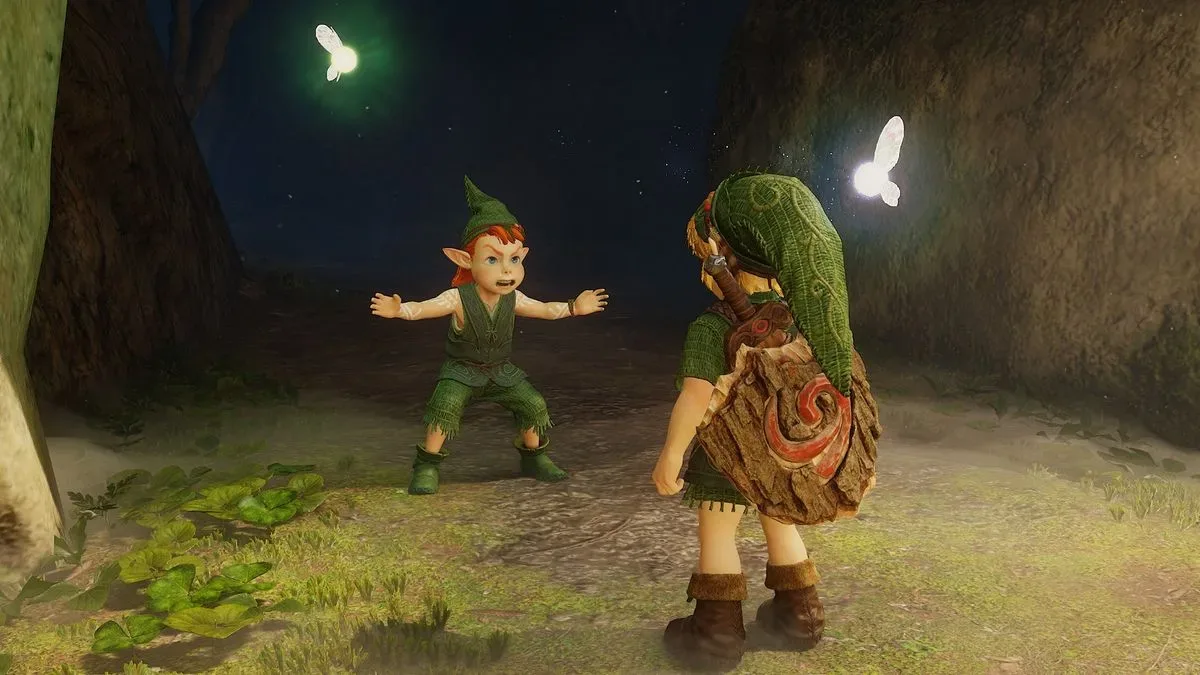
A pair of reported discoveries in The Legend of Zelda: Ocarina of Time remake files has given fans two substantial-looking leads to examine: one apparently concerns the absent Master Quest mode, while the other points to an unannounced mask with dialogue that sounds unusually close to Majora’s Mask.
The important qualifier is also the least exciting one: neither a Master Quest expansion nor a remake of Majora’s Mask has been officially confirmed. File references can reflect unused material, internal testing, planned content that changes direction, or features with a much less dramatic purpose than fans expect. Still, the reported strings are specific enough to explain why the conversation has moved beyond broad anniversary speculation.
What the reported Master Quest references show
The Master Quest discussion stems from file strings reportedly found by dataminer MrCheeze. The key detail is the use of “MQ” labels, including separate references to DodongoCavern and DodongoCavern_MQ.
“MQ” is widely understood in this context as shorthand for Master Quest, the alternate dungeon configuration associated with earlier versions of Ocarina of Time. Master Quest first appeared with the GameCube port, then came included in the 3DS remake. Its identity is not simply a higher enemy-damage setting: its central appeal is revised dungeon design, with altered puzzle layouts and changed solutions intended for players who already know the original route.
That distinction matters. A dungeon identified as an MQ variant suggests more than a generic difficulty toggle. If the labels accurately represent active, planned content, they imply a separately configured version of Dodongo’s Cavern. They do not, on their own, reveal how extensive the content is, whether every dungeon will receive comparable treatment, or whether the material will ever be released.
Master Quest’s omission has stood out because it was part of the 3DS package by default and because returning players often look for a fresh mechanical angle after replaying one of gaming’s most familiar adventures. For newcomers, the normal quest remains the essential version of the game. For veterans, alternate layouts can create the rare feeling of uncertainty in spaces they may otherwise navigate from memory.
DLC is plausible, but format and cost are unknown
The file labels make post-launch downloadable content a reasonable possibility, not a settled fact. There is no indication in the reported material of a release date, price, scope, or whether an expansion would be free. It is also unknown whether a potential Master Quest would closely follow the older version or be remixed to match the remake’s own changes.
That last point could be decisive for fan reception. The original Master Quest has a mixed reputation: its redesigned puzzles are valued by players seeking a tougher, less predictable run, but not everyone considers every revision an improvement. An expansion built specifically around the remake could offer designers a chance to reconsider those rougher elements. Conversely, preservation-minded players may prefer the historic layout, quirks and all.
Related coverage includes Ocarina of Time Remake Datamine Reportedly Points to Master Quest and Majora's Mask Plans.
Until Nintendo says otherwise, the safest reading is narrow: the reported strings suggest that an MQ-formatted Dodongo’s Cavern exists somewhere in the game’s data. Anything beyond that—full expansion, launch window, price, dungeon count, or quality—is speculation.
Mask 103 is the more curious Majora’s Mask clue
A second datamine centers on the remake’s mask-reaction system. NPCs reportedly respond to whichever mask Link wears, and the game includes the masks from the original Nintendo 64 release. Two further masks are expected when Link and Zelda amiibo arrive in 2027, each giving the characters an N64-style appearance.
Those two masks are reportedly identified in the files as Mask 101 and Mask 102. The intriguing outlier is Mask 103, an additional unrevealed entry found alongside NPC dialogue. Characters allegedly describe the mask as “otherworldly” and “suspicious,” suggesting it is treated as something distinct from the familiar masks already accounted for.
One reported line has drawn particular attention because it imagines that wearing such a mask might cause monsters to ignore the wearer. That idea resembles Majora’s Mask functionality in The Legend of Zelda: Breath of the Wild and The Legend of Zelda: Tears of the Kingdom, where the mask has an enemy-disguise effect.
The resemblance is suggestive rather than conclusive. Dialogue about a strange mask and monster behavior is not the same as an asset explicitly named “Majora’s Mask,” nor is it confirmation of a full sequel remake. It could foreshadow an amiibo bonus, a standalone cosmetic or gameplay reward, an unused concept, or something entirely different. The reported dialogue does, however, give the theory more footing than visual nods alone.
Why fans are connecting it to a Majora’s Mask remake
Majora’s Mask has always been the natural follow-up in remake conversations because of its direct relationship to Ocarina of Time. The original released roughly two years later and reused assets from its predecessor. Cremia and Romani, for example, use adult and child Malon models respectively.
Asset reuse should not be mistaken for proof that a modern remake would be quick or easy. A full remake needs its own design, production, technical work and release plan. But the shared foundation makes the pairing easy to understand creatively: a modern Ocarina of Time rebuild could provide a useful basis for revisiting Termina, just as the original games had an unusually close relationship.
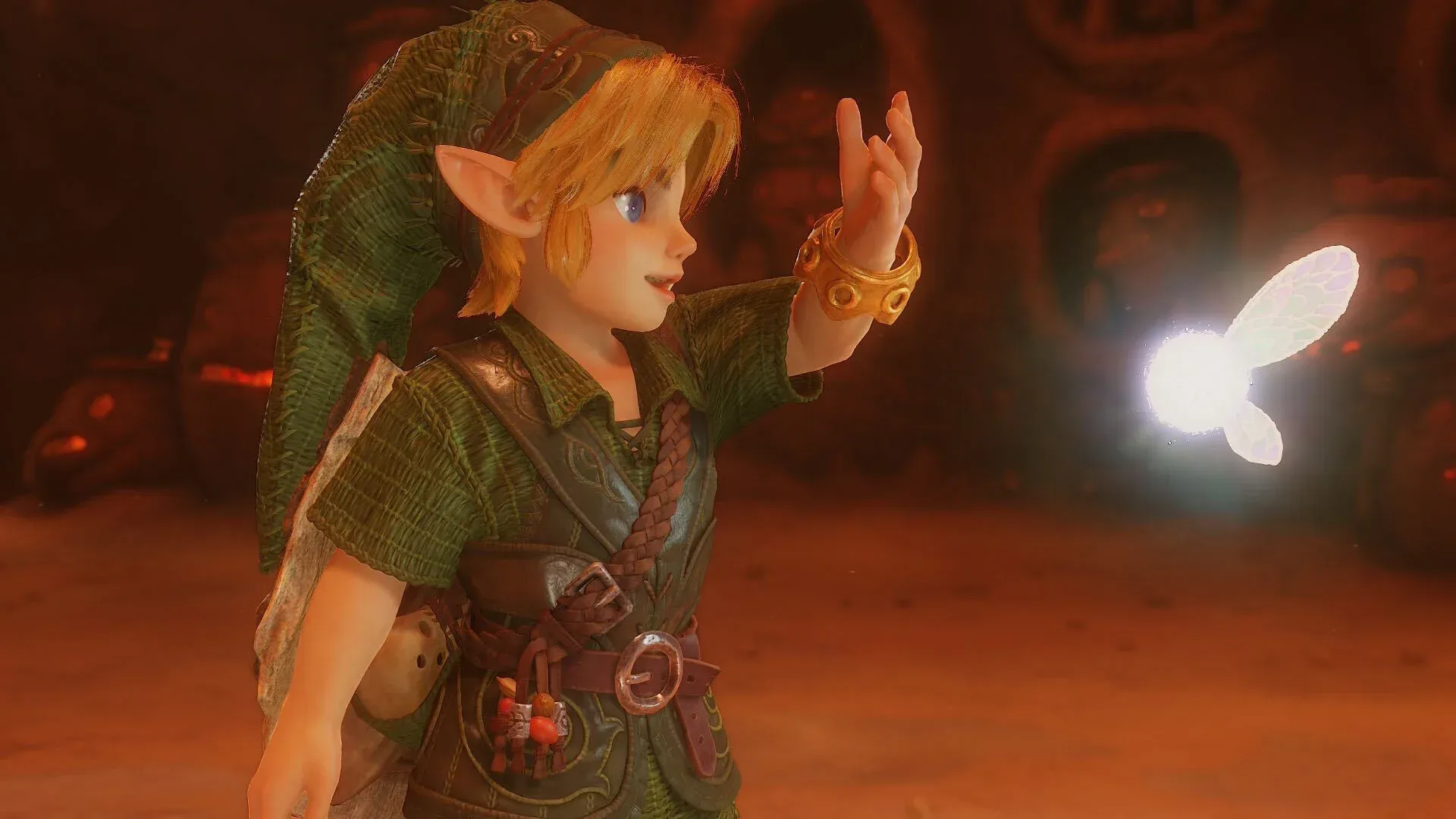
Other details have already prompted fan theories, including the Happy Mask Salesman’s gold bracelets and a Skull Kid line about his face missing something. Those are weaker clues. The bracelets resemble part of the character’s Majora’s Mask appearance, while the Skull Kid line is tied to the Skull Mask quest within Ocarina of Time itself. Neither one establishes a future project. Mask 103, if accurately reported, is the more concrete point because it refers to an unidentified data entry and associated dialogue.
There is also a commercial argument fans are making: an eventual Majora’s Mask amiibo would make intuitive sense alongside a remake. Yet even that remains an assumption. The existence of planned Link and Zelda amiibo does not establish that another figure, another mask, or another game is coming.
How to read a datamine without overreading it
A datamine is the examination of files included in a game or its updates to locate names, text strings, assets, settings or other technical references. It can be valuable because files sometimes reveal content before it is publicly accessible. It is not equivalent to a company announcement.
- What it can establish: A particular label, dialogue line or asset reference appears in the examined build, assuming the finding is accurately reported.
- What it usually cannot establish: That the material is finished, scheduled, purchasable, free, or destined for public release.
- Why context matters: Development files may retain placeholders, cut ideas, test material, support for future possibilities, or remnants of earlier plans.
That framework is especially useful here. “DodongoCavern_MQ” is meaningful because it is a specific naming convention paired with the base dungeon name. Mask 103 is meaningful because it appears to have a position in a system that also contains known masks, plus dialogue that differentiates it. But neither discovery answers the biggest questions fans actually have.
There is no official indication that Master Quest will be added, no confirmation that it will be paid DLC, and no announced Majora’s Mask remake. It would be premature to plan purchases or expect a particular 2027 or 2028 schedule from these findings.
What players can reasonably take from the reports
For people currently revisiting Hyrule, the practical takeaway is modest but appealing: Master Quest may remain a live possibility rather than a permanently abandoned omission. Players brushing up on the original route can also consult this Princess Ruto and Jabu-Jabu route guide for one of the adventure’s most memorable progression segments.
For Majora’s Mask fans, the reported mask dialogue is best viewed as a reason to watch future official Zelda news closely, not as a release announcement in disguise. The “otherworldly” language and monster-avoidance implication fit the theory neatly, but the step from a masked item reference to a full remake is still a large one.
Nintendo has said there is more to come from The Legend of Zelda in 2027, the series’ 40th anniversary year. That gives fans a real upcoming milestone to monitor, but it does not specify what will be shown or released. The most defensible conclusion for now is that the reported files make both ideas more interesting: Master Quest has a plausible technical breadcrumb, and Majora’s Mask has a potentially relevant mask-shaped mystery. Confirmation will require something much simpler than a datamine—an official reveal.