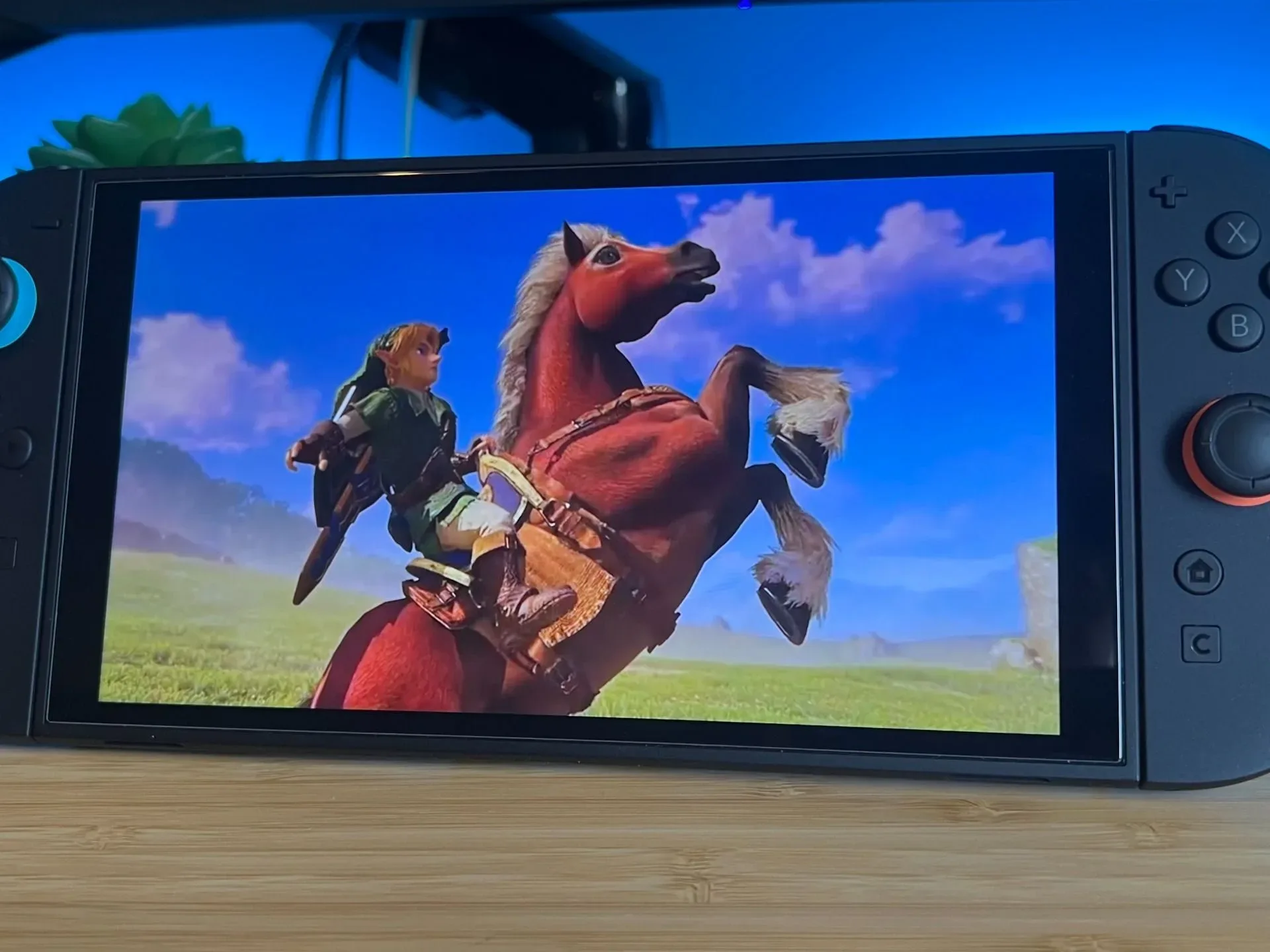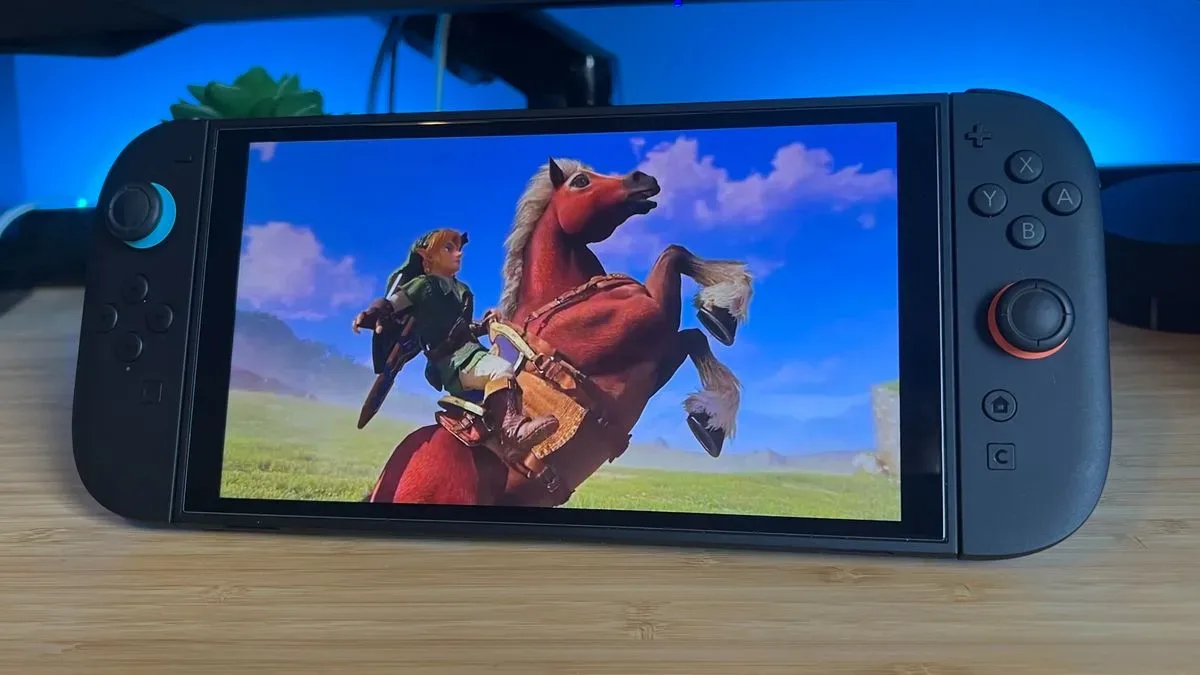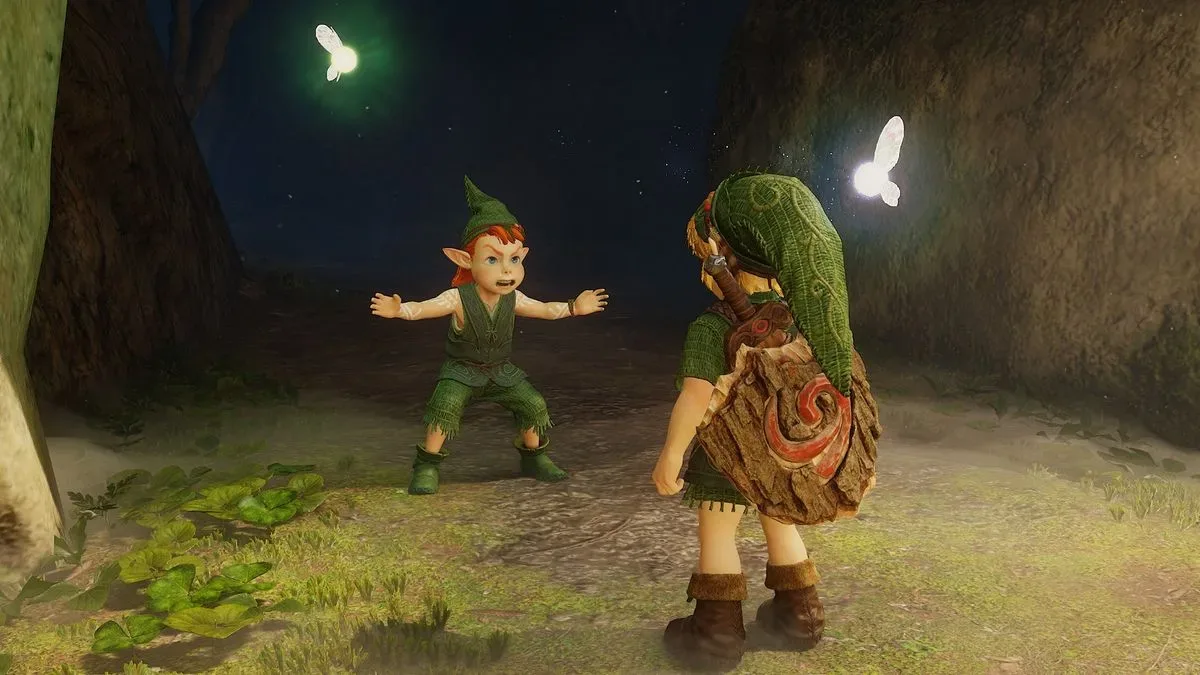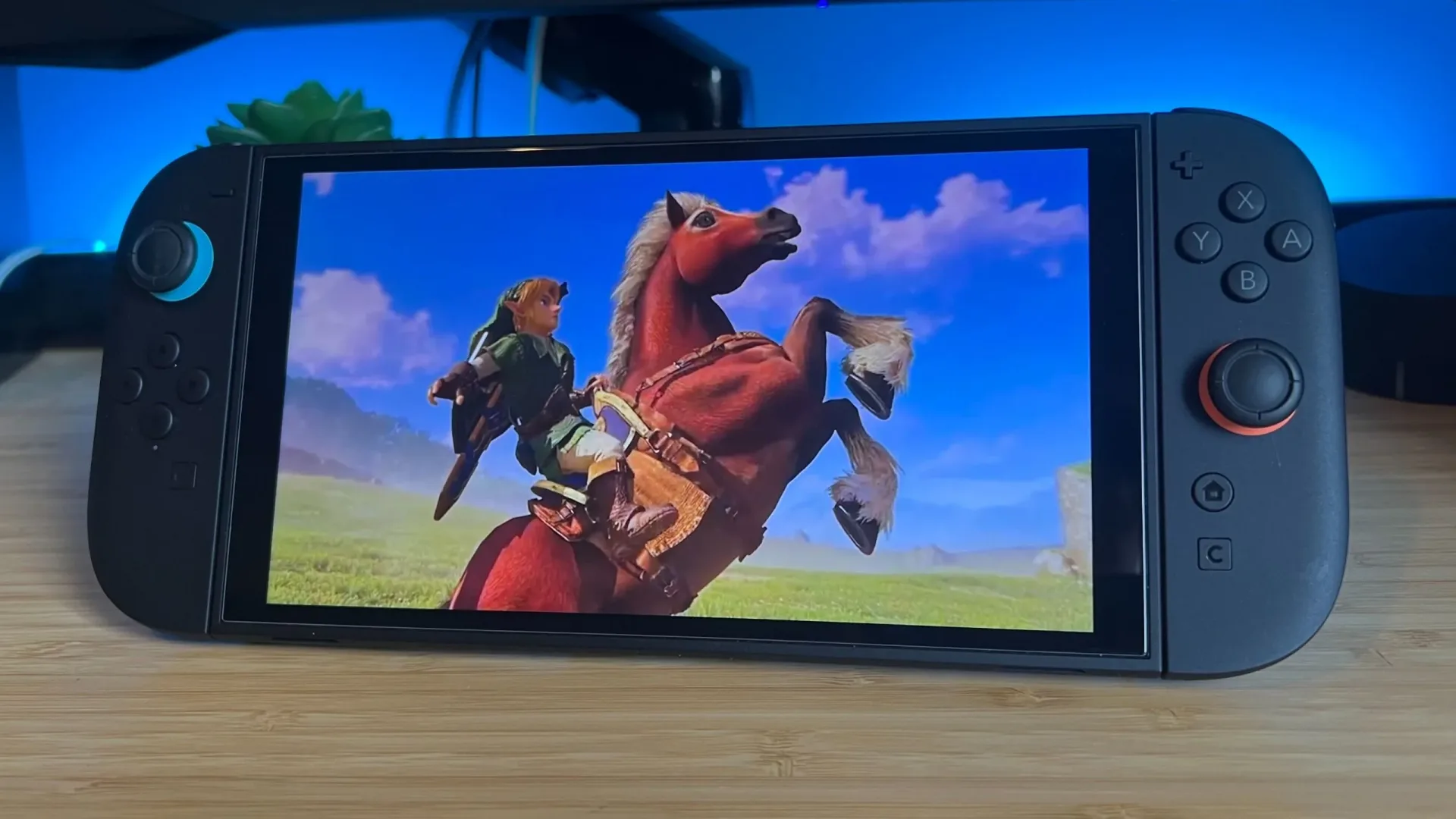
Nintendo Switch 2 shoppers have a short-notice price drop to consider ahead of Ocarina of Time Remake, which is due to arrive on November 5. Woot is listing the console at $469, a $30 reduction from its $499 price. The listing matters less because $30 suddenly turns a console into a bargain-bin impulse purchase—this is still serious hardware money—and more because new-condition Switch 2 discounts have not appeared often in the available information since the console’s September price increase.
For anyone trying to get set up before the Zelda release, the simple arithmetic is clear: the Woot offer sits $30 below the current $499 price, but remains $20 above the system’s reported $449 launch price. It is also described as $50 less than a difficult-to-find special-edition Switch 2. That makes it a practical option for buyers focused on getting a standard new console rather than waiting for a themed version whose availability is uncertain.
What the $469 listing actually represents
The key distinction is new condition. Retail discounts can look alike at a glance while covering substantially different products. A new unit is sold as new; a refurbished or renewed unit is one that has been returned, repaired, inspected, or otherwise prepared for resale. The latter can be a sensible way to lower the entry cost, but it is not equivalent to a new retail purchase when a buyer is weighing condition, included packaging, warranty terms, or personal comfort with a previously owned device.
Woot has previously offered lower Switch 2 prices on renewed hardware. The most recent referenced renewed promotion reached as low as $409 after an advertised markdown and an extra event-related reduction were combined. That is a materially lower number than $469, but it came from a different type of listing and depended on stacked savings. It should not be read as evidence that a new $409 Switch 2 is available now.
Likewise, a lower historical price does not automatically make a current new-unit offer poor. Deals are snapshots, particularly where a retailer’s stock of consoles can disappear quickly. Buyers comparing the numbers should compare like with like: new against new, and renewed against renewed. A $60 gap between $469 new hardware and a previous $409 renewed promotion is real, but so is the condition difference.
Why timing is driving interest
The discount lands just before Ocarina of Time Remake’s November 5 release. That proximity gives the hardware listing a very obvious audience: players who have delayed an upgrade and now want a Switch 2 in hand for a major Zelda launch. A console deal does not change the game’s own cost, however, so the full purchase decision needs both figures.
The digital version of Ocarina of Time Remake is listed at $59.99. Physical pre-orders had previously been available at a $10 reduction at Amazon and Walmart, but those retailers are now reported to be out of stock for the textured-foil physical cartridge. Best Buy is listed at the full $69.99 price for buyers who specifically want that physical case.
That leaves two different shopping paths. The digital route has a stated $59.99 price and avoids the issue of finding the physical edition. The physical route is for those who value the cartridge and textured-foil case enough to pursue stock, while recognizing that the cited remaining option is at full price. Neither choice is inherently better: it is a question of whether the packaging and physical format are worth the extra $10 cited here.
Related coverage includes Nintendo Switch 2 Drops to $469 Ahead of Ocarina of Time Remake Release.
There is also a useful broader signal in the launch-week rush around the game. A Zelda release can concentrate demand across consoles, themed hardware, game editions, controllers, and accessories at once. That does not guarantee shortages or future price changes, but it explains why a retailer’s ordinary-looking $30 console reduction may attract attention at this particular moment. The calendar, not just the discount size, is doing some of the work.
For more Zelda-related release-week context, see Google’s Zelda Easter Egg Pulls Search Back to 1998 Ahead of Ocarina of Time Remake.
A buyer’s checklist before treating it as a win
Availability is the major caveat. The offer is characterized as one likely to move fast, based on the way prior renewed Switch 2 listings have sold through. A listing can change or vanish, so the sensible approach is verification rather than assumption. Before completing an order, check the displayed price, whether the item is explicitly marked new, its stock status, and the retailer’s current shipping, returns, and warranty information.
- Confirm the condition: Make sure the listing says new if new hardware is the goal. Do not rely on a headline price alone.
- Confirm the final checkout total: The $469 figure is the advertised console price; taxes and any applicable delivery charges can affect the amount paid.
- Separate console and game budgets: A $30 hardware discount does not mean the game is discounted. The digital game is listed at $59.99, while the specified physical edition is listed at $69.99 where available.
- Decide whether a themed model matters: The standard unit is presented as $50 below a hard-to-find special edition. Buyers who primarily want to play soon may not benefit from an open-ended search for that model.
- Read the return terms before opening: This is especially useful for any high-value electronics purchase, and essential when comparing new listings with renewed alternatives.
How to read the price history without overreacting
The Switch 2’s $469 listing is being positioned as one of the first discounts after its price increased in September. That is notable, but it should not be confused with a promise that this is the lowest price that will appear. The available history contains both a lower launch price of $449 and a much lower renewed offer of $409. It also notes that the $409 result was an unusually favorable combination of discounts rather than an everyday baseline.
In other words, “best price ever” and “reasonable purchase right now” are different tests. A buyer who needs a new Switch 2 for the November 5 game release may reasonably value the immediate $30 reduction. A buyer with no deadline may choose to wait and see whether Black Friday produces another deal. Waiting carries its own trade-off: there is no supplied evidence that a better new-unit price will definitely arrive, and the current offer may not remain available.
That uncertainty should shape the decision more than hype. Buy now if the new-condition requirement, the $469 total, and the imminent Zelda release match the budget. Wait if a lower target price matters more than playing at launch, or if a renewed unit is acceptable and a buyer is willing to watch for another promotion. Shoppers who chiefly want the special-edition hardware are making a third, separate decision about design and scarcity rather than the standard model’s value.
Accessories are a separate purchase decision
A console price can create the illusion that an entire setup is covered. It is worth pausing before adding controllers, headsets, or other extras automatically. The deal information points prospective owners toward Switch 2 accessories, controllers, and headsets, but it does not establish that any of those items are required for an Ocarina of Time Remake purchase or that they are discounted alongside the console.
For a budget-conscious buyer, the cleaner plan is to prioritize the console and chosen game format first. Add a controller only if local multiplayer or a preferred control style makes it necessary; add a headset only if it fills a real use case. This keeps the $30 console saving from disappearing into unplanned add-ons at checkout.
The bottom line on this particular offer
At $469, the Woot listing is a meaningful but measured Switch 2 deal: $30 off the stated $499 price, available on a new console, and timed closely to the November 5 arrival of Ocarina of Time Remake. It is not the console’s reported $449 launch price, and it does not beat the previously cited $409 renewed promotion. Those comparisons are useful context, not reasons to pretend the listings are identical.
The strongest case for the deal is convenience with a modest saving: a buyer who wants a new standard Switch 2 now can reduce the hardware cost before the Zelda release. The strongest case for waiting is equally straightforward: a buyer who is comfortable delaying an upgrade may prefer to gamble on a later seasonal promotion or a renewed listing. With physical textured-foil game pre-orders already tighter at some retailers, anyone set on a particular game format should check that item independently rather than assuming the console offer solves both purchases.
Shop the products
Check current price, model and availability at the retailer.