The Question: Enforcement Versus Trust
“Backlash” is a useful word only if it is treated as a question to investigate rather than a verdict already reached. In this context, it can describe public criticism, the movement of a project to another host, the cancellation or redesign of a tournament, distrust of published rules, or changes in how a community decides what work is safe to release. It does not, by itself, establish that Nintendo acted unlawfully, that a takedown was improper, or that criticism accurately identifies Nintendo’s motives. Nor does the existence of a legal right settle whether exercising that right has predictable social effects.
The central distinction is therefore between enforcement authority and community trust. Copyright owners generally possess important rights over copying, distribution, adaptations and commercial exploitation of their works. Trademark law can provide additional protection against uses that create confusion about source, sponsorship or affiliation. Contractual terms and platform rules may govern participation in services or events. None of those propositions requires a rights holder to tolerate every fan project, ROM archive or unauthorized commercial use. But a lawful entitlement to object does not answer every question raised by the way an objection is communicated, the forum in which it is made, or the uncertainty left for other users.
Nintendo’s own public materials provide the starting point for that inquiry. Its intellectual-property policy describes removal requests under the Digital Millennium Copyright Act in appropriate circumstances and says that Nintendo may take action at its discretion. Its reporting materials identify several categories for complaints, including ROM sites, counterfeit products, trademark misuse and copyright infringement. Those categories describe the company’s stated enforcement framework. They do not amount to a complete record of every notice sent, every project left online, or every internal standard used to distinguish one case from another.
That qualification matters because a published policy and an individual enforcement event perform different functions. A policy tells the public what kinds of conduct a company regards as reportable and what procedural tools it may use. A notice directed to a host, a letter sent to a platform, a settlement agreement or a court judgment concerns a particular record. The latter may reveal more about a dispute, but it should not automatically be generalized into a universal rule. Conversely, the broad language of a policy should not be described as proof that every project falling within its categories was actually targeted.
The trust question arises in the space between those documents and lived decisions. A creator may spend years making a fan game, a tournament organizer may build an event around a particular title, and a technical project may publish software that its developers describe as research, homebrew support or customized firmware. If the project later receives a removal request, its developers may move hosts, stop updates or discontinue distribution. Those reactions are observable consequences, but they do not by themselves reveal whether Nintendo demanded the decision, whether a host acted independently, or whether the project’s operators chose a conservative response to legal uncertainty.
The same care is necessary when discussing community criticism. A project’s disappearance can be experienced as a loss even when the owner had a defensible legal basis for objecting. A tournament’s cancellation can damage participants’ plans even when licensing questions were unresolved. A developer’s decision to stop publishing can reflect risk assessment rather than an adjudicated finding of infringement. Reporting should preserve all of those distinctions. Disappointment is not evidence that enforcement was unlawful, and a notice is not evidence that every factual or legal assertion in it has been proved.
Community behavior can nevertheless change without anyone having established wrongdoing. Organizers may seek written approval before announcing an event. Developers may avoid recognizable characters, names or assets. Hosts may remove material after receiving a rights-holder complaint even where the merits would be debatable, because a platform’s exposure and resources differ from those of the creator. Users may migrate to private channels or successor projects. Each response can be reported as a behavioral effect, but none should be inflated into proof of intimidation, hostility or bad faith.
Nintendo’s terms of use and community-facing rules add another layer. They address intellectual property, user conduct and the conditions under which people may participate in Nintendo-related spaces or activities. The tournament guidelines, in particular, distinguish certain small, non-profit individual events from activities outside that permission. Under the cited guidelines, for-profit tournaments are not permitted for individuals, and Nintendo states that it does not currently grant individuals permission to organize commercial tournaments. Separate treatment for legal entities or organizations should not be described as a general approval route for individual commercial events.
That is where predictability becomes a legitimate reporting subject. A rule can reserve discretion for sound reasons, including changing technology, differing commercial risks or facts that cannot be captured in a short policy. Yet discretion can also make compliance difficult for people who need to decide whether to invest money, labor or reputation in an activity. The relevant question is not whether Nintendo must approve fan work. It is whether a reasonable reader can understand the boundaries before acting, and whether later outcomes appear consistent with the boundaries that were published.
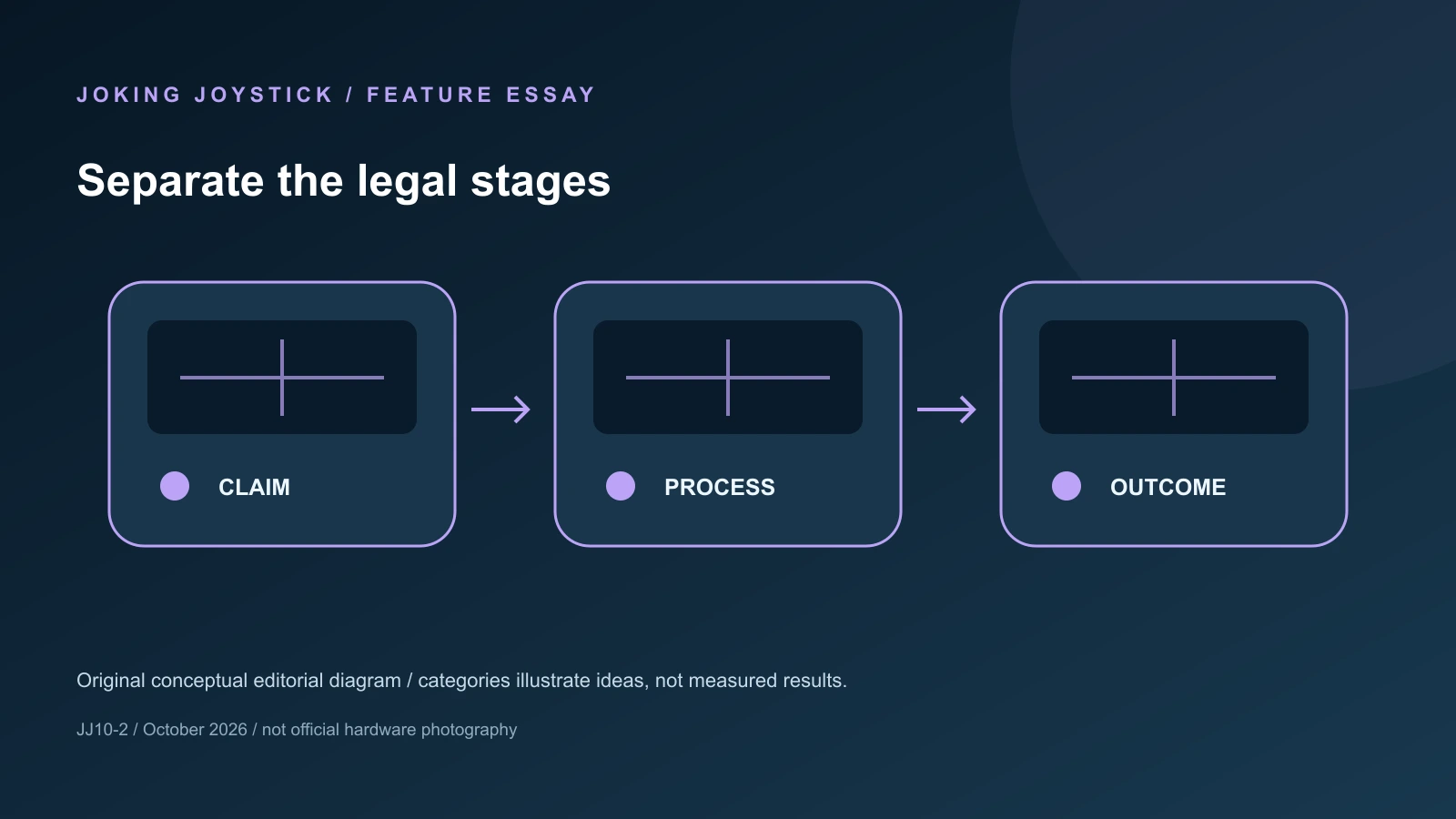
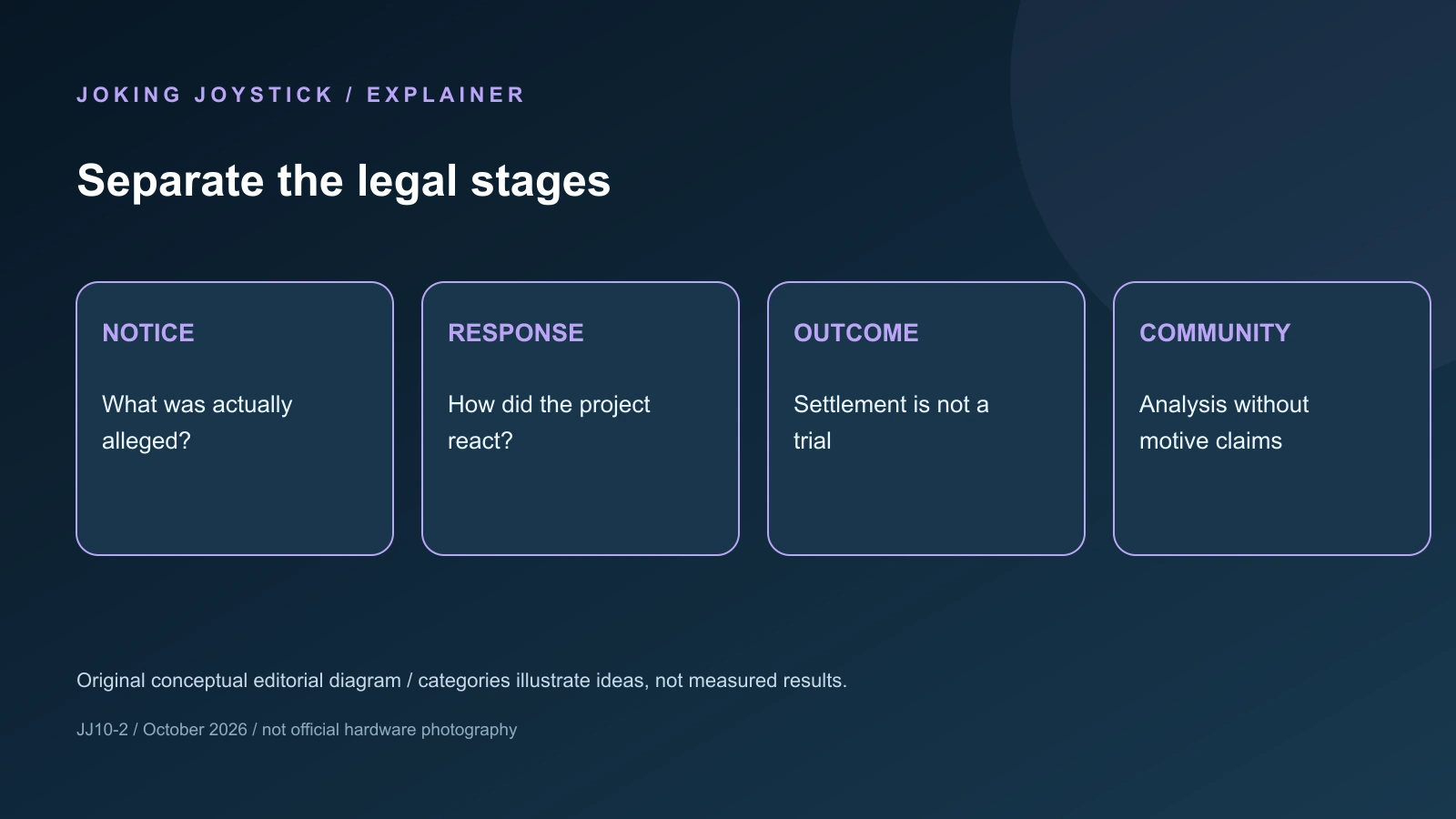
The evidence examined in this feature does not support a single answer. It includes host removals, voluntary shutdowns, settlements, consent judgments, default proceedings and platform communications, as well as disputed tournament accounts. Those mechanisms are legally and factually different, even when communities describe them with the same shorthand. The task is to separate them, identify what each record proves, and then ask what their combined pattern may mean for trust. That approach neither dismisses Nintendo’s rights nor converts community frustration into a legal finding.
What Nintendo’s Stated Policy Actually Says
Nintendo’s public enforcement architecture begins with categories rather than a comprehensive compliance code. Its intellectual-property materials identify conduct such as copyright infringement, piracy, ROM distribution, counterfeit products and trademark misuse as matters that may be reported. The company’s policy describes DMCA removal in appropriate circumstances and preserves discretion over whether to act. This is a statement of available process and corporate policy, not a declaration that every reported item will be removed or that every report will be evaluated under identical facts.
The reporting categories are intentionally broad. A ROM site might host individual unauthorized copies, a large catalog, links to files or material whose status is disputed. A counterfeit product may reproduce branding, hardware appearance or packaging in ways that raise different legal questions from a fan-made digital work. Trademark misuse can concern names and logos even where the underlying copyright analysis would be different. Grouping these matters on a reporting page makes them accessible to rights holders and users, but it does not provide a detailed test for deciding where lawful reference, commentary or independent creation ends.
Nor does a reporting page itself establish the result of a complaint. A DMCA notice is an assertion presented through a platform process. A host may remove material under statutory procedures, contractual terms or its own assessment of legal and operational risk. The uploader may submit a counter-notification, decline to do so or move the material elsewhere. A court may later be asked to decide the merits, but many disputes never reach that stage. A removal therefore proves that a platform acted, not that a judge determined every allegation in the notice.
The 2023 Nintendo of America Community Tournament Guidelines provide a more detailed, but still conditional, framework. Published on October 24, 2023 and effective November 15, they allow certain small, non-profit individual events to proceed if they follow specified conditions. The conditions address matters including event size, monetization, branding, sponsorship and the game version used. The guidelines do not permit for-profit tournaments organized by individuals, and Nintendo states that it does not currently grant individuals permission to organize commercial tournaments. References to separate applications should therefore be limited to legal entities or organizations and should not be presented as a general approval path for individual commercial events.
Those distinctions are significant because they show an attempt to classify community events by their practical relationship to Nintendo. An informal gathering with limited attendance and no profit is not treated in the same textual category as a large event supported by sponsors or designed around revenue. Branding and sponsorship provisions address the risk that an event could appear officially endorsed or use Nintendo’s identity as a commercial asset. Requirements concerning game versions can also affect competitive integrity and the relationship between an event and the currently supported product.
At the same time, the guidelines are not a blanket license. They preserve Nintendo’s ability to act and contain conditions that organizers must satisfy. A person reading them still has to determine whether an event qualifies, whether its financing changes its status, whether its branding could imply affiliation, and whether circumstances require separate contact with Nintendo. The document may therefore function as a conditional permission framework for some organizers while retaining significant case-by-case control for situations that do not fit neatly within its categories.
That structure creates a practical compliance question without proving that the rules are inadequate. Detailed rules can become outdated or invite efforts to design around their wording. Broad discretion can allow a rights holder to respond to facts that a checklist misses. But the more a community depends on approval that is not guaranteed by the text, the more important communication becomes. Organizers may want to know whether a proposed event is acceptable before they pay venues, announce brackets or solicit sponsorship. A published framework that does not answer those questions may leave risk distributed unevenly between Nintendo and organizers.
Regional scope must remain clear. The cited tournament guidelines are Nintendo of America rules. They were issued for the North American context and should not be treated as a universal Nintendo policy applying automatically in Japan, Europe or every other market. Differences in corporate entities, local law, platform arrangements and community practice can matter. The existence of an American guideline does not establish what Nintendo has promised elsewhere, nor does an event outside its stated scope become evidence that the guideline was followed or breached.
Nintendo’s terms of use add general provisions concerning intellectual property, user content and conduct on its services. They are relevant to participation in Nintendo-controlled spaces, but they should not be confused with a complete rulebook for every independent fan activity. A tournament hosted by a separate organizer, a project repository operated by another platform and a commercial ROM site each involve different relationships. The same intellectual-property owner may communicate with each through different mechanisms, and a platform’s own terms may influence the result.
The published architecture therefore supports two careful observations. First, Nintendo has publicly identified categories of activity it regards as actionable and has created a limited framework for some community tournaments. Second, those materials leave room for case-by-case judgment. They do not establish that Nintendo must enforce every infringement, that a project outside the stated permission is necessarily unlawful, or that a project left untouched has been approved. Whether the framework is predictable enough for communities is an empirical and governance question, to be tested against actual notices and outcomes rather than inferred from policy language alone.
Fan Games: AM2R and Pokémon Uranium
AM2R and Pokémon Uranium are often placed in the same story: prominent fan games became unavailable after Nintendo-related takedown activity, and communities interpreted the episodes as evidence of an uncompromising approach to fan creation. The comparison is useful only if the records are kept separate. The two projects have different statements and different evidence about contact with developers and hosting services. Neither cited episode produced a court ruling deciding whether the project qualified for fair use or resolving every possible copyright and trademark theory.
For AM2R, the reproduced developer statement says that Nintendo of America filed a DMCA request and that releases and updates would end. That account supports a specific procedural description: a developer reported a Nintendo of America request, and the project’s public distribution and development were discontinued. It does not establish that a court reviewed the game, that the developer admitted liability, or that every host received an identical notice. The statement also does not transform the project’s disappearance into proof of Nintendo’s motive.
The practical sequence still matters. A host-level request can end public distribution without a judicial order. A project may decide not to contest the removal because litigation is expensive, because the creator does not want to disclose personal information, or because continued publication seems unlikely to be sustainable. Those possibilities are not interchangeable, and the available record does not establish which considerations controlled the AM2R decision beyond the developer’s stated account. “Taken down” is therefore an incomplete description unless it identifies the host action and the developer’s subsequent choice to stop releases and updates.
Pokémon Uranium presents a different record. The cited project statement reports that hosting sites received takedown notices and that the developers would no longer provide official updates or support. That statement does not establish that Nintendo directly contacted the developers or that Nintendo itself sent those notices, and it does not establish a court judgment. The supportable conclusion is therefore that the project statement attributed hosting-site removals to the episode and announced the developers’ voluntary end to official updates and support; describing the episode as a direct cease-and-desist to the developers would go beyond the evidence.
Nor should the two projects be treated as proof of a complete count of affected fan games. They show that at least these projects faced removal-related disruption according to their statements, but the available material does not supply a comprehensive dataset. Claims that Nintendo shut down hundreds of similar projects would require records identifying the projects, the notices, the relevant rights claims and the final outcome. Community recollection can indicate significance, but it cannot substitute for that count.
The legal theories are plausible subjects for explanation, not conclusions to be assigned after the fact. A fan game may reproduce protected characters, artwork, music, dialogue or other expressive elements. It may also adapt a pre-existing fictional world into a new game. Those features could support copyright arguments concerning reproduction or adaptation. Names, logos and presentation could raise trademark or consumer-confusion questions if users might think the project was official, licensed or sponsored. The fact that a project is noncommercial might be relevant to a defense, but it does not automatically resolve those issues.
Fair use is similarly not a label that can be applied solely because a project was made by fans or distributed for free. Analysis can depend on purpose, the nature of the work, the amount and substantiality of material used, and the effect on potential markets, among other considerations. The cited AM2R and Pokémon Uranium records contain no judicial fair-use determination. It would therefore be inaccurate to say that Nintendo defeated a fair-use claim, just as it would be inaccurate to say that the projects were judicially confirmed as protected fair use.
Community responses add a separate layer of evidence. Fans may have criticized the takedowns, moved discussion or development to other locations, or regarded the loss of updates as an injury to a shared cultural project. Such reactions demonstrate importance to participants and may help explain later distrust. They do not prove that Nintendo acted with hostility or bad faith. A change in an awards listing or public recognition may show that a project’s status affected its eligibility or presentation, but it does not determine the merits of the underlying rights dispute.
What these records support is narrower but still consequential. Fan projects can be disrupted through platform procedures before a court tests the legal theory. Developers may choose closure rather than contest a notice. Communities may experience that choice as a warning about the risks of investing in unofficial work. Those are legitimate subjects for reporting on trust and predictability. They are not proof that Nintendo was required to tolerate either project, that the notices were legally wrong, or that criticism justifies personal targeting of Nintendo staff, developers or platform operators.
ROM-Hosting Litigation: LoveROMs and LoveRETRO
The LoveROMs and LoveRETRO litigation provides a different procedural record from the fan-game episodes. It was not a host removal followed by a developer’s voluntary decision to stop updates. It became a court-entered final resolution after the defendants agreed to settle Nintendo’s claims. The order records allegations involving reproduction, distribution, public performance, display and associated branding of Nintendo games. The result is legally significant, but it must be described as a settlement converted into a stipulated or consent judgment, not as a jury verdict after a contested trial.
The distinction between allegation and resolution is especially important here. Nintendo’s filings set out its account of the operators’ activities and the legal theories it believed applied. The defendants then agreed to a final resolution rather than requiring a court to hear contested evidence on every issue. The judgment made the agreed relief enforceable. That does not mean a jury weighed competing testimony, calculated damages independently or issued findings on the broad question of emulation. It means the parties ended the dispute through an agreement recorded by the court.
The alleged conduct also differs analytically from an unaffiliated tribute project. A fan game may create a new program that draws on recognizable characters, settings or concepts. A ROM-hosting operation, as described in Nintendo’s claims, concerns copies of existing commercial games made available for users to obtain or access. The asserted injury is correspondingly framed around the reproduction and distribution of the games themselves, together with the use of Nintendo-related names and branding. That is not a finding that every ROM-related activity is identical, but it explains why Nintendo characterized this case differently from a fan creation.
The order’s recorded relief included a $12.23 million amount, an injunction and provisions concerning the surrender or destruction of relevant material. The monetary figure should be described as a stipulated or consent judgment following settlement. It should not be presented as an amount awarded by a jury after calculating proven lost sales, nor as evidence that the full sum was collected. A judgment can establish an enforceable obligation while the public record does not establish what portion, if any, was ultimately paid.
The injunction matters independently of the money. Injunctive relief can restrict continued operation, distribution and use of material identified in the order. Surrender or destruction provisions can affect copies, devices or records within the judgment’s scope. Those remedies show the practical power of a negotiated court resolution: a defendant may lose the ability to continue the challenged operation even though no trial has produced a published merits opinion on every legal question. The order should therefore be read for its operative terms, not expanded into a general rule about all forms of copying.
Nothing in the consent judgment establishes that all emulation is unlawful. An emulator is software that can have uses distinct from the distribution of unauthorized game copies. The order addressed the defendants and the conduct covered by the claims and agreed relief. It did not decide the status of every emulator developer, preservation institution, personal backup arrangement or research project. Nor does it establish that possession of a console or an independently developed program is legally equivalent to operating a commercial ROM library.
The case likewise does not settle every question about personal copies. Whether a particular copying practice is permitted can depend on facts, applicable law and the relationship between the copy, the original media and the user’s conduct. The LoveROMs order is not a universal opinion on those questions. Reporting should resist both extremes: treating the judgment as proof that every ROM-related practice is forbidden, or treating the absence of a trial opinion as though Nintendo’s claims had no legal force. The parties chose a resolution that produced binding relief.
For communities, the case may nevertheless affect perceived boundaries. A large library of commercial game copies, a fan-made adaptation and an emulator can be discussed together online, even though their legal theories differ. When one dispute ends in a substantial consent judgment, users may generalize its warning to neighboring activities. That reaction is understandable as a social effect, but it is not a doctrinal conclusion. The responsibility of reporting is to identify the conduct actually alleged and the mechanism that ended the case.
LoveROMs and LoveRETRO therefore belong in a comparative enforcement record, but not as a simple example of Nintendo “winning at trial.” The documented outcome was a settlement, a stipulated court judgment and permanent restrictions. It shows that Nintendo can obtain powerful relief against alleged distribution of a commercial game library without asking a jury to decide every issue. It also shows the limits of that record: it does not resolve the legality of all emulation, preservation or personal copying, and it cannot alone explain how Nintendo evaluates unrelated fan projects or community events.
RomUniverse: Judgment, Remedy and Limits
Nintendo v. Storman, concerning the RomUniverse service, is best understood as a case about alleged online distribution of unauthorized copies that proceeded through contested summary-judgment proceedings and later injunctive relief, not as a universal ruling on emulation. Nintendo’s complaint alleged direct, contributory and vicarious copyright infringement, along with trademark violations. Those allegations described Nintendo’s legal theory at the beginning of the case. They should not be narrated as though each factual assertion had been tested through a jury trial, but neither should the case be grouped with a defendant’s failure to appear.
The distinction matters because a complaint is a party’s pleading. It identifies what the plaintiff says happened, which legal rules it believes apply and what relief it seeks. The pleading in this case concerned a service that allegedly hosted and distributed unauthorized copies of Nintendo games. That alleged activity is materially different from developing an emulator, studying software preservation or making a claim about a private backup. The presence of a Nintendo game in a dispute does not make every technically or legally adjacent activity the same.
The later record concerns summary judgment, reconsideration and an injunction. Storman participated in the litigation and filed opposition, so the case should not be described as one in which the defendant failed to meaningfully contest the claims. Summary judgment resolves claims on the evidentiary record presented to the court without a jury trial; it is different from a default judgment and different from a settlement. That procedural route affects what can fairly be inferred from the result, even though the resulting judgment and injunction have legal force.
That distinction does not mean the RomUniverse judgment was meaningless or that Nintendo obtained no remedy. It means the judgment should be described according to the court’s rulings and operative relief, rather than as proof that every proposition in the complaint was established after a full jury trial. The order is significant for the remedies it provides and for the court’s treatment of the claims on summary judgment. It does not automatically answer broader legal questions that were not necessary to resolve the dispute or that were not developed through a trial record.
Copyright and trademark theories also need to remain distinct. Copyright claims concern protected expression and acts such as reproduction, distribution or related exploitation. Trademark allegations concern the use of names, logos or other indicators in ways that may raise source, sponsorship or affiliation issues. Nintendo’s complaint included both types of claim, but their inclusion does not merge them into one general offense called piracy. A service could face different arguments about copied game files and about branding used to present or promote that service.
The remedy is similarly more specific than the shorthand often used to describe the case. Statutory damages are not the same thing as a demonstrated calculation of Nintendo’s actual lost sales. They are a form of relief authorized by copyright law within statutory limits, subject to the procedural and factual circumstances of the case. A court’s award or assessment of statutory damages should not be converted into a finding that a particular number of users would otherwise have purchased particular games. The record does not establish a universal sales formula for unauthorized copying.
An injunction serves a different function from damages. Money addresses a past violation or alleged violation; an injunction restricts future conduct. In the RomUniverse matter, the injunctive relief is important because it reflects the court’s authority to prevent continuation of the conduct covered by the judgment. It does not, however, transform every neighboring activity into an enjoined act. The scope of an injunction must be read from its operative language and the parties and conduct before the court.
That limitation is essential when discussing emulation. An emulator is software, and its legal status cannot be determined merely by observing that it may be used in connection with unauthorized copies. A service that allegedly offers a library of Nintendo game files presents a different factual setting from a project that develops software without distributing those files. The same distinction applies to archival institutions, researchers and users who assert a right to make or retain a personal copy. Those circumstances may raise difficult questions, but the RomUniverse judgment did not resolve all of them.
Nor does the case establish that all preservation is lawful, or that every personal-copying arrangement is protected. It leaves those questions dependent on their own facts, legal provisions and applicable defenses. A responsible account should resist the temptation to use one judgment as a shortcut around those distinctions. The case supplies evidence about Nintendo’s ability to obtain relief against an alleged hosting and distribution operation. It does not supply a complete map for every form of software development or archival practice.
For Nintendo, the practical achievement in RomUniverse was remedial: the company pursued claims against an alleged distribution service and obtained court-backed restrictions rather than merely a host-level removal. For observers, the case demonstrates how copyright and trademark allegations can be combined in litigation and how statutory damages and injunctions can operate after contested summary-judgment proceedings and reconsideration. It does not demonstrate a specific amount of lost revenue, a universal rule against emulation or a judicial conclusion that all personal copying is unlawful.
Circumvention Hardware: Why the Theory Changes
Anti-circumvention cases involve a different legal theory from ordinary claims that someone copied or distributed game files. Copyright law generally asks questions about protected works and acts involving those works. Anti-circumvention provisions address conduct involving technological measures that control access to copyrighted material, including the trafficking or provision of devices alleged to bypass those measures. The theories can overlap, but they are not interchangeable.
Nintendo’s civil complaint against Gary Bowser alleged conduct involving SX OS and circumvention devices associated with Team Xecuter. As a complaint, that document presented Nintendo’s allegations and requested relief. It did not itself constitute a judicial finding that every allegation was true. The complaint’s importance lies in showing how Nintendo framed the conduct: not merely as a user possessing a console or making a personal technical modification, but as commercial activity involving tools alleged to defeat platform protections and facilitate unauthorized uses.
The criminal matter proceeded on a separate track. The Department of Justice described Bowser’s guilty pleas, his role as a salesperson and public voice connected with Team Xecuter, the resulting sentence and restitution. A guilty plea is procedurally different from a civil complaint. It involves a defendant’s admission in a criminal case and can lead to criminal punishment. The government’s account of sentencing is therefore evidence about that criminal resolution, not a substitute for the pleadings, orders or settlement terms in Nintendo’s civil case.
Keeping the two tracks separate prevents a common error. The criminal conviction or plea should not be described as though it adjudicated every claim in Nintendo’s civil complaint. Conversely, Nintendo’s civil allegations should not be presented as though they were the criminal charges to which Bowser pleaded guilty. The matters concerned related conduct and people, but their legal forums, burdens and remedies were different. Civil damages, restitution, imprisonment and injunctions arise through distinct procedures even when they involve the same commercial ecosystem.
The distinction between device trafficking and file distribution has practical significance. A service that supplies unauthorized copies of games may be accused of reproducing or distributing copyrighted works. A business that sells or promotes a device designed to circumvent access controls may face anti-circumvention allegations even where the complaint’s focus is the device and its promotion rather than a catalog of hosted game files. The conduct can be connected, but the plaintiff or government must identify the theory that makes the conduct legally relevant.
That theory should not be expanded into a claim that console ownership is unlawful. Owning a Nintendo console, modifying hardware for a permitted purpose or studying a system does not, by itself, establish the commercial trafficking conduct described in the Bowser materials. Nor do the sources establish that all custom firmware, homebrew development or technical research is piracy. The legal question in an anti-circumvention case depends on what a device does, how it is developed or distributed, how it is marketed and what statutory provisions are alleged to apply.
The commercial character of the conduct also matters to the comparison. The Bowser materials concern allegations and criminal findings connected with a group that sold or promoted circumvention products. That setting is not morally or legally identical to a noncommercial developer writing code for research, accessibility, homebrew or preservation. Similar technical concepts can appear in very different factual arrangements. The existence of a risk that software may be misused does not, without more, establish that every developer shares the liability of a commercial distributor.
At the same time, a disclaimer does not settle the legal issue. A project may state that it does not support piracy, but that statement is evidence of stated purpose rather than an automatic defense. Courts and enforcement agencies may examine design, distribution, promotion and surrounding conduct. Open-source licensing likewise governs permissions to use and modify the code under that license; it does not immunize every use from copyright or anti-circumvention claims. These points are general legal distinctions, not conclusions about every firmware project.
The criminal resolution demonstrates why anti-circumvention enforcement can produce consequences beyond a conventional takedown. A platform may remove a listing, while a civil plaintiff may seek damages or an injunction and prosecutors may pursue criminal charges. Those routes can operate separately. A person or company affected by one route should not be assumed to have been adjudicated through all of them. Reporting should identify whether a fact comes from a complaint, a plea, a sentencing account, a settlement or a court order.
It is also important not to fill gaps in the public record with technical speculation. The available materials support discussion of circumvention devices, SX OS and the alleged commercial role of Team Xecuter. They do not justify reproducing keys, bypass procedures, stealth functions or operational guidance. Such details would not improve the legal analysis and could turn an explanatory feature into an instruction manual. The relevant point is the category of conduct and the procedural path, not the mechanics needed to recreate it.
For community trust, anti-circumvention theories can feel broader than ordinary copyright claims because they address tools rather than only copies. That perception may cause developers of adjacent software to worry that a technical project will be characterized by its possible uses rather than its stated purpose. The record supports examining that concern as a question about uncertainty. It does not prove that Nintendo treats all technical projects as piracy, or that every developer facing concern has been legally targeted.
The Bowser matter thus marks a boundary in the enforcement map. Nintendo’s civil complaint alleged trafficking and related conduct; the criminal case ended in guilty pleas, sentencing and restitution. Those outcomes show that commercial circumvention-device activity can generate serious civil and criminal exposure. They do not erase the distinctions between a seller of such devices, a game-file distributor, an emulator developer and a firmware researcher. Any account that collapses those categories loses the very legal difference the case makes visible.
The Williams Judgment and the Meaning of Default
The September 23, 2026 order in Nintendo v. Williams adds another judgment to the record, but its meaning depends on the word “default.” The order awarded $4.5 million in statutory copyright damages and imposed a permanent injunction concerning pirate shops, unauthorized Nintendo game copies and circumvention software. That relief is operative and legally significant. It should nevertheless be distinguished from findings reached after a defendant appears, contests the evidence and litigates the merits through trial.
The case began with Nintendo’s allegations about the defendant’s role in promoting or facilitating the challenged operations. As with any complaint, those allegations represented Nintendo’s account and legal theory at the pleading stage. In a default proceeding, well-pleaded factual allegations may be treated as admitted for purposes of establishing liability when the defendant fails to defend the action. The court must still determine that it has authority to enter judgment, that the claims are legally sufficient and that the requested damages and injunctive relief are appropriate. That procedural acceptance is not the same as a trial record in which every factual assertion has been tested by opposing evidence.
“Default” should therefore not be used as a synonym for “no legal effect.” A final judgment can bind the parties, authorize enforcement and prohibit conduct described in the injunction. The defendant’s failure to participate does not make the order advisory. It does mean that readers should avoid presenting the case as though a judge or jury resolved all disputed factual questions after a full adversarial hearing. The order’s strongest evidence is the relief it actually grants and the categories of conduct it covers.
The $4.5 million award was statutory copyright damages. That label carries a specific procedural and remedial meaning. It is not a report of measured sales losses, a statement that Nintendo proved a particular number of downloads caused a particular amount of lost revenue, or a market-wide valuation of unauthorized copying. Statutory damages allow a court to award an amount within the governing framework when the law permits that form of relief. The figure should be reported as the court-ordered amount, not as a demonstrated calculation of Nintendo’s commercial injury.
The permanent injunction is equally important. It concerns the alleged pirate shops, unauthorized copies and circumvention software identified in the judgment. An injunction can prevent future operation, distribution or promotion within its terms. It may also reach associated online activity when the order expressly does so. But the scope must be read rather than inferred from headlines. A judgment against one defendant and the conduct described in that case does not automatically prohibit every emulator, firmware project, archive or software repository that a reader might consider technically related.
The combination of unauthorized game copies and circumvention software shows why the case involves more than one legal theory. Copyright claims address the games and their alleged reproduction or distribution. Anti-circumvention claims concern technology alleged to bypass access controls or facilitate access. Those theories may support overlapping remedies, but they remain analytically distinct. The order does not justify describing all software capable of interacting with a console as circumvention software, nor does it establish that all custom firmware falls within the injunction.
The judgment also illustrates the difference between a court order and a platform action. A platform notice can remove a repository or store listing under a platform’s procedures. A court judgment follows litigation and can carry compulsory, enforceable relief. That does not mean a court has considered every matter that a platform removes, or that a platform notice is equivalent to a judgment. The Williams order occupies the stronger procedural position because it is a final judicial order, but its reach remains tied to the case and its language.
There is a temptation in reporting to emphasize the size of the award or the language of “pirate shops” while leaving the procedural qualifications in the background. That approach makes the story more dramatic but less accurate. The award is notable because it demonstrates the scale of statutory relief Nintendo obtained in this default proceeding. The injunction is notable because it can stop continuing activity. Neither fact proves that the defendant’s alleged sales caused a measured amount of loss, nor that every allegation would have survived a contested trial in identical form.
The public record also does not require, or justify, amplifying personal information about the defendant. Legal analysis can explain the judgment, the categories of conduct and the remedy without encouraging readers to identify, contact or confront anyone. Criticism of enforcement policy is a matter for argument and evidence. It is not a reason to direct harassment at a defendant, Nintendo personnel, platform employees or communities associated with the dispute.
For legitimate software developers, the unresolved boundary is important. The Williams order does not decide whether an emulator that distributes no game files is lawful. It does not decide whether a preservation project may make copies under a particular legal exception, or whether a person’s backup practice is permitted. It does not hold that every repository using console-related terminology traffics in circumvention technology. Those questions may arise in other proceedings, but they are not answered merely because the order mentions circumvention software.
Nor should the judgment be treated as evidence that all claims in all similar cases will receive the same remedy. Statutory damages and injunctions depend on the claims, procedural posture, parties and facts before the court. A defendant who appears and contests liability may produce a different record and outcome. A settlement may produce agreed relief without judicial findings. A platform may remove content without a case being filed. Comparing these mechanisms requires more than listing dollar amounts.
Williams is consequently valuable as a case study in remedial power and procedural limits. Nintendo obtained a final default judgment, a $4.5 million statutory copyright award and a permanent injunction directed at alleged shops, unauthorized copies and circumvention software. That is a meaningful legal result. The default posture means it should not be narrated as a contested merits trial resolving every allegation. The order demonstrates what Nintendo can obtain in a particular enforcement action, while leaving broader software and preservation questions open.
Dolphin on Steam: A Takedown That Was Not a Court Case
The shorthand that Nintendo “sued Dolphin” or “DMCA’d Dolphin off Steam” collapses several different events into one. The documented primary material is a letter from Nintendo to Valve requesting removal of Dolphin’s Steam listing and arguing that the planned release raised concerns under the Digital Millennium Copyright Act. That letter is a legal demand directed to a platform. It is not a judicial opinion, and the available record does not establish a filed merits case against Dolphin.
The distinction between a demand and a DMCA notice is also worth preserving. A rights holder can communicate with a platform in several ways. It may send a formal notice invoking statutory procedures, ask a platform to act under a store agreement, or present legal arguments in a business communication seeking voluntary removal. The recipient may then decide whether to delist material under its own policies or commercial arrangements. The existence of a request therefore proves that Nintendo asked Valve to act; it does not, without more, establish the precise statutory route Valve used.
Nor does a platform’s decision settle the legal question presented by the sender. Valve operates a commercial store and has its own relationship with projects seeking distribution through that store. It may assess legal risk, contractual obligations and the practical cost of hosting a contested listing. Removing or declining to release a listing can be a business decision made without a court ruling. That decision may have significant consequences for a project’s public distribution, but it is not itself a finding that the software is unlawful.
Nintendo’s letter should consequently be described as Nintendo’s asserted legal position. The company argued that Dolphin’s release on Steam raised anti-circumvention concerns. That argument may be relevant to understanding why Valve was asked to remove the listing, but it remains an allegation or legal contention in a platform communication. The record does not support rewriting it as a judicial conclusion that emulator development violates the law.
The software categories must also be separated. Dolphin is an emulator project. Unauthorized game files are a different category. Keys, firmware and other access-control components raise further questions. An emulator may be used by someone in connection with conduct Nintendo opposes, but that possible use does not by itself establish that the emulator developer distributed game copies or trafficked in circumvention technology. Conversely, a project’s description of itself as an emulator does not automatically defeat a rights holder’s legal theory. The facts and design of the particular project would matter.
That distinction is not merely semantic. Copyright claims about copied games focus on the files and the acts of reproduction or distribution. Anti-circumvention claims may focus on whether software or a device bypasses a technological measure, and on how it is designed, distributed or promoted. Trademark concerns might arise separately if branding suggests official endorsement. A letter can raise several theories at once, but the recipient and the public should not be left with the impression that one theory has been judicially proven simply because it appears in a demand.
The Steam episode also shows how platform procedures can shape public perception. A store listing is a visible signal that a project has a route to mainstream distribution. When that listing disappears or never launches, observers may describe the project as “banned,” even if no court issued an order and the project remains available through other channels. The disappearance can affect developers, users and potential collaborators regardless of the legal merits. Those effects are appropriate subjects for a trust analysis, but they do not alter the procedural facts.
A project may choose not to challenge a platform decision for reasons unrelated to an admission of wrongdoing. Litigation can be expensive, slow and uncertain. A developer may decide that a store release is not essential, or may prefer to avoid a dispute with a major rights holder. The available Dolphin record does not establish which considerations controlled beyond the documented request and the resulting absence of a Steam release. It would be speculative to describe the outcome as either a vindication of Nintendo’s theory or proof that Valve rejected it.
The episode should also not be used to imply that Nintendo brought the same case against every emulator project. Enforcement communications are fact-specific, and a letter concerning one proposed store release does not establish a universal policy toward all emulator development. Nor does the absence of a known lawsuit establish approval of projects that remain online. Platform availability, legal authorization and Nintendo’s decision not to litigate are separate propositions.
There is a legitimate policy question about whether platform companies should provide clearer explanations when they remove or decline to list software after a rights holder’s demand. Developers and users may want to know whether a decision rests on copyright allegations, anti-circumvention concerns, store terms or a commercial risk assessment. Yet the evidence here cannot answer that question for Valve beyond the existence of Nintendo’s letter and the project’s reported Steam outcome. A responsible account should identify the uncertainty instead of filling it with assumed motives.
Nor does the Dolphin episode justify operational discussion of decryption, keys, firmware modification or ways to evade platform controls. Those details are unnecessary to explain the legal distinction and could create risks unrelated to the reporting question. The useful lesson is procedural: a rights holder’s letter to a platform can have immediate distribution consequences without a court determining whether the underlying software is lawful.
Dolphin therefore belongs in the feature as an example of platform pressure rather than litigation. Nintendo made a legal request to Valve; the request invoked anti-circumvention concerns; the available record does not show a filed merits case against Dolphin or a judicial ruling on emulator development. The episode demonstrates how a project can be removed from a commercial channel through a platform relationship while the central legal question remains unresolved. That gap between practical effect and adjudicated outcome is precisely where community trust can become difficult to assess.
Ryujinx, GitHub and Voluntary Shutdown
Ryujinx presents a record in which two documented events can easily be mistaken for one. The original project’s organization page says that development was discontinued and directs users toward successor projects. Separately, a Nintendo notice published through GitHub’s repository for copyright complaints alleges that repositories associated with Ryujinx traffic in software designed to circumvent protections on the Switch. These facts belong in the same chronology, but they do not have the same evidentiary status.
The first fact is a project statement. It records what the original organization chose to say about its own status: the project was discontinued, and users were pointed toward successor efforts. That is reliable evidence of the organization’s public position and of the original repository’s status at the time of the statement. It does not, by itself, explain every reason for discontinuation. It does not disclose private communications, establish the legal terms of any arrangement or prove that every person connected with the project accepted the same account.
The second documented event is the GitHub notice. Nintendo’s submission alleges that Ryujinx-related repositories traffic in software designed to circumvent Switch protections. That is Nintendo’s legal theory in a platform process. A rights holder’s notice can cause a host to remove material under the host’s procedures, but the notice remains an assertion unless a court later adjudicates it or the recipient expressly accepts it in a binding resolution. The notice therefore has a different evidentiary position from a final judgment. It shows what Nintendo alleged and what relief it sought from the platform; it does not establish that every allegation was tested and proved.
That distinction is particularly important for anti-circumvention claims. Nintendo’s position appears to focus on software that, in its view, is designed or used to defeat technological protections. Such a theory is different from saying that the project distributed Nintendo game files. It may also involve questions about design, distribution, promotion and intended use that cannot be answered merely by looking at a repository name or by observing that a program is an emulator. The notice does not provide a general judicial rule for all emulator development, firmware projects or preservation work.
Nor does a GitHub removal request equal a court order. A platform may assess a notice under its own procedures and remove repositories without a judge deciding the merits. That process can have immediate consequences: code can disappear from a familiar host, contributors can lose an established collaboration point and users can be redirected to uncertain alternatives. Those effects are real as matters of community experience. They do not change the legal category of the event. Platform action is platform action; it is not a final injunction.
The same care is required when describing the original project’s discontinuation. A voluntary shutdown means that the project stopped, or that its organization announced that it would stop, rather than that a court compelled it to do so. A project may voluntarily discontinue after receiving a demand, after reaching an agreement, because of resource constraints or for reasons the public record does not reveal. “Voluntary” does not mean free from pressure, and it does not mean that Nintendo’s legal position was correct. It means that the available record does not show a final judicial order directing the shutdown.
Successor repositories create another boundary. The original organization’s direction toward successor projects is evidence that the community was given alternative places to look. It is not evidence that Nintendo authorized those projects. A fork remaining online is not a declaration of legality, just as a repository disappearing is not a court finding of infringement. The status of each successor would depend on its own conduct, content, communications and any separate platform or legal process. Nothing in the cited record supports treating all forks as unlawful or all successors as approved.
The episode also illustrates why community discussions often outrun the documents. A project can be publicly discontinued, a rights holder can publish a takedown notice and users can experience a rapid migration, all without a trial explaining the underlying dispute. Those events may reasonably prompt questions about transparency and predictability. Developers may want to know whether a platform notice concerned code, documentation, distribution practices or alleged circumvention features. Users may want to know whether a successor is merely a community continuation or has some formal relationship with the rights holder. The available material does not answer those questions.
That uncertainty should not be converted into accusations about motive. The record does not establish that Nintendo sought to suppress every form of technical research, nor does it establish that the project’s supporters were entitled to continued hosting. Nintendo has legal rights it may assert, and a host has procedures through which it may respond. The separate public-interest question is whether a platform process gives enough information for affected developers and observers to distinguish a narrow repository complaint from a broader legal objection.
Ryujinx is therefore best described as a mixed procedural record: a voluntary discontinuation announced by the original organization and a later GitHub notice containing Nintendo’s anti-circumvention allegations. There is no cited final judicial merits ruling against the original project, no basis to say that every fork was found unlawful and no basis to call successor repositories Nintendo-authorized. That careful description does not minimize the practical impact of the events. It identifies what the evidence can show, and leaves the unresolved legal questions unresolved.
What Actual Firmware Developers Say
Atmosphère is useful to this discussion because its own developers describe a category of software rather than a single consumer activity. The official repository presents it as customized firmware for the Switch and identifies a collection of components, modules and supporting code. It also uses a GPL licensing framework. Those descriptions establish how the developers characterize the project and how the code is licensed. They do not establish legal immunity, but they do make it harder to treat “custom firmware” as a synonym for piracy without examining what a particular project does.
Firmware occupies a different technical layer from a game library. It concerns software that affects a device’s operating environment, system services or behavior. A customized firmware project may provide altered system modules, additional interfaces or mechanisms for running software that the manufacturer’s standard environment does not expose. The category can include projects with very different purposes. Some developers may focus on homebrew applications, some on research and debugging, some on accessibility or device behavior, and others on functions that Nintendo regards as enabling unauthorized access.
Atmosphère’s repository records that its design is modular. The project is not described simply as a package of Nintendo game copies. Its components concern system operation and the relationship between the operating environment and additional software. The configuration documentation also records features involving custom system behavior and Game Card-reader configuration. These references are relevant because they show the technical subjects the developers discuss. They do not, without a court’s analysis, decide whether a particular feature violates copyright law or anti-circumvention provisions.
Open-source licensing supplies another important distinction. A GPL license addresses permissions governing the covered code, including conditions for copying, modifying and distributing that code under the license. It does not grant permission to use Nintendo’s proprietary software, reproduce protected game content or bypass access controls. Nor does a project’s open-source status answer whether its design or distribution falls within a separate legal restriction. Licensing and anti-circumvention are different questions, even when both appear in the same technical project.
The Ryujinx-related GitHub notice presents Nintendo’s anti-circumvention theory at a high level: Nintendo alleges that certain repositories traffic in software designed to circumvent Switch protections. That allegation should be compared with Atmosphère’s technical descriptions, but not treated as a ruling on Atmosphère. The notice does not establish that all customized firmware is infringing. It also does not establish that a disclaimer, an open-source license or a stated homebrew purpose defeats Nintendo’s position. It shows the kind of legal concern Nintendo may raise in a hosting process.
The distinction between stated purpose and legal effect is central. Developers can document a project as intended for homebrew, research or preservation. That documentation is evidence of the project’s public purpose and may help explain how its authors understand their work. It is not conclusive evidence of how a court would characterize every component or use. Conversely, the possibility that users may employ software for unauthorized access does not automatically prove that the developers themselves engaged in infringement or unlawful circumvention. The relevant facts would include design, distribution, promotion and surrounding conduct.
Technical communities often use a more granular vocabulary than public debate. “Homebrew” can refer to independently developed applications. “Research” can include analysis of system behavior or software interfaces. “Preservation” can involve maintaining knowledge of obsolete systems, while “accessibility” can involve adapting a device for users whose needs are not met by default settings. “Unauthorized access” describes a different concern: obtaining or enabling access in ways the rights holder or platform owner has not permitted. These categories can overlap in a single tool, but they are not interchangeable labels.
That overlap is one reason anti-circumvention disputes produce anxiety among developers. A feature that changes system behavior may be valuable for research or accessibility while also being capable of affecting a control that Nintendo considers important. A repository may contain general-purpose code, documentation and modules with different functions. A platform complaint can treat the repository as a whole, while developers and users may see a set of separable components. Without a judicial record examining those distinctions, outside observers should not assume either that the entire project is unlawful or that every component is legally harmless.
The technical record also has limits. A repository and configuration document can describe architecture, licensing and stated functions. They do not show how every user employs the software, whether a particular build contains a particular feature at a particular time or how a court would apply a statutory exception. Nor should an explanatory article fill those gaps with operational instructions. Keys, installation steps, bypass methods and piracy workflows are unnecessary to explain the legal and social distinction, and including them would shift the discussion from evidence to enablement.
Atmosphère therefore complicates any simple enforcement narrative. It shows that a project can be presented by its developers as customized system software with an open-source structure and a range of technical functions. That does not make the project legally immune, and it does not disprove Nintendo’s concerns about other software. It does show why a broad statement such as “custom firmware is piracy” is analytically inadequate. The category includes stated purposes and technical functions that require separate examination.
For trust, the question is whether public enforcement communications distinguish those categories clearly enough. A notice that refers broadly to circumvention software may be legally understandable from Nintendo’s perspective while remaining ambiguous to researchers, firmware developers and preservation groups. Ambiguity can encourage speculation, but speculation is not proof of targeting. The responsible conclusion is narrower: Atmosphère’s own documentation demonstrates a technical field with multiple stated uses, while Nintendo’s anti-circumvention allegations demonstrate a legal concern that has not, in the cited material, been adjudicated across that field.
Competitive Communities: Smash World Tour and Rule Legitimacy
The Smash World Tour dispute belongs in an account of enforcement and trust for a different reason from the software cases. It was not a copyright judgment, a damages award or a finding that tournament organizers infringed Nintendo’s rights. It was a breakdown in communications and licensing expectations involving the cancellation of the 2022 finals and questions about permission for 2023. The available reporting presents conflicting accounts from Nintendo, Smash World Tour and Panda Global. That conflict is itself the relevant fact; the record does not establish a definitive finding of sabotage or bad faith by any party.
Nintendo’s account, as reported, described its position about licensing and the circumstances under which the tournament could proceed. Smash World Tour presented a different account of the communications and the effect those communications had on the event. Panda Global responded from its own perspective, adding another version of how the relationship and licensing questions developed. These statements should not be merged into a single narrative merely because the event’s cancellation produced a clear public result. The outcome is certain; responsibility for each disputed communication is not.
The episode is best analyzed against Nintendo’s later Community Tournament Guidelines. Those North American rules distinguish some small, non-profit individual events from activities outside that permission. They address matters including event scale, monetization, branding, sponsorship and the version of the game being used. The guidelines do not permit for-profit tournaments organized by individuals, and Nintendo states that it does not currently grant individuals permission to organize commercial tournaments. Separate applications should therefore be understood as concerning legal entities or organizations, not as a general approval route for individual commercial events.
That distinction matters because a local, non-profit event and a large tournament circuit do not present identical commercial or brand-management questions. A small event may operate under conditions concerning size, revenue and presentation. A larger event may involve sponsors, ticketing, media arrangements, branding and a more visible association with Nintendo’s games. Nintendo can reasonably treat those situations differently as a matter of licensing policy. The existence of a permitted small event does not create a right to approval for a large commercial competition.
At the same time, a rule can preserve discretion even while listing conditions. The guidelines allow some events subject to requirements but reserve Nintendo’s ability to act. That structure may protect Nintendo’s flexibility, but it can leave organizers uncertain about whether compliance is sufficient or merely a prerequisite to asking for permission. The text can therefore be read in two ways: as a useful compliance map for ordinary community events and as a framework that retains significant case-by-case control. Neither interpretation proves that Nintendo acted improperly in the Smash World Tour matter.
Predictability becomes especially important when an organizer has invested in venues, staff, sponsors, travel arrangements and promotion. If organizers believe that published conditions describe a stable path, a late change or disputed instruction can impose costs even where no court has found infringement. Those practical consequences do not transform a licensing disagreement into a copyright violation. They explain why community members may judge the process by standards of governance as well as by formal legal rights.
The public statements also show why communication quality can matter independently of the final authority to approve an event. If parties disagree about whether Nintendo required cancellation, declined a future license or communicated conditions inconsistently, observers may struggle to identify what an organizer could have done differently. The evidence supports saying that the dispute damaged confidence for some community members or created uncertainty around the approval process as a matter of reasonable interpretation. It does not support assigning an unproved motive or declaring that one party deliberately engineered the disruption.
Panda Global’s role should likewise be handled cautiously. The reporting presents its response as part of the disputed public record, not as a judicially tested account. Personal allegations or accusations against individuals would add heat without resolving the central question. The useful issue is institutional: how a publisher, an organizer and a tournament company communicate when a community event depends on permission to use a commercial game and its branding.
The guidelines’ regional scope also limits the conclusion. They are Nintendo of America rules published in 2023 and effective from November of that year. They should not be described as a universal Nintendo policy governing every country, game, tournament or historical event. A later rule set can provide context for the dispute without retroactively proving what the parties agreed to in 2022. Nor does a published framework establish that every earlier communication was clear or that every event received identical treatment.
The tournament dispute therefore illustrates a trust problem without supplying a copyright verdict. Nintendo retained legal and commercial interests in its games, branding and licensing relationships. Organizers depended on access to those games and on a predictable process. When public accounts conflict, the community may perceive the system as discretionary even if Nintendo’s formal authority is undisputed. That perception can affect participation, investment and willingness to build institutions around the game.
A careful conclusion is narrower than either side’s strongest public narrative. The sources support reporting a disputed breakdown over the 2022 finals and 2023 licensing, comparing it with guidelines that permit certain small, non-profit individual events while excluding individual for-profit tournaments, and examining how unclear communication can reduce confidence. They do not prove sabotage, bad faith, personal responsibility for every consequence or copyright infringement. The Smash World Tour episode shows that community trust can be affected by the administration of permission even when no court is asked to decide the underlying legal rights.
The Backlash Question: What the Evidence Can and Cannot Prove
Host-level removal is the least equivalent to a final court ruling. A rights holder can ask a host to remove material, and the host can act under statutory procedures, contractual terms or internal risk assessments. The result may be immediate and disruptive. A fan-game release can disappear from a hosting site, or a repository can become unavailable to ordinary users. Yet the removal establishes primarily that a request was made and that the host responded. It does not, by itself, decide infringement, fair use, anti-circumvention liability or the scope of any defense.
A voluntary shutdown is different again. When a project announces that it will end releases, updates or support, the public record establishes the project’s decision. It does not necessarily establish compulsion, agreement, admission or legal liability. A voluntary decision may follow a demand, a private settlement, financial limits or a judgment that continued work is not worth the risk. Communities may experience the loss as an enforcement victory, but the procedural description should remain voluntary unless a court order or disclosed agreement shows otherwise.
Settlements and consent judgments occupy a stronger legal position than platform notices while carrying a different evidentiary meaning from trial judgments. In the LoveROMs matter, the defendants agreed to a final resolution that included substantial monetary relief and injunctive provisions. The resulting order is enforceable. It is not a jury verdict after contested evidence, and the stipulated amount is not a judicial calculation of every alleged market loss. A settlement can efficiently stop conduct and resolve risk, but it does not answer every broader question about neighboring activities.
Criminal prosecution adds the state’s authority and different burdens, remedies and admissions. The Bowser matter involved guilty pleas, sentencing and restitution as described by the Department of Justice, alongside a separate civil track. A criminal resolution can establish responsibility for the offenses to which a defendant pleaded. It does not convert every related civil allegation into a criminal finding, and it does not make commercial circumvention-device sales legally identical to noncommercial research. The mechanism matters because punishment, restitution and civil injunctions answer different institutional questions.
Platform delisting sits between legal demand and commercial governance. The Dolphin letter sought action from Valve over a planned Steam listing. The available record does not show a court case deciding emulator legality. A store can remove or decline a listing because of legal risk or platform terms without accepting every proposition in a rights holder’s letter. Likewise, the absence of a listing does not establish that the underlying software was judicially found unlawful. The practical effect can still be substantial because mainstream distribution channels confer visibility and legitimacy.
Discretionary licensing, illustrated by the Smash World Tour dispute, operates outside the ordinary image of copyright enforcement. A publisher may establish conditions for some small, non-profit individual events, while individual for-profit tournaments are not permitted under the cited guidelines. Nintendo states that it does not currently grant individuals permission to organize commercial tournaments; separate treatment for legal entities or organizations should not be described as a general approval path for individuals. This structure can protect branding, version control and commercial relationships, but it can also leave organizers dependent on communications that are difficult for outsiders to verify. The disputed tournament record does not prove sabotage or bad faith, but it does show why licensing administration can become a trust issue even without litigation.
These mechanisms support three competing interpretations of backlash. The first is that enforcement protects commercial markets and platform security. Actions against alleged ROM libraries, circumvention-device businesses and unauthorized commercial operations can be understood as efforts to preserve the value and control of Nintendo’s works and systems. That argument is supported by the nature of the claims and remedies, but it does not prove that every individual action was necessary or correctly characterized.
The second interpretation is that uncertainty discourages legitimate activity. Developers may distinguish homebrew, research, preservation, accessibility and emulator development from commercial copying, yet a takedown notice or platform letter can make those distinctions feel precarious. The record supports that concern as a question about incentives and perceived risk. It does not establish that Nintendo targets communities because it dislikes them, or that any particular project was lawful. A chilling effect is an empirical proposition requiring evidence about decisions, not a conclusion that follows from criticism alone.
The third interpretation is that unclear communication amplifies distrust beyond the underlying legal dispute. A project statement may not reveal private terms. A platform notice may state allegations without a ruling. Tournament parties may publish conflicting accounts. In each setting, observers can know that something changed without knowing precisely why. That information gap invites broad narratives, but the responsible response is to label uncertainty rather than fill it with motive. Better explanation could improve confidence; the cited record does not prove what Nintendo’s internal communications or objectives were.
Criticism remains legitimate. Communities can question whether a policy is predictable, whether a platform process offers adequate transparency, whether rules are consistently applied or whether a publisher’s stewardship matches the culture built around its games. Those arguments are not evidence of infringement, and disagreement with Nintendo does not establish that Nintendo acted unlawfully. The same discipline applies in the other direction: Nintendo’s legal rights do not settle whether its communication is clear, its licensing system is trusted or its community relationships are well managed.
Backlash never justifies harassment, threats, doxxing, brigading or attempts to evade legal and platform processes. Frustration with a takedown does not authorize targeting Nintendo employees, developers, tournament organizers, moderators, defendants or other individuals. Nor does criticism provide a license to publish private information or pressure people through coordinated contact. A community can demand clearer rules and challenge public policy without turning disagreement into personal abuse or operational evasion.
The evidence therefore supports a measured conclusion. Nintendo’s enforcement record contains different legal and administrative mechanisms, not a single campaign with one proven motive. Some outcomes involve binding judgments; others involve settlements, default procedures, voluntary decisions, platform action or disputed licensing. Those distinctions determine what can be claimed. Legal rights may justify seeking removal, damages, injunctions or licensing control, but they do not alone answer whether the process is predictable, whether communication is adequate or whether communities regard the publisher as a trustworthy steward.
Related reading and hardware searches
Check the exact item, edition, seller, compatibility, regional fit, price and availability before buying.
Affiliate disclosure: As an Amazon Associate, Joking Joystick earns from qualifying purchases. Search results do not guarantee stock or price.