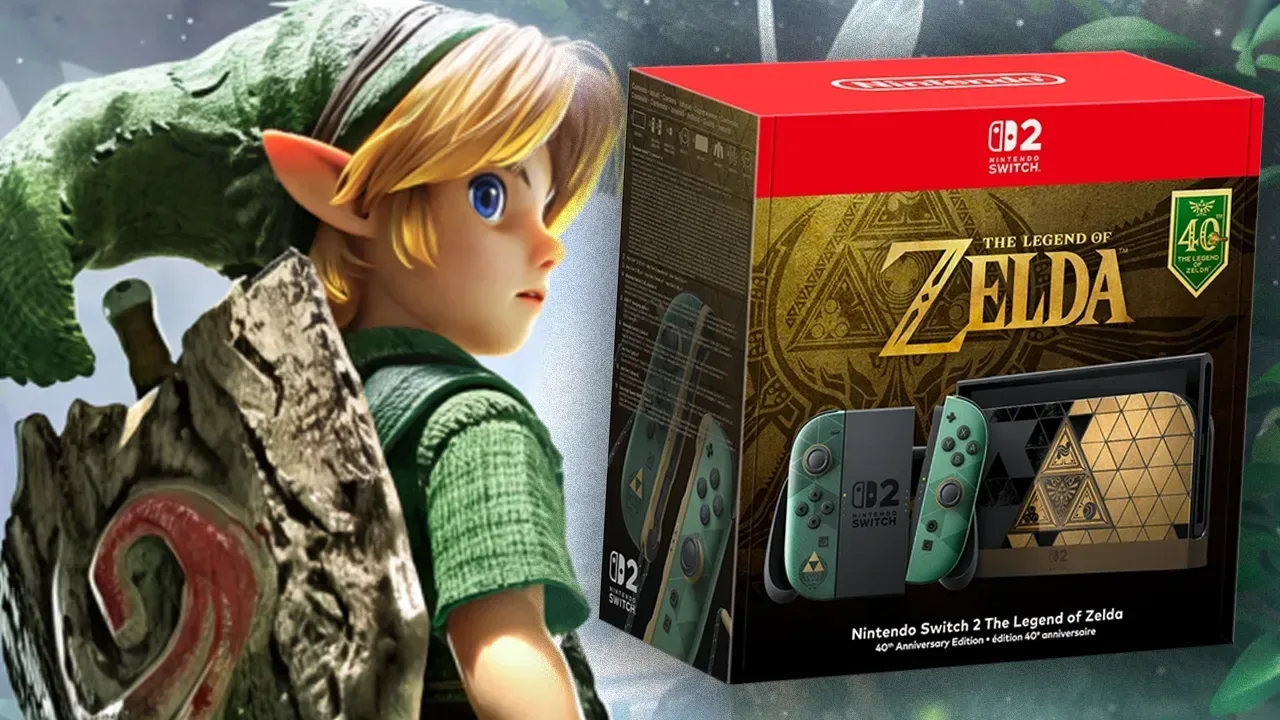
Nintendo has officially lifted the curtain on hardware built for Hyrule’s milestone birthday: The Legend of Zelda 40th Anniversary Nintendo Switch 2 console and a matching Nintendo Switch 2 Pro Controller: The Legend of Zelda 40th Anniversary Edition. The special-edition pair is scheduled for October 29, turning a familiar set of fantasy artifacts—gold, the Triforce, and an impressively determined little hero—into a coordinated hardware look.
Product imagery had circulated before the formal reveal, but the Zelda-focused Nintendo Direct supplied the first official presentation and confirmed that the hardware is real. Crucially, Nintendo has provided a date but has not yet provided pricing details. That leaves the usual practical questions unanswered: whether the console and controller will be sold in every territory at the same time, what the console package will include, and how much collectors will need to set aside from their rupee reserves.
What is clear is the visual direction. This is not an all-gold system that risks looking like it was removed from a palace display case. Nintendo has instead used a black-and-teal foundation, then added bright gold Zelda accents where they can make their presence known without beginning a duel with the entire living room.
A Triforce on the dock, and a recognizable palette on the handheld
The Switch 2 dock carries a golden Triforce graphic on one side. That is the most immediate signature element of the console edition: a compact symbol with decades of series history, positioned to be visible when the system is docked. For anyone who largely plays on a television, the dock is also the part of the special edition likely to remain on display rather than retreating into a drawer between sessions.
The Switch 2 unit itself uses black and teal Joy-Con controllers. Each Joy-Con is decorated with Triforce patterns, extending the anniversary treatment beyond the dock and into the portable configuration. It is a sensible choice for a Zelda-themed machine. Black gives the hardware a reserved base, teal introduces a color association without overwhelming the device, and gold details do the ceremonial work. Nintendo appears to have avoided making the edition depend on a single huge character portrait or a scene that can date the design to one game.
That matters for a 40th anniversary release. The Legend of Zelda has shifted visual identities repeatedly, from early pixel art to richly illustrated manuals, cel-shaded seafaring adventures, and wide-open modern worlds. A Triforce-based design draws from the franchise’s central iconography rather than asking one particular era to represent all the others. It is a little like choosing the Master Sword for a museum plaque: not every player’s only favorite thing, but difficult to mistake for something else.
The matching Pro Controller leans into gold details
Nintendo is also releasing a dedicated anniversary Pro Controller with the same black-and-teal base colors. The controller has a gold Triforce at its center, paired with gold shoulder buttons and triggers. Those features give it a more overtly commemorative look than a standard color variant while keeping the main layout familiar.
Matching controllers can be an especially appealing part of themed hardware releases because they have a life beyond the console bundle. A player may choose the controller for regular use, reserve it for Zelda sessions, or display it alongside older franchise peripherals. The tradeoff, naturally, is the eternal collector dilemma: a controller is designed to be held, but a clean collector piece often seems to be asking not to meet a single sweaty boss-fight thumb.
Related coverage includes Nintendo Reveals Zelda 40th Anniversary Switch 2 Console and Pro Controller.
Both the console edition and Pro Controller include the Legend of Zelda 40th Anniversary logo. The emblem incorporates a small NES-era Link icon, tying the anniversary branding to the franchise’s earliest home-console roots. It is a charming historical nod amid hardware aimed at the Switch 2 generation. The design effectively gives the newest platform a tiny pixelated chaperone from the era when Link’s adventure began with far fewer buttons and a great deal more graph paper.
What has been confirmed—and what remains unknown
With special-edition hardware, it is easy for a few confirmed images to become the starting point for increasingly elaborate assumptions. At present, the confirmed details are much narrower, and that is worth keeping straight. Nintendo has shown the console and controller, identified their official names, described their anniversary branding, and set October 29 as the release date.
- Confirmed: The Legend of Zelda 40th Anniversary Nintendo Switch 2 console is set for October 29.
- Confirmed: Its dock has a gold Triforce design on one side.
- Confirmed: The console uses black-and-teal Joy-Con controllers with Triforce patterns.
- Confirmed: A matching 40th Anniversary Switch 2 Pro Controller is coming the same day.
- Confirmed: The Pro Controller has a black-and-teal body, gold central Triforce, and gold shoulder buttons and triggers.
- Confirmed: Both products carry the anniversary logo featuring NES-era Link.
- Not announced: Pricing information.
That final item is important. Until Nintendo details prices, it is premature to treat either product as a routine console purchase, a premium collector package, or anything in between. It is also not yet time to infer pack-in games, exclusive software, production quantities, retailer arrangements, or regional plans from the imagery alone. The safest reading is the simplest one: October 29 is the date, while the purchase particulars remain pending.
Why the anniversary branding works for a collecting audience
Commemorative game hardware occupies a peculiar intersection. It is functional consumer technology, branded memorabilia, and—depending on how it is used—an eventual record of one moment in a platform’s lifecycle. Zelda has been particularly well suited to the format because its symbols are instantly legible. The Triforce can be scaled down to a small print on a dock, repeated as a subtle controller pattern, or placed front and center in gold without requiring a paragraph of lore to explain its presence.
The new Switch 2 treatment also separates the franchise cues into layers. The dock offers the large display statement. The Joy-Con patterns reward closer inspection in handheld mode. The Pro Controller provides a coordinated but distinct companion item. And the NES Link in the anniversary logo gives the whole package a deliberate historical anchor. None of that establishes rarity or long-term value—those are questions no one can responsibly settle before price, production, and retail details are known—but it does make the set visually coherent.
For preservation-minded owners, official details are a better guide than early chatter. Keeping an eye on final package descriptions, whether any included items are specifically listed, and the exact regional product naming can be useful when documenting a collection. If the hardware is opened and used, retaining outer packaging and inserts in good condition can still help preserve the complete presentation. If it is displayed, the black, teal, and gold scheme should make it easy to distinguish from a standard Switch 2 setup at a glance.
An anniversary console is still a modern connected device
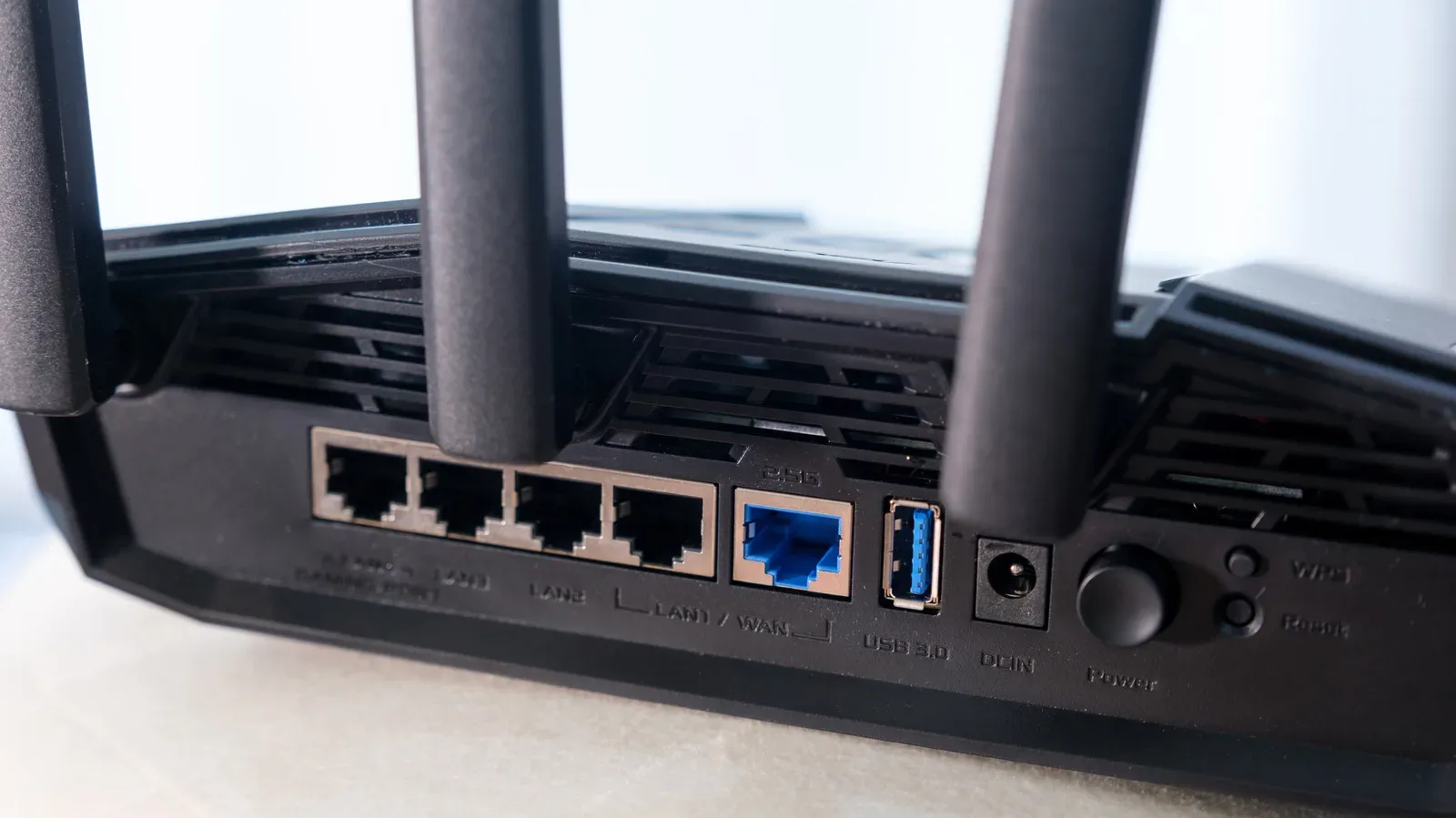
The design is rooted in Zelda history, but Switch 2 hardware remains contemporary game hardware, which means a themed dock is only part of the home setup. Players planning to use the system for downloads, updates, and online features may also want to think about the less glamorous side of the quest: stable home connectivity. Our overview of why 2.4GHz and 5GHz matter for gaming Wi-Fi explains the difference between the two common bands without pretending either one comes with a Triforce of Courage.
For now, Nintendo’s announcement accomplishes the essential thing: it transforms an anniversary hardware rumor into a dated, named product release. The October 29 launch places the console and Pro Controller on the calendar, while the gold Triforce, black-and-teal color scheme, patterned Joy-Con, gilded controller controls, and NES Link anniversary mark provide a design that reaches across the series’ long history. The next details to watch are the practical ones, especially pricing. Until then, this is a very recognizable piece of Zelda hardware—and one that has already made a strong case for clearing a little shelf space.