Samus Aran has survived hostile planets, space pirates, parasitic lifeforms, haunted laboratories, and the eternal inconvenience of doors that refuse to open until every nearby creature has been professionally vaporized. Metroid Ravenous now appears ready to add a more unsettling problem to that lengthy intergalactic résumé: hunger.
The newly shown game is described as the next 2D side-scrolling entry in the Metroid series and carries a notably darker mood than the usual image of Samus calmly collecting missiles while aliens reconsider their career choices. Material shown for Ravenous frames survival as central to its premise. Samus is associated with the idea of making it home even if she must feed on the enemies in her path, a strikingly grim direction for Nintendo’s armored bounty hunter.
That wording does not establish every detail of the game’s story or systems, but it does make Ravenous immediately distinct. Metroid has long used isolation, danger, transformation, and hostile ecosystems as parts of its identity. A survival-driven mechanic tied to consuming or drawing strength from enemies could fit that tradition while giving the series a much more openly predatory edge. Samus has absorbed upgrades from defeated foes before in the broadest mechanical sense; Ravenous seems poised to make the relationship between combat and sustaining power much more direct.
A January 28 date, with major details still unconfirmed
Metroid Ravenous is listed for release on January 28. No platform was specified in the information presently available, and no price, edition details, developer, regional schedule, or exact release year has been provided alongside that date. With the material pointing to a launch in the following January, players should be careful not to infer more than has been established until Nintendo provides a fuller breakdown.
That uncertainty matters because the reveal concentrates on tone and spectacle rather than the usual shopping-list facts. There is no confirmed account of map size, upgrade count, boss roster, accessibility options, multiplayer, physical release, digital storefronts, or performance targets. There is also no reason yet to treat any individual scene as a final representation of the game. What is visible is promisingly dramatic, but Ravenous remains a game with many unanswered practical questions.
Nintendo’s current slate has shown room for sharply different moods across its releases. For a very different Nintendo-related prospect, see Onyx: The Dark Grip’s handheld-only horror approach on Switch 2. Ravenous, however, looks set to pursue dread through Samus’s own fight to endure rather than through a straightforward horror framework.
2D exploration with moments that push forward
The foundation is familiar in the best possible way: Ravenous is a 2D side-scroller. That puts it in the lineage of the series’ exploratory adventures, where moving through corridors and alien caverns is only half the task. The other half is returning after acquiring new tools, realizing an unremarkable wall was suspicious all along, and discovering that a tiny visual hint from three hours earlier was actually an invitation to find a missile tank.
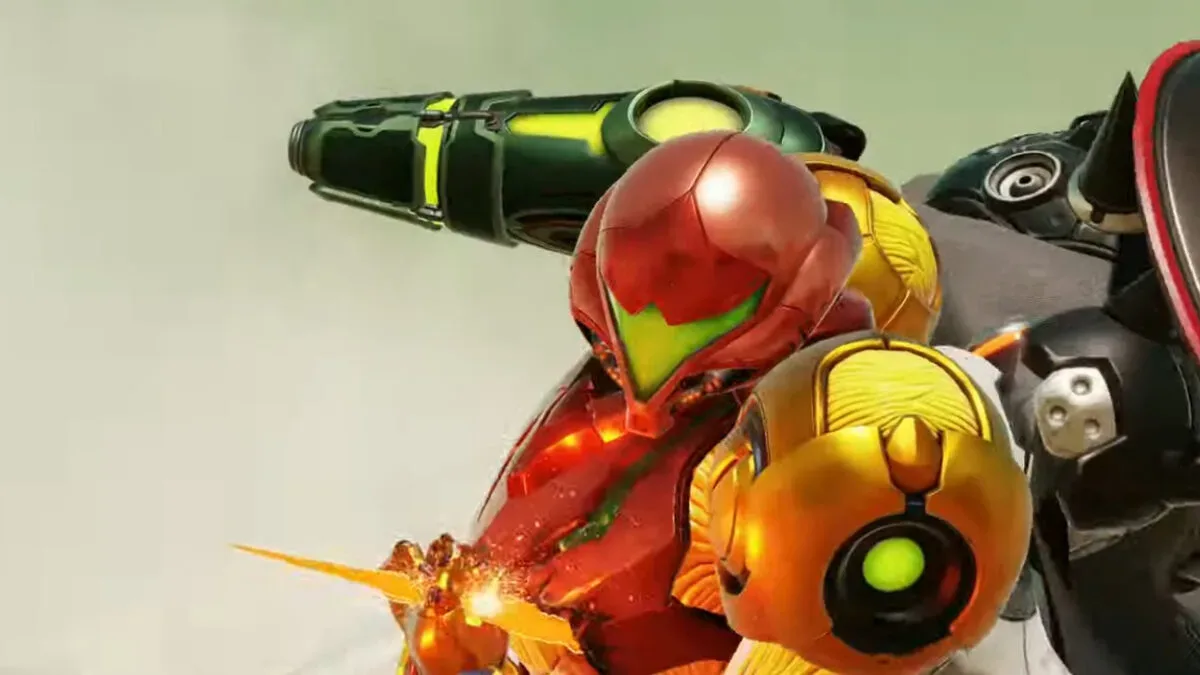
Yet footage or scenes described from the game do not appear determined to stay on a completely flat visual plane. Certain sequences reportedly have Samus charging directly toward enemies, creating an impression of motion and staging that reaches beyond standard left-to-right presentation. It is not clear whether these moments are playable action, cinematic transitions, or a mixture of both. Either way, they suggest Ravenous wants its 2D structure to feel more physically forceful than a simple retro imitation.
That could be important for a modern Metroid. The series’ classic side-scrolling format is beloved because it pairs precise movement with dense world design, not because it must remain visually static. A brief forward rush, a pursuit sequence, or a combat beat staged with deeper perspective can add urgency without abandoning the essential satisfaction of learning a place piece by piece. The key question is how often the game uses these flourishes and whether they support exploration rather than interrupt it. For now, they are best read as an intriguing stylistic signal.
Power at a cost may shape Ravenous’s combat
Among the most interesting hints are abilities that seem to drain Samus’s energy. The apparent need to feed on enemies is presented as connected to replenishing that resource, though the exact rules have not been confirmed. It is unknown whether this is a constant survival meter, a temporary consequence of a particular power, a scripted story element, or something else entirely.
Even so, the possibility changes how players may view the familiar Metroid loop. Normally, a new ability is a triumph: an obstacle loses its power, a hidden route becomes available, and an enemy that once demanded caution turns into a convenient source of drops. If a powerful move in Ravenous consumes energy and encourages Samus to draw something back from opponents, each encounter could potentially become a calculation. Is the ability worth using now? Which enemy is safest to approach? Does an aggressive recovery technique leave Samus exposed? Can a player preserve energy by relying on conventional arm-cannon fire instead?
None of those systems are confirmed, but they illustrate why the premise has attention. A resource-draining power can be more than a visual gimmick if it creates pressure between mobility, offense, and safety. Metroid games frequently make players feel stronger as their arsenal expands. Ravenous may ask them to manage the burden of that strength too. Samus having the tools to devastate a threat is one thing; needing the threat afterward is a decidedly less comfortable arrangement.
An arm blade and relentless resistance
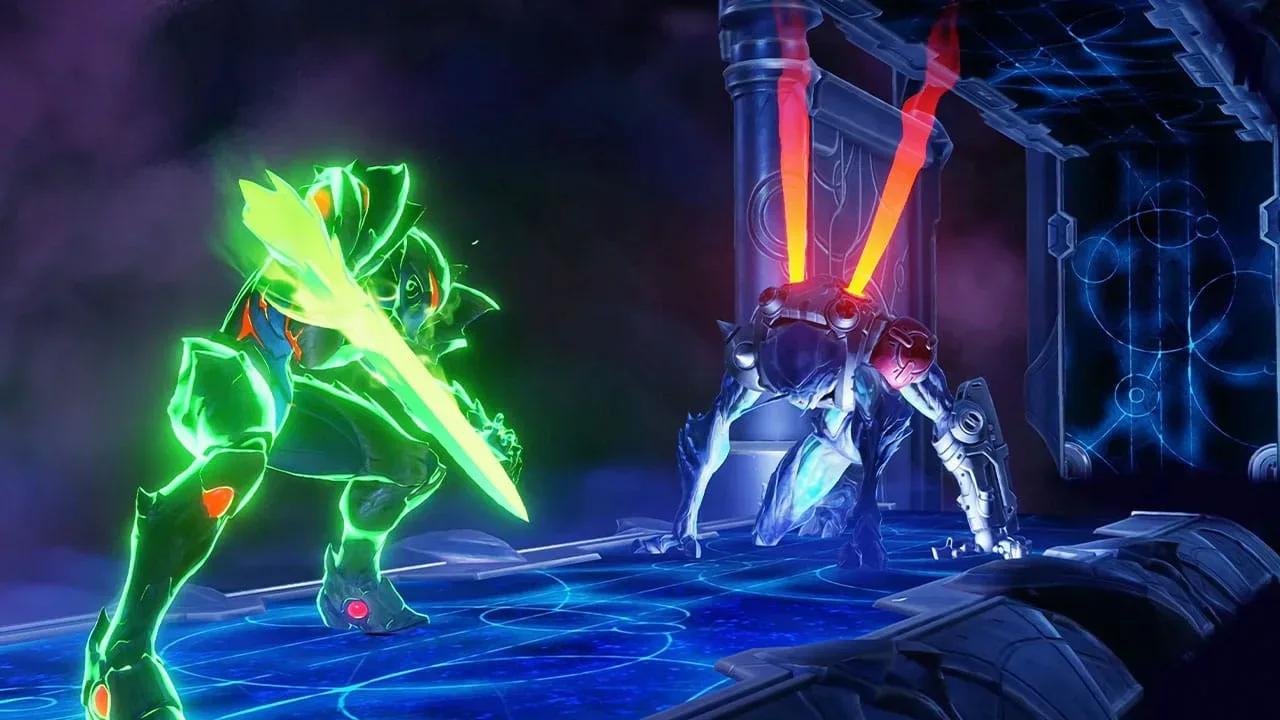
One visible piece of equipment is a large blade mounted on Samus’s arm. Its name, function, and place in the move set have not been detailed. It may be a melee weapon, a traversal tool, a special attack, or an element restricted to cinematic sequences. Still, its silhouette alone gives Ravenous a harsher personality. Samus’s arm cannon is among gaming’s most recognizable weapons because it fuses science-fiction technology with a clean, practical design. Adding a huge blade makes her look less like an explorer equipped for a mission and more like someone prepared to cut a route through a catastrophe.
The revealed material also includes threatening figures with a cybernetic appearance, compared in broad visual terms to Mortal Kombat’s Raiden. They apparently overwhelm or attempt to kill Samus in one sequence, only for her to resume fighting. Their identity, allegiance, abilities, and role in the plot are all unknown. What the moment does convey is resilience. Samus may be dealing with exhaustion, an energy cost, and a hostile appetite, but the character is not being repositioned as helpless.
That balance is vital. Metroid is at its strongest when solitude and vulnerability coexist with capability. The player can feel trapped in an alien environment while also believing that Samus, once fully equipped, is the most dangerous being in it. Ravenous appears to emphasize the first feeling early while retaining the second through its fierce action. The grim material need not mean Samus is diminished; it may simply mean the next escape will demand something harsher from her.
Cinematics could give the journey a different rhythm
The game’s cutscenes have drawn attention for their visual quality and intensity. Cinematics seem positioned as a significant part of Ravenous’s presentation, helping carry action between gameplay encounters. That can be a welcome fit for this particular premise. A story about an increasingly desperate fight home benefits from seeing the toll of the mission on Samus and from giving unfamiliar enemies a chance to feel genuinely threatening before they become another icon on the map.
There is a careful line to walk, of course. Metroid’s atmosphere often comes from quiet: the player alone in a strange location, guided by environmental clues and music rather than a steady stream of explanation. Cinematic scenes can enhance that loneliness when used to sharpen pivotal moments. They can also disrupt it if they become too frequent or too eager to tell the player what every shadow means. Ravenous has not yet shown enough to know where it lands, but its apparent ambition is clear: it wants its story beats to hit with the same impact as its combat.
For now, Metroid Ravenous is compelling because it preserves a recognizable shape while changing the emotional texture inside it. The 2D format, Samus at the center, new abilities, dangerous adversaries, and an escape-oriented drive are all compatible with the series’ history. Feeding on enemies, energy depletion, a massive arm blade, and more aggressive cinematic staging give that framework a sharper edge. January 28 is the date to watch; the details that remain unannounced will determine exactly how ravenous this new mission really is.