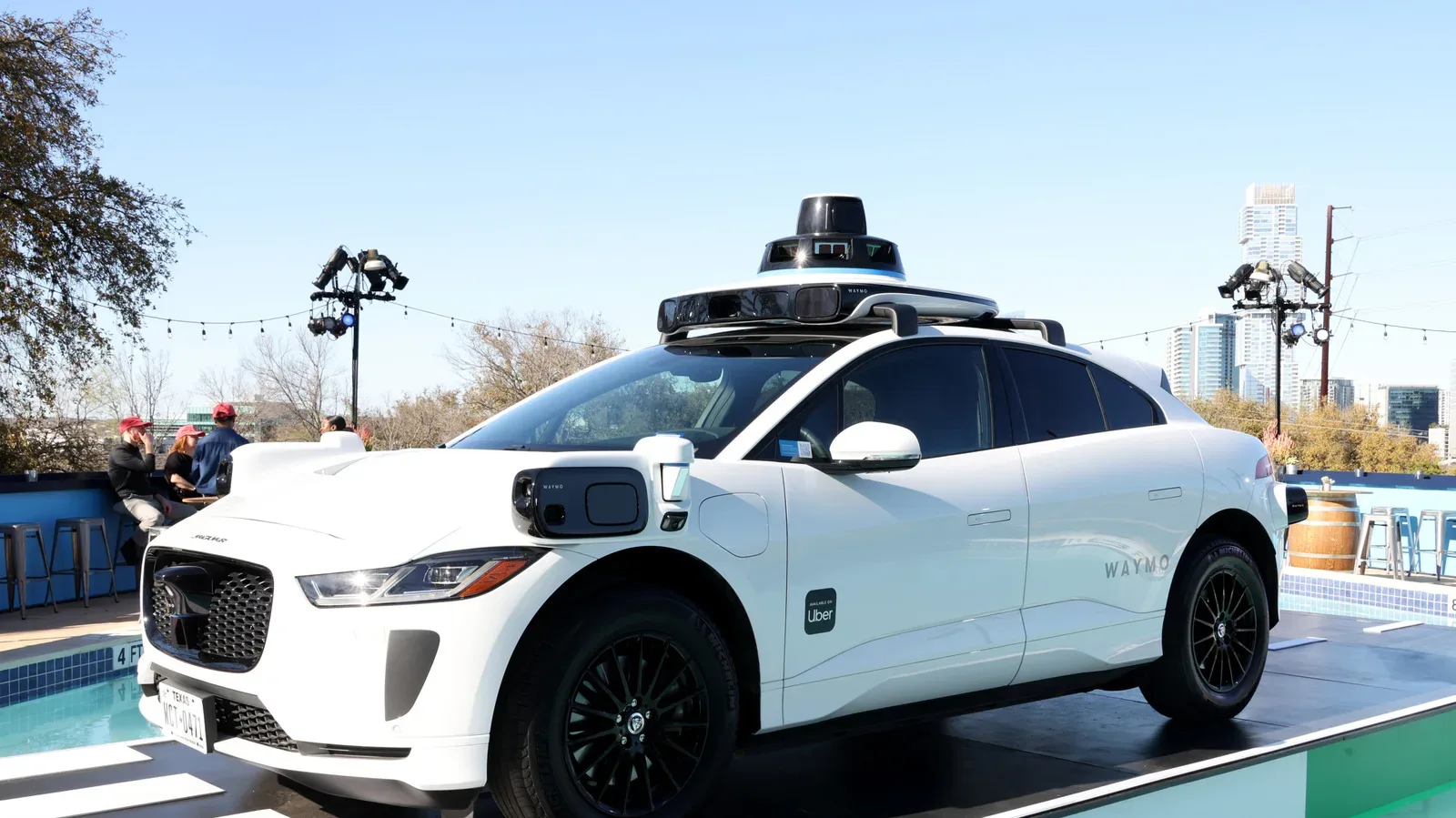
The National Highway Traffic Safety Administration has opened a recall query into whether a late-2025 Waymo software update actually corrected a serious robotaxi safety issue: driving past school buses that were stopped with flashing red lights and their stop arms deployed.
The inquiry matters because the update was intended as a fleetwide remedy, yet the agency says that a majority of the incidents it is examining happened after the remedy date. That does not establish why the post-update events occurred, nor does it mean the recall failed outright. It does mean the regulator is now scrutinizing the effectiveness of the fix rather than merely the original behavior that prompted it.
For autonomous-vehicle software, that is an important distinction. A traditional vehicle recall can involve a physical component that is replaced or repaired. A software recall changes the decision-making system that tells a vehicle how to respond to what its sensors detect. The central question in this case is therefore not simply whether Waymo deployed an update across its fleet, but whether that updated system consistently handled the real-world conditions surrounding a stopped school bus.
What the recall query is examining
The agency’s Office of Defects Investigation began the latest recall query on Friday. It follows Waymo’s voluntary software recall in late 2025, which was completed across the robotaxi fleet in November 2025.
That earlier recall itself followed a federal investigation into reports of robotaxis proceeding past stopped school buses in Atlanta, Georgia, and Austin, Texas. In those cases, the buses had flashing red lights active and stop arms extended. Those are the relevant signals in the reports: the concern is not merely that a vehicle encountered a bus, but that it encountered a bus displaying the equipment associated with a stop for children.
The new inquiry is focused on two linked issues:
- Whether the software remedy was effective in preventing the behavior it was designed to address.
- What conditions caused the reports that occurred after the remedy was installed.
In practical terms, investigators will need to separate several possibilities without assuming an answer in advance. A post-remedy report could potentially indicate that the updated software did not solve the underlying decision problem. It could also involve circumstances that the original remedy did not cover, or a scenario in which the vehicle’s interpretation of the environment differed from the facts later established by investigators. The available information does not settle which explanation applies. The purpose of the query is to investigate that gap.
Why stopped-school-bus behavior is a high-stakes test
School-bus stops are a demanding situation for automated driving systems because the safety-critical action is not only about detecting a large yellow vehicle. The vehicle must recognize the bus’s relevant signals, interpret that the bus is stopped, understand the significance of the flashing red lights and deployed stop arm, and make the appropriate driving decision promptly and reliably.
For a human driver, these cues are taught as road rules and reinforced by experience. For a robotaxi, they must be turned into a chain of technical judgments. The system must turn sensor input into an accurate representation of the situation, classify the bus and its equipment correctly, then select a safe response. If any stage is incomplete or incorrect, the final vehicle action can be wrong even if other parts of the system operate normally.
Technical terms: perception, prediction and planning
Autonomous-driving systems are often discussed as a single black box, but the basic task can be described in stages:
- Perception is the process of detecting and identifying objects and signals in the vehicle’s surroundings. In this context, that may include the school bus, its flashing lights, and its extended stop arm.
- Prediction concerns what other road users might do next. Around a stopped school bus, a cautious system must treat the area as one where children may be crossing or about to enter the roadway.
- Planning is the selection of the robotaxi’s own path and motion: slowing, stopping, remaining stopped, or proceeding when it is safe and permitted.
A recall remedy may adjust one or more of those layers. It could improve recognition of a particular signal, alter how the system weighs the significance of an identified bus stop, or revise the vehicle’s response once it identifies the scenario. The exact changes included in Waymo’s 2025 update have not been detailed in the supplied information, so it would be premature to characterize the remedy more specifically.
Still, the regulator’s concern about post-remedy reports illustrates why software fixes require careful validation. Installing an update is a necessary operational step; proving that it works across the range of relevant road situations is the larger safety question.
Deployment is not the same as demonstrated effectiveness
Waymo completed the software recall across its entire robotaxi fleet in November 2025. That establishes that the remedy was deployed fleetwide. It does not, on its own, answer whether the revised behavior performed as intended in every subsequent case.
This distinction is especially useful for readers who encounter the word “recall” and imagine vehicles returning to a dealer for a visible mechanical repair. Software can be distributed across a fleet relatively quickly, but the underlying driving challenge may involve a broad set of real-world variations. A stopped bus may be encountered under different traffic patterns, positions on the road, visual conditions, and combinations of cues. A safe remedy needs to hold up where it is supposed to apply.
The recall query is therefore a form of accountability after deployment. The agency is examining whether the measure taken in response to the initial issue produced the intended safety outcome. Its investigation also aims to identify the causes of the conditions connected to reports received after the remedy date.
There is a broader consumer-facing takeaway here as well. Robotaxi safety cannot be judged only by whether a company says it has shipped a fix. The performance of the system after a fix—and the ability of regulators to investigate new reports—are both part of the safety picture. The update is an intervention; the evidence gathered afterward helps determine whether the intervention was sufficient.
A separate inquiry follows a Santa Monica crash
The Office of Defects Investigation has also opened a separate probe into an incident in which a Waymo robotaxi struck a child in Santa Monica, California, in January. The information available does not provide further details about the event, including the circumstances of the crash or any conclusion regarding responsibility. It should not be treated as part of the stopped-school-bus recall query unless regulators establish such a connection.
Its existence does, however, show that the federal examination of Waymo currently extends beyond one type of reported road behavior. Separate inquiries can have separate factual records and aims. Keeping them distinct is essential: an investigation is not a finding, and one incident should not be used to fill in missing facts about another.
Multiple federal bodies are looking at the school-bus issue
The safety department’s vehicle-defect office is not the only federal body examining Waymo’s behavior around stopped school buses. The National Transportation Safety Board, an independent federal agency, launched its own investigation earlier this year.
The involvement of more than one agency does not mean they are doing identical work. The current recall query is explicitly concerned with the effectiveness of Waymo’s software remedy and the causes of post-remedy reports. The separate safety-board investigation adds another federal examination of behavior around stopped school buses. Neither investigation’s existence should be mistaken for a final conclusion.
For Waymo and the wider autonomous-vehicle sector, the immediate consequence is sustained scrutiny of a particularly sensitive driving scenario. The question is not abstract: the initial reports involved robotaxis in Atlanta and Austin moving past buses displaying flashing red lights and extended stop arms. Those facts are why the effectiveness of the 2025 remedy is now central.
What has been established—and what has not
A few points are clear from the information currently available. Waymo issued a voluntary software recall in late 2025 following an earlier federal probe. The recall was completed across its robotaxi fleet in November 2025. Federal regulators subsequently opened a recall query because most incidents referenced in that query occurred after the remedy date. The agency is investigating whether the update worked and why the post-remedy reports happened.
What is not established is equally important. There is no final finding presented here that the software remedy was ineffective. There is no supplied detail explaining each post-remedy incident. And there is no conclusion from the separate Santa Monica child-strike probe. Those gaps are precisely why investigations are underway.
The episode is a useful reminder that autonomous transport is not just a question of whether a vehicle can navigate routine traffic. Safety confidence depends on its conduct in the moments where road rules, vulnerable people, and split-second judgment intersect. A stopped school bus is one of those moments. The results of the recall query will matter because they address whether a fleetwide software correction delivered the protection it was meant to provide.
Readers interested in the more everyday software side of electric transport can also see why an EV’s charging behavior can change as the battery manages itself. The Waymo case is a far more consequential example of the same broad reality: in modern vehicles, software behavior can be central to how the machine acts in the real world.