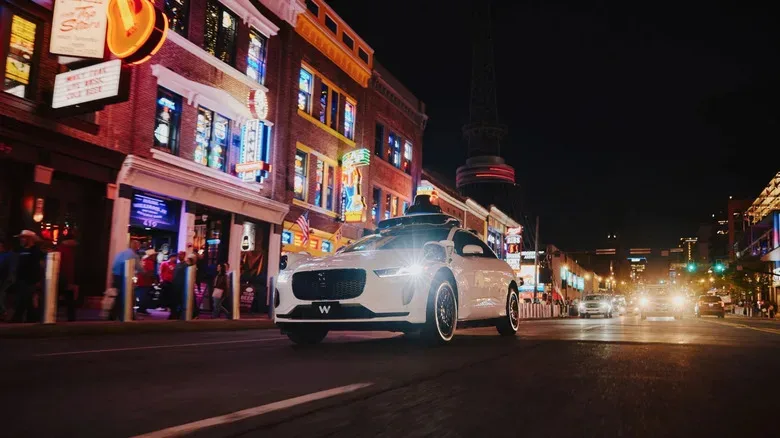
Nashville Lyft users may now find that the car arriving for a routine ride has no human driver in the front seat. Lyft has begun offering matches with fully driverless Waymo vehicles in the city, making Nashville the first place where Waymo rides are available through both the Waymo app and Lyft’s app.
The rollout is a notable expansion of the companies’ partnership, but it is also deliberately bounded. A trip must both begin and end inside Waymo’s designated central Nashville service area to qualify. In other words, this is not yet a citywide summon-a-robotaxi button, even if the prospect of ordering a car with the same casual confidence as selecting a matchmaking queue is now very real for eligible riders.
For players accustomed to new technology arriving with a patch note’s worth of caveats, the key details are straightforward: certain Lyft ride requests may be fulfilled by a Waymo vehicle, there is no extra stated cost for that match, and passengers can decline or entirely opt out of driverless rides.
Where Waymo rides can appear in Nashville
Waymo availability through Lyft is presently tied to a defined central-city map. Eligible journeys must start and finish within the coverage zone; having only one end of the trip in the area is not enough.
The listed neighborhoods and districts covered by Lyft’s Waymo service are:
- Downtown/Broadway
- North Nashville/Germantown
- East Nashville
- Midtown
- South Nashville
That geographic limitation matters more than the novelty factor. Someone traveling between two qualifying points could be matched with the autonomous vehicle, while a rider whose destination falls beyond the boundary should not expect the same result. It frames the launch as a concentrated operational zone rather than a promise that every Nashville Lyft request can suddenly become a driverless trip.
Lyft says Waymo availability in the city is expected to expand over the coming weeks. That describes growth in availability, not a specific timetable or a commitment to a particular future boundary. Riders should therefore regard the current footprint as the practical map to watch, rather than assuming that a broader service area has already been set.
Which Lyft ride requests may receive a Waymo match
Waymo can be offered when a rider requests one of four Lyft options: Standard, Priority Pickup, Wait & Save, or Extra Comfort. These are ordinary categories in the Lyft booking flow, which is part of the point. The autonomous option is not described as a wholly separate product that requires a special Waymo-only selection inside Lyft.
Instead, an eligible request in the right part of Nashville may be matched with a Waymo vehicle. That approach lowers the number of decisions required before booking: choose the familiar ride type, confirm a trip within the operating area, and the system may present the driverless car as the vehicle fulfilling the request.
There are still meaningful choice controls. A passenger who does not want an autonomous vehicle at all can opt out of Waymo rides. A rider can also decline a Waymo match for an individual journey. That distinction is useful: someone might be perfectly happy to try the technology on a short afternoon ride but prefer a conventional car on another occasion, without treating the setting as a permanent all-or-nothing pact.
There is no stated surcharge for accepting a Waymo ride. The news does not establish that every type of trip will be priced identically in every circumstance; ride-hail pricing can vary for familiar reasons. What is clear is that being matched with Waymo itself does not add an extra cost.
A partnership moving from plans to passenger trips
Waymo, an Alphabet subsidiary, announced its Lyft partnership in September of the previous year. Its vehicles have been testing in Nashville since that period. In February, Waymo received permission to operate the vehicles without a human driver behind the wheel, clearing the way for the fully driverless service now accessible through Lyft.
The timeline illustrates how autonomous ride-hail expansions tend to work: partnership announcement, local vehicle testing, regulatory permission for driverless operation, then a limited commercial-facing rollout. It may look from the passenger side like a simple app update, but the app experience comes after several separate pieces have moved into place.
Nashville’s status is particularly significant because riders have two app pathways to Waymo. They can use Waymo’s own application or access eligible Waymo trips through Lyft. For the companies, that creates a shared-service arrangement in which the autonomous fleet can reach riders who already use Lyft’s booking system while Waymo continues to operate its direct customer channel.
The practical passenger checklist
For anyone wondering whether a driverless Waymo ride might appear on an upcoming Lyft request, the available information suggests a simple checklist.
- Open Lyft and choose Standard, Priority Pickup, Wait & Save, or Extra Comfort.
- Make sure both the pickup point and destination are within the current central Nashville Waymo coverage area.
- Review the match presented by the app.
- Accept the Waymo vehicle, decline it for that trip, or use the opt-out control if driverless rides are not desired.
That is less dramatic than the phrase “fully driverless car” might imply, and that normality is arguably the important part of the rollout. The technology is being placed inside a familiar ride-request workflow rather than being treated as an amusement-park attraction or an experimental side menu.
Still, a fully autonomous ride is not merely a cosmetic swap. Passengers who have never used one may want to consider their own comfort level before confirming the match. Lyft’s ability to let users decline an individual Waymo ride means curiosity does not need to become obligation. A passenger can make a moment-by-moment decision, which is probably sensible for any technology that replaces the usual small talk with the quiet hum of software doing its route calculations.
Why the opt-out matters
Opt-out controls are an essential part of this launch, not an afterthought. Technology adoption is rarely uniform, especially when the change is visible in such an immediate way. Some riders will see a driverless vehicle as a convenient extension of an app they already use. Others may want more time, more information, or simply a human driver on a particular trip.
The service structure accommodates both responses. The presence of a Waymo match does not mean a rider must take it, and a broad opt-out is available to those who do not want to receive autonomous matches. That preserves agency in a system built around automated dispatch.
It also makes the Nashville launch easier to understand as an availability expansion rather than a replacement of Lyft’s standard service. Conventional rides remain part of the platform. Waymo is a possible match under defined conditions, not a declaration that every Lyft passenger in Nashville has entered an unavoidable robotaxi campaign.
A local rollout with broader platform implications
For Nashville, the immediate change is narrow but tangible: eligible trips within several central neighborhoods can now be completed in a fully driverless Waymo vehicle booked through Lyft. For Lyft and Waymo, the development demonstrates a model in which an autonomous driving company can operate through its own consumer app and a major ride-hail partner at the same time.
That dual-app availability is the differentiator here. It gives riders a choice of booking interface while preserving Waymo’s distinct operational footprint and Lyft’s familiar ride categories. The service area, permitted ride types, and opt-out mechanisms keep the deployment legible at launch.
Anyone tracking the overlap between transport tech and the increasingly software-shaped routines of daily life can view this as another case of a platform turning a complex backend system into one more option on a standard menu. For a separate look at how big claims around AI deserve careful scrutiny rather than reflexive hype or panic, see this examination of AI-risk claims and the need for evidence.
For now, the most important limitations remain clear. Waymo matching via Lyft is available only for eligible ride classes, only when both ends of the journey sit within the defined central Nashville area, and only when the rider chooses to accept it. Availability is set to grow over coming weeks, but the existing boundaries and controls are the rules that count today.