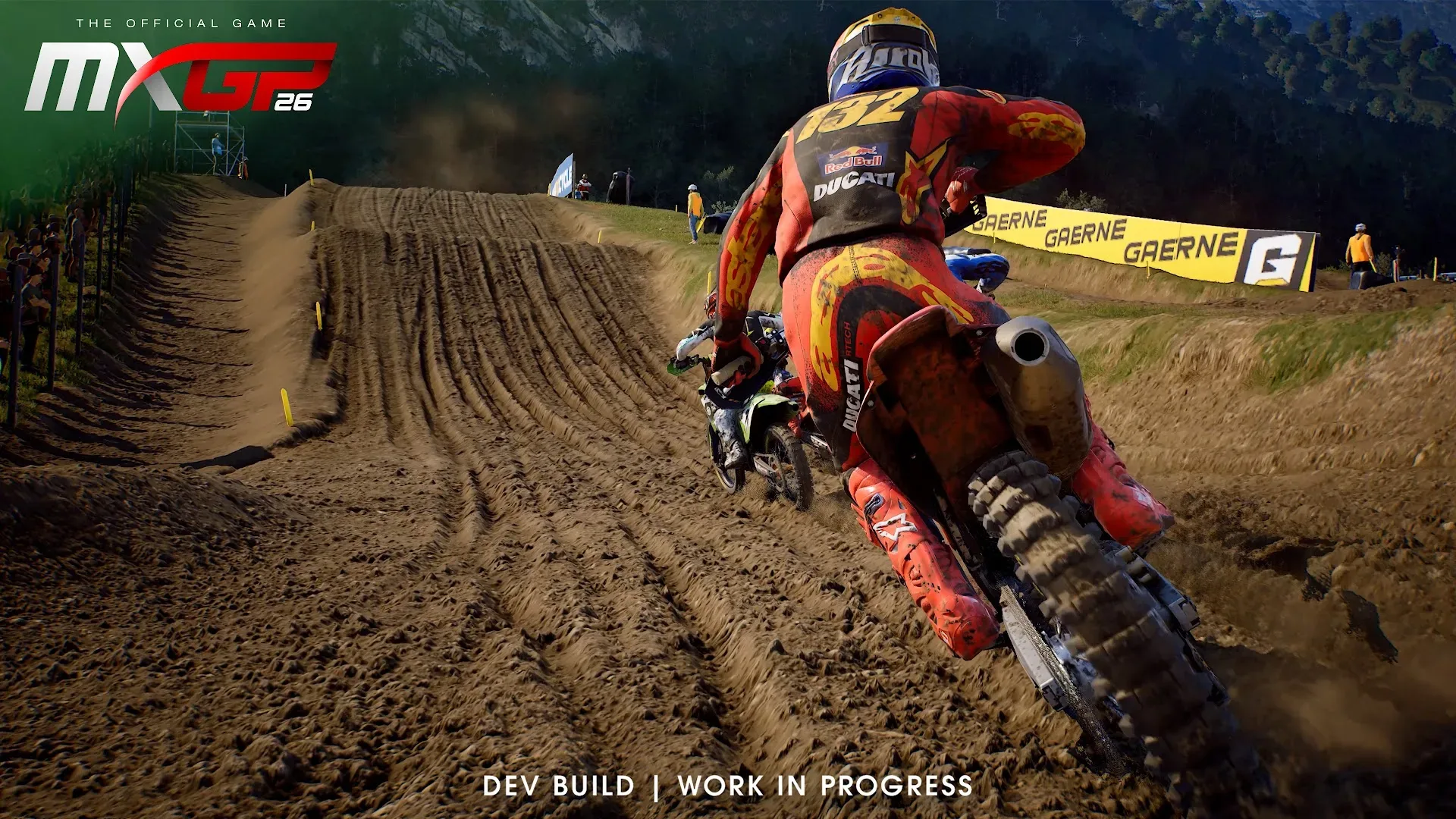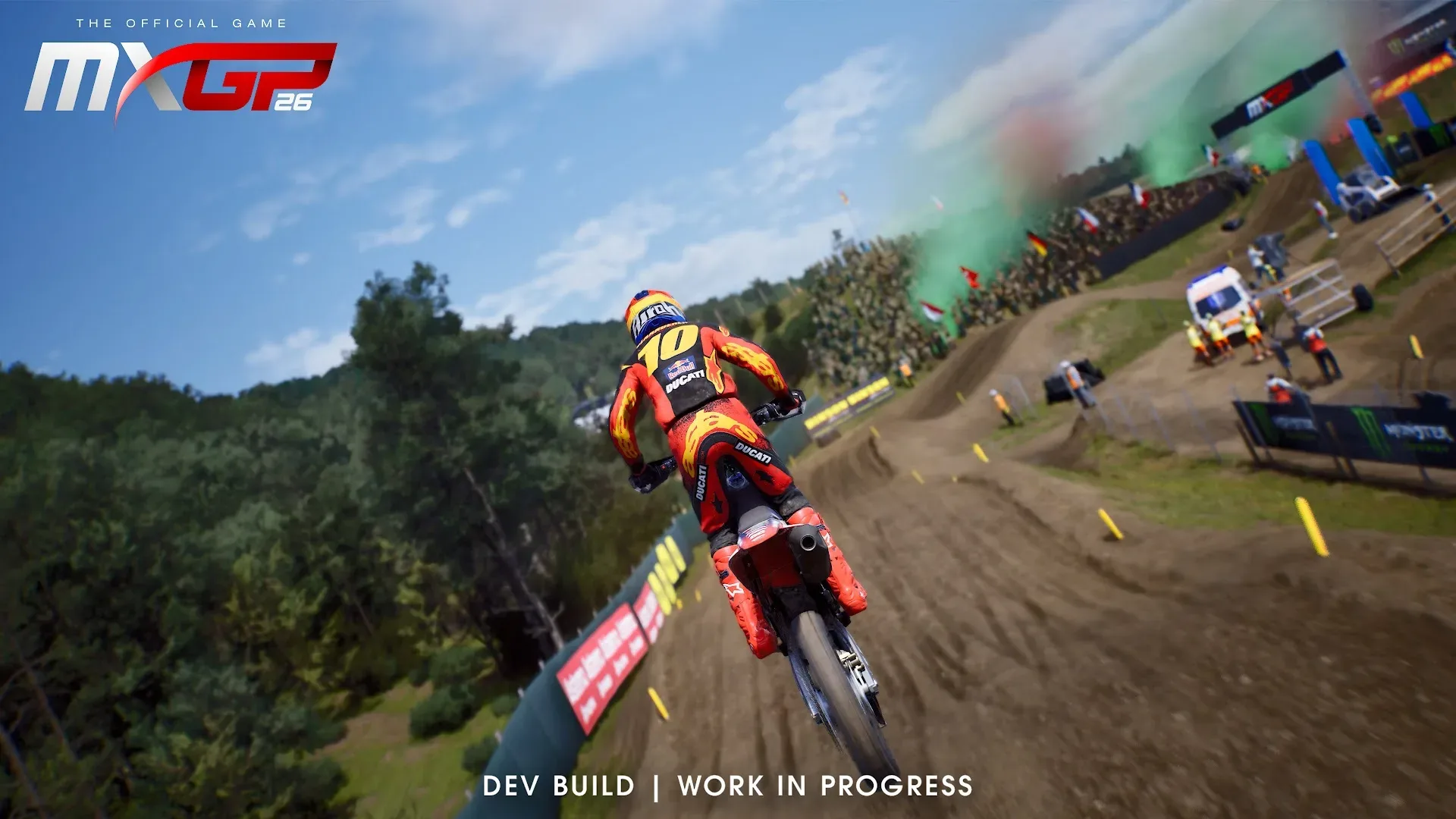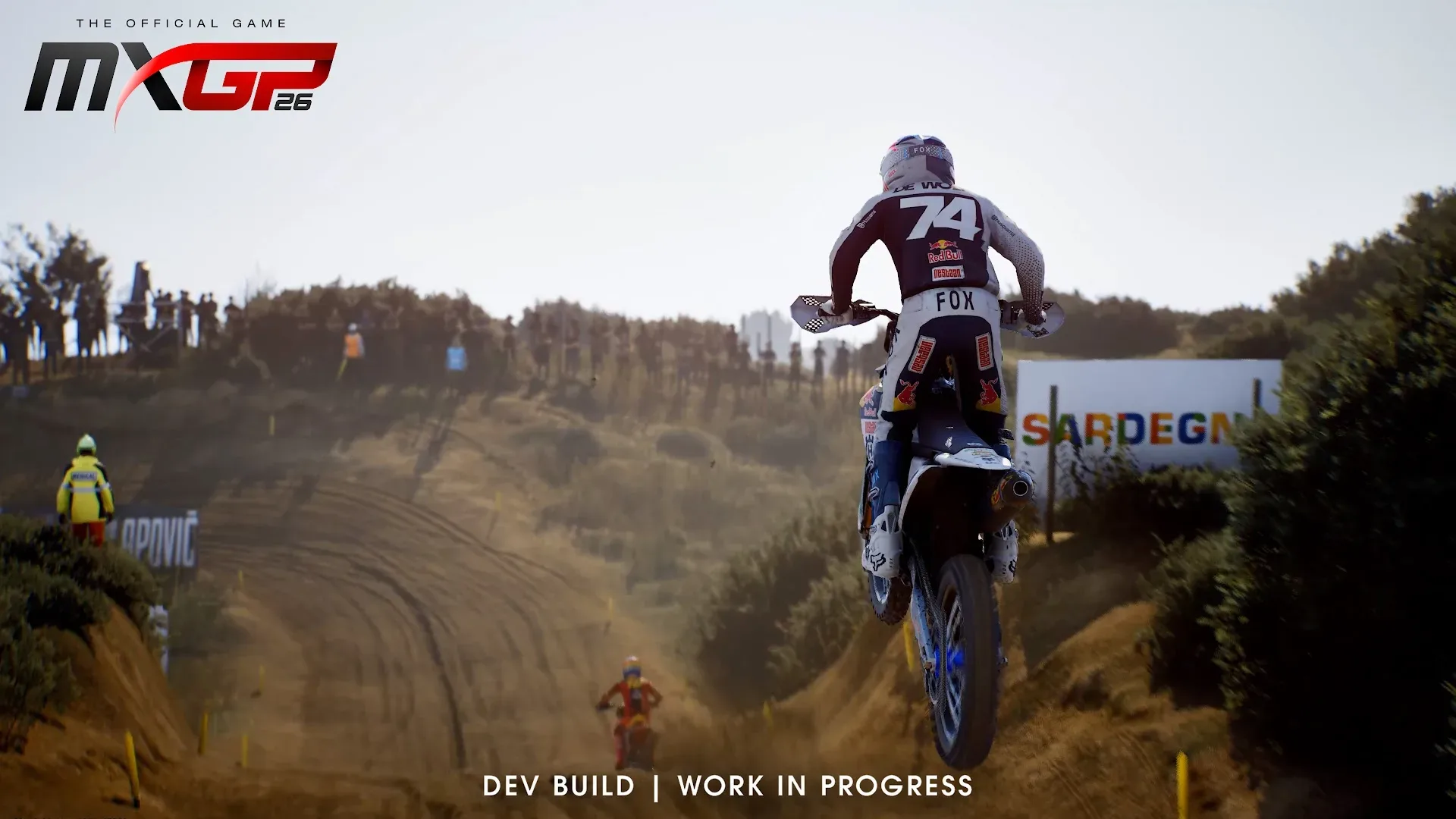
MXGP 26 has entered early access for owners of the Fox Holeshot Edition. The Deluxe version unlocks the motocross racer 72 hours before its full October 1, 2026 release, putting eligible players on PlayStation 5, Xbox Series X|S and PC onto the track now.
The early-unlock period is the immediate practical distinction between the Fox Holeshot Edition and the standard launch. It is not a separate game or platform-exclusive release: the full release remains scheduled for October 1 across the same three platforms. The Deluxe package also includes five exclusive Fox liveries and access to MXGP-TV, the official platform used to follow the real-world championship.
For a quick report on the early-access opening, see this coverage of the Fox Holeshot Edition rollout.
What the early-access edition includes
The Fox Holeshot Edition’s headline perk is its three-day head start. With the broad release arriving October 1, the edition gives purchasers access during the final days of September. That may matter most to players hoping to learn circuits, get comfortable with the revised handling model, or simply begin a 2026-season campaign before the general player population arrives.
For more context, explore Vita3K Build 4100 brings the latest experimental emulator packages.
Its other confirmed extras are cosmetic and companion-content benefits rather than additional bikes or tracks. The package includes:
- 72-hour early access to MXGP 26
- Five exclusive Fox liveries for bike and rider customization
- Access to MXGP-TV, the official real-world championship platform
A livery is a visual design applied to a vehicle or, here, related rider presentation. It changes appearance rather than establishing a performance advantage. That distinction is useful for players deciding whether the edition’s extras match what they value: the supplied details identify early access, cosmetic customization and MXGP-TV access, but do not describe exclusive gameplay content beyond the timing of access.
Track deformation is central to the pitch
Motocross games face a particular simulation problem: a dirt course is not a fixed strip of asphalt. Repeated passes can dig ruts and alter the surface that later riders must negotiate. MXGP 26 is built around dynamic track deformation that changes in real time as tires work the ground.
In plain terms, the circuit is intended to evolve throughout an event rather than remain visually and mechanically identical from the opening lap to the last. A line that feels smooth earlier could become more cut up as bikes pass through it. This type of system can make line choice more consequential because players are not only reacting to the track layout; they are also reacting to the state of the dirt.
The announcement also says the game has completely rewritten physics. Physics in a racing game refers to the rules governing how the bike responds to acceleration, braking, steering, surface contact, landings and momentum. “Completely rewritten” describes the developer’s ambition for the underlying handling model, but it does not by itself establish how the game will feel in players’ hands. The meaningful question after launch will be how its bike behaviour, deforming terrain and rider movement work together in practice.
That interplay is especially important in motocross. A jump is not merely a visual landmark; the rider’s takeoff angle, speed and landing are part of controlling the bike. A developing rut is not merely scenery either if it changes the line through a corner. MXGP 26’s stated design puts those conditions at the centre of its racing experience.
Unreal Engine 5, 60fps target and helmet-view movement
Artefacts Studio is developing MXGP 26 in Unreal Engine 5. The game targets photorealistic rendering on current-generation hardware and 60 frames per second, or 60fps.
Frames per second measures how many individual images a game displays each second. A 60fps target means the game is aiming to update and display sixty frames every second. In a fast racing game, higher frame rates can make movement look smoother and can help inputs and visual feedback feel more immediate. The stated target is therefore relevant not just to presentation, but to the broader goal of precise handling.
MXGP 26 also has a rider-animation system designed to respond to bumps and jumps, with helmet view specifically called out as an immersive perspective. Helmet view is a first-person-style camera intended to place the player near the rider’s point of view. If the animation and camera response are carefully balanced, surface changes can be communicated through visible rider and bike movement rather than only through interface cues.
There is an obvious balance to strike. Motocross is naturally violent and unsettled: suspension compresses, bikes buck over terrain and riders shift their weight. A helmet camera that conveys those forces can strengthen the sense of speed and terrain, while excessive motion can make reading the course harder. The announced animation system suggests that the game is seeking to make each bump and jump feel connected to the rider rather than treating the rider as a static model above the bike.
Official 2026 MXGP and MX2 content
The game includes official material from the 2026 season across the MXGP and MX2 classes. It lists 16 official bikes and names manufacturers including KTM, Honda, Yamaha and Kawasaki. The roster also recreates riders including Jeffrey Herlings, Romain Febvre and Maxime Renaux.
MXGP and MX2 are the two categories referenced in the game’s official-season offering. For fans, licensed content is a major part of the appeal: it connects the digital competition to recognizable machinery, riders and venues rather than presenting a fictional motocross world. The announcement does not provide the full rider, manufacturer or bike list, so the confirmed names should be treated as examples of the wider licensed roster rather than a complete catalogue.
Tracks named so far include Bariloche and Riola Sardo. Their inclusion matters alongside the deformation system because an official circuit provides the baseline layout, while the changing dirt is intended to create a race-specific layer on top of it. A familiar venue can therefore be approached differently as the surface develops during play.
The phrase “100% official content” signals that the game is built around the 2026 championship license. It should not be read as a detailed feature list beyond the information confirmed: 16 official bikes, MXGP and MX2 categories, identified manufacturers and riders, and tracks including the two named venues.
Who can play now, and what happens October 1
Players who bought the Fox Holeshot Edition can access MXGP 26 now on PS5, Xbox Series X|S and PC. Everyone else is scheduled to receive access when the game launches globally on October 1, 2026.
The launch window also comes with a YouTube Premiere on the NACON Racing channel featuring producers Alex VII and Romain Paolillo. The available information identifies the event and its presenters, but does not specify a runtime, a feature breakdown or whether it contains new gameplay information.
For prospective buyers, the cleanest way to assess the edition is to separate the confirmed benefits. Choose it for the earlier start, the five Fox visual designs and MXGP-TV access. Wait for the standard version if those additions are not worth paying for personally. Either way, the underlying game’s main promises are the same: official 2026 motocross content, real-time track deformation, rewritten physics, responsive rider animations and a 60fps target on its current-generation console and PC platforms.
With early access now underway, MXGP 26’s October 1 release will be the point at which the full audience can judge how successfully those systems turn a shifting dirt track into a satisfying race.