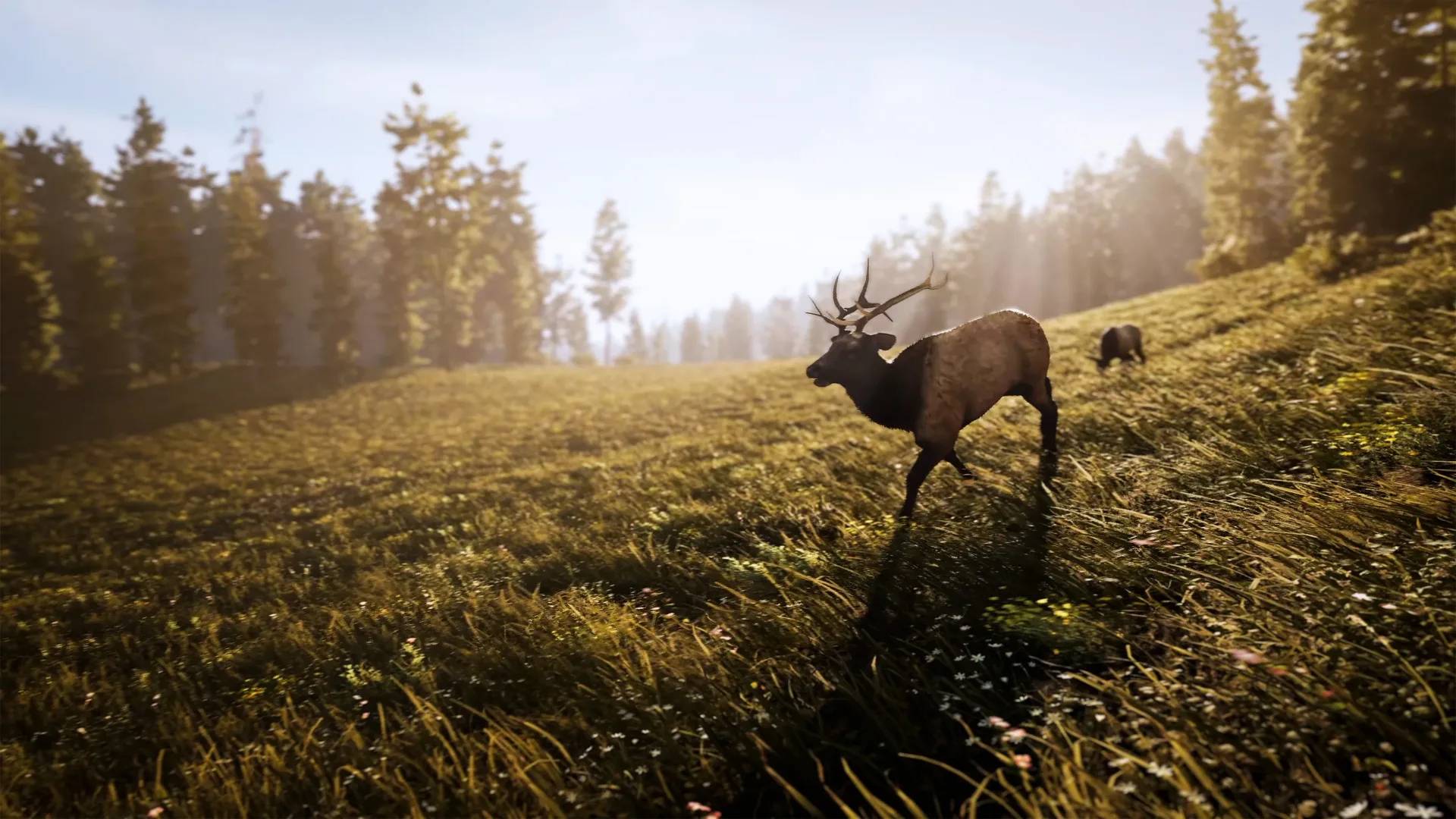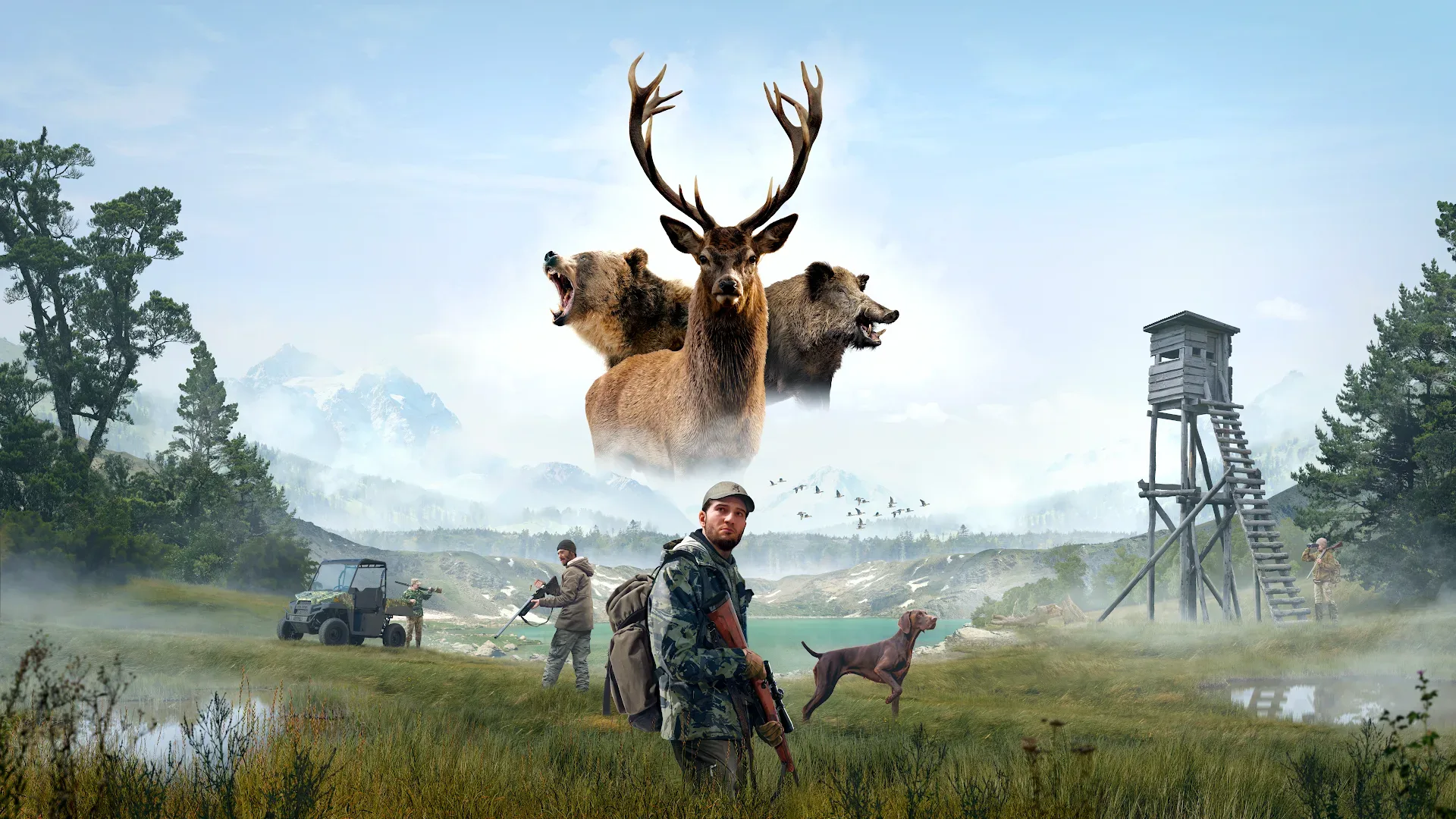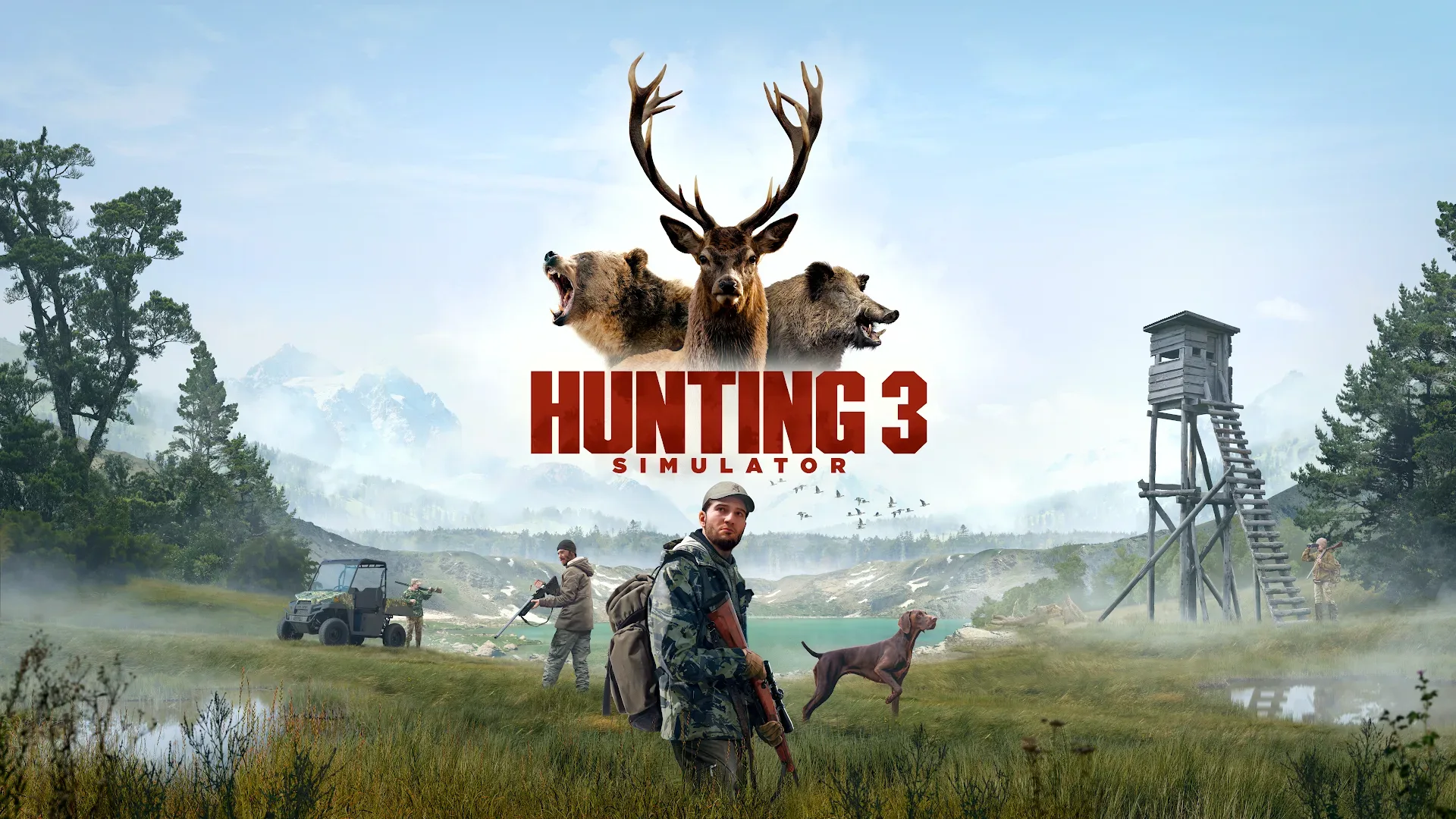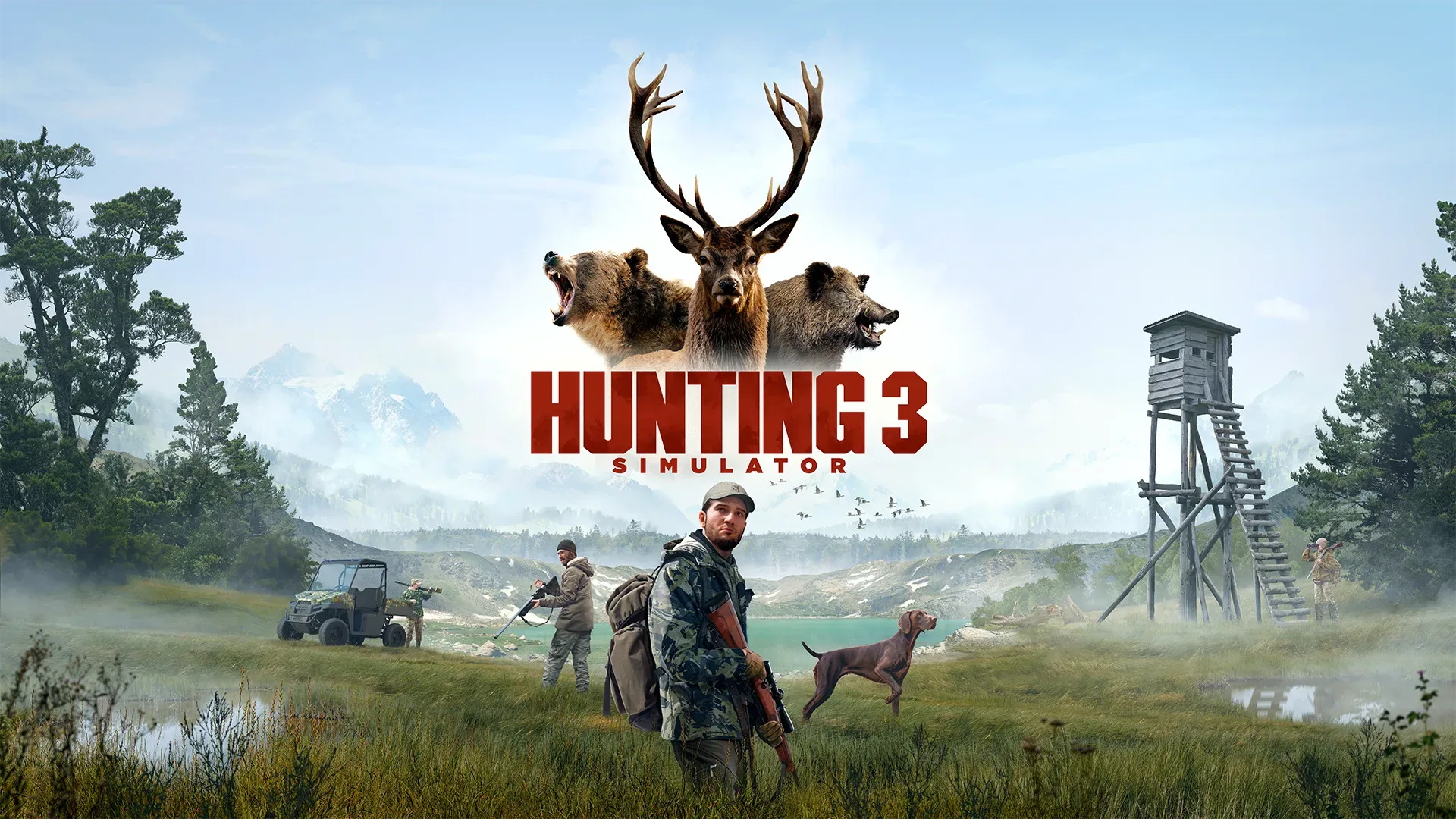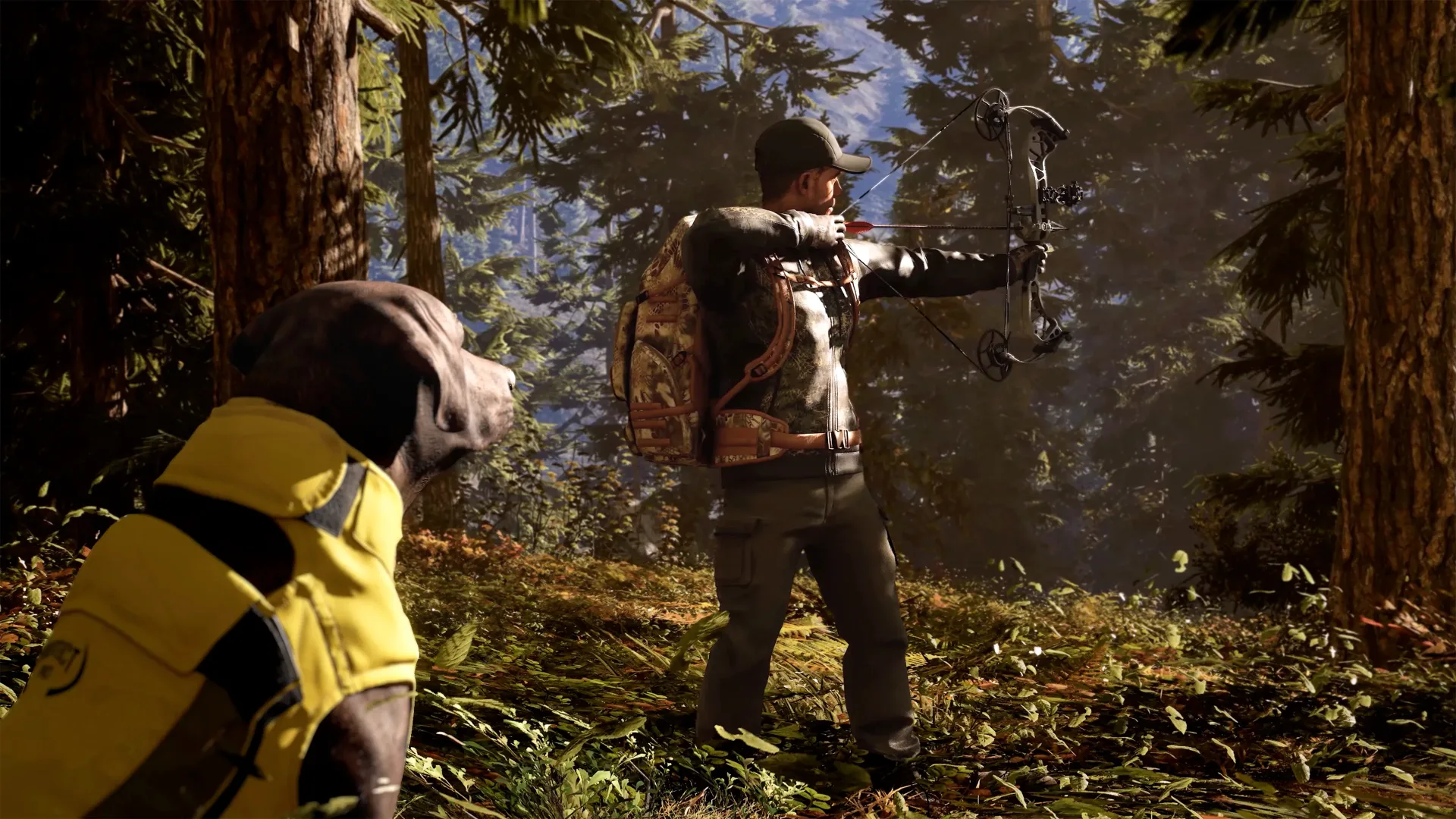
Hunting Simulator 3 is now available on PC, PlayStation 5 and Xbox Series X|S. The new hunting simulation from NACON and NACON Studio Ghent uses Unreal Engine 5 and centers its outdoor pursuits on two large environments, changing seasonal conditions, animal behavior and a substantial selection of licensed equipment.
The launch arrives with an emphasis on methodical observation rather than simply crossing a map in search of targets. Wildlife can react to a player's presence, while scent, wind direction, vegetation and movement are all factors players must consider before taking an approach. There is also transportation for covering long distances, a commandable dog companion, target shooting activities and a lodge that doubles as a customization and trophy-display space.
It joins a busy October 29 release slate; readers tracking the wider day in games can also see the games releasing today.
Two 39-square-mile hunting areas
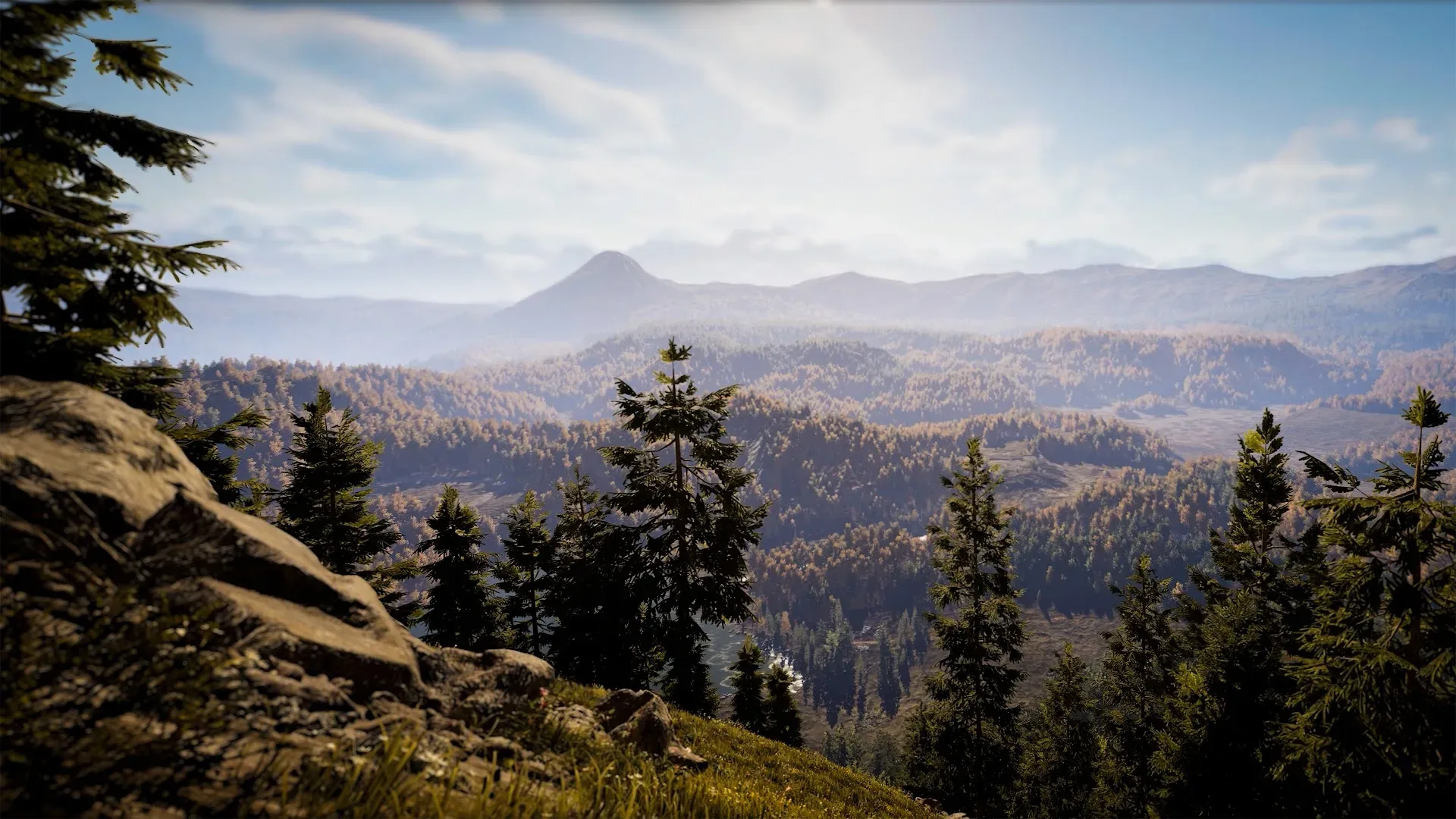
Hunting Simulator 3 includes two regions measuring 39 square miles each. One is inspired by high-altitude Colorado forests, while the other draws from the open, wind-exposed plains of Texas. The contrasting settings matter because they frame the practical challenges of locating and closing in on animals. Forest cover can break sightlines and provide concealment, whereas an exposed plain places greater importance on route planning and the direction of the wind.
Players can initially traverse each area in a Polaris UTV, then leave the vehicle to explore on foot. That division suggests a straightforward rhythm: use the UTV to cover the broad distance between potential hunting grounds, then slow down once a track, scent or promising location calls for a quieter approach. It is a useful structure for maps this large, avoiding the expectation that every trip must begin as a long walk while retaining on-foot movement for the careful part of a hunt.
Neither the amount of mission content nor the exact boundaries and landmarks of the two regions have been detailed here. What is clear is the intended scale: these are not small shooting ranges, but broad landscapes meant to support tracking, travel and repeat excursions across varied terrain.
What SimFauna is designed to change
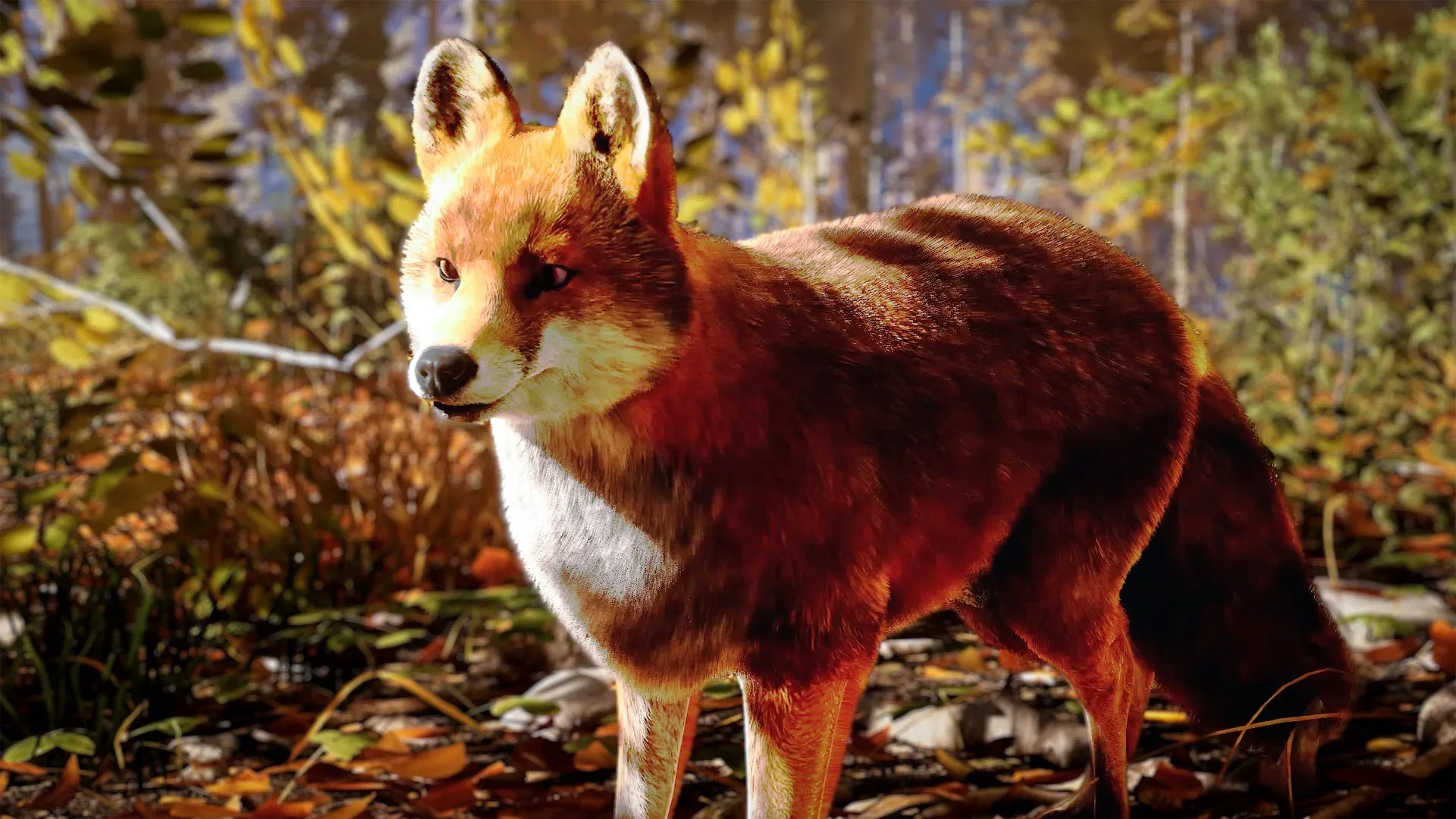
More than 35 animal species are included. Their behavior is governed by a system called SimFauna, which is designed to let wildlife live independently, respond to player behavior and change as seasons pass.
In this context, “independent” means animals are not presented merely as objects that wait for the player to arrive. The system is intended to make their movement and presence part of an ongoing world. The claim that animals learn from player behavior is especially significant for repeat hunts: a direct, noisy or poorly concealed encounter may have consequences beyond a single missed opportunity if nearby wildlife becomes more wary.
Related coverage includes Hunting Simulator 3 Launches on PC, PS5 and Xbox Series X|S.
Seasonal change is another important part of that pitch. A season system can affect the conditions under which players plan an outing, even when the available details do not specify every mechanical effect. The key promise is that the environment and its wildlife are not fixed in one permanent state. Players should expect to reassess conditions rather than rely completely on a route that worked earlier.
Reading the environment before moving
The game identifies four core considerations for approaching large game or steering clear of predators: scent, wind, vegetation and movement. These are familiar ideas in hunting simulations, but each addresses a different way the player can be detected or aided.
- Scent refers to the trace a player leaves in the world and the possibility that an animal can pick it up.
- Wind is the direction that can carry that scent, making position relative to an animal a tactical concern rather than a cosmetic weather detail.
- Vegetation can affect visibility and cover, offering places to conceal an approach while also potentially obscuring a clear view.
- Movement is the immediate risk factor: rushing through cover or making an ill-timed advance can expose the player.
Together, those systems point to a simulation built around patience. The practical implication is that equipment is only one part of preparation. Players will also need to watch their route, use terrain deliberately and decide when to stop moving. That can make a successful encounter feel more like the result of reading conditions than simply finding an animal at range.
A dog companion for tracking and retrieval
Players can summon a canine companion through a command wheel. The dog can follow scents, help guide the player through cover and retrieve small game.
A command wheel is a radial menu: instead of placing every companion function on its own button, it groups instructions in a circular selection interface. For a game where the player may be monitoring terrain, wind and wildlife at the same time, that kind of menu is meant to keep orders readily accessible without requiring a switch away from the hunt for a more elaborate interface.
The dog has a clear functional role rather than being only a cosmetic traveling companion. Scent tracking can help turn a vague clue into a direction of travel, while retrieval can reduce the need to manually search for small game after a successful shot. Guidance through cover also fits the game’s focus on vegetation and careful movement. The announcement does not specify breeds, progression systems or the full list of commands, so prospective players should treat those details as unconfirmed.
The hunting lodge is the game’s central hub
Outside the field, Hunting Simulator 3 uses a fully customizable hunting lodge as its hub. It is where players can display trophies, purchase and modify equipment, and practice.
That makes the lodge more than a simple menu backdrop. It brings together the game’s progression-facing activities in one space: trophies represent the results of hunts, gear access and modification support future outings, and practice provides a lower-pressure setting to work with equipment before returning to the wilderness. The customization element also gives players a way to make that home base their own.
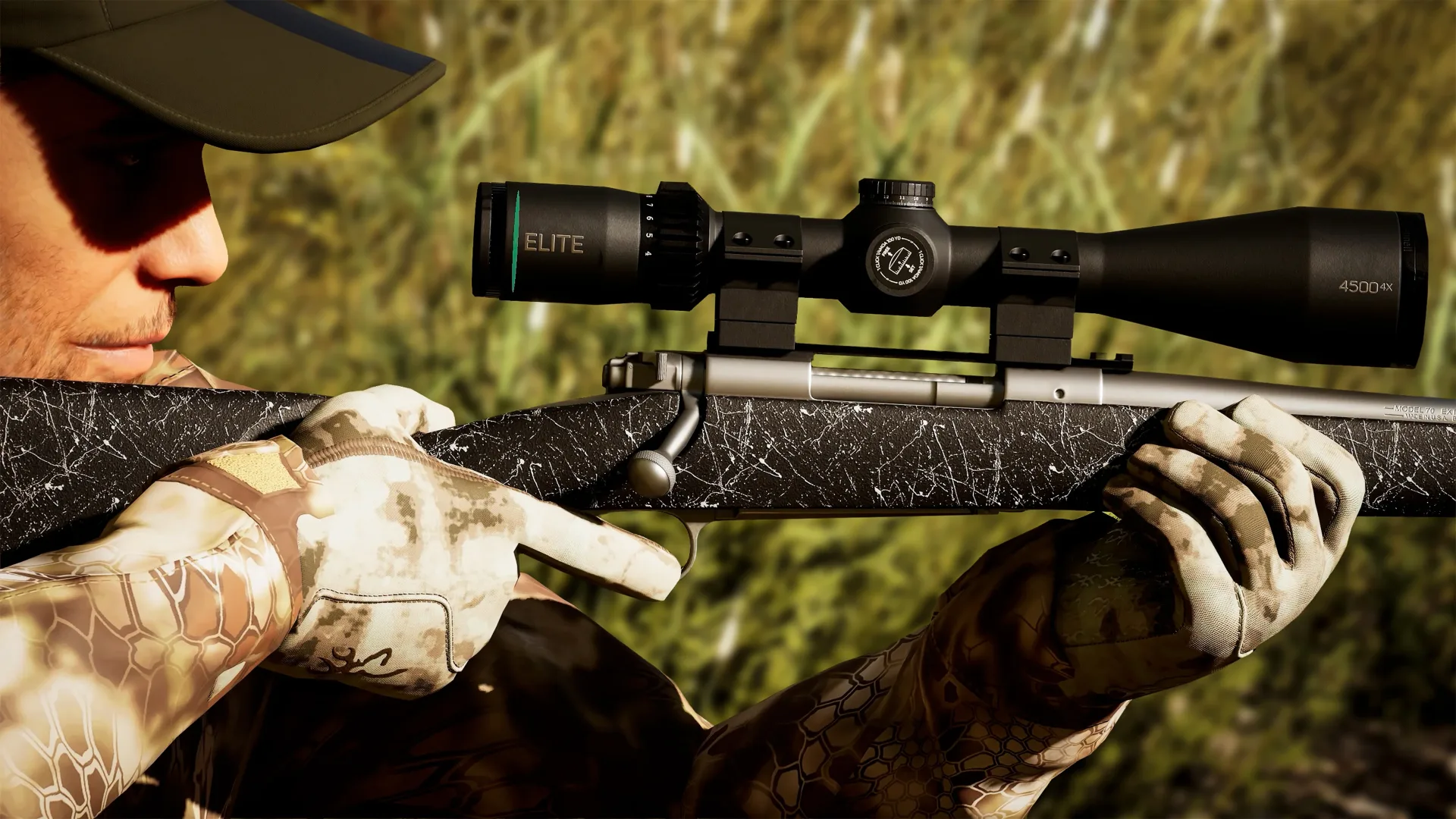
The game contains more than 200 authentic items. That total includes 75 firearms alongside scopes and accessories, with Remington, Beretta, Winchester and Browning among the brands represented. The word “authentic” here concerns the real-world branding and equipment lineup named for the game; it should not be read as a guarantee that every item’s real-world specifications or handling are reproduced in full.
For players, the meaningful takeaway is variety. Firearms, optics and accessories give a hunting game several ways to tailor a loadout to a chosen situation. Still, the available information does not set out a complete modification model, item unlock requirements or every brand and accessory. The broad numbers establish the size of the catalogue, not the exact path to every piece of equipment.
Clay shooting adds a scored competitive activity
Hunting Simulator 3 also includes clay pigeon shooting sessions, with scoring and a global leaderboard. Clay shooting is a target discipline in which moving clay targets are launched for the shooter to hit. In a video game setting, it offers a focused test of timing and aim that is separate from tracking wildlife across a large environment.
The leaderboard means scores can be compared globally, giving players a competitive objective alongside the more deliberate pace of a field hunt. It also makes sense as a practice option from the lodge: moving-target sessions can provide a contained way to become more comfortable with shooting before relying on that skill during an encounter in either major region.
No details have been provided on leaderboard seasons, score categories or whether different weapons create separate rankings. Those questions remain open, but the included mode broadens the package beyond the two hunting maps and their wildlife systems.
What players can expect at launch
At release, the clearest picture is of a hunting simulation that combines long-distance travel, on-foot stalking and environmental awareness. Its two large regions provide different terrain identities, while SimFauna is intended to make animal behavior and seasonal changes central to repeat play. The canine companion can assist with scent trails and retrieval, and the lodge supplies a place for equipment, practice and trophies between excursions.
Hunting Simulator 3 is available now for PC, PlayStation 5 and Xbox Series X|S. The launch materials describe a franchise community of two million fans, though they do not explain how that figure is measured. They do, however, lay out the main features players can expect from this entry: expansive Colorado- and Texas-inspired environments, 35-plus species, more than 200 equipment items, 75 firearms, dog-assisted tracking and globally ranked clay shooting.