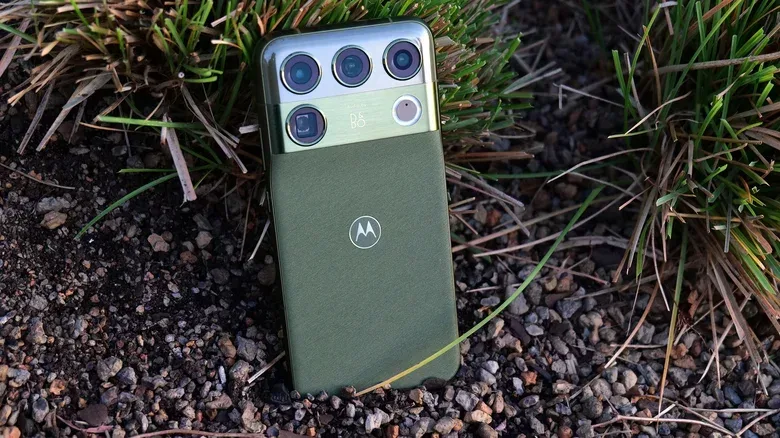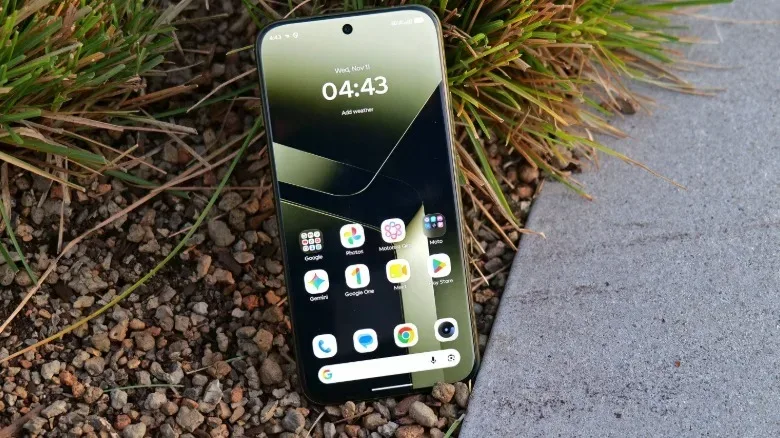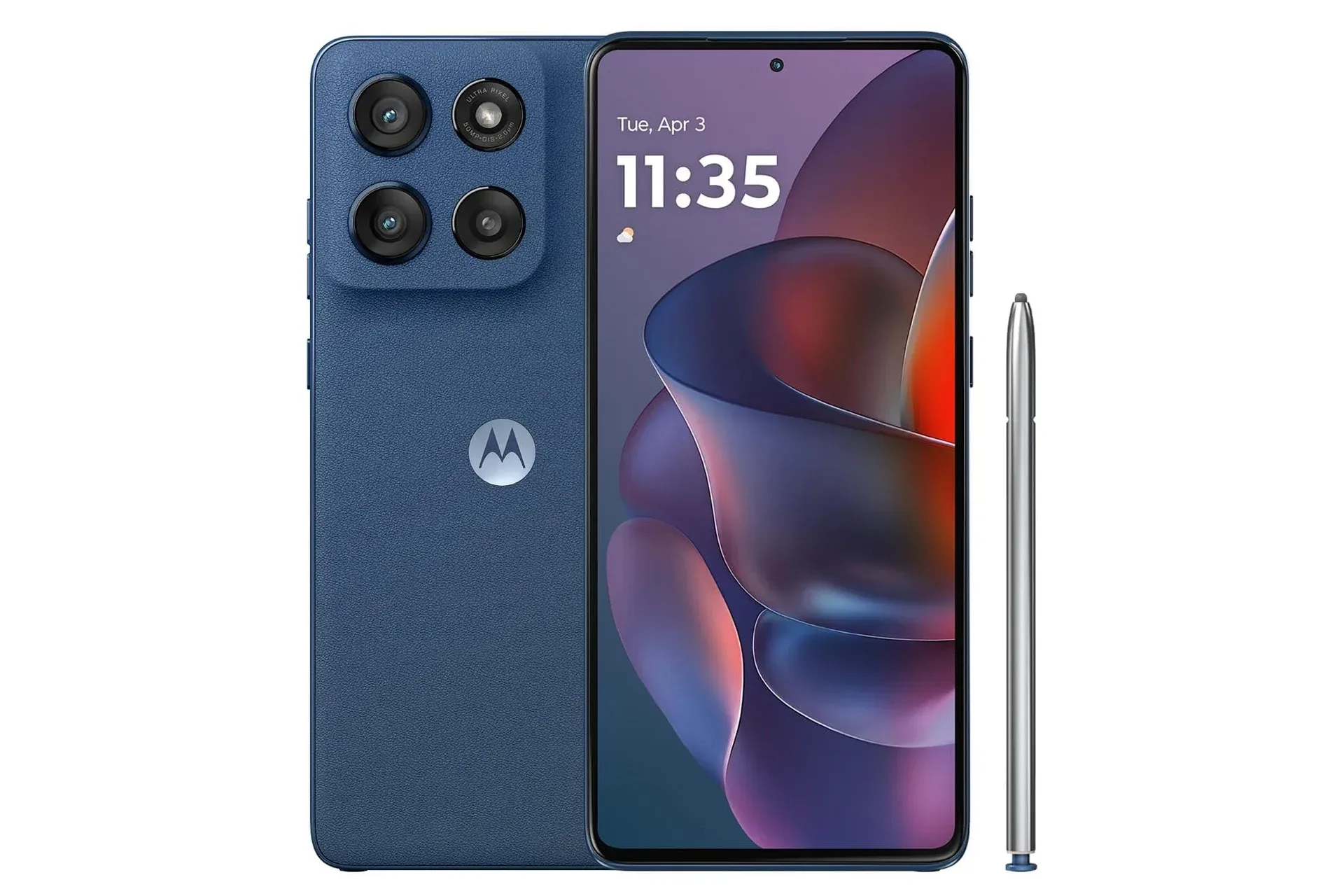
Motorola is taking an unapologetically maximalist route with the Signature 27, a flagship smartphone positioned around unusually aggressive hardware specifications and an equally aggressive $1,600 price. The handset is slated to be the first phone sold in the United States with Qualcomm’s Snapdragon 8 Elite Extreme Gen 6 processor, but the chip is only one piece of a package built to remove the usual “almost flagship” qualifiers from Motorola’s top-end phone.
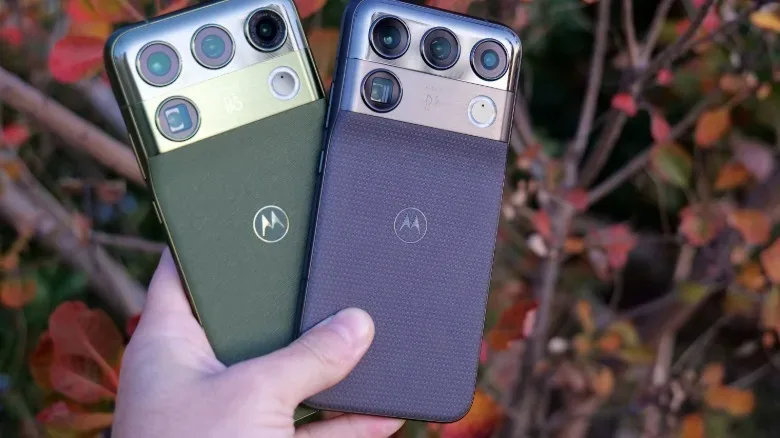
The Signature 27 combines a 6.8-inch tandem OLED display, a 7,000mAh silicon-carbon battery, wired charging up to 90W, a four-sensor rear camera arrangement, 12GB of memory, and 512GB of base storage. It also brings a dedicated AI button, speakers tuned by Bang & Olufsen, an IP69 dust-and-water-resistance rating, and finishes Motorola calls olive green and coal smoke.
That list is a clear statement of intent. Motorola is not trying to make a cheaper alternative that selectively sacrifices screen, camera, battery, or sustained performance. It is attempting to build a phone for buyers who want the largest available spec sheet—and are prepared to pay a price that puts the Signature 27 firmly in super-premium territory.
A display designed to win the numbers game
The Signature 27’s screen is a 6.8-inch Extreme AMOLED Duo panel based on tandem OLED technology. In simple terms, tandem OLED uses stacked OLED layers rather than a single light-emitting layer. The potential appeal is that it can pursue higher brightness and durability characteristics than conventional OLED designs, though a panel’s real-world behavior still depends on the complete implementation.
Motorola rates the display at up to 12,000 nits of peak brightness. A nit is a measure of luminance—how intensely a display emits light. Peak-brightness figures generally refer to a limited portion of the screen under particular conditions, rather than the brightness a user should expect across an entire screen for extended periods. Even with that important context, 12,000 nits is an eye-catching claimed number next to the 2,600-nit peak brightness cited for Samsung’s Galaxy S26 Ultra.
For a phone used outdoors, display brightness is more than a bragging-rights statistic. It can determine whether maps, messages, camera controls, or a game remain legible under direct sunlight. High brightness also has implications for HDR content, where brilliant highlights can stand out more distinctly. Buyers should nevertheless treat the maximum number as part of the specification sheet, not a promise that the phone will constantly operate at that level.
Motorola is covering the screen with Corning Gorilla Glass Ceramic 3. The company is therefore treating the front as a flagship-grade component too, rather than putting the majority of its investment behind performance and cameras while leaving protection as an afterthought.
Four rear sensors, including a camera-focused action tool
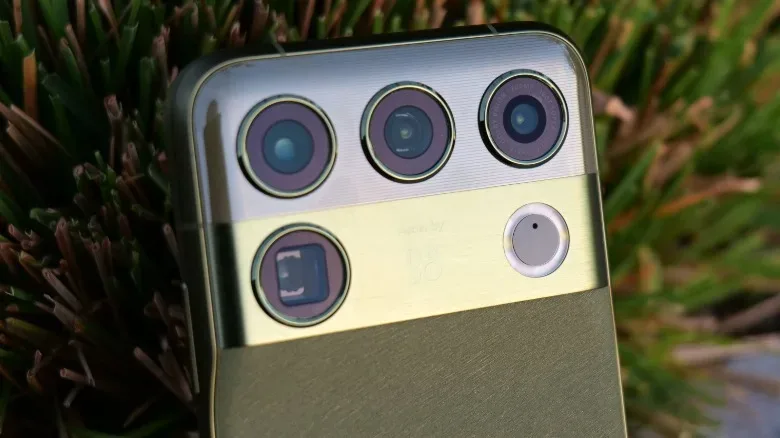
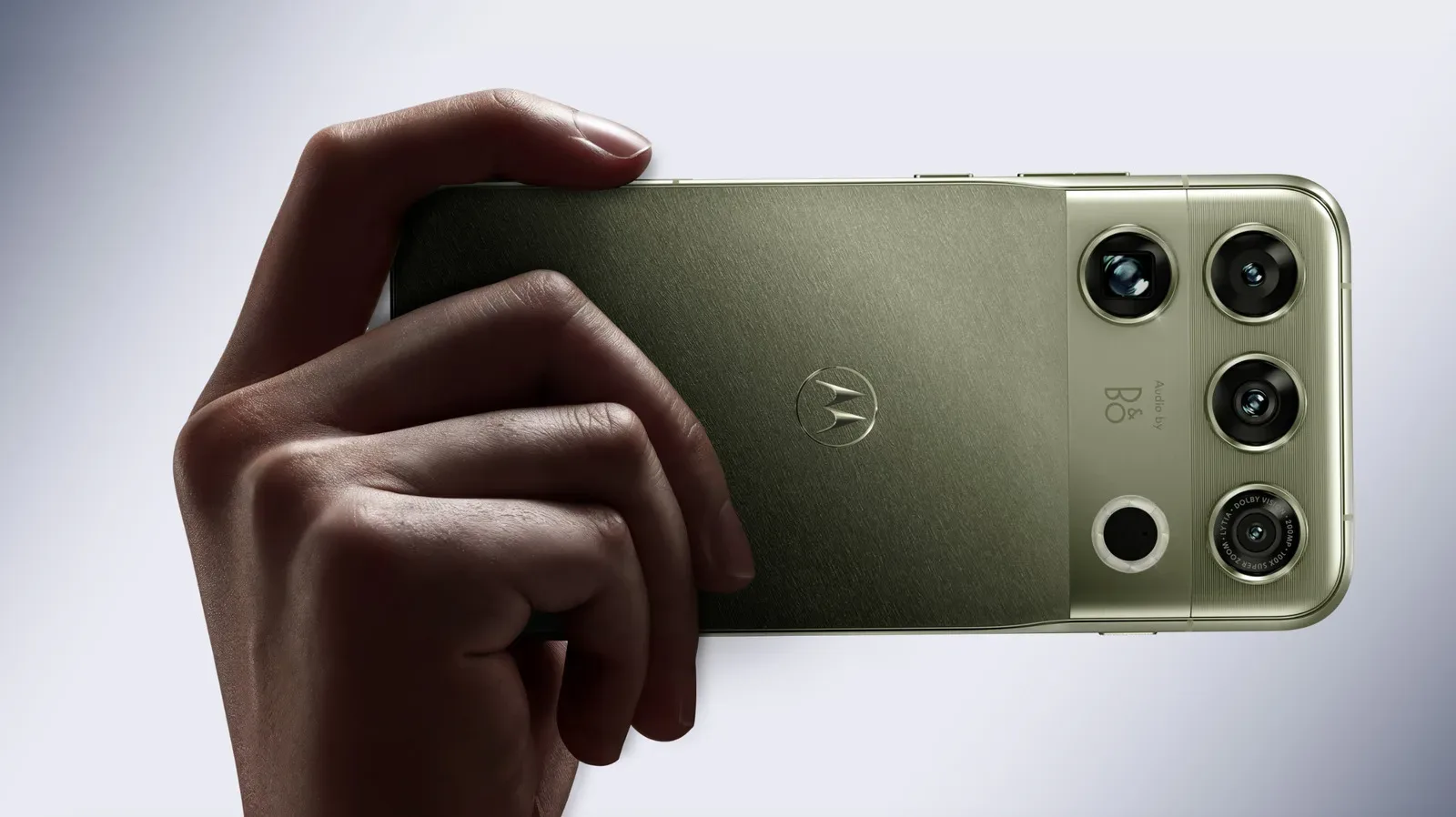
The conventional portion of the Signature 27’s rear camera system starts with three high-resolution cameras: a 50-megapixel Sony LYTIA L910 main sensor, a 50MP ultra-wide camera, and a 200MP telephoto camera with 3x optical zoom.
Each fills a recognizable role. The main camera is the default tool for everyday photography. An ultra-wide camera uses a broader field of view for subjects such as landscapes, architecture, or group shots when taking a step backward is not practical. The 3x optical telephoto camera is designed to bring distant subjects closer through lens optics, rather than relying entirely on digital cropping. Optical zoom matters because it gives the camera a more appropriate view of the scene before computational processing takes over.
The more unusual component is a fourth EVS sensor. Motorola says it is the first such sensor in a smartphone and that it can detect pixel-level changes in light to help deliver sharper images of action. EVS here is intended as a dedicated motion-oriented imaging component, rather than another general-purpose camera. The practical target is easy to understand: rapidly moving players, pets, children, or other subjects can expose the limits of phone photography, particularly when light is limited.
Whether that fourth sensor becomes a meaningful differentiator will depend on how consistently it helps in real scenes and how Motorola’s camera software deploys it. The important point is that the Signature 27 is not merely increasing megapixel counts. It is adding a sensor meant to address a specific photographic failure case: motion that can turn an otherwise good moment into blur.
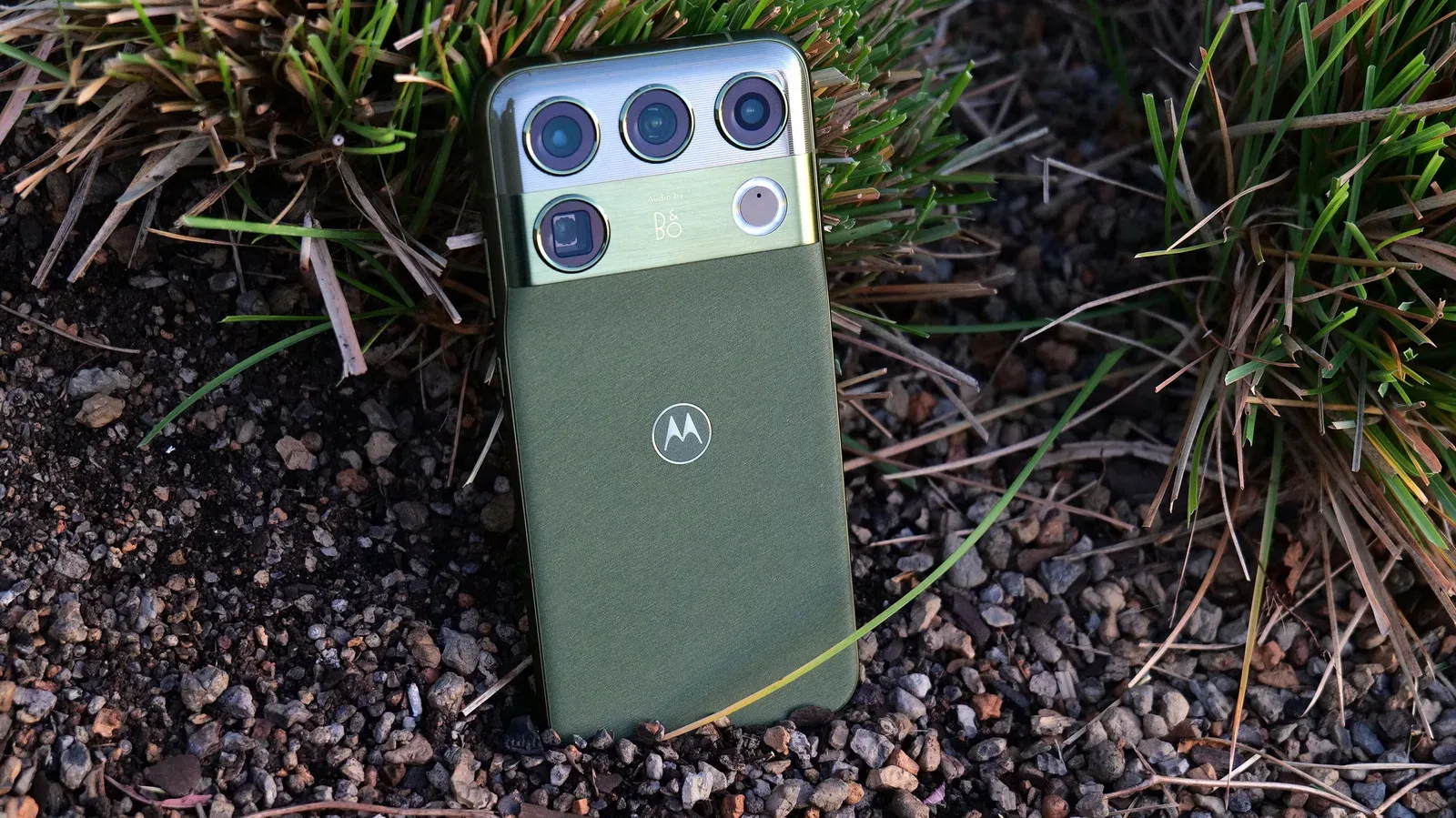
The camera hardware also affects the phone’s visual identity. Motorola has shaped the rear surface so it rises gradually toward the cameras, leaving the lenses essentially flush instead of placing them on a pronounced island. It is an effort to integrate a dense imaging array without the obvious snag point or table wobble associated with a large camera bump. With four lenses and a flash, though, the resulting rear arrangement remains visually busy.
Processor, memory and cooling: the performance pitch
Qualcomm’s Snapdragon 8 Elite Extreme Gen 6 is central to the Signature 27’s positioning. As the first handset slated to go on sale in the US with the processor, Motorola gets a timing advantage over rival phones that will use the same top-tier silicon later.
Motorola pairs the chip with 12GB of RAM and 512GB of base storage. RAM is the short-term working memory used by apps and the operating system; more of it can help a phone keep more work active in the background instead of reloading applications when a user switches among them. The company’s RAM boost feature can effectively extend available memory to 24GB for multitasking purposes. That is different from turning the phone into a device with 24GB of physical RAM, but it signals Motorola’s focus on heavy, concurrent use.
Gaming, video capture, image processing, and sustained performance can all turn heat into a constraint. The Signature 27 answers that with an 8,384mm² 3D vapor chamber and what Motorola describes as diamond-infused thermal gel. A vapor chamber is a cooling component that spreads heat away from a concentrated source, such as the processor, across a larger area. Its job is not to make heat disappear; it is to manage and distribute heat so a device has a better chance of maintaining performance before it must slow itself down.
That thermal emphasis matters to mobile players as much as benchmark watchers. A phone can have the newest processor and still feel less impressive if it becomes hot and reduces speed during a longer session. Motorola has made sustained behavior part of its engineering argument, although actual long-duration performance will need independent evaluation once the phone is available.
For readers who use an Android phone as part of a broader game setup, the continuing work around native ports and handheld-friendly software is another reminder that raw hardware is only one side of the experience. Native Android game ports can still present their own handheld hurdles, regardless of how much processor headroom a flagship phone has.
A 7,000mAh battery changes the conversation, with accessory caveats
The Signature 27’s 7,000mAh silicon-carbon battery is arguably its most consequential specification. Battery capacity is expressed in milliamp-hours, or mAh, a measure associated with how much electrical charge a battery can hold. It is not a direct battery-life guarantee: screen settings, signal conditions, apps, processor load, and software behavior all influence how long a device lasts. Still, a 7,000mAh cell is a substantial starting point for a large flagship phone.
Silicon-carbon battery technology is part of the reason a manufacturer can pursue a larger capacity in a contemporary phone design. Motorola is pairing that capacity with charging of up to 90W over a wired connection and up to 50W wirelessly. The catch is material: the maximum charging rates require Motorola’s proprietary TurboPower adapters.
That means the charging headline should be read as a system claim rather than an assumption about every charger a buyer already owns. Someone who wants the stated top speed needs the appropriate Motorola charging hardware. Buyers also need to account for the absence of built-in magnets. Magnetic accessory support is possible with a case, but it is not integrated into the phone itself.
These caveats do not erase the appeal of a large battery, especially for people who travel, game, shoot a lot of photos and video, or simply dislike arranging daily charging around a demanding flagship. They do clarify that the phone’s most ambitious charging numbers come with ecosystem requirements.
Premium details, a programmable button and a premium-price decision
Motorola has not limited its flagship push to internal parts. The Signature 27 includes speakers tuned by Bang & Olufsen, standard lock and volume controls, plus a dedicated AI button that can be customized to launch another app. A customizable physical shortcut can be more useful than its branding suggests: a user can make it a fast route to the function they personally need rather than treating it as a button solely for one company-defined AI workflow.
The olive green version has a finish intended to resemble a mix of cloth and leather, while the coal smoke model uses what Motorola calls a tactical weave, evoking ballistic nylon. The phone also carries an IP69 rating. Motorola says that rating supports submersion at up to five feet for as long as 30 minutes. Water and dust resistance are valuable safeguards, but they should be treated as protection against accidents, not a reason to make water exposure a normal part of ownership.
All of those choices culminate in the most difficult part of the proposition: the $1,600 price. At that level, the Signature 27 cannot rely on one marquee feature to make its case. It has to persuade prospective owners that the screen, processor, cooling, imaging system, battery, charging, storage, materials, audio, and protection combine into an experience worth choosing over established premium alternatives.
There are sensible questions to ask before committing. Does the buyer value the first US availability of Qualcomm’s next top chip enough to avoid waiting for later devices? Is 512GB of storage meaningful for their use? Will the large battery and fast charging matter daily, and are they comfortable using a TurboPower adapter for maximum speeds? Is a dedicated action-oriented imaging sensor more valuable than magnetic accessories built into the phone? At $1,600, small preference differences can matter as much as headline specifications.
Motorola is set to open Signature 27 pre-orders on November 19. The device’s arrival is significant because it is a direct attempt to compete without compromise in the most expensive smartphone tier. The resulting question is not whether its spec list is huge—it plainly is—but whether Motorola can make that all-in hardware approach feel coherent enough to justify a price that is just as enormous.