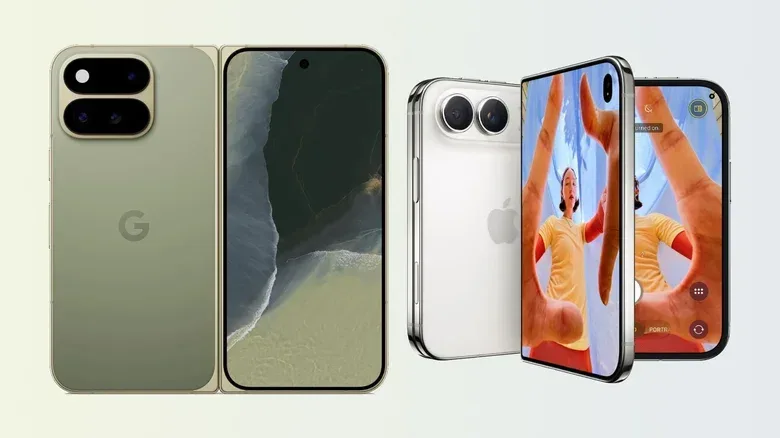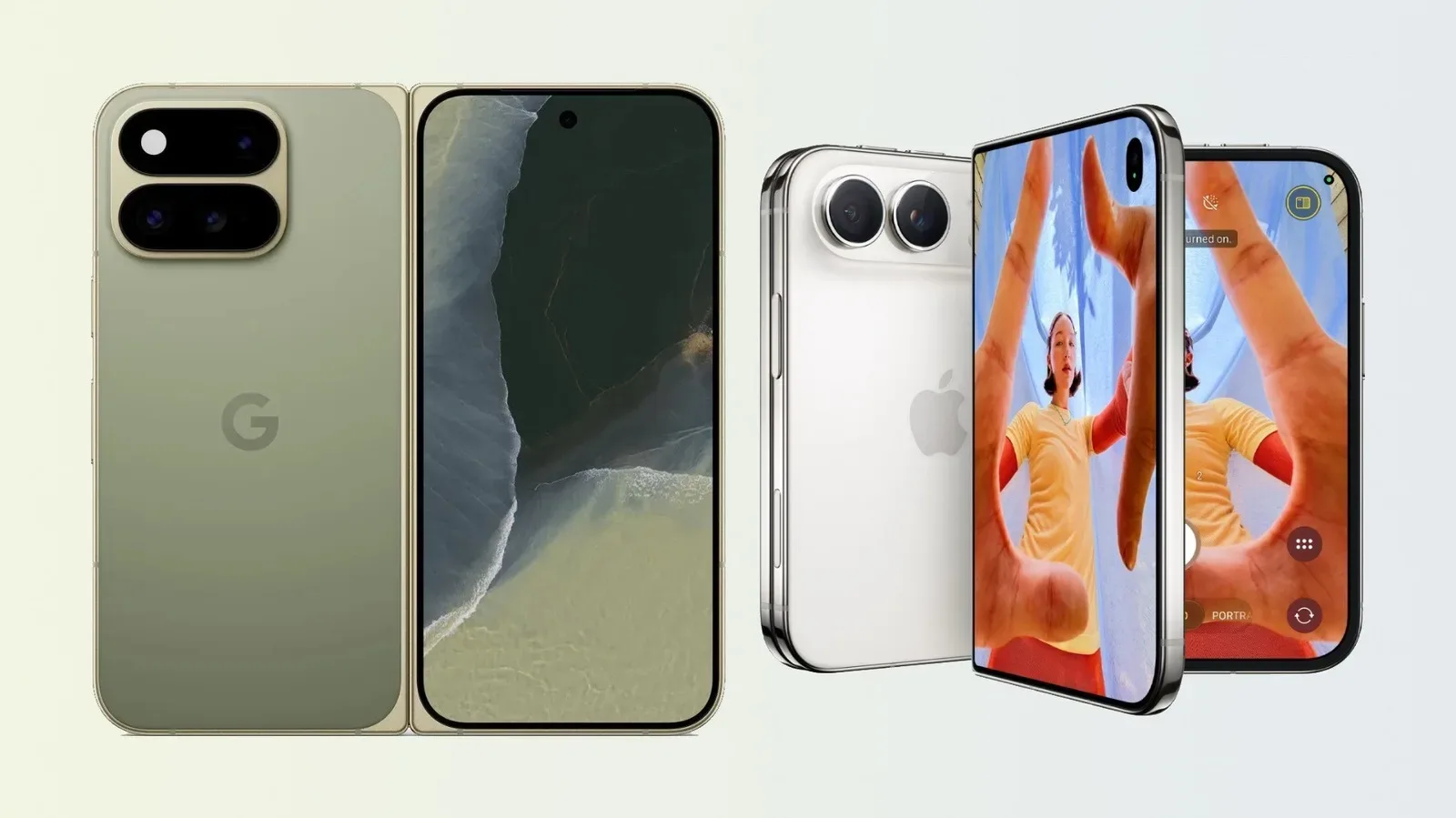
Foldable phones are often discussed as though the big decision is simply whether a handset should bend in the middle. The more meaningful choice between Apple’s iPhone Duo and Google’s Pixel 11 Pro Fold is what each company believes that bend is for. One treats the opened device as a broad, passport-shaped canvas; the other leans into a taller, more conventional-feeling outer phone that opens into a larger, squarer workspace.
That difference affects nearly every practical trade-off. It changes how the phone sits in a pocket, how comfortable the cover screen feels for quick tasks, how video occupies the internal panel and which kinds of apps may feel naturally at home on the expanded display. Cameras, charging and price further separate the two. Neither is a casual purchase: the iPhone Duo begins at $1,999 with 256GB of storage, while the Pixel 11 Pro Fold starts at $1,899 for the same capacity.
For prospective buyers, the useful question is less “which foldable is best?” than “which compromises will be least noticeable every day?” Here is what the supplied specifications and reported testing suggest.
Two different answers to the cover-screen problem
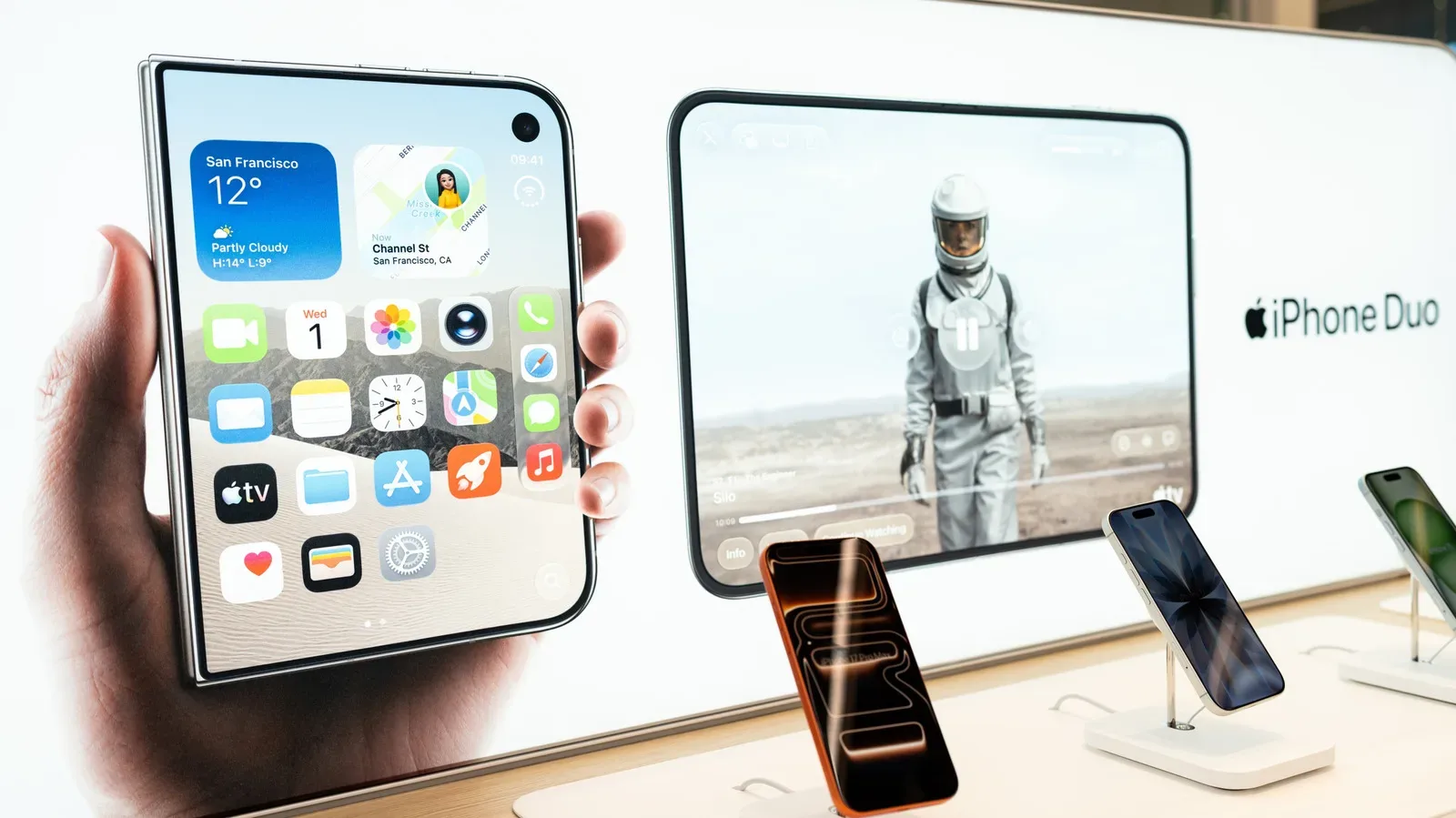
The iPhone Duo uses what is described as a wider, passport-style design. Closed, it has a 5.4-inch outer display. Opened, it reveals a 7.6-inch screen, putting its display size close to that of an iPad mini. The Pixel 11 Pro Fold takes the alternate approach: an 8-inch inner display paired with a 6.5-inch outer screen.
Screen measurements alone do not explain the experience. Aspect ratio is the relationship between a display’s width and height. A wider shape can give media more room when a device is open, while a more traditionally phone-like cover display can make the folded device feel less like a compromise for messaging, browsing or other short interactions.
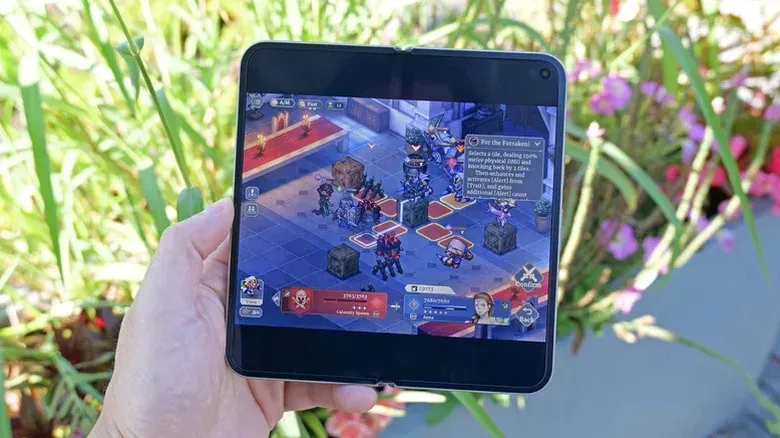
In this matchup, the iPhone Duo’s wider inner ratio is positioned as the stronger fit for consuming content on the large screen. Its trade-off is a comparatively small 5.4-inch external display. The Pixel’s 6.5-inch outer display is closer in size to a standard smartphone screen, making its folded form potentially more familiar for day-to-day phone duties. Its squarer expanded display, however, can leave vertical and widescreen video looking unusual.
Neither design is universally superior. Someone who expects to unfold the device frequently for reading, browsing and watching media may value Apple’s wide presentation. Someone who wants to leave the device closed for many tasks may prefer the Pixel’s larger outer panel. That is a much more consequential distinction than the modest difference between the 7.6-inch and 8-inch inner-screen diagonals.
Brightness, glare and the crease are separate display issues
The Pixel 11 Pro Fold has the higher stated peak brightness: 3,600 nits, compared with 3,000 nits for the iPhone Duo. A nit is a unit of display brightness. Higher figures can matter outdoors or under intense lighting, though a peak-brightness number does not by itself describe every part of everyday screen behavior.
Apple’s counterpoint is a nano-texture layer on the Duo’s foldable screen. The stated purpose is to cut glare and reduce the visibility of the central crease. That makes the display comparison less tidy than “higher number wins.” Brightness is one part of visibility; reflected light and the way the crease catches that light are different parts of the experience.
The remaining practical uncertainty is personal preference. A buyer who regularly uses a phone in bright environments may put substantial weight on the Pixel’s 3,600-nit peak. A buyer particularly bothered by reflections or the visible reminder that a screen folds may consider the Duo’s surface treatment more important. The information available does not establish that one display is categorically better in all conditions.
Pixel is slimmer and lighter, but neither chases ultra-thin territory
The iPhone Duo measures 11.3 mm when closed and weighs 254 grams, or almost 9 ounces. The Pixel 11 Pro Fold is 10.1 mm thick and weighs 239 grams, or 8.4 ounces. On a spec sheet, the 15-gram difference may look small. In a product designed to be held open for long periods, it can be meaningful.
Thickness is also especially visible in a foldable because the closed device stacks its two halves. The Pixel is thinner, although it has still been characterized as considerably bulkier than Samsung’s foldable offerings. The broader point is simple: neither option should be approached as a featherweight conventional slab phone with an extra trick. Buyers who are sensitive to pocket bulk or hand fatigue should treat the physical dimensions as central, not incidental, to the purchase.
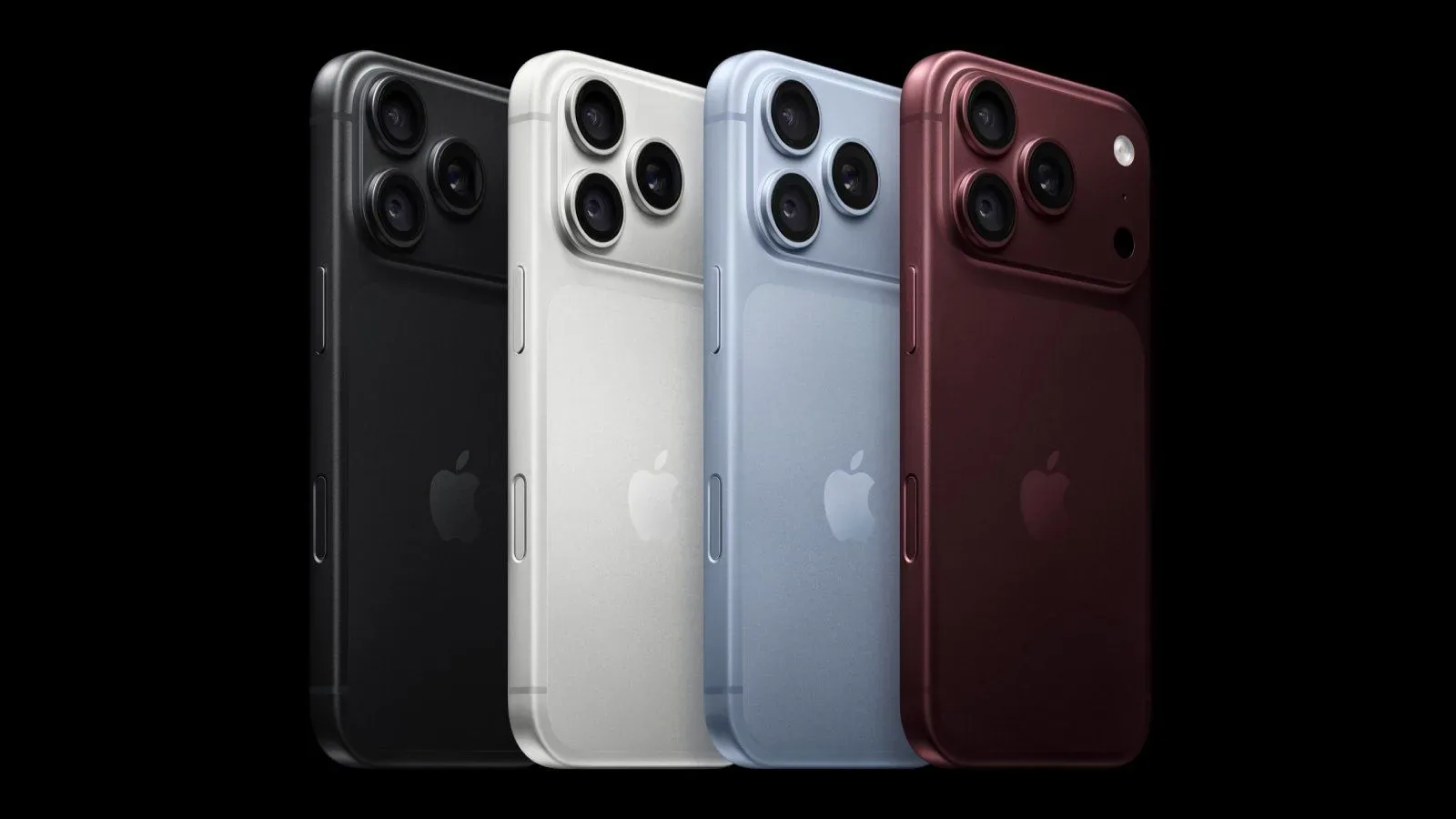
The materials diverge as well. Apple uses a titanium frame and Ceramic Shield glass on the Duo’s back. Google uses a fiberglass composite back and ceramic glass on the Pixel’s outer screen. Both devices carry an IP68 rating for water and dust protection. IP68 is an ingress-protection designation covering resistance to dust and water under the standard’s defined test conditions; it is a notable capability for foldables, where hinges and flexible displays add design complexity. It should not be interpreted as an invitation to ignore ordinary care, but it does put both handsets in a relatively uncommon group for this category.
Apple’s software case rests on form-factor adaptation
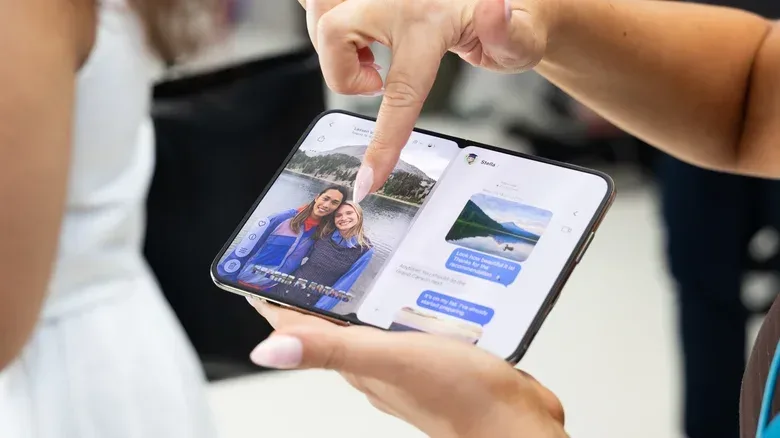
Apple has tailored iOS 27 for the Duo with device-specific functionality including split-screen mode. The interface is also designed to adapt as the phone changes posture: closed, fully open, or half-folded and propped on a table in tent mode. Split-screen means placing two apps or app views on screen at the same time, a feature that has obvious value when an inner display offers more working area than a typical phone.
The important detail is not merely that the Duo can run two apps. Foldables ask software to respond gracefully to a screen that changes shape during use. A polished implementation should keep a task coherent when a user opens the phone, closes it or changes its orientation. Apple’s Duo-specific adaptations signal an effort to make that transition part of the product rather than an afterthought.
Google has had longer to optimize Android for foldables, but the available assessment identifies an ongoing limitation: some Android apps still enlarge their standard interfaces instead of redesigning the layout to use the extra space. In other words, a larger screen can sometimes mean larger empty areas, larger controls or a stretched phone view rather than extra tools and information.
That is not solely an operating-system issue. Individual app developers decide whether to build layouts that react intelligently to different screen sizes and positions. The iPhone Duo therefore has its own open question. Apple can provide a framework and include its own tailored features, but it remains to be seen how many iOS developers will adapt their leading apps for the foldable form factor. A buyer choosing between the platforms is also choosing between Google’s established but uneven foldable app landscape and Apple’s newer ecosystem opportunity.
This software angle may matter to mobile players and emulator users in particular, although the supplied information does not make performance or controller claims for either device. A bigger display is not automatically better if an app does not rearrange its interface well. For Android users weighing wider gaming and emulation possibilities, our look at HakuX on Android for original Xbox emulation is a reminder that software setup can matter as much as raw hardware ambition.
Google has the clearer camera advantage
The camera comparison is more direct. The Pixel 11 Pro Fold has a 48-megapixel main camera, plus 10-megapixel ultra-wide and telephoto cameras. The telephoto hardware enables optical zoom. Optical zoom uses lens optics to bring distant subjects closer, unlike digital enlargement, which crops or scales an image. The Pixel camera system has been described as the strongest on a foldable, even though its ultra-wide and telephoto sensors have lower resolutions than those in the standard Pixel 11 Pro.
The iPhone Duo has two 48-megapixel cameras: wide and ultra-wide. It does not have optical zoom or the variable aperture offered by the iPhone 18 Pro. A variable aperture is a camera mechanism that changes the opening through which light enters the lens, offering another way to manage light and depth-of-field behavior. Its absence, alongside the lack of a telephoto camera, makes Apple’s hardware proposition less flexible on paper for people who frequently photograph distant subjects.
This does not mean the Duo’s two cameras are unusable; it means the Pixel offers more distinct focal-length options. For buyers who see the foldable as a primary travel or event camera, that versatility is a substantial advantage. For those already invested in iOS and mostly using wide or ultra-wide framing, the Duo’s camera limitations may be acceptable, but they are real limitations rather than minor spec-sheet trivia.
Battery comparisons need careful reading
Battery claims are not directly comparable yet because the iPhone Duo had not reached stores at the time of the information provided. Apple rates it for up to 31 hours of video playback using the inner screen and up to 44 hours on the outer screen. Those are controlled playback figures, not a promise of the same result in mixed real-world use involving applications, network conditions, brightness choices and changing screen states.
The Pixel 11 Pro Fold reportedly delivered about 27 hours of video playback on its external screen during review testing, surpassing Google’s stated 24-hour figure. That is a useful data point, but it is still not an apples-to-apples test against Apple’s stated inner- and outer-display numbers. The sensible reading is that the Pixel has a reported tested result, while the Duo’s real-world battery behavior remains to be established.
Charging favors Apple on the supplied figures. With a 60W power adapter, the iPhone Duo can reach 50 percent in roughly 20 minutes. The Pixel 11 Pro Fold is capped at 30W charging and takes about 30 minutes to reach 50 percent. Buyers should note the condition attached to Apple’s number: achieving that result requires the specified 60W adapter.
Price is close at entry, but storage raises the ceiling
At 256GB, the $100 gap is relatively narrow: $1,999 for the iPhone Duo and $1,899 for the Pixel 11 Pro Fold. The iPhone Duo can rise to $3,199 in its 2TB configuration, illustrating how rapidly a foldable purchase can escalate when high storage capacity is part of the plan.
The Pixel 11 Pro Fold is already available to buy. The iPhone Duo was listed to reach stores on October 23, with pre-order setup available through Apple’s website. Availability aside, the decision is unusually easy to frame. The Pixel delivers a larger, more phone-like outer display, a slimmer and lighter body, the higher stated brightness and a more versatile camera system. The iPhone Duo offers a wider inner-screen shape, nano-texture aimed at glare and crease reduction, Duo-focused iOS 27 features and faster stated charging with the required adapter.
There is no universal winner because the central trade-off is behavioral. Pick the Pixel if the folded device must feel as close as possible to a normal phone and camera reach is a priority. Pick the Duo if the wider opened canvas and iOS experience are the reasons to buy a foldable in the first place. At these prices, that personal workflow matters far more than declaring either hinge the champion of a spec-sheet duel.