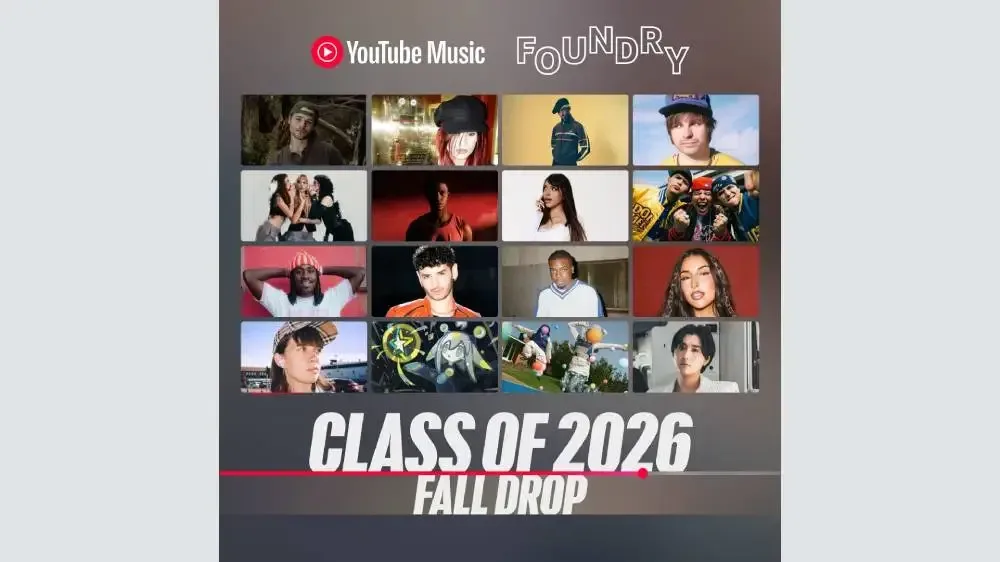
YouTube Music has introduced its Foundry Class of 2026, selecting 16 independent artists from eight countries for a program built around financial support, platform partnership and career-development opportunities. The new group includes Underscores, Zeina, Max McNown, This is Lorelei, Takase Toya, FLVCKKA and others working across hyperpop, R&B, country, electronic music, rap, folk, Afro-fusion and multilingual pop.
Foundry has operated since 2015 and has worked with more than 250 artists. Participants receive a grant, dedicated support from YouTube partners, access to newer products, and tailored opportunities both on and away from the platform. Those are distinct forms of support: a grant is direct funding, while partner assistance and product access can help artists navigate an increasingly video-led music ecosystem. “Bespoke” opportunities, meanwhile, means the activity is intended to be tailored to a particular artist rather than treated as a one-size-fits-all promotional package.
The 2026 class is notable less for one shared sound than for how many scenes and working methods it brings together. Several artists operate between genres, languages or national music traditions; others are rooted in a sharply defined local style. That breadth is central to the practical value of a program like Foundry. Independent artists may have audiences well beyond their home markets without the infrastructure traditionally associated with a large label operation. A platform relationship cannot replace the creative and business work involved in building a career, but funding and direct support can matter at a point where visibility, video, release planning and audience connection all intersect.
The Foundry Class of 2026
The incoming cohort comprises Aiobahn, Asfar Shamsi, Baran Kok, FLVCKKA, Gabriel Jacoby, harha, Jonny Mahoro, José Jr, KEVIS Y MAYYKI, Mariasss, Max McNown, Takase Toya, This is Lorelei, Underscores, Yapi and Zeina.
- Aiobahn (Japan) is an electronic dance music producer whose work connects Japanese subculture and pop.
- Asfar Shamsi (France) works in a post-rap pop space that combines rap, electronic music and classic pop songwriting.
- Baran Kok (Germany) is associated with high-energy German rap and direct, taboo-free storytelling.
- FLVCKKA (Mexico), from Chihuahua, works in alternative trap through a self-described “hypercorridos” style and the genre-blending Neobuchonismo collective.
- Gabriel Jacoby (United States) makes intimate R&B and funk, emphasizing soulful melodies, vulnerable writing and multi-instrumental ability.
- harha (Japan) is a project formed in 2022 by producer harha and vocalist yonabe, using hip-hop-influenced music to explore emotions and the fading sense of childhood purity.
- Jonny Mahoro (Germany) combines poetic indie-pop writing with driving beats shaped by R&B.
- José Jr (Brazil) is a multi-instrumentalist singer-songwriter combining folk, rock and traditional Brazilian music.
- KEVIS Y MAYYKI (Mexico) are a rap duo from Nuevo León who blend old-school sounds and alternative rock. Their debut, LOS CHICOS DEL NORTE, arrived in 2025.
- Mariasss (Brazil) are a sister trio previously included in Foundry Rising 2025, combining vocal harmonies with pop, K-pop and electronic beats.
- Max McNown (United States) is a folk-country singer-songwriter known for acoustic, emotionally direct storytelling and viral ballads.
- Takase Toya (Japan) writes, composes and produces his own work. “Doushite feat. Emi Noda” has surpassed 1.2 billion cumulative streams across Asia.
- This is Lorelei (United States) is the solo project of Water From Your Eyes member Nate Amos, making lo-fi alternative pop.
- Underscores (United States) blends hyperpop with conceptual songwriting, cinematic framing and visually focused world-building.
- Yapi (Spain), who was born in Madrid, combines Spanish and French lyrics with Afrobeat in an Afro-fusion approach aimed across Europe and Latin America.
- Zeina (Lebanon, Egypt) is a Brooklyn-born, Montreal-raised Lebanese-Egyptian artist working across Arabic, English and French. Her existing milestones include two JUNO Award nominations and an entry on the Billboard Canadian Hot 100.
What the genre labels actually signal
Some of the descriptions attached to the class use labels that are useful shorthand but can be misunderstood as rigid boxes. Hyperpop, the term associated here with Underscores, generally refers to pop that pushes digital production, contrast and genre collision to conspicuous extremes. In this context, the more informative detail is that the project pairs those sonic choices with conceptual writing and a deliberate visual world. It suggests the music and the imagery are meant to function together, which is especially relevant on a video platform.
Post-rap pop, applied to Asfar Shamsi, signals an approach that does not draw a hard border between rap and pop. The supplied description places electronic elements and classic pop alongside rap, with raw and honest songwriting as the anchor. It is not a formal rulebook; it is a way to describe music built from multiple established vocabularies rather than allegiance to a single lane.
FLVCKKA’s hypercorridos description similarly points to a hybrid. Corridos are part of a Mexican musical tradition, while “hyper” suggests a more intensified or digitally inflected reworking. The available information does not define its precise musical mechanics, so it is best understood here as the artist’s stated alternative-trap fusion rather than a claim that every artist using the term works identically. The affiliated Neobuchonismo collective is also described as genre-blending and visually distinctive, highlighting that style and presentation are part of the project’s identity.
Afro-fusion, in Yapi’s case, refers in the supplied description to a meeting point between Afrobeat and multilingual Spanish/French songwriting. Meanwhile, Zeina’s use of Arabic, English and French demonstrates another kind of crossover: not simply mixing styles, but using more than one linguistic and cultural register in a global-pop setting. The class therefore reflects a contemporary independent landscape in which “international” is not a special category bolted on after the fact. It is present in the music’s language, collaborators, genre choices and intended audience from the beginning.
Why the support package matters
The Foundry program’s stated aim is to help independent artists create sustainable careers on their own terms. Sustainability is an important word here. It does not merely mean a moment of attention around a single song. It implies the capacity to continue making and releasing work, reaching audiences, and developing a creative identity over time.
Grants can provide room for that work, although no individual amounts or allocations were detailed for this class. Dedicated partner support may help artists make use of a large platform’s tools and opportunities. Access to the latest products points toward the technical side of contemporary music promotion, where artists increasingly need a coherent relationship between recordings, video, short-form discovery and fan-facing material. Bespoke on- and off-platform opportunities broaden the idea beyond a placement on a service alone.
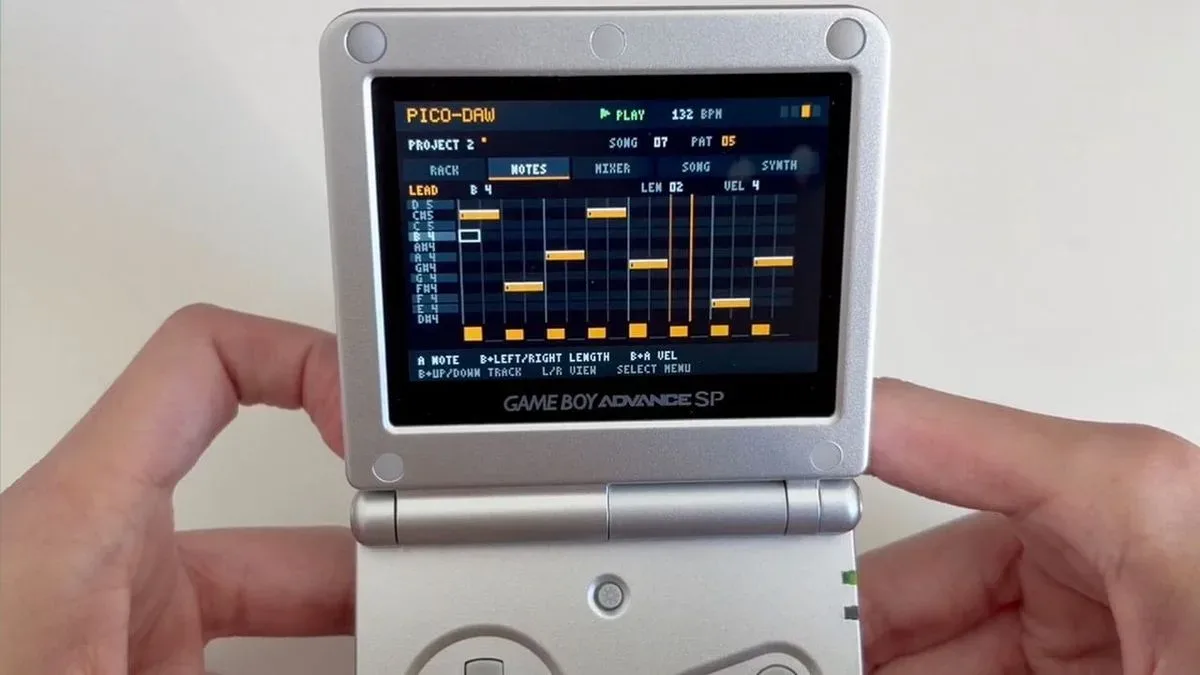
For producer-led artists, the overlap between music-making and digital tools is particularly visible. Takase Toya is described as taking on writing, composition and track-making, while Gabriel Jacoby is identified as a multi-faceted musician. Aiobahn’s electronic production and Underscores’ audiovisual world-building likewise foreground the creative choices surrounding a song, not only a vocal performance. Music creation tools have also found unusual homes in game hardware culture; for a related example of that crossover, see a six-track, MIDI-style music sequencer made for Game Boy Advance.
That does not make Foundry a technology story instead of a music story. Rather, it underscores why product access may be consequential for artists whose work depends on carefully controlled production, visuals and direct audience communication. In the 2026 group, Mariasss’ audiovisual universe, FLVCKKA’s visual collective, Underscores’ world-building and the multilingual work of Yapi and Zeina all make the video context more than an afterthought.
A class built around distinct identities, not a single trend
The roster also avoids a narrow definition of what a developing artist should sound like. Max McNown’s acoustic folk-country approach sits far from Baran Kok’s forceful German rap. José Jr’s blend of Brazilian traditions, folk and rock is markedly different from harha’s hip-hop-nurtured expression of memory and emotion. KEVIS Y MAYYKI bring rap into contact with alternative rock, while This is Lorelei is framed through lo-fi alt-pop. The connective tissue is independence and artistic specificity, not sonic uniformity.
Existing momentum is present without being the sole criterion. Takase Toya’s track has passed 1.2 billion cumulative streams, Zeina has award nominations and a Canadian Hot 100 entry, Mariasss previously participated in Foundry Rising, and KEVIS Y MAYYKI have a 2025 debut to their name. Elsewhere, the descriptions emphasize distinctive creative propositions: Jacoby’s vulnerable R&B and funk, Mahoro’s poetic intimacy, and Asfar Shamsi’s cross-genre songwriting.
For audiences, the immediate result is a concise list of artists whose work is already defined by strong points of view. For the artists, the more meaningful measure will be what they build with the funding, direct support, products and tailored opportunities attached to Foundry. The program’s 2026 selection gives all 16 a place in a network designed for independent careers while leaving their sounds, languages and scenes notably unstandardized.