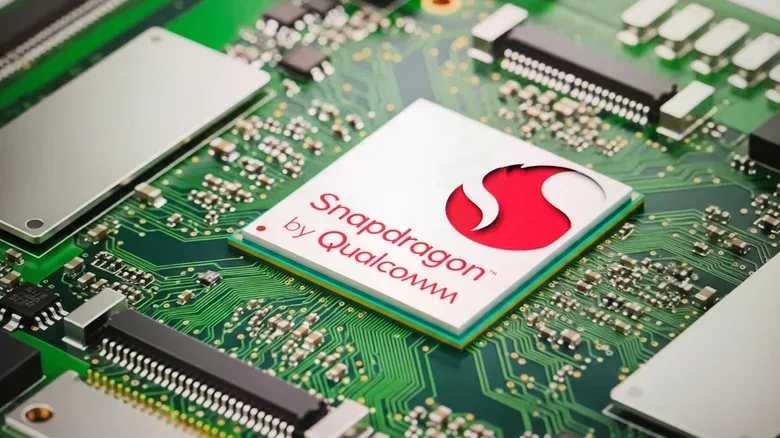
Google’s decision to move Pixel phones away from Qualcomm Snapdragon chips was not primarily a bid to win a mobile-gaming benchmark war. It was a move to put Google’s own artificial-intelligence priorities at the center of its phone hardware.
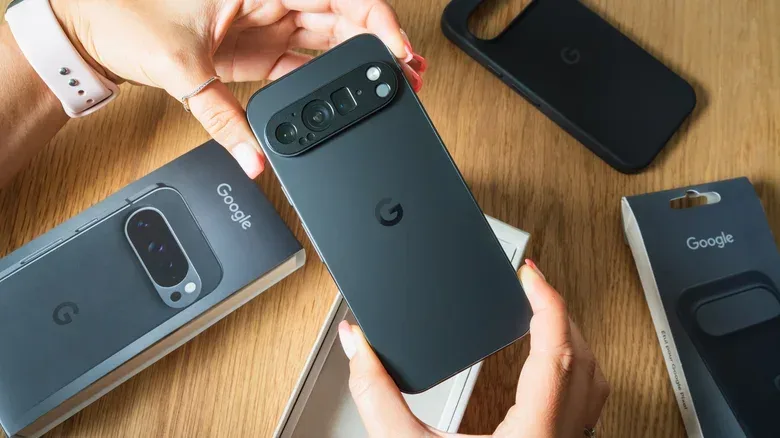
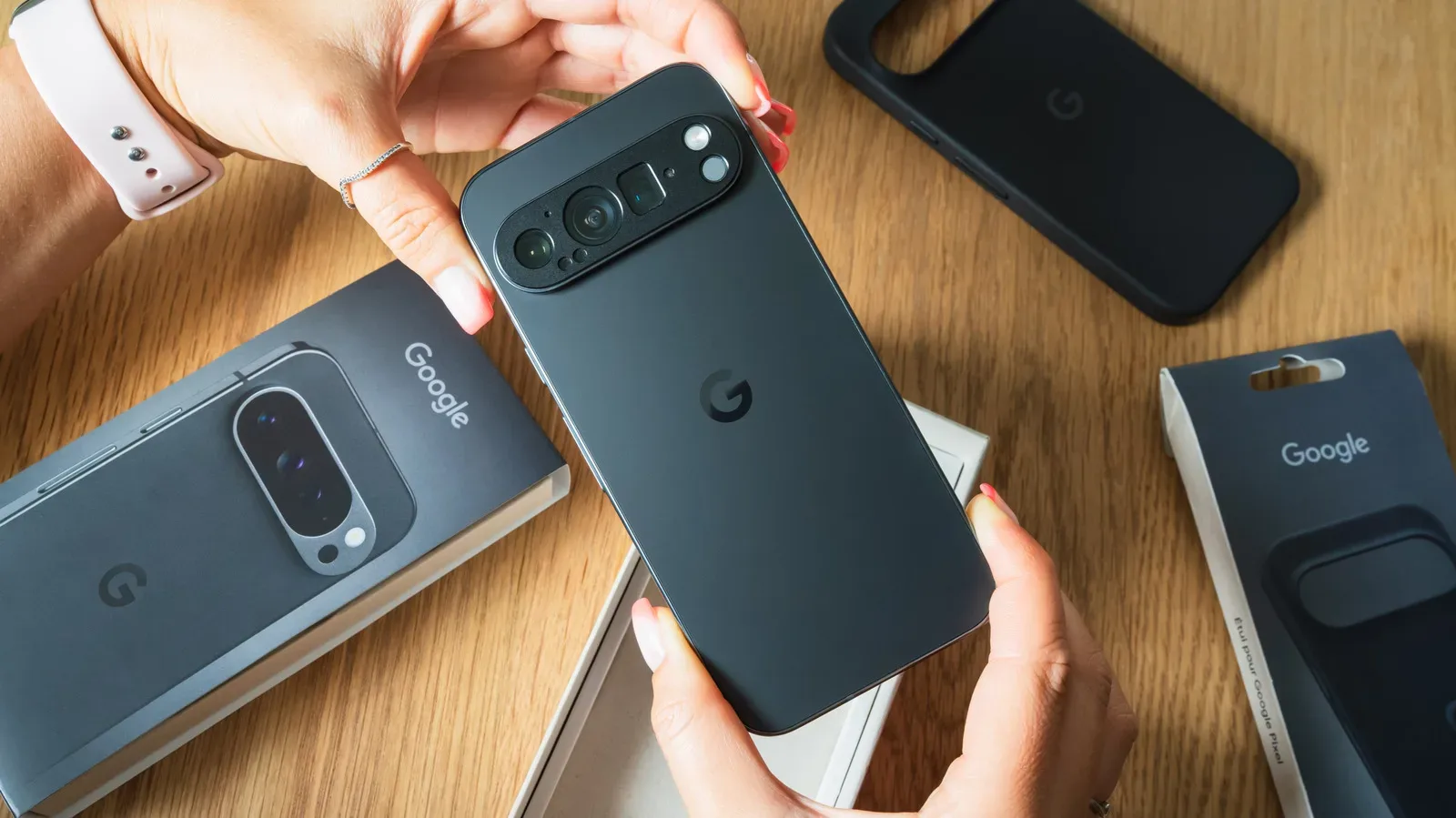
The turning point came with the Pixel 6 in 2021, which replaced the Snapdragon platform used by the Pixel 5a with Google Tensor. At the time, Google said it had encountered computing limits that stood in the way of its AI ambitions. Tensor was designed around those ambitions, with dedicated hardware meant to run speech recognition, translation and computational-photography models on the handset rather than relying entirely on cloud processing.
That explains the change in direction. It also explains a compromise Pixel buyers, particularly players, should understand: Tensor phones have consistently trailed leading Snapdragon and Apple silicon in raw processing and graphics performance. Google has not abandoned Qualcomm everywhere, either. The newly introduced Pixel Watch 5 uses Qualcomm’s Snapdragon W5 Gen 2, while the Pixel 11 family continues with the Tensor G6.
In other words, Google did not decide that Snapdragon was universally unsuitable. It decided that its flagship phones needed a chip roadmap it could shape around its own AI models and services.
Tensor’s purpose was on-device AI, not maximum frame rates
The important component in Google’s original Tensor strategy is the TPU, short for tensor processing unit. This is an application-specific integrated circuit: hardware built for a defined category of work rather than trying to be equally suited to every computational task. In this case, the intended work is running Google’s machine-learning models efficiently on a phone.
For a user, “on-device” means a task is handled locally by the handset rather than being sent to a remote server for processing. Google positioned the first Tensor around tasks such as transcription, translation and computational photography. The appeal is clear: Google can tune the silicon and the software model together, instead of treating the processor as a general-purpose part supplied by another company.
That logic remains intact with the Tensor G6 in the Pixel 11. Google says its newest TPU provides 50% more compute than the Tensor G5. With the latest Gemini Nano model, it also claims on-device AI work can be up to 3.5 times faster while using up to 3.5 times less energy. Those are vendor claims, not a blanket measure of phone speed, but they show where Google is concentrating its improvements.
“Compute” is a broad term. A chip can be very capable at one kind of calculation while losing to another in a general CPU or graphics test. The CPU handles a wide variety of everyday program instructions. The GPU is the component most closely associated with rendering the images and effects seen in games. A TPU is aimed at AI-model workloads. Tensor’s design puts unusual importance on that third category.
Related coverage includes Why Google Replaced Snapdragon With Tensor in Pixel Phones.
That is why it is misleading to reduce the Pixel’s Snapdragon split to a simple question of whether Google made a faster or slower chip. Google made a chip focused on a different target. The more useful question is whether that target matches how a buyer uses a phone.
The trade-off matters most to demanding mobile games
For people who spend most of their phone time messaging, taking photos and using Google’s AI-led tools, Tensor’s priorities can make sense. A player trying to maximize performance in graphically intensive games has more reason to care about the parts of the comparison Tensor does not lead.
Reported testing of the Tensor G5 against Qualcomm’s Snapdragon 8 Elite found Qualcomm’s chip delivered more than twice the multi-core CPU performance and roughly 2.5 times the graphics performance. Multi-core results reflect how well a processor performs when several CPU cores work together. They do not predict every individual app’s behavior, but a gap that large is meaningful for workloads that can use the available hardware.
Graphics performance has an especially direct relationship to modern mobile games. It can affect how much rendering work a phone can handle, including higher-detail scenes and effects. Sustained loads are equally important. A device may look strong in a short test and then reduce performance as heat builds during an extended session. The available evidence indicates that flagship Snapdragon chips and Apple’s A-series processors have had the advantage over Tensor in raw performance and sustained gaming workloads throughout the Tensor era.
Battery use during heavy play is part of the same practical equation. The source material notes that Snapdragon and Apple chips probably also hold an advantage under heavy use, though that point is presented with appropriate uncertainty. A gaming phone purchase should never be based on one benchmark alone, but a buyer who values long sessions should treat peak CPU, GPU and sustained behavior as separate considerations.
The distinction matters because AI gains do not automatically convert into a gaming gain. A faster TPU can benefit a supported local AI task. It does not by itself establish that a game will render faster. Conversely, a leading GPU result does not guarantee that a particular AI feature will work the way Google intends. These are parallel strengths, and Tensor has been built to emphasize the latter.
Thermals are worth watching for anyone who plays for long stretches. Tensor’s first four generations were made through a Samsung-based effort, and Samsung manufacturing processes were blamed for thermal problems in the line. If a phone gets hot, it may manage that heat by pulling back performance. That is why users troubleshooting a noisy gaming laptop should think in terms of heat and sustained load as well; this guide to loud laptop fans explains useful first checks on the PC side. The hardware is different, but the basic importance of cooling under load is not.
Tensor was not fully Google-designed from day one
Calling every Tensor generation wholly independent would miss a major part of the platform’s history. The project began as a Samsung co-development known by the codename Whitechapel. Analysis of the first Tensor found shared clock-management, power-management and memory-controller architecture with Samsung Exynos processors. Samsung also manufactured every Tensor from the original chip through Tensor G4 and supplied the modems.
A modem is the component that handles a phone’s cellular connection. The Samsung-based Tensor generations attracted criticism over connectivity, and the Exynos modems were blamed for those problems. That history helps explain why a change in manufacturing and components is significant even though Google had already marketed the chips under the Tensor name.
The Tensor G5, used in the previous year’s Pixel 10, marked the first Tensor built without Samsung. It shifted to a Google base design manufactured by TSMC in Taiwan. The G6 continues that direction in the Pixel 11. Leaked specifications, subsequently partly confirmed, indicate that the G6 moved from an Exynos modem to a MediaTek component, removing what had been the last major Samsung part from the platform Samsung helped establish.
This evolution does not erase Tensor’s performance gap overnight. Nor does it prove that every concern attributed to the earlier Samsung-linked platform has disappeared. It does show that “Tensor” covers more than one hardware era. The first four generations were deeply tied to Samsung’s technology; G5 and G6 represent a new phase in which Google has greater control over the base design and a different manufacturing partner.
Cost and control are central to Google’s calculation
There is also a business reason to build a proprietary platform. Qualcomm’s current flagship Snapdragon 8 Elite Gen 5 chips are said to cost phone makers between $240 and $280 apiece, an increase of $40 to $80 compared with Snapdragon 8 Gen 3. Developing custom silicon carries its own substantial costs, but a Tensor roadmap potentially lets Google avoid that specific flagship-chip markup and direct resources toward the TPU capabilities its Gemini features depend on.
That does not mean Tensor has made Pixel phones categorically cheaper than rival flagships. The supplied information explicitly does not support that conclusion. The payoff is strategic control: Google can plan its hardware around the local AI functions it wants to deliver, rather than waiting for a general-purpose chip vendor’s schedule and design decisions.
Samsung provides an illuminating contrast. Its Galaxy S26 Ultra uses Qualcomm’s Snapdragon 8 Elite Gen 5 in every region, while all North American Galaxy S26 models use Snapdragon as well. Google and Samsung are therefore taking sharply different routes at the flagship level. Samsung is leaning on Qualcomm’s highest-tier platform for these devices; Google is continuing to invest in Tensor as a differentiator for Pixel.
Google still uses Qualcomm where Tensor is not the answer
The Pixel Watch 5 is a useful reality check on any claim that Google has “left Qualcomm.” It launched alongside the Pixel Tag and Pixel 11 series with Qualcomm’s Snapdragon W5 Gen 2. Google has not yet made a Tensor wearable platform, so its smartwatch remains on Qualcomm silicon.
That choice reinforces the broader point. Custom silicon makes the most sense to Google where it believes tight integration with its own models and software provides a strategic advantage. It has not treated Tensor as a mandatory replacement for every Qualcomm component in every product category.
For Pixel buyers, the bottom line is not that Tensor is secretly a Snapdragon equivalent with a different name. It is a deliberately different proposition. Choose it for Google’s approach to on-device AI and the company’s control over the feature roadmap. Treat a top-end Snapdragon handset as the more compelling option when raw CPU strength, graphics throughput and sustained gaming performance are the priorities. Google traded part of the conventional performance race for ownership of a tailored AI platform—and five Tensor generations later, that trade remains the defining fact of the Pixel strategy.