Apple has revised its U.S. Trade In estimates, adding six Samsung foldable phones to the eligible-device list while changing maximum credits for a broad range of iPhones, Google Pixels and Apple Watches. The update matters most to people weighing an ecosystem switch: Galaxy Z Fold and Z Flip owners now have a direct route to Apple credit or an Apple Gift Card, though the quoted figures are ceilings rather than guaranteed payouts.
The newly included Samsung devices are the Galaxy Z Fold7, Z Fold6, Z Fold5, Z Flip7, Z Flip6 and Z Flip5. Their maximum credits range from $125 for the Galaxy Z Flip5 to $410 for the Galaxy Z Fold7. Apple also altered values for recent iPhones in both directions, cut most of the listed Pixel estimates, and made smaller adjustments to six Apple Watch models. Mac and iPad maximums remain unchanged from the figures introduced in October.
Samsung foldables now have Apple Trade In estimates
For a customer leaving Android for an iPhone, the headline change is simple: six Samsung foldables can now be entered into Apple’s trade-in system. A trade-in estimate is the highest credit listed for a device category before its particular condition, year and configuration are assessed. It should not be read as the amount every owner will receive.
- Samsung Galaxy Z Fold7: up to $410
- Samsung Galaxy Z Fold6: up to $335
- Samsung Galaxy Z Fold5: up to $270
- Samsung Galaxy Z Flip7: up to $215
- Samsung Galaxy Z Flip6: up to $185
- Samsung Galaxy Z Flip5: up to $125
The Fold entries lead the Flip entries in this list, with the Fold7 holding the highest maximum among the six additions. That does not establish a general rule about what every foldable is worth; it is simply how these newly listed models are currently valued in this program.
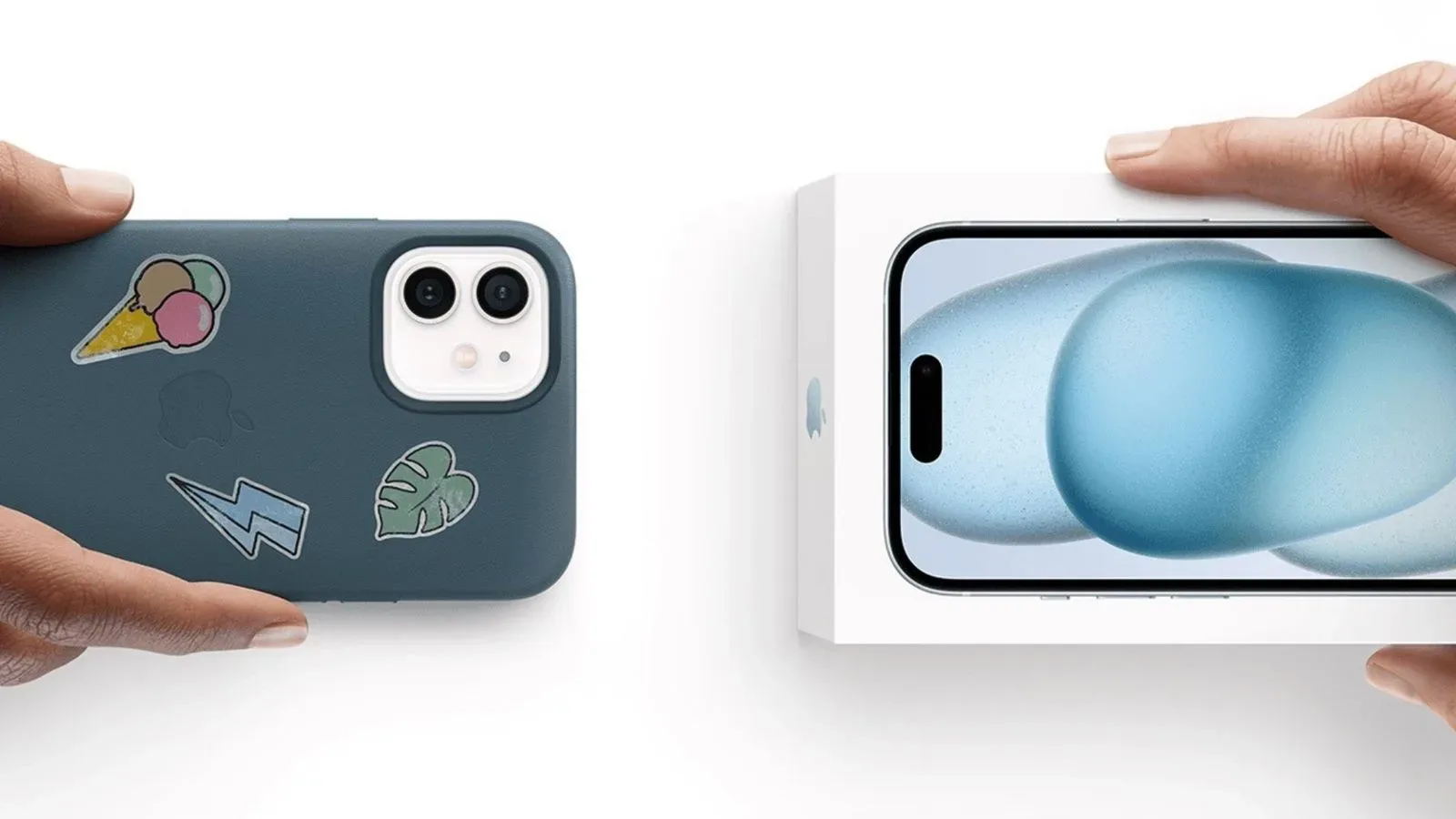
For prospective switchers, the practical benefit is convenience. An eligible phone can be used for credit toward a purchase or converted into an Apple Gift Card. Devices judged to have no trade-in value can still be recycled for free. The trade-off is that the estimate is contingent on assessment, so a shopper should treat it as part of a budget rather than money already in hand.
Recent iPhone changes are mixed
The biggest reduction among the listed iPhones belongs to the iPhone 17 Pro, whose maximum falls by $45 to $740. The iPhone 17 Pro Max drops $30, to $855. At the same time, the iPhone Air and standard iPhone 17 each rise $30, reaching maximum credits of $615.
- iPhone 17 Pro Max: up to $855, down from $885
- iPhone 17 Pro: up to $740, down from $785
- iPhone Air: up to $615, up from $585
- iPhone 17: up to $615, up from $585
- iPhone 16 Pro Max: up to $590, down from $610
- iPhone 16 Plus: up to $450, up from $430
- iPhone 16: up to $440, up from $430
- iPhone 16e: up to $285, up from $270
- iPhone 15 Pro Max: up to $445, down from $455
- iPhone 15 Pro: up to $365, down from $370
- iPhone 15 Plus: up to $325, up from $315
- iPhone 14 Plus: up to $215, up from $210
Older iPhones mostly receive modest increases. Several had lost value in September and have now regained some of that lost ground, although most remain below their pre-September maximums. The exception identified in the update is the second-generation iPhone SE: its $5 increase returns it to $45, completely undoing its earlier reduction.
- iPhone 13 Pro Max: up to $330
- iPhone 13 Pro: up to $265
- iPhone 13: up to $180
- iPhone 12 Pro Max: up to $220
- iPhone 12 Pro: up to $180
- iPhone 12 mini: up to $85
- iPhone SE (2nd generation): up to $45
- iPhone 11 Pro Max: up to $145
- iPhone 11: up to $105
- iPhone XS Max: up to $90
- iPhone XS: up to $65
- iPhone XR: up to $80
- iPhone X: up to $55
Those figures are maximum credits, not resale appraisals. A maximum is useful for comparing one Apple Trade In revision with the last, but it is not a promise that a device with wear, damage, a different configuration or other assessment factors will hit that number.
Pixel values mostly move lower
Google Pixel owners see the most consistently negative direction in this revision. The standard Pixel 9 takes the biggest dollar cut among the listed Pixels, declining $20 to a maximum of $180. The Pixel 7 is the lone model in this group to move upward, gaining $5 to $70.
- Google Pixel 9 Pro XL: up to $280, down from $290
- Google Pixel 9 Pro: up to $265, down from $275
- Google Pixel 9: up to $180, down from $200
- Google Pixel 8 Pro: up to $135, down from $150
- Google Pixel 8: up to $100, down from $115
- Google Pixel 7 Pro: up to $80, down from $90
- Google Pixel 7: up to $70, up from $65
It is tempting to view every downward adjustment as a verdict on a phone, but the supplied changes only show updated trade-in estimates. They do not explain why individual models rose or fell, and they do not establish what a device might fetch through another selling method. The actionable point for owners considering an upgrade is narrower: check the current maximum before relying on an older quote.
Apple Watch adjustments remain relatively small
Only six Apple Watch models change in this pass. The Apple Watch Ultra 2 rises $10 to a maximum of $275. The Series 10, second-generation Watch SE and Series 6 each rise $5. The original Apple Watch Ultra and Series 7 each decline by $5.
- Apple Watch Ultra 2: up to $275, up from $265
- Apple Watch Ultra: up to $185, down from $190
- Apple Watch Series 10: up to $155, up from $150
- Apple Watch SE (2nd generation): up to $65, up from $60
- Apple Watch Series 7: up to $60, down from $65
- Apple Watch Series 6: up to $45, up from $40
The changes are smaller than the most notable phone movements, but they can still affect the final cost of a device purchase when paired with another trade-in. Apple’s wider iPhone services continue to evolve as well; for example, Apple Sports has added UFC live statistics, fight cards and strike heat maps on iPhone. That broader software context may be part of an upgrade decision, but it is separate from a handset or watch’s assessed trade-in credit.
Condition grading is the key caveat
Apple introduced more detailed condition grading in September. The stated effect was to improve offers for devices with minor cosmetic defects that had previously faced deductions closer to those used for serious damage. That is an important distinction for a phone with superficial wear: a small cosmetic flaw and more significant damage are not necessarily treated identically under the updated approach.
Still, there is no single universal payout. Actual offers depend on condition, year and configuration. In practical terms, an owner should separate two questions:
- What is the current maximum for this model? The lists above answer that starting point.
- Does this individual device qualify for the maximum? That depends on the subsequent assessment and the device’s relevant details.
This distinction is especially relevant after a revision that includes both increases and decreases. A $30 increase in a published maximum does not mean every owner receives $30 more than before, just as a $45 reduction in a maximum does not predetermine the final credit for every iPhone 17 Pro.
Mac and iPad values hold steady
There are no new Mac or iPad changes in this update. Their trade-in values remain at levels introduced in October, including maximum estimates of $2,560 for a Mac Pro and $915 for an iPad Pro.
For anyone planning a purchase, the latest revision creates a clear checklist: identify the exact model, look at the current maximum rather than a prior estimate, account for condition and configuration, and decide whether purchase credit or an Apple Gift Card better fits the intended use. The addition of Samsung’s Z Fold and Z Flip devices expands that same process to a group of foldable-phone owners who were not on this trade-in list before.