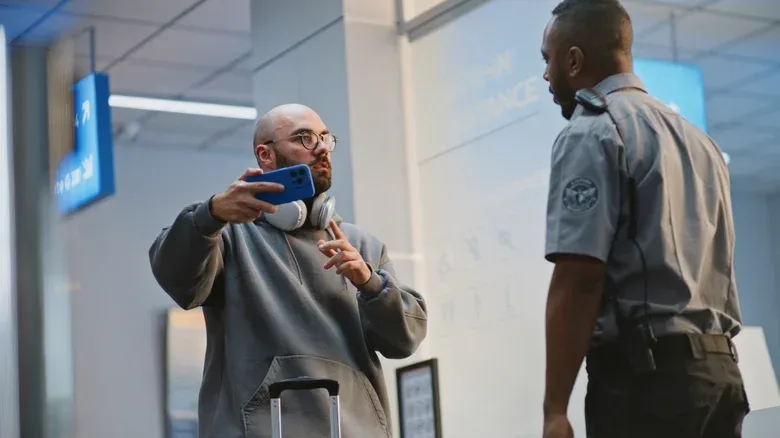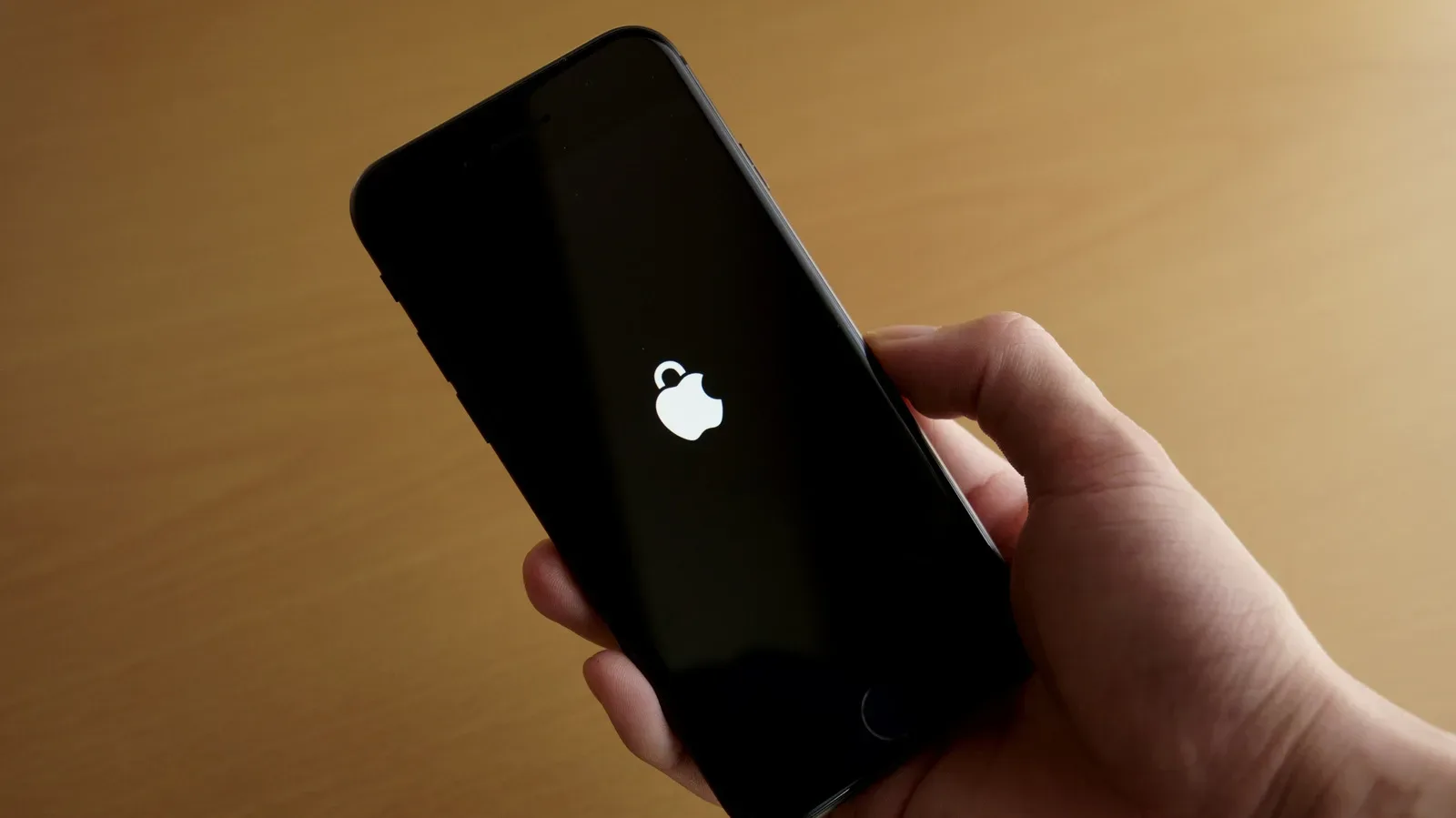
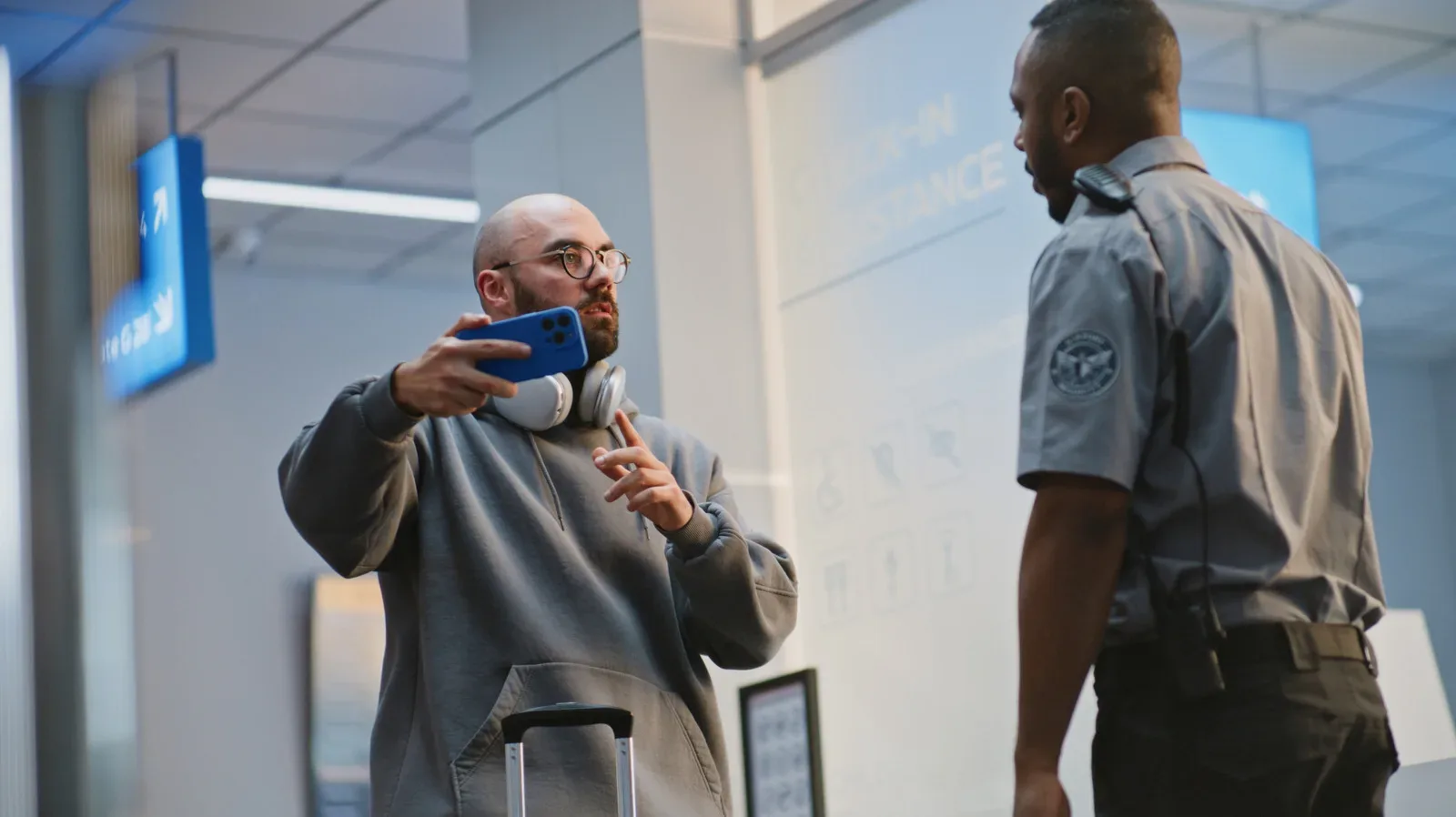
An airport security officer asking a traveler to switch on a phone can feel unexpectedly intrusive, particularly when the device is carrying the practical clutter of modern travel: boarding details, messages, authentication apps, photos, games and far more. But the basic reason for that request is not to inspect the contents of the phone. It is to establish that the object is, in fact, a functioning phone.
The requirement has been in place since 2014 for travelers arriving from overseas. A device that powers on can help demonstrate that it has not been altered for a purpose unrelated to its normal function. A device with no power may lead to additional screening. The security concern is that electronic devices can potentially be adapted for harmful uses, including as detonators, jamming devices or storage for bomb components.
That distinction matters because several very different airport interactions are often lumped together as “a phone search.” A request to light up a phone is one thing. A request to unlock it or examination of its messages and apps is another. And an international border inspection falls under a separate set of authorities from routine Transportation Security Administration screening.
A powered-on screen is the point of the TSA check
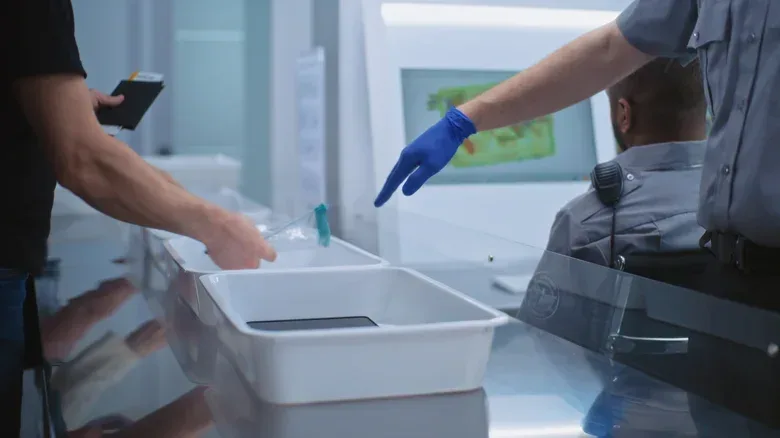
At a standard security checkpoint, travelers are already accustomed to separating larger electronics such as laptops and tablets for screening. Phones may not routinely get the same treatment, but an officer can ask for one to be powered on. If it starts normally, the requested demonstration is generally complete and the traveler can continue through the checkpoint.
The practical test is simple: does the device behave like the electronic device it purports to be? Turning it on, lighting the screen or unlocking it enough to show that it functions addresses that question. This is different from reading notifications, opening chats, browsing pictures or examining installed apps. The stated purpose is verification of the hardware’s ordinary function, rather than an investigation of a traveler’s digital life.
It is also not a request most people should expect on every trip. Most travelers will never encounter it. Still, the possibility is a good reason not to arrive at the airport with a dead handset, tablet, handheld system or other electronic item that may need to be demonstrated.
What “additional screening” can mean in practice
The supplied guidance does not specify every possible step an officer may take when an electronic device cannot be powered on. What it does make clear is that a drained battery can trigger further screening. The practical takeaway is not that a dead phone proves wrongdoing; it does not. It means a traveler may lose the quickest available way to demonstrate that the device is functional.
For travelers carrying a lot of electronics, that can be especially inconvenient. One device may be a phone, another a laptop, and another may handle entertainment or travel logistics. Keeping them charged is therefore less about anticipating a rare confrontation and more about avoiding a preventable delay if a power-on request happens.
Related coverage includes Why Airport Security May Ask You to Turn On Your Phone.
TSA screening and CBP inspection are not the same thing
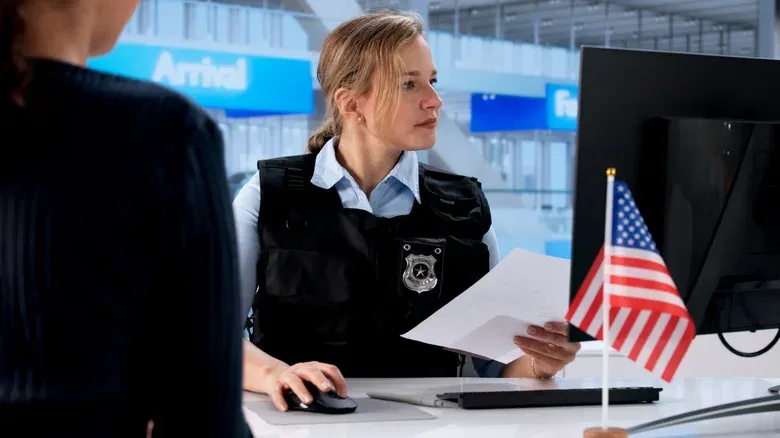
The most important clarification is institutional. TSA screening is directed at transportation security, while U.S. Customs and Border Protection, or CBP, operates in the international-travel border context. The authority and potential scope described for CBP are broader than a TSA officer asking whether a phone will turn on.
For international travelers, CBP can ask to inspect a phone through the border search exception. In plain language, that is a legal framework that permits searches at the border under rules that differ from the ordinary warrant expectations people may associate with the Fourth Amendment. The Fourth Amendment is the constitutional protection against unreasonable searches and seizures, ordinarily including the requirement for a warrant in many situations.
The provided information characterizes manual phone searches by border agents as routine under a Fourth Circuit ruling. It also describes a CBP directive under which an officer can retain a device for what is considered a “brief, reasonable time” for a routine inspection.
That does not mean every form of device examination is treated identically. The key difference is between a basic review and a more extensive examination.
- Basic inspection: Without a warrant or reasonable suspicion, the described scope is a manual inspection of content such as text messages and app activity.
- Advanced inspection: With reasonable suspicion, the inspection may become more thorough and include downloading the phone’s contents to another device.
Reasonable suspicion is a meaningful threshold in this context. It refers to a basis for suspecting wrongdoing that can justify a more searching examination than a routine manual look. The supplied information draws a firm distinction between that deeper, data-copying inspection and a basic inspection.
For travelers, the useful lesson is to avoid treating an airport interaction as one single category. A power-on request at the security lane is about confirming a device works. A request from CBP during international travel may raise substantially different questions because it can involve access to the information stored on the device.
What remains a proposal, not a current rule
A late-2025 proposal would allow CBP to request five years of social-media history from travelers arriving from certain regions before entry to the United States. The status is crucial: it remains a proposal and is not law. Travelers should be wary of summaries that describe a proposed change as though it is already a universal requirement.
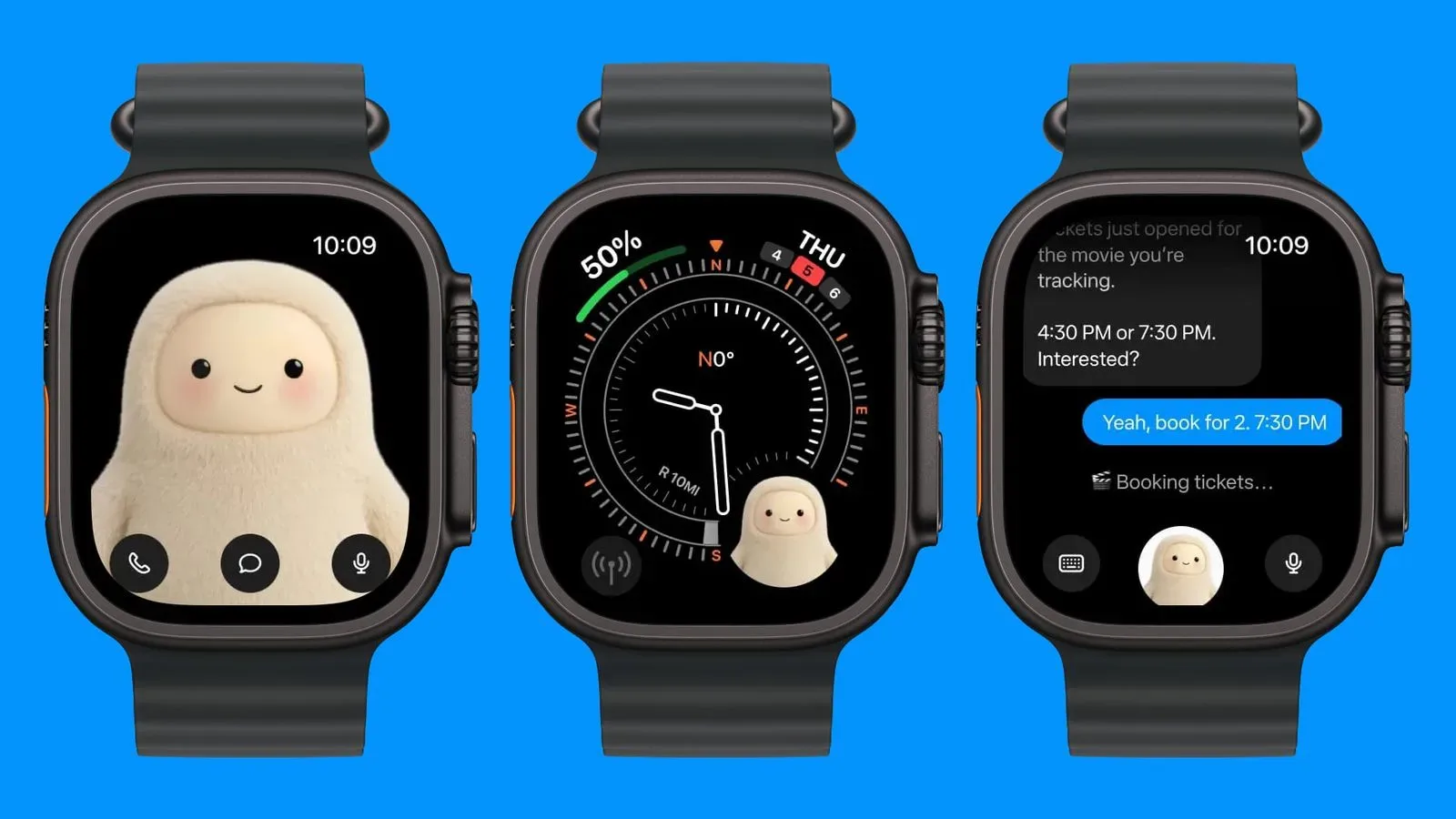
This is also a reminder that digital-travel issues extend beyond the physical device. Phones increasingly serve as identity tools, communications hubs and authentication keys. For example, wearable devices and connected services continue to add messaging, dictation and calling functions, as reflected in recent developments around connected watch features. The more personal functions a device combines, the more important it is to distinguish a simple hardware check from a content inspection.
Practical preparation: solve the battery problem before the checkpoint
The most direct preparation is also the least dramatic: charge the phone before heading to the airport. A traveler who is asked to power on a device should be able to do so without scrambling for an outlet after reaching the screening line.
- Keep the phone charged. Enough battery to start the device and show an active screen is the central requirement behind this precaution.
- Know how to power it on quickly. If asked, turn it on or wake the display. The requested showing is that the phone functions as a phone.
- Prepare other electronics, too. Large devices such as laptops and tablets are already commonly separated for scanner screening, and any electronic device could be relevant to a power-on request.
- Separate the situations in your mind. TSA checkpoint screening and an international CBP interaction should not be treated as interchangeable. The latter can involve inspection rules that go beyond a functional demonstration.
- Do not confuse a proposal with law. The social-media-history idea described here has not become law.
None of this requires assuming that a routine trip will become unusual. The evidence indicates that most people will never be asked to turn on a phone. But travel is exactly the setting where batteries are more likely to run down—after navigation, boarding passes, delays, streaming or games—and where charging access can be uncertain. Keeping power available is a small bit of preparation that can remove one avoidable complication.
Why the distinction is worth getting right
The phrase “airport security can check your phone” is too vague to be useful. It can imply that every request to switch on a handset authorizes a search of its messages. That is not what the power-on check described here is for. Its narrow function is to help confirm that the item is a real, operational electronic device rather than an object modified for a dangerous alternative use.
At the same time, it would be misleading to suggest that all device interactions are equally narrow. International travelers may encounter CBP, whose ability to inspect devices is described under the border search exception. A manual basic inspection and a more comprehensive examination involving downloaded data are different actions with different stated conditions.
So the sensible response to a TSA request is straightforward: power the phone on and demonstrate that it works. For international travel, understand that the legal and practical landscape may be more complicated. In both cases, a charged device is the simplest preparation—and it may be the difference between a quick confirmation and extra screening.