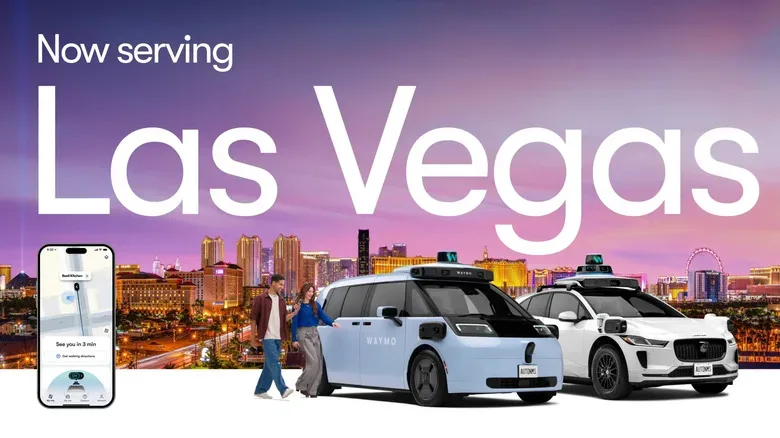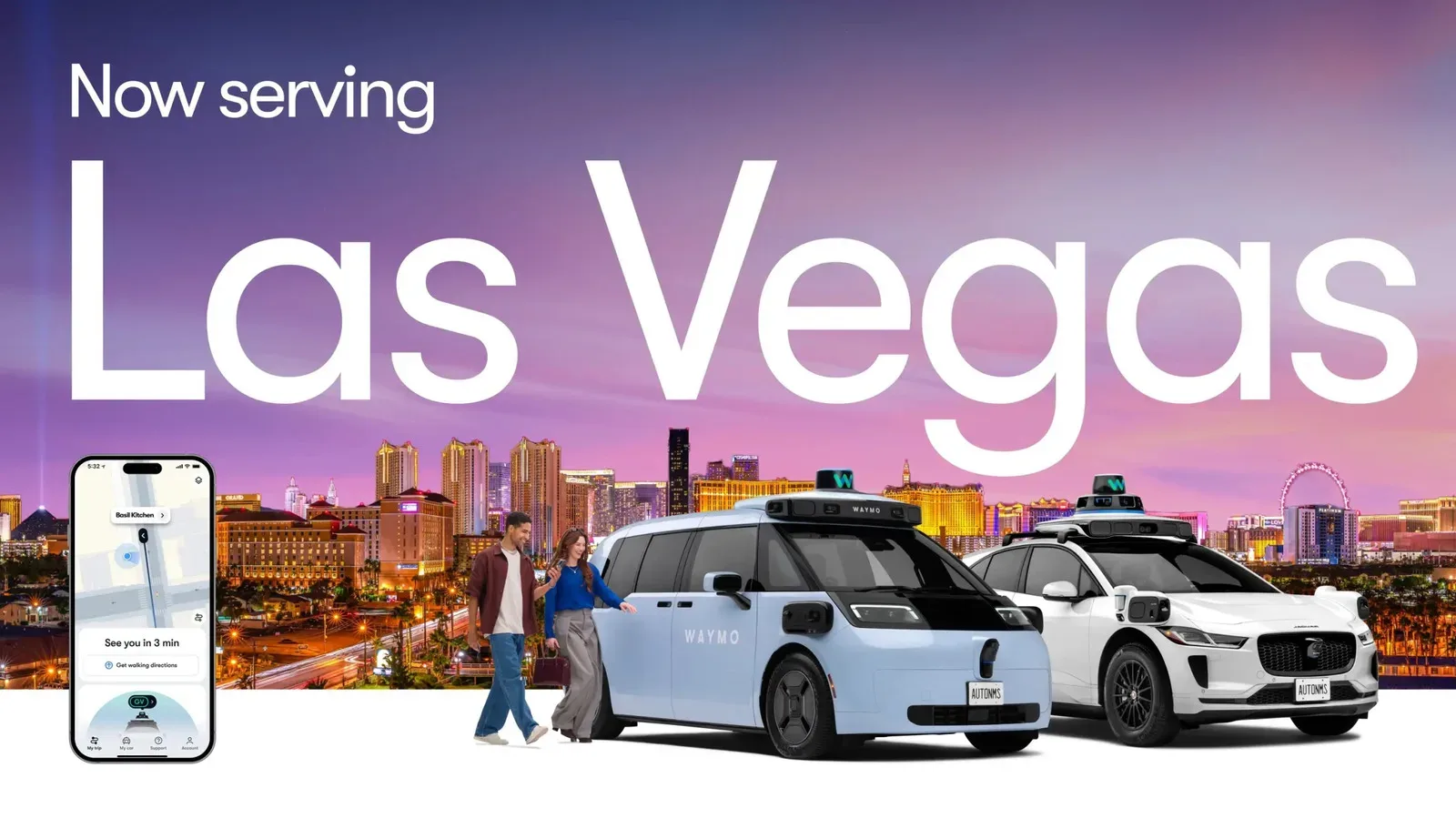
Las Vegas has gained another futuristic attraction, except this one is meant to take visitors from place to place rather than keep them planted in front of a slot machine. Waymo has launched its robotaxi service in Las Vegas, marking the company’s entry into Nevada and adding a fully autonomous transportation option around one of the busiest tourism corridors in the United States.
The initial operating area covers a 24-mile zone surrounding the Las Vegas Strip. That starting boundary is important: this is not presented as immediate citywide or statewide coverage. Waymo has said the footprint will expand later into more of Clark County, the county that includes Las Vegas. For now, the Strip and nearby area are the opening level of the rollout.
For visitors accustomed to a city built around spectacle, a car arriving without a human driver may fit surprisingly neatly into the landscape. But the practical part matters more than the novelty. A service area, the vehicles used, the permissions required to operate, and the companies competing for a place on the road all define what this launch actually represents. Las Vegas is becoming a notable meeting point for several autonomous-vehicle operators, each trying to establish its own route through a city already famous for constant movement.
A 24-mile starting map around the Strip
Waymo’s Las Vegas debut begins within a 24-mile service area centered on the Strip. The company intends to widen that operating territory to reach additional parts of Clark County over time, but no full-county timeline or detailed future boundary has been specified here.
That approach makes the launch feel less like flipping on a cheat code for every address in southern Nevada and more like opening access map by map. The Strip is an obvious focal point because it is a concentrated destination for hotels, entertainment, restaurants, convention traffic, and visitors navigating an unfamiliar city. A defined opening zone also gives the service a clear initial identity: autonomous rides for people moving around the core Las Vegas experience.
It is worth separating the confirmed launch details from assumptions people may make when they hear “Waymo is in Vegas.” The information available establishes an initial 24-mile area around the Strip and an eventual plan for broader Clark County coverage. It does not establish that every hotel, neighborhood, attraction, or airport-adjacent destination is included. Nor does it outline the pace of the proposed expansion. Riders will need to rely on the service’s current coverage information rather than treating the countywide goal as present-day availability.
The fleet: mostly Ojai electric minivans
Waymo says its Las Vegas fleet will consist mostly of Ojai all-electric minivans. These vehicles use the sixth generation of Waymo Driver hardware, which the company describes as intended to handle harsh weather conditions.
That technical detail stands out in a city where summer heat is not a background prop. Autonomous driving systems are built around a complicated mix of onboard hardware and driving software, but the specific confirmed point in this case is narrower: Waymo is bringing sixth-generation Waymo Driver hardware to its primarily Ojai minivan fleet in Las Vegas, and the company has tied that hardware to difficult-weather capability.
The use of all-electric minivans also gives the launch a distinct vehicle profile. Robotaxis are often discussed as a broad concept, as though every driverless ride looks and operates the same. In practice, the vehicle model and onboard system generation are part of the deployment story. Las Vegas will mostly see Ojai minivans, not an unspecified collection of autonomous cars. That specificity matters when a service is entering a market that will soon feature several different driverless transportation brands.
Nevada approval cleared the route
The launch follows regulatory approval from the Nevada Transportation Authority. Last month, the authority approved Waymo’s application for an Autonomous Vehicle Network Company permit. That approval led into the beginning of service in Clark County.
Permits can sound like the menu-screen paperwork before the interesting part begins, but they are central to any robotaxi operation. The Nevada Transportation Authority’s decision provides the approval framework behind Waymo’s entry into the Las Vegas market. It also shows that the city’s autonomous-ride landscape is not developing around a single company.
The authority granted the same type of approval to Tesla and Uber. That means Las Vegas visitors should expect the prospect of more driverless vehicles traveling through and around the Strip. Approval and operation should not be treated as identical claims, however. The confirmed information is that Tesla and Uber received the approvals as well; it does not provide launch dates, service maps, fleet sizes, or rider access details for either company.
Waymo’s arrival is therefore one move in a wider Nevada board game, not a final boss victory screen. The Strip is becoming a place where different autonomous-vehicle businesses can seek to operate under the same state-level regulatory category, while potentially pursuing different vehicles, networks, and deployment plans.
Zoox already reached Las Vegas first
Waymo is not the first robotaxi service to establish itself in Las Vegas. Zoox launched there in September of last year, then expanded its own footprint in the city. That earlier arrival gives Las Vegas an existing place in the robotaxi story rather than making it a brand-new experiment created by Waymo’s entry.
The sequence matters. Zoox set the initial marker, Waymo has now begun its own Las Vegas service, and Tesla and Uber have obtained comparable Autonomous Vehicle Network Company approvals from the Nevada Transportation Authority. Taken together, those developments point to growing competition in a destination where a huge number of trips are concentrated around recognizable corridors.
There is still plenty that should not be assumed from that picture. The available details do not compare prices, wait times, operating hours, ride volumes, safety performance, passenger capacity, app features, or exact service boundaries among the companies. They also do not establish that every approved company is currently giving the public the same kind of trip in the same parts of the city. What is clear is the direction of travel: Las Vegas is building a more crowded autonomous-transportation field.
Waymo’s expansion has moved quickly across several cities
Las Vegas follows a run of Waymo expansion announcements earlier this month involving Denver, San Diego, and Tampa, Florida. The company’s Nevada launch is part of that broader push, rather than an isolated stop selected only for the Strip’s bright lights.
Waymo, an Alphabet subsidiary, has also moved beyond the United States. Its robotaxi fleet launched in Munich, Germany, in August. The combination of new activity in Denver, San Diego, Tampa, Las Vegas, and Munich illustrates a network growing across very different urban environments.
For readers following Alphabet’s technology efforts more generally, that corporate connection is another reason the story may feel familiar. The company remains active across software and consumer-tech projects, including tools discussed in Gemini’s Google Drive file organizer. Waymo, however, represents a considerably more physical version of software ambition: its systems are attached to vehicles operating on public roads.
Las Vegas is especially notable within that expansion because it pairs a global tourist destination with a clearly defined opening coverage area. The city’s initial 24-mile zone places Waymo directly around the Strip before any future extension across Clark County. It is a focused launch, but one occurring amid multiple approved competitors and after Zoox’s earlier entry.
What the Las Vegas launch confirms—and what remains open
The confirmed facts paint a straightforward picture. Waymo has entered Nevada through Las Vegas. Its initial service territory is a 24-mile area around the Strip. The company plans a later expansion to more of Clark County. Most of the local fleet is expected to be Ojai all-electric minivans using sixth-generation Waymo Driver hardware designed with harsh weather in mind. Nevada’s transportation regulator approved Waymo’s Autonomous Vehicle Network Company permit last month.
The larger competitive context is equally clear. Zoox launched first in Las Vegas in September of last year and expanded later. Tesla and Uber have also received the same category of approval from the Nevada Transportation Authority. Waymo arrives after announcing services in Denver, San Diego, and Tampa earlier this month, and after launching in Munich in August.
Beyond those points, the next chapters remain unwritten. Waymo has not provided the complete eventual Clark County map in the details available here, and the timing of that expansion is not stated. The launch nevertheless puts another driverless service on the Las Vegas board, where the Strip’s familiar traffic may increasingly include vehicles with no one in the driver’s seat.