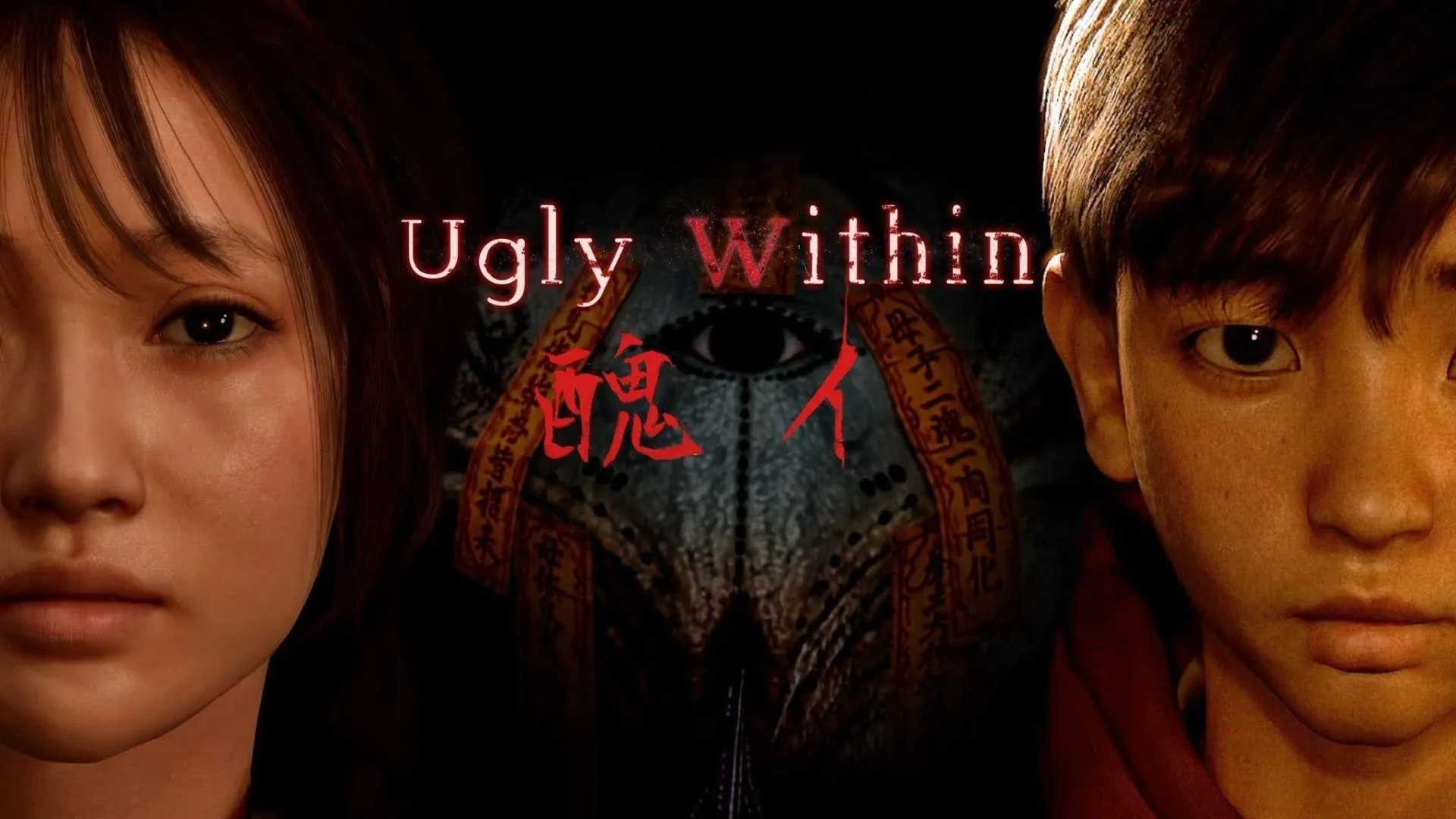
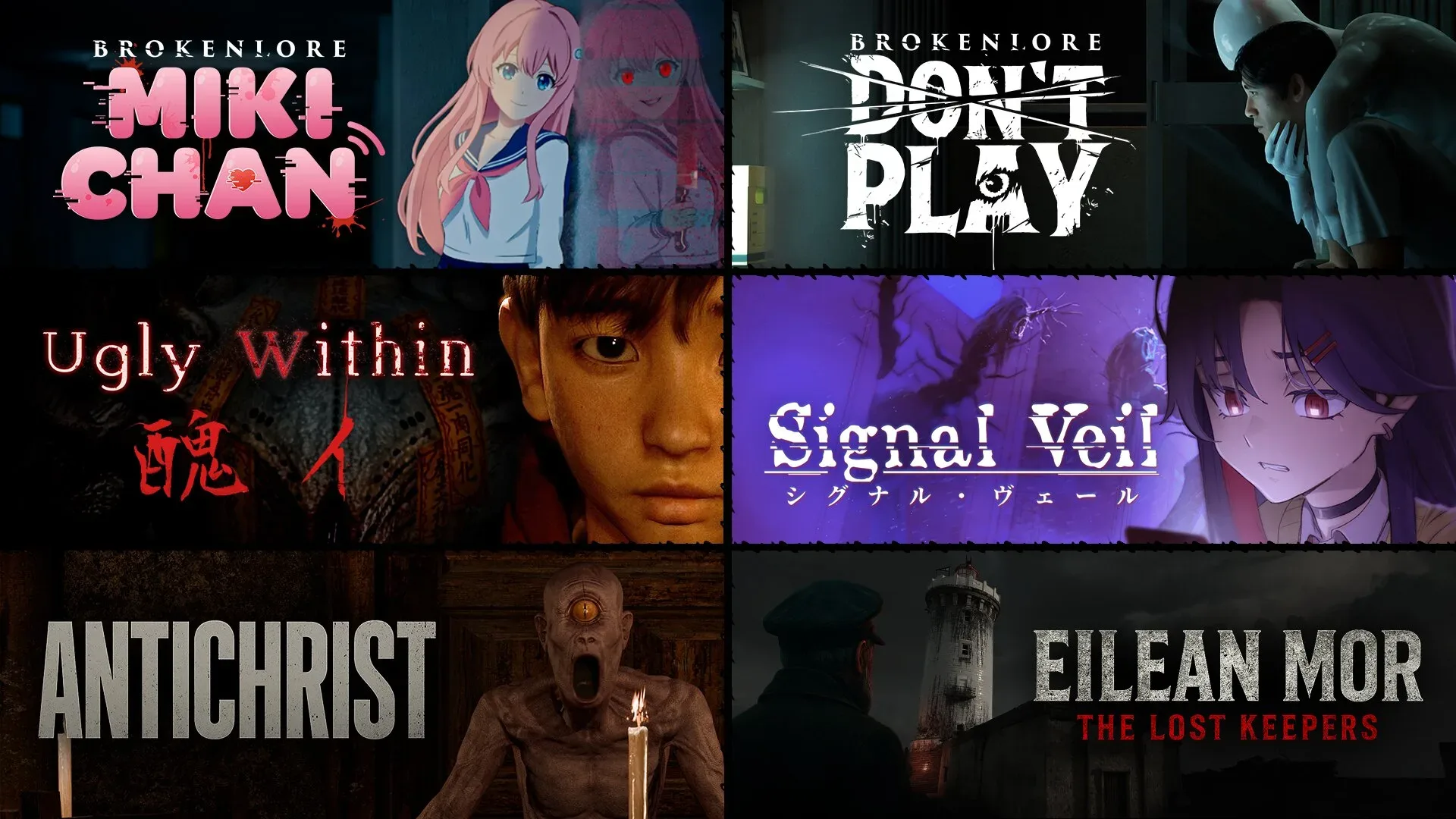
Serafini Productions arrived at The Horror Game Awards 2026 with a compact but varied horror slate: six projects spanning survival horror, psychological horror, supernatural investigation and real-world mystery. The headline was Ugly Within, a newly revealed third-person survival horror game from independent developer Yamaitachi. The publisher also shared first gameplay for BrokenLore: MIKI-CHAN and Antichrist, a fresh trailer for BrokenLore: DON'T PLAY, a voice-cast reveal for Signal Veil, and a story-focused trailer for Eilean Mor: The Lost Keepers.
The event also brought concrete release information for two other games. BrokenLore: ASCEND is scheduled for January 7, 2027 on PlayStation 5, Xbox Series X|S and PC, while The Hambagu Shop follows on January 11 for PlayStation 5, Xbox Series X|S, Nintendo Switch and PC.
It is a showcase defined less by a single shared setting or mechanic than by a common fascination with unstable realities. A haunted family estate, a school simulation, a cursed experimental console, a spirit-reactive phone and an isolated lighthouse all serve as routes into stories where familiar places or devices cannot be trusted. That makes the lineup a useful snapshot of the many forms contemporary horror games can take, even when they overlap in mood.
Ugly Within opens the estate door
Ugly Within is the show’s world-premiere reveal and perhaps the clearest example of the lineup’s emphasis on two-character investigation. It is a Japanese third-person survival horror game set at the Kamata family estate. Players follow Shu Onodera, a man able to see the past, and exorcist Reiko Miyama as they investigate family secrets and the entity worshipped by the family over generations.
“Third-person survival horror” describes a game played from a camera view outside the protagonist rather than through their eyes, with survival elements typically placing pressure on decision-making through danger, vulnerability, exploration or limited resources. The announced material does not detail Ugly Within’s combat, inventory design or puzzle structure, so those particulars remain unknown. What is clear is its narrative setup: Shu’s ability to perceive past events gives the estate a built-in mechanism for revealing hidden history, while Reiko’s role as an exorcist establishes a direct connection to its supernatural threat.
The Kamata estate is more than a backdrop in the premise. A family residence tied to generational worship gives the investigation a contained setting with room for revelations about inheritance, ritual and complicity. The story’s tension will likely hinge on what Shu and Reiko learn about the entity and why the family’s relationship with it endured. That is an interpretation of the stated premise, not a confirmation of specific plot developments.
Yamaitachi is developing Ugly Within for PlayStation 5, Xbox Series X|S, Nintendo Switch 2 and PC through Steam and the Epic Games Store. No release date was announced. Its planned platform spread is notable because it includes both current console families, Nintendo’s newer hardware and two PC storefronts, but it should not be read as a promise of simultaneous launch timing until that detail is formally provided.
BrokenLore branches into school simulations and screen-crossing horror
Two entries from the BrokenLore line appeared in the showcase, and both turn technology into the delivery system for dread.
Related coverage includes Ugly Within Revealed as Serafini Productions Shows Six Horror Games.
BrokenLore: MIKI-CHAN received its first official gameplay presentation. This first-person psychological horror game follows Kazuaki, a student stuck in an unstable school simulation. Its central threat is a virtual study assistant that becomes jealous and obsessive. Kazuaki must explore, hide and make use of the Rewriter, a tool described as reality-altering, in an effort to return to the real world.
Psychological horror generally shifts the emphasis from plainly visible monsters and direct action toward uncertainty, perception and mounting unease. MIKI-CHAN’s setup leans into that territory particularly hard: the player is not merely navigating a school, but a simulation whose stability is already in question. The Rewriter is the most mechanically suggestive detail in the announcement. Because it can alter reality, it may be part of how players solve obstacles or escape danger; however, no exact rules, limitations or interface details have been announced.
The game is being developed by Serafini Productions and published by Serafini Productions alongside Soft Source. It is due in 2027 for PlayStation 5, Xbox Series X|S and PC. A 2027 window provides a broad target rather than a launch date, so players should treat its arrival as a plan rather than a calendar commitment.
BrokenLore: DON'T PLAY approaches technological anxiety from another angle. The first-person psychological horror game follows Hideo through five disturbing levels after sessions with an experimental console begin to bleed into reality. The new trailer’s premise foregrounds the boundary between play and the physical world: the horror is not contained by the device in front of the player.
The announcement confirms a five-level structure, but it does not specify how those levels differ, how long they are, or whether they connect through a single narrative path. Serafini Productions is both developer and publisher. BrokenLore: DON'T PLAY is planned for PlayStation 5, Xbox Series X|S and PC in 2027.
For a quick practical reading of the slate, the two BrokenLore games should not be conflated. MIKI-CHAN centers on Kazuaki, a school simulation and the Rewriter; DON'T PLAY follows Hideo and an experimental console across five levels. They share the franchise name and first-person psychological-horror label, but the announced concepts are distinct.
Dead Witness brings two different investigations
Developer Dead Witness showed two first-person psychological horror games, each framed around returning to a place with an incomplete or disturbing past.
In Antichrist, players are a journalist who originally exposed Masum, a mysterious person feared as the Antichrist. A decade later, the journalist returns to Masum’s abandoned house to investigate hidden clues, solve puzzles and confront three entities. The presentation marked the game’s official gameplay debut.
The distinction between an investigation premise and a detective-game guarantee matters here. Antichrist is explicitly said to include hidden clues and puzzles, which supports an exploratory investigative structure. It does not establish an evidence-board system, branching case outcomes or a particular style of puzzle. Likewise, the three entities are confirmed, but their nature and role in the game have not been detailed.
Antichrist is in development for PlayStation 5 and PC, and a free demo is available through Steam. A demo can be useful for prospective players because it offers an official sample of the project’s tone and basic interaction, but it should not be assumed to represent every system or the final game’s full scope. PC players reviewing what software is installed before trying multiple demos may find this broader guide to removing or replacing Windows apps that take up space useful.
Eilean Mor: The Lost Keepers takes inspiration from a true-crime mystery involving three lighthouse keepers. In December 1900, the keepers sent a final signal and vanished. A logbook described a storm that, according to the game’s stated inspiration, never occurred. Players become a reserve keeper sent to investigate.
The new story trailer expands on that historical mystery rather than confirming a full explanation for the game’s version of events. That restraint is important for anyone trying to separate premise from spoiler: the announced setup establishes disappearance, an anomalous logbook and an isolated assignment, but it does not reveal what the reserve keeper ultimately finds. Eilean Mor: The Lost Keepers is also a first-person psychological horror project for PlayStation 5 and PC, with a free Steam demo available.
The two Dead Witness games demonstrate different uses of investigation. Antichrist begins with a journalist returning to a notorious house after a decade, while Eilean Mor sends a reserve keeper into an unexplained disappearance tied to a lighthouse. Both have psychological-horror framing, yet one centers on a figure already exposed by the protagonist and the other begins with an unresolved historical event.
Signal Veil puts a spirit-sensitive phone at the center
Signal Veil, developed by Time Hunters in Chile, received a voice-cast reveal. The third-person survival horror game follows teenage protagonist Aki Mizuno as she investigates disappearances at Nishikawa High School. Her missing mother leaves behind an old cellphone that reacts to spirits invisible to everyone else.
The phone is a concise storytelling hook because it connects Aki’s personal loss to the larger mystery while providing a means of detecting the supernatural. Still, its exact gameplay function has not been disclosed. It is reasonable to expect the device to matter to exploration given the premise, but details such as whether it maps spirits, records evidence, offers guidance or triggers encounters have not been confirmed.
Signal Veil is planned for PlayStation 5, Xbox Series X|S, Nintendo Switch 2 and PC. As with Ugly Within, no release timing was announced. Its appearance in the showcase was about its cast rather than a launch update, so the most reliable takeaway is the continued development of a school-set supernatural survival horror game with Aki and the phone at its narrative center.
What players can actually mark on the calendar
The showcase contains a lot of projects in development, but only two January releases received firm dates. BrokenLore: ASCEND launches January 7, 2027 on PlayStation 5, Xbox Series X|S and PC. The Hambagu Shop launches January 11, 2027 on PlayStation 5, Xbox Series X|S, Nintendo Switch and PC.
No further gameplay or story specifics for those two releases were included with the wider showcase details. The safest takeaway is simply their release schedule and platform availability. Players interested in the demonstrated projects should also separate confirmed demos from planned launches: Antichrist and Eilean Mor each have a free Steam demo, while the other titles discussed here were presented as works in development without an announced public demo in this information.
- Ugly Within: PlayStation 5, Xbox Series X|S, Nintendo Switch 2, PC; release date not announced.
- BrokenLore: MIKI-CHAN: PlayStation 5, Xbox Series X|S, PC; due in 2027.
- Antichrist: PlayStation 5 and PC; free Steam demo available.
- BrokenLore: DON'T PLAY: PlayStation 5, Xbox Series X|S and PC; due in 2027.
- Signal Veil: PlayStation 5, Xbox Series X|S, Nintendo Switch 2 and PC; release date not announced.
- Eilean Mor: The Lost Keepers: PlayStation 5 and PC; free Steam demo available.
A publisher slate built around uncertainty
Serafini Productions earned nominations for Best Developer and Best Indie Developer at The Horror Game Awards 2026. The six-game presentation helps explain the broad creative range behind that recognition: family occultism, digital obsession, an infamous abandoned home, spirits at school and a lighthouse mystery are all different starting points, even where the games share first-person or third-person horror language.
The practical implication for horror fans is not that every project offers the same experience, but that there are clear entry points depending on preference. Those looking for third-person survival-horror setups can watch Ugly Within and Signal Veil. Players who favor reality-bending first-person psychological horror have MIKI-CHAN, DON'T PLAY, Antichrist and Eilean Mor to follow. And for anyone wanting something playable now rather than another trailer to file under “eventually,” the Antichrist and Eilean Mor demos are the confirmed options.
With no release date yet for Ugly Within or Signal Veil, and only year-wide windows for MIKI-CHAN and DON'T PLAY, the January launches remain the nearest fixed points. For the rest of the lineup, the showcase establishes compelling premises and platform plans, while leaving the most consequential questions—release timing, gameplay depth and the rules behind each game’s supernatural or simulated reality—appropriately unresolved.