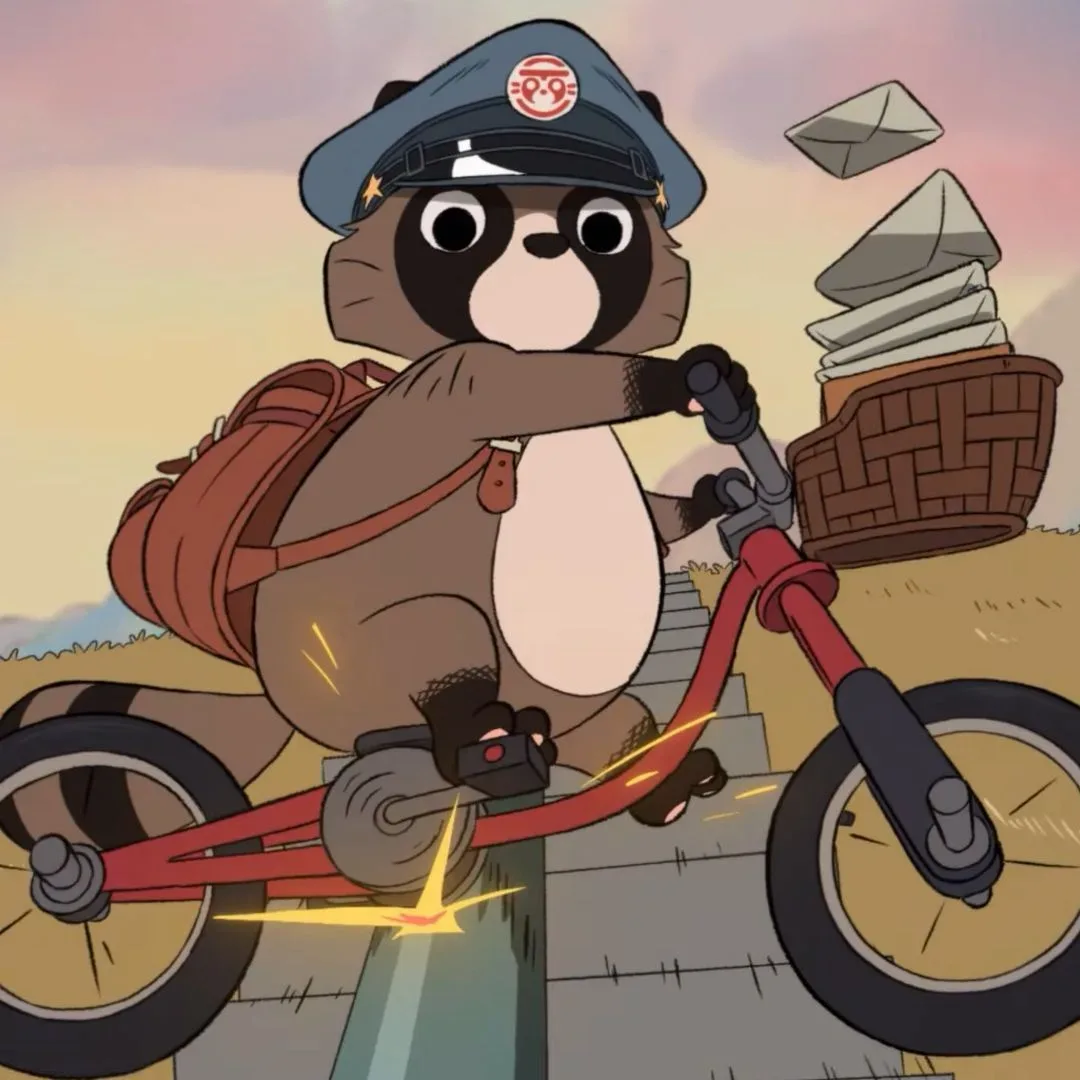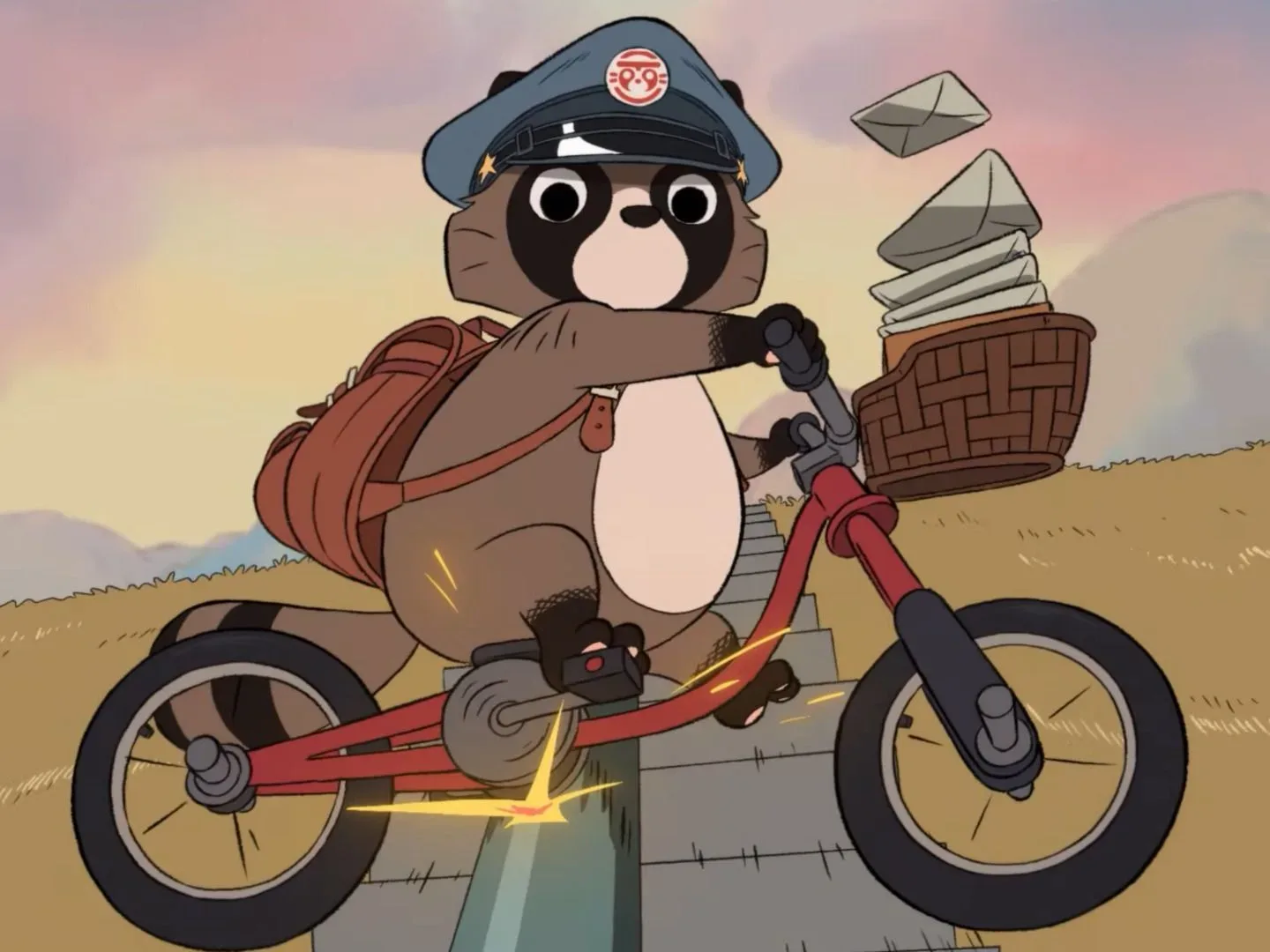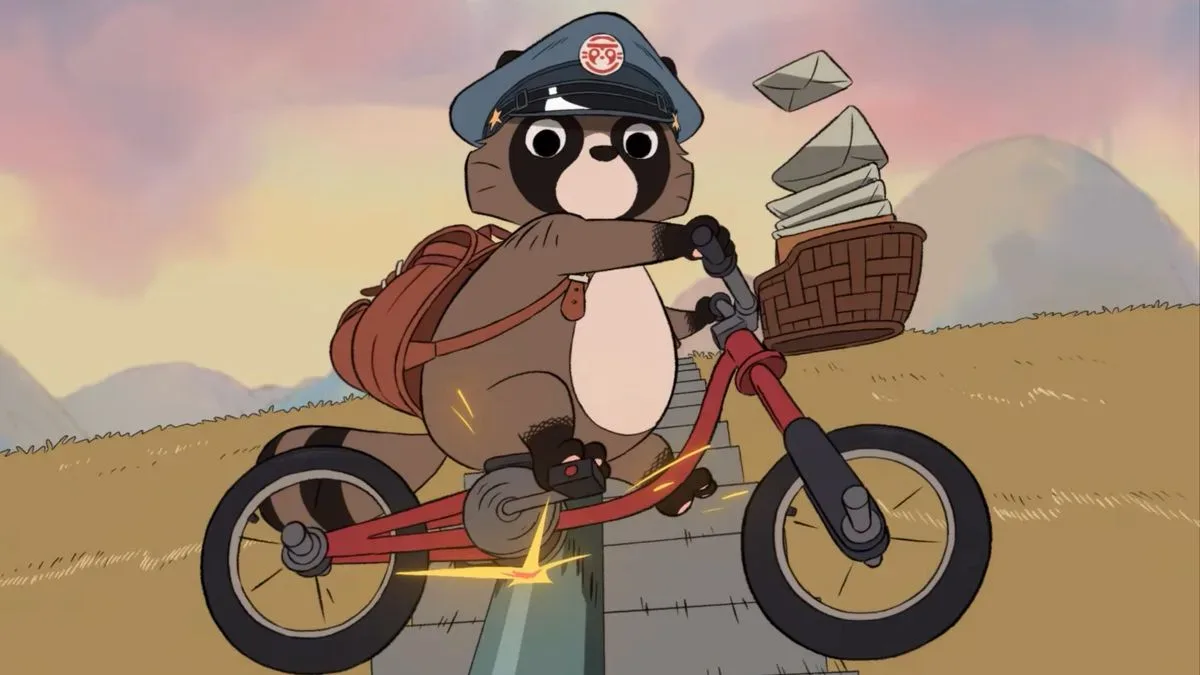
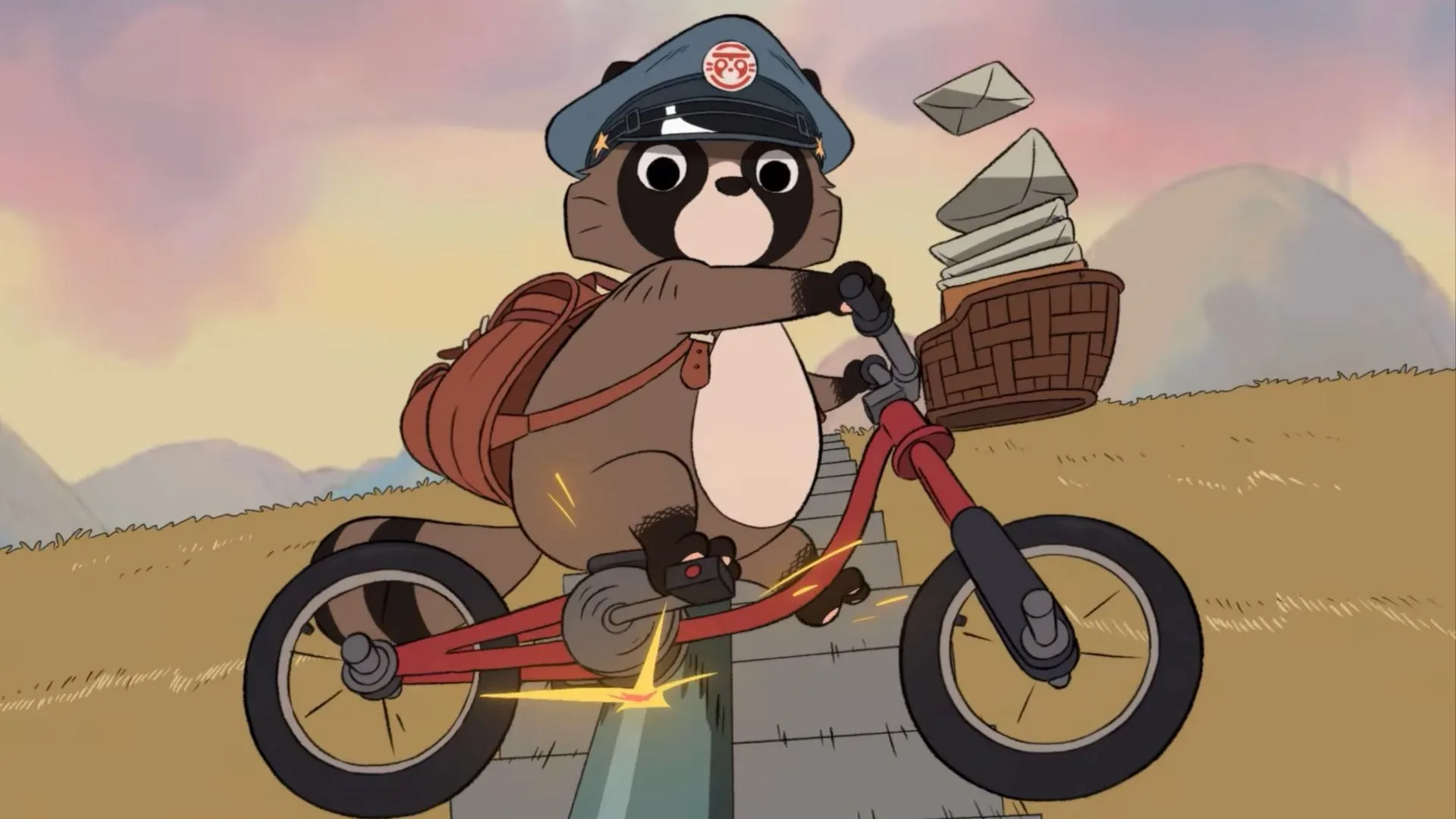
There are worse fates for a game than being memorable on sight. Tanuki: Pon’s Summer has a premise built to stick in the brain: a potbellied tanuki riding a BMX bike through a Japanese town, grinding rails, pulling tricks and delivering packages to local residents. It is cozy, playful and decidedly smaller in scale than the blockbuster games crowding its release window.
Denkiworks, the team behind the game, is not pretending otherwise. Co-founder and game director Liam Edwards has framed Tanuki: Pon’s Summer as a “lovely little underdog” amid a November dominated by a newly released Ocarina of Time remake and GTA 6. The studio’s approach is less about attempting to outshout those releases than making sure its own strengths remain clear to people looking for something different.
That is a sensible position for a niche independent game. The biggest releases command conversation, storefront attention and players’ time. But they also create an obvious counterpoint: not everyone wants their next game to be another enormous, all-consuming event. A colorful delivery game centered on a BMX-riding tanuki has a very different appeal, and that contrast is the core of the pitch.
A distinct premise rather than a blockbuster imitation
The available description of Tanuki: Pon’s Summer focuses on active traversal and small-town errands. Pon rides a BMX bike around an adorable Japanese town, uses rails and aerial tricks, and delivers packages for residents. Those details matter because they establish two complementary sides to the game’s identity.
First, there is movement. Rail-grinding means riding along a narrow rail or similar surface, a familiar trick-game mechanic that turns the environment into a route for momentum and style. Aerial tricks are maneuvers performed while the rider is in the air. Together, those elements suggest that getting from one place to another is not simply a matter of following a route; the ride itself is part of the attraction.
Second, there is the delivery work. Package deliveries for town residents give the BMX action a local, everyday purpose. Rather than being presented as a contest or a high-stakes chase, the activity is anchored in a community setting. That combination is what makes the description “cozy” meaningful here: it points to a game that pairs expressive movement with a gentler neighborhood-scale objective.
It is also why the game’s visual hook has value. A tanuki protagonist on a BMX bike is a clear elevator pitch, but it is not the whole story. The town, the deliveries and the tricks supply a compact explanation of what players will actually be doing.
Denkiworks is betting on the long tail
Edwards acknowledged that the timing is difficult, particularly because the Ocarina of Time release arrived on November 5 without advance notice. He suggested there may be more overlap between Tanuki’s potential audience and players interested in the Switch 2 Zelda release than with GTA 6’s audience.
Related coverage includes Tanuki: Pon's Summer Embraces Its Underdog Role in a Crowded November.
That distinction is important. “Audience overlap” does not mean the games are alike. It means the same person may have a limited budget, limited free time or a limited willingness to start several games at once. When releases land close together, a player who might eventually enjoy all of them can still choose one first and postpone the rest.
The team’s response is to focus on positioning. Edwards said developers cannot fully account for the moves other companies make in an unusually busy period, so the practical task is to understand a game’s own strengths and keep promoting those strengths. Denkiworks has worked with publisher Critical Reflex to find contexts in which Pon stands out, and Edwards said those efforts have produced success.
The longer-term hope is word of mouth: recommendations passed between players after they have spent time with a game. This can be especially important for a smaller title with an unusual concept. A player may initially overlook a game during a major-release rush, then remember it later after seeing positive impressions from friends or communities.
Edwards also used the phrase long tail. In game publishing, that refers to interest and sales continuing over an extended period rather than being concentrated entirely at launch. A long tail is not a promise of instant visibility. It is the possibility that a game keeps finding people well after the release-week spotlight moves elsewhere.
For Tanuki: Pon’s Summer, the theory is straightforward: once players finish, pause or simply take a break from larger games, they may remember the “BMXing Tanuki game” and give it a look. Its premise is specific enough to support that kind of delayed recall.
Positive reception provides a useful starting point
Tanuki: Pon’s Summer has a “Very Positive” review status on Steam. That label is a platform-facing summary of user reception, not a replacement for reading individual reviews or deciding whether the game fits a player’s tastes. Still, it is a meaningful early signal for a title pursuing a word-of-mouth strategy.
In practical terms, a strong user-reception label can reduce uncertainty for someone discovering the game after launch. The potential buyer is no longer only evaluating screenshots and a strange-but-charming premise; they can also see that Steam users have responded favorably. That does not make the game universally suited to every player, but it gives the underdog argument more substance than novelty alone.
The game had previously appeared as a demo during Steam Next Fest in June. Demos can serve as an unusually direct introduction for games whose appeal is rooted in feel and rhythm. The supplied details do not establish how the final release compares with that demo, but the premise itself is easy to understand in playable terms: ride, trick, explore the town and deliver packages.
What players should take from the release timing
A packed calendar can make it easy to treat every game as part of a zero-sum contest. That is useful shorthand for discussions of attention, but it is less useful for players deciding what to play. The games in this window appear to offer very different experiences, and a player does not need to choose a permanent winner in order to choose what fits a particular evening or month.
Tanuki: Pon’s Summer is aimed at people drawn to its particular blend of cozy town life, cycling traversal and delivery tasks. Its most immediate competition may not be every large release on the calendar. It may be the familiar tendency to save an interesting smaller game to a wishlist and then forget it once the next wave of announcements arrives.
That makes Edwards’ long-tail ambition understandable. The goal is not necessarily to dominate the same moment as the industry’s largest games. It is to remain visible enough that, when someone wants a smaller change of pace, Pon is still easy to remember.
GTA 6 remains one of the releases shaping the crowded landscape; readers weighing its launch platforms and official streaming options can find more detail in this guide to playing GTA VI on phone, PC and smart TV at launch.
Platforms and the underdog case
Tanuki: Pon’s Summer is available now on PlayStation, Xbox, Nintendo Switch, Nintendo Switch 2 and PC. The broad platform availability gives interested players multiple ways to approach the game, although the provided information does not specify versions, storefronts beyond Steam, cross-platform features or performance differences.
The essential case for the game is therefore refreshingly uncomplicated. It is a fully released, broadly available indie game with a distinctive central character, BMX trick riding, package deliveries in a Japanese town and Very Positive Steam reception. Denkiworks knows it has launched in the shadow of enormous names. Rather than denying that reality, the studio is embracing the role of the smaller game waiting nearby for players who want something more compact, stranger and softer around the edges.