Synduality: Echo of Ada is scheduled to lose its online service in 2027, but it is not being left behind entirely. The mecha extraction game is set to continue its regular online operations until May 2027, after which it will transition to a planned offline PvE mode. That distinction matters enormously for the players who have stuck with the 2025 release: the game’s world, salvaging loop and combat are intended to remain playable, while the unpredictable player-versus-player side of its design will no longer be part of the experience.
It is an unusually important preservation step for a game built around online PvPvE. Rather than making the whole game inaccessible once servers are retired, the proposed offline version is meant to let players explore the setting and fight CPU-controlled enemies. Details such as progression, save migration, balance changes, feature parity and exactly which online systems will carry over have not been outlined here, so players should avoid assuming that the offline mode will be a one-to-one replica of the live game. Still, the commitment to a playable PvE future gives Synduality a chance to outlive its network service in a meaningful form.
What is ending, and what is staying
Synduality: Echo of Ada launched in 2025 as part of a broader science-fiction property that also spans anime and other media. Its game structure combines open-world mecha exploration with an extraction-driven risk system and encounters involving both environmental enemies and other players.
The online component is due to remain active through May 2027. Before that shutdown, digital currency will be removed from sale on December 17, 2026. The planned replacement is an offline PvE mode, not a continuation of the existing online environment. In practical terms, players can expect the future version to center on fighting computer-controlled opponents rather than competing against human salvagers.
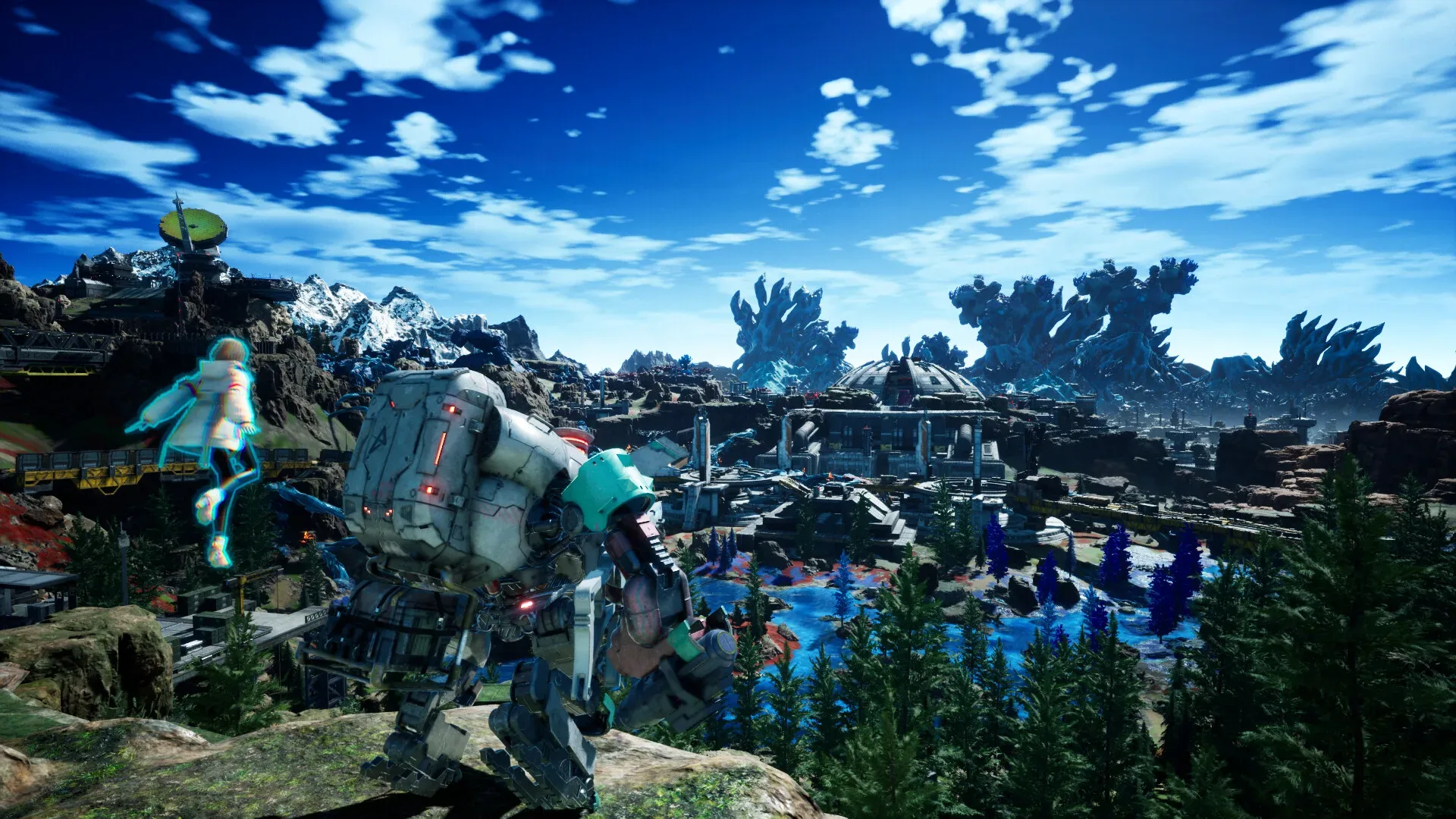
That is a consequential shift in the game’s identity. “PvPvE” means player-versus-player-versus-environment: a structure where players face AI-controlled threats while also being potential threats to one another. In Synduality, that means piloting a mecha to locate supplies, battle mutated creatures and contend with rival salvagers. The environment supplies the objectives and monsters; other people supply the uncertainty.
Once the game becomes offline PvE, the environmental half remains the focus. The announced direction is specifically about continued exploration and battles against CPU opponents. It does not mean that every online social, economic or matchmaking element can be presumed to survive locally. It does mean the core act of taking a mecha into the world to hunt for supplies and confront dangerous creatures is intended to remain available after service closure.
Why removing PvP changes the stakes
The extraction element explains why some players are greeting the offline plan with relief rather than treating it solely as a loss. In an extraction game, leaving an expedition safely with gathered resources is generally the goal. The danger is not merely failing a combat encounter; it is risking what has already been collected during the run.
In Synduality: Echo of Ada, dying in the open world means losing the materials gathered and the mecha being used. That is a substantial penalty, especially because it turns every decision to travel farther, collect more or stay in a hostile area into a calculation. A player who finds valuable supplies has more to lose as the run continues.
Human opponents can make that calculation harsher. A creature encounter may be difficult, but its behavior is governed by the game. A rival player can arrive unexpectedly, choose when to strike and exploit a moment when another salvager is focused on gathering or fighting. One player responding to the closure news described spending hours accumulating materials and items, only to be ambushed and lose them, then needing considerable time to rebuild lost money and equipment.
That frustration is not incidental to the format. The possibility of being attacked is part of what gives PvPvE extraction games their tension. Successful runs can feel more valuable because failure has real consequences. But the same system can also make a setback feel punishing, particularly for players who prefer exploration, story and PvE combat over competitive ambushes.
The planned offline mode will therefore do more than replace a server connection with an AI opponent. It will alter the nature of risk. Players should still expect opposition from the world and its large enemies, but they will no longer need to account for another person entering the encounter with a better angle, stronger equipment or simply a willingness to take their haul. For some, that may make the game’s materials loop easier to enjoy; for others, it removes the high-pressure uncertainty that made an extraction run distinctive.
A possible second audience for the mecha world
The original online model did not find a large Steam audience. Its peak concurrent player count on the platform only narrowly exceeded 3,000. That figure does not define every player across every version of the game, nor does it explain why individuals did or did not stay. It does, however, show that the Steam player base never reached the scale the project was likely seeking.
Bandai Namco continued to update the game after launch, but the planned 2027 server closure signals that those updates will not lead to an indefinitely operated online service. The offline announcement offers a different proposition: rather than asking players to accept the volatility of competitive extraction, it can appeal to those who want a self-contained mecha action and exploration experience.
There is a logical audience for that version. Some players are attracted to the concept of piloting a mecha through a sci-fi landscape, tracking down supplies and taking on imposing enemies, but are less interested in a system where another human player can erase an extended expedition. A PvE-only approach cannot erase the history of the live-service closure, and it is not yet clear how comprehensive the offline conversion will be. Yet it directly addresses a familiar objection to the game’s risk structure.
The change may also make the story and world easier to approach at an individual pace. In a PvP setting, a player’s attention can be divided between narrative or exploration goals and the need to watch for rival salvagers. With the competitive element removed, the announced mode should permit more focus on navigating the environment and confronting its CPU enemies. That may be particularly welcome to players who were interested in the wider Synduality setting but did not want a competitive extraction commitment.
For a very different kind of PC game arriving through Steam, Moonfrost’s Early Access plans are another reminder that a game’s long-term relationship with its players can take very different forms. Synduality’s situation, however, is specifically about a live online game attempting to preserve a playable version after its servers are gone.
What current and prospective players should keep in mind
The most immediate practical date is December 17, 2026, when digital currency will no longer be sold. Players considering purchases should recognize the difference between an operational online service and the later offline version. The supplied details confirm that currency sales will end and that an offline PvE mode is planned; they do not establish what happens to every type of existing currency, item, entitlement or online-only feature after the transition.
Players who still value the PvP side also have time before the scheduled endpoint. Online operations are planned to continue until May 2027, leaving a remaining period for those who enjoy the present mix of scavenging, mutated-creature battles and rival-salvager encounters. Those players should not treat the planned offline mode as a substitute for the multiplayer experience, because its stated purpose is explicitly PvE.
Conversely, people who avoided the game because of its equipment-loss penalty and human ambushes may want to monitor official details about the conversion. The offline mode sounds aligned with their priorities, but the most important unanswered questions are mechanical ones: how progression functions, how gear loss will be handled, what content is included and whether any connected features are retained. Until those specifics are provided, the safest description is simply that players will be able to continue exploring and fighting CPU opponents offline.
The more constructive kind of live-service ending
Server shutdowns can be especially severe when a game has been designed around online connectivity. They can turn a purchased game into something inaccessible, even when its combat, environments and single-player-friendly systems might otherwise remain worthwhile. Synduality: Echo of Ada’s proposed offline PvE mode does not preserve every part of its original design, but it acknowledges that a game can still have value after the population and business case for online operation have changed.
It is also a candid adjustment to where the game’s appeal may be strongest. The original PvPvE design asked players to embrace risk from both the world and one another. The later version is positioned around the part of that formula that can endure without a live community: the mecha, the supplies, the exploration and the fights against computer-controlled threats.
Whether that creates a stronger long-term version will depend on implementation details that have not yet been shared. For now, the key point is clear: Synduality: Echo of Ada’s online service has an end date, but its world is planned to remain playable afterward. For fans exhausted by the prospect of losing a hard-earned mecha or a pile of materials to a surprise PvP attack, that may be more than a consolation prize. It may be the version of the game they wanted all along.