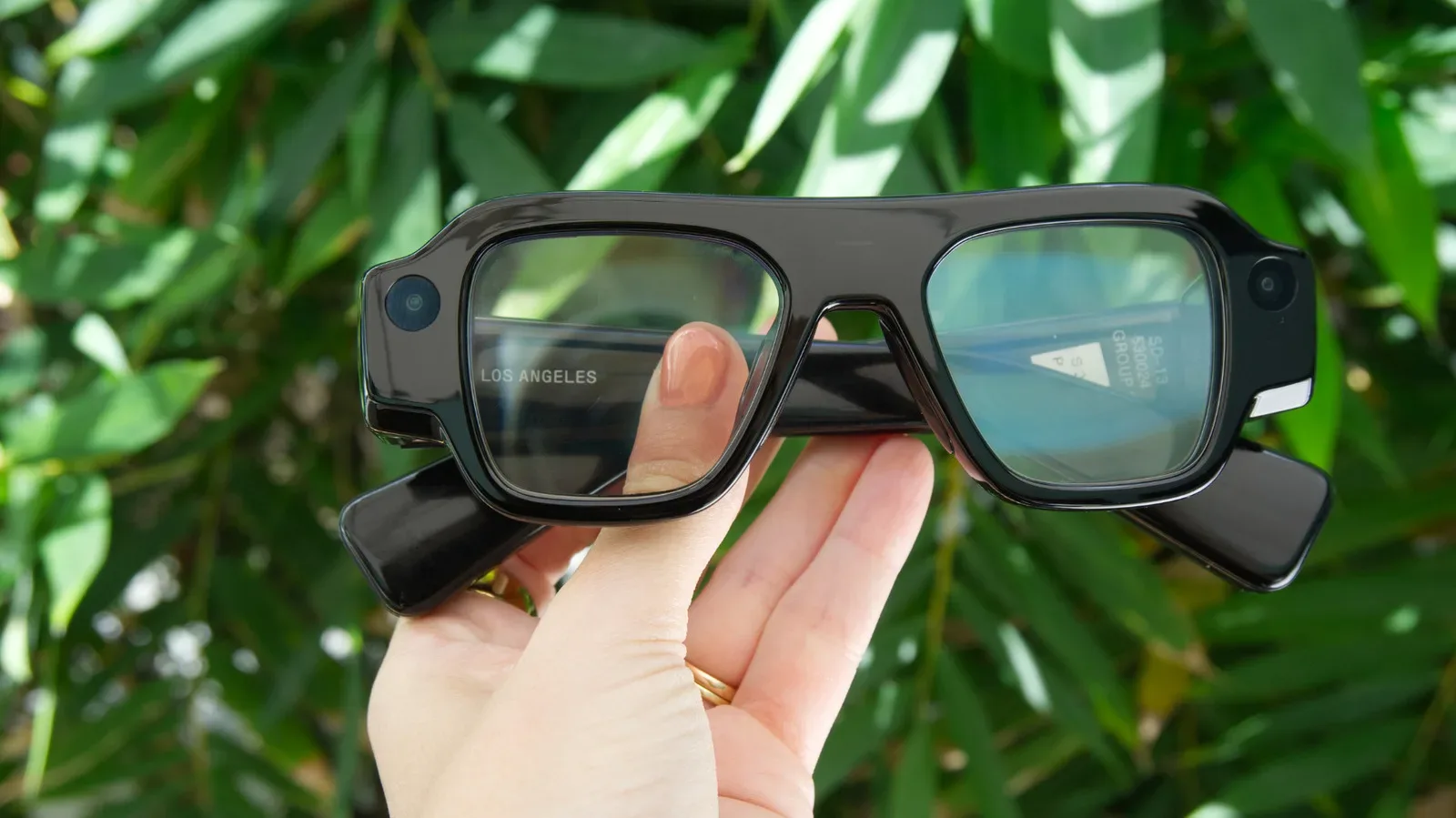
Snap is expanding its artificial-intelligence plans beyond Snapchat with Specs Intelligence, a standalone service built to work with its redesigned AR glasses as well as its own mobile and desktop apps. The company calls it an “anticipatory AI service,” a description that points to a specific kind of AI product: one designed not merely to answer a request, but to use information from services a person chooses to connect and bring up relevant material before it is explicitly requested.
That framing matters. Generative AI features have appeared in Snapchat, but Specs Intelligence is presented as a separate, more productivity-oriented system rather than an extension of the social app. It is intended to understand a user’s goals, priorities, routines and relationships through linked tools and apps, then turn that context into useful reminders, meeting preparation or travel information.
The biggest immediate story is not just that Snap has an AI service, but that the service is meant to operate across screens and, for Specs owners, inside a field of view. That makes its usefulness dependent on a difficult balance: it needs enough connected personal information to be relevant, yet it must earn enough trust for people to connect those accounts in the first place.
What Specs Intelligence is designed to do
Specs Intelligence is not described by Snap as an agent or assistant, though its stated function overlaps with both terms. An AI assistant generally responds to prompts or helps complete requests. An agent is often used for a system that can take more independent, multi-step actions. Here, the available details focus less on autonomous actions and more on contextual organization and recommendations.
In practical terms, the service draws on connected outside accounts, including Google, to surface information at moments when it may matter. The examples provided are deliberately everyday ones: questions and reminders to consider before a meeting, and travel plans appearing ahead of a trip. The underlying idea is that a calendar event, account information and a person’s established priorities can be brought together without requiring that person to search separately through every connected service.
Specs Intelligence also sorts material into different “corners” based on context. A family-oriented corner could therefore be separated from one focused on work deadlines. This may sound like a small interface decision, but it addresses a familiar problem with digital reminders: even useful information can become noise when work, personal obligations and travel details are delivered in one undifferentiated stream.
The service’s “anticipatory” label should not be confused with a guarantee that it knows what someone wants. It means the system is intended to provide information proactively, based on connected data and inferred relevance. That can be convenient when the inference is correct. It can also be intrusive or unhelpful when the context is incomplete, outdated or simply misunderstood. The quality of those judgments will be central to whether the product feels like practical support or another feed competing for attention.
How the AR glasses change the proposition
On Snap’s AR Specs, relevant information can appear directly in the wearer’s field of view. Owners will be able to invoke the service with the phrase “Hey Specs.” Voice activation is particularly important in glasses because it avoids the awkwardness of needing to reach for a phone while moving through the world.
There is a meaningful distinction between an AI app on a phone or computer and one used through augmented reality. Augmented reality, or AR, places digital elements into a view of the physical world rather than replacing that world with a wholly virtual environment. In this case, the promise is not simply that a user can ask a question while wearing glasses; it is that timely information can be placed where the user can see it while preparing for a meeting, heading out on a trip or handling a task.
That is also why context becomes more consequential on a wearable device. A reminder that arrives at the right time can prevent a missed detail. The same reminder at the wrong moment can distract from a conversation, task or journey. The available information does not establish how Specs Intelligence decides when to surface information, how much control users will have over those moments, or what the final interface will look like. Those are practical questions that will matter as much as the broad AI concept.
Snap’s voice control is not presented as fully demonstrated in the material available. The wake phrase was used to launch a browser window, while the broader Specs Intelligence feature was not available during a demonstration. That means prospective users should separate what has been described from what has been publicly shown working in that setting. The promised experience is clear enough; its final day-to-day behavior remains something to evaluate when access broadens.
Why Snap is keeping it outside Snapchat
Positioning Specs Intelligence separately from Snapchat suggests Snap sees it as a different category of product. Snapchat is associated with communication, camera features and social interactions. Specs Intelligence, by contrast, is being built around connected accounts, routines, scheduling context and organization.
That separation could be useful for clarity. A person may be comfortable using a social app without wanting that experience intertwined with workplace deadlines, family tasks or travel plans. A standalone service can establish its own privacy controls, connections and expectations rather than asking users to treat a social platform as the default home for their personal organization layer.
It also lets the service reach people who do not own the AR glasses. Snap plans dedicated mobile and desktop apps, so Specs Intelligence is not restricted to hardware buyers. The glasses are still the most distinctive version of the idea, since they can present information in the user’s view, but the cross-platform approach gives the service a larger potential role: it can function as an account-connected organizer first and an AR companion second.
For a company operating around social technology and camera hardware, this is a notable move toward a more personal productivity product. It reflects a wider contest over who gets to supply the layer that connects calendars, communications, plans and alerts. In gaming and technology alike, platform questions often come down to who controls the interface between a person and their information—a theme also present in broader industry debates about access and platform rules.
Privacy commitments are central, not incidental
Products that derive value from a person’s routines and connected accounts naturally raise questions about data use. Snap is addressing that concern directly with several stated commitments: it says Specs Intelligence will not use the service’s information to train its AI models, will not use it to serve advertisements, and will not allow Snap personnel to view or access the personal content used with the service.
Those claims are significant because the product’s pitch relies on knowing enough context to provide worthwhile help. Meeting preparation, travel reminders and time-and-attention insights all require the system to process information that users may consider sensitive. Saying that this material will not train models or power ads draws a boundary between making the service function for an individual and repurposing that individual’s content for broader commercial or model-development use.
Still, privacy language and practical user understanding are not identical. Anyone considering the preview will want to pay close attention to what they choose to connect, what kinds of insights the service produces, and whether the value of those insights matches the data access involved. The key word is choose: Specs Intelligence is described as learning from apps and tools a user elects to connect. That makes account-linking decisions the practical control point for users.
- Connected accounts: These are the external services a user authorizes Specs Intelligence to access for relevant information.
- Proactive suggestions: Information surfaced without a user first asking for it, such as a pre-meeting prompt or a travel reminder.
- Model training: Using data to help develop or improve an AI model. Snap says personal content used with Specs Intelligence will not be used for that purpose.
- Ad serving: Selecting or delivering advertising based on information. Snap says Specs Intelligence data will not be used to serve ads.
What is available now, and what is still limited
Availability is staged rather than broad. A limited US preview is available now through the Specs app on iOS. In that preview, users can connect a Google account to receive insights about where they spend their time and attention. However, it does not include proactive suggestions, which means the more ambitious part of the product’s pitch—timely prompts that appear ahead of an event or trip—is not part of that initial version.
The fuller early-access version is set to begin as invite-only and will be available only through the Specs Mac app. Interested users can join a waitlist. This arrangement leaves several boundaries worth keeping clear: the iOS preview is limited; the full early-access product is not open to everyone; and the full early-access version is tied to Mac rather than described as broadly available across every desktop or mobile platform.
That phased release is sensible for a service built around personal context. Features that summarize patterns in time and attention are one thing; systems that decide what users should see before a meeting or while travelling require careful calibration. A limited preview gives Snap a narrower starting point while users get a chance to judge the basic insight experience before the product adds proactive behavior.
What to watch next
Specs Intelligence is easy to understand at the headline level: connect services, receive useful context, and, with AR Specs, see it without pulling out a phone. The harder questions sit underneath that pitch. How accurately will it understand separate work and family contexts? How often will it be useful without becoming distracting? What choices will users have over connected accounts and the kinds of insights they receive? And how consistently will the service deliver on Snap’s stated privacy boundaries?
For now, the initial iOS preview offers a narrower test centered on Google-account insights into time and attention, not the complete proactive-assistance experience. The invite-only Mac early access is the next step toward the larger vision. Snap is therefore entering the AI-assistant conversation with a product that is ambitious in scope but deliberately limited in its first public form—one that will stand or fall on relevance, restraint and trust as much as on the novelty of seeing an answer through a pair of glasses.