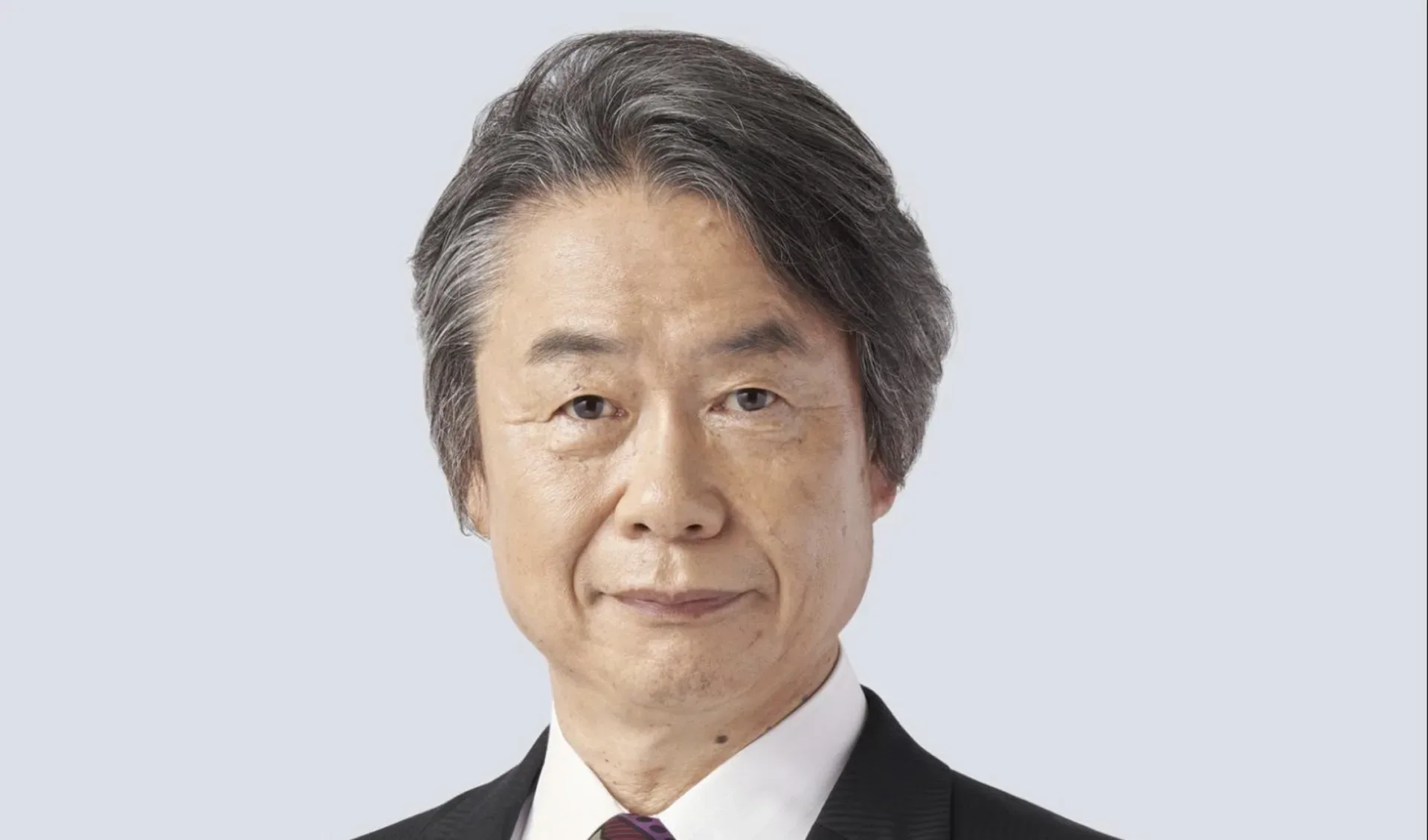
Shigeru Miyamoto has framed generative AI less as a settled answer for game development than as a prompt for the industry to examine its own creative values. Speaking after being recognized in Japan for his cultural contribution to gaming, the Nintendo veteran reflected on nearly 50 years in the business, the collaborative nature of game-making, and the distinction he sees between forming an idea and carrying out the work around it.
His position was notably cautious. Miyamoto did not claim to know whether AI will eventually handle every part of creative work. Instead, he argued that as tools take on more technical tasks, people may have a clearer reason to ask what, exactly, human creators contribute. For an industry currently debating generative systems in art, writing, production, and design, that is a meaningful emphasis: the technology may change workflows, but it does not automatically answer questions of purpose, taste, or intent.
An honor shared with collaborators
Miyamoto described video games as something made by groups rather than by a lone individual, accepting the recognition as a representative of the people with whom he has worked. He also pointed to his more recent collaboration with Universal Studios Japan on Super Nintendo World, a reminder that game characters and worlds now involve teams beyond conventional development disciplines.
That framing matters because it resists a familiar shorthand around famous game creators. A recognizable name can become a symbol for a franchise or era, yet games depend on many interconnected kinds of labor: planning, visual design, programming, sound, testing, production, and the long process of polishing a playable experience. Miyamoto’s comments place the emphasis on that collective process rather than on individual authorship alone.
He joined Nintendo in 1977, when the company was particularly associated with playing cards and board games. He connected that background to a lasting interest in the living room: games as experiences that belong in a shared domestic space, where friends and family can gather. In this view, a game is not only software or hardware. It is also an object and activity that has to feel welcome in people’s everyday lives.
The Wii and the question of accessibility
Miyamoto linked this philosophy to the transition from GameCube to Wii. At that point, he was concerned that games were advancing alongside their existing audience, while console hardware was increasingly understood through power. More people were playing games, he observed, but there was still a social divide between people who played and those who did not.
His concern centered on the game controller. A controller is the player’s physical interface with the game: the device through which movement, selection, timing, and other actions are communicated. It can be empowering for experienced players, who learn complex combinations and develop muscle memory. But it can also be a barrier when its buttons, sticks, and conventions make an unfamiliar activity feel difficult before the game has even begun.
For Miyamoto, the goal was not merely to expand an audience in numerical terms. He wanted games to blend more naturally into daily life and potentially have a positive place there. The Wii’s design direction followed from that question of approachability. His remarks also place later mobile-phone gaming in the same broader story of access, alongside the Wii and Nintendo DS. As generations who grew up with games raise children of their own, gaming has become more woven into the wider culture.
This legacy remains relevant whenever the industry discusses onboarding, control schemes, interfaces, or who a game is made for. Accessibility can describe many things, but Miyamoto’s comments focus on an immediate and basic issue: whether a newcomer feels invited to begin. Technical complexity and creative ambition need not be opposites, but a design that assumes prior knowledge can narrow the people able or willing to participate.
Readers looking at Nintendo’s continuing place in the console landscape can also follow the latest Nintendo hardware and Zelda anniversary coverage.
Characters beyond the controller
Miyamoto also described a change in his thinking about game adaptations. He had once opposed turning his games into films because he regarded the characters as designed for their interactive setting. That is an important distinction: in a game, a character’s meaning is shaped partly by what a player does with them. Movement, choice, repetition, success, and failure all contribute to the relationship between player and character in ways a film cannot reproduce.
Over time, however, Nintendo characters became familiar to fans in a broader cultural sense. Miyamoto said that affection made the characters more flexible across media, including film and theme-park settings. Rather than suggesting that games and films are interchangeable, his account recognizes that a character can have one kind of life in an interactive work and a different, still valuable one elsewhere.
The same principle helps explain why game development now overlaps with fields such as themed entertainment. A theme park cannot recreate gameplay exactly, just as a movie cannot duplicate player agency. But it can provide a physical, shared encounter with imagery and characters that people already recognize. The medium changes; the relationship audiences have developed with the work can endure.
AI as a design question, not a shortcut to an answer
When asked about AI, Miyamoto approached the subject through earlier changes in creative tools. He recalled the move from typewriters toward word processors and computers, and the way designers once learned lettering: carefully reproducing text for posters and other materials. As software made copying, pasting, image sourcing, and clean text rendering easier, he argued, the value of other skills became more visible—particularly an individual understanding of layout.
Layout is the arrangement of text, images, space, and visual emphasis so that a design communicates clearly and effectively. Miyamoto’s point was not that tools erase design. It was that when a tool makes one technical task easier, the creative decisions surrounding that task may become more apparent. A person can have access to polished type and imagery without necessarily knowing what should be emphasized, what should be omitted, or how elements should relate to one another.
He sees generative AI through a similar lens. Generative AI refers here to systems that can produce material such as text or images from patterns in data and a user’s input. Miyamoto’s comments did not set out a list of approved or prohibited uses. Instead, they warned against treating output or busywork as proof that something worthwhile has been created.
“The more AI takes over various tasks, the more it becomes an opportunity to think deeply about what it actually means to create.”
At Nintendo, Miyamoto said, there has been a distinction between “creating” and “working.” Creating begins with establishing a broader structure; working involves filling gaps and polishing. He also stressed that work itself can be enjoyable, because it can provide the satisfaction associated with making something. The danger, in his view, is becoming pleased with the labor and mistaking that feeling for confirmation that the result is genuinely good.
That distinction offers a practical way to read the AI debate without assuming that every task belongs wholly to either machines or people. A tool might assist with a repeated technical process, but someone still needs to determine the structure, judge whether the output suits the goal, and decide what deserves refinement. Miyamoto places individual intention at the heart of design, with the computer assisting the realization of that intention.
What this means for game development
Miyamoto’s remarks do not predict a specific technical future for games, nor do they promise that human creative work is insulated from change. He explicitly said he does not know how far AI will develop or whether it will one day encompass creating itself. His immediate conclusion was simpler: there remains plenty for people to do.
For developers, that leaves a challenge more useful than a blanket verdict on AI. Teams can ask whether a tool helps them execute a clear direction, or whether it encourages them to avoid making the difficult choices that give a game its character. They can distinguish speed from judgment, and volume from coherence. They can also remember Miyamoto’s earlier point that games are made by groups: even an efficient tool does not remove the need for communication among the people deciding what a project should be.
For players, the comments are a reminder that the technology behind a game is only one part of its identity. Controls, clarity, the feel of interaction, the ideas that guide a world, and the care taken in polishing details all shape the final experience. Miyamoto’s history—from an interest in living-room play to a willingness to see Nintendo characters extend into other media—suggests that tools and formats will keep changing. The central question he raises is whether creators remain deliberate about why they are making something and what they want it to mean.