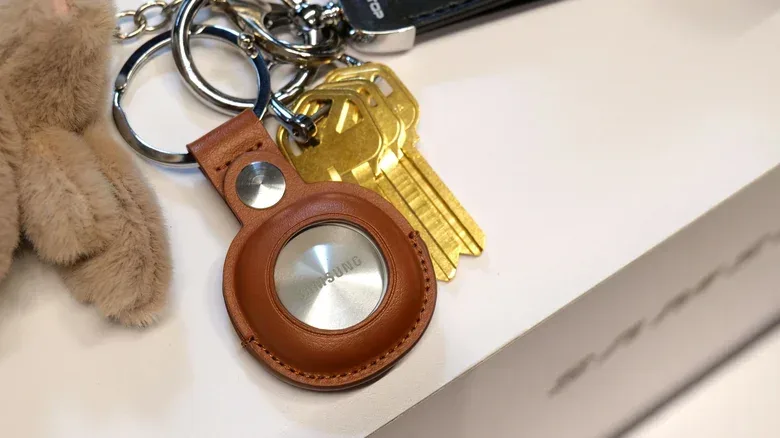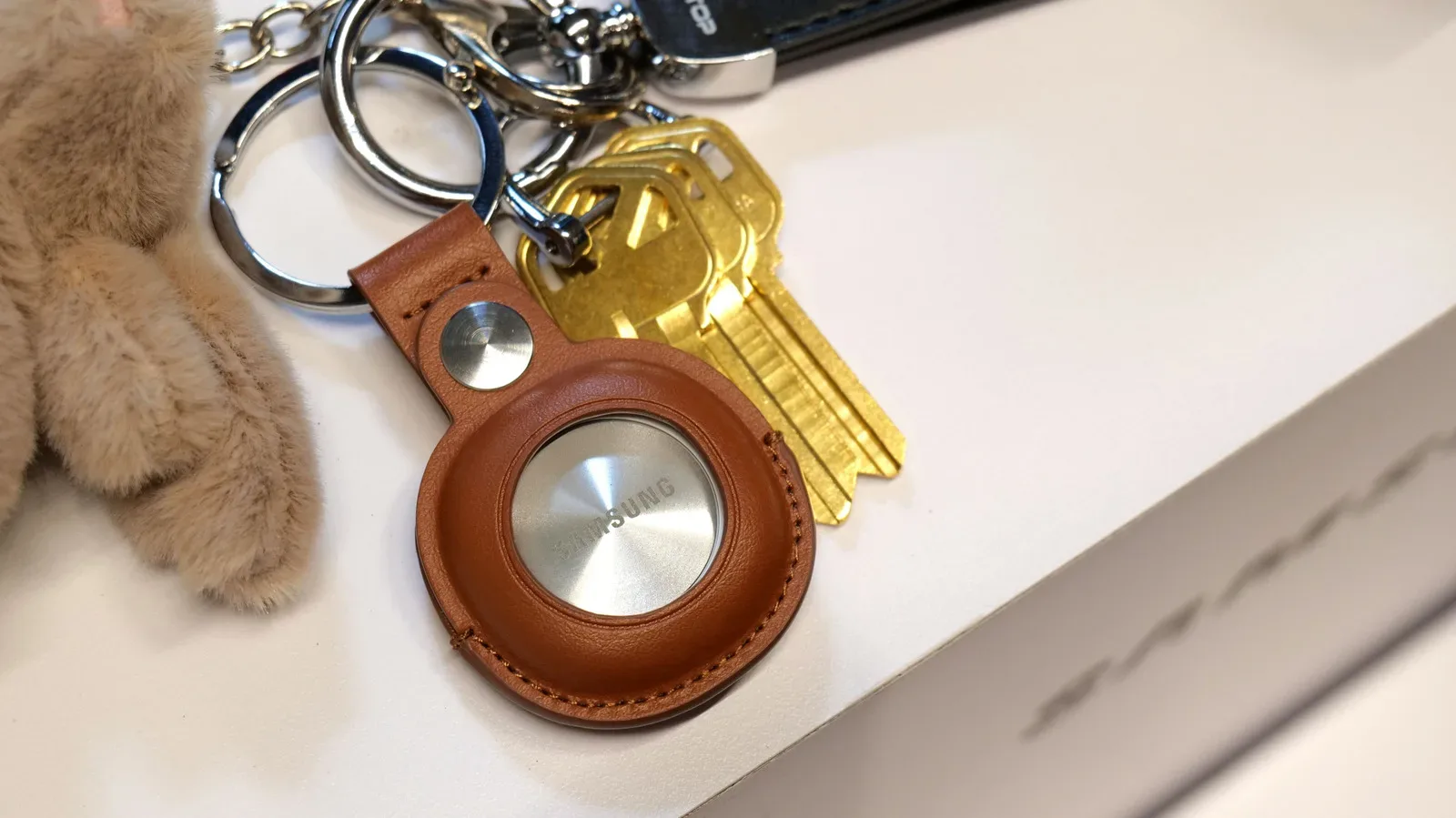
Samsung’s Galaxy SmartTag 3 is making a bid to be more than a small beacon for misplaced keys, bags and other everyday essentials. The new tracker adds a pet-focused activity view that can record movement, active time and sleep, alongside upgrades to range, battery life and platform compatibility.
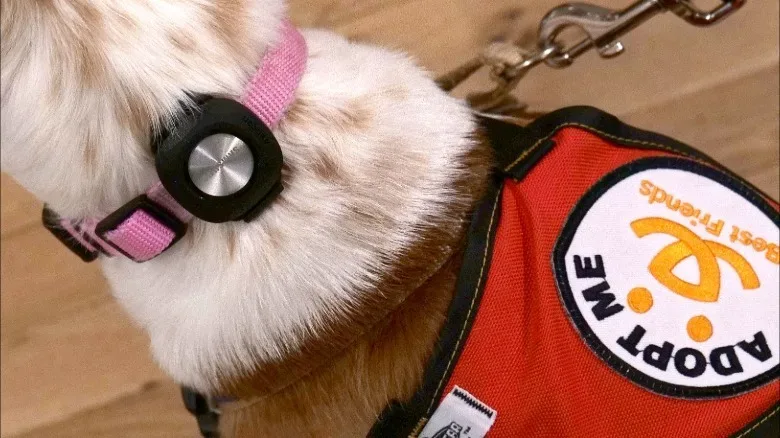
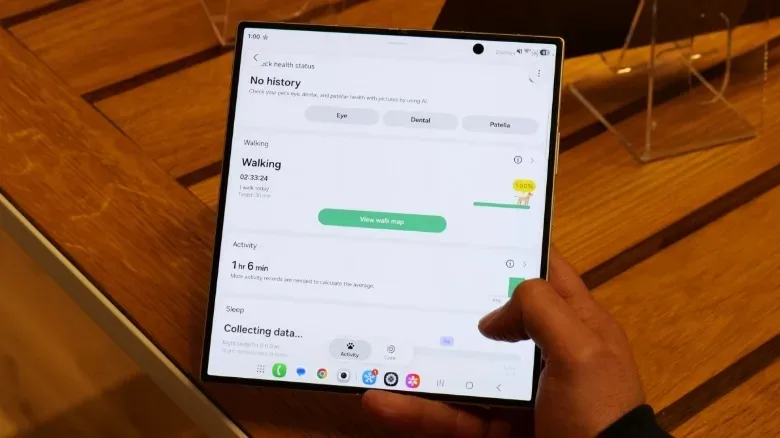
That combination matters because a tag attached to a pet collar has usually been framed as a recovery tool: something that may help locate an animal when it has wandered off. SmartTag 3 keeps that role, but Samsung is also positioning the device as a lightweight way to observe everyday patterns. Its SmartThings app includes a dedicated section for pet statistics, including an overview of activity and sleep, plus location information for walks.
There is an important limit to that description. SmartTag 3 is not presented as a full pet fitness or health tracker. It does not measure heart rate or VO2, a metric associated with oxygen use during exertion. What it does offer is a simpler record of how much a pet moves, the length of active periods and how long it sleeps. For owners, that turns a location tag into a device that can show broad routine changes without claiming to provide medical-style measurements.
A tracker with a second job
The pet activity feature is the clearest change in SmartTag 3’s purpose. A device that was primarily meant to be found can now produce a running picture of a pet’s day. That may be useful for people who want one compact accessory serving two distinct functions: location assistance if an animal gets loose, and a high-level log of normal movement and rest.
The key word is high-level. Motion, activity time and sleep are useful categories for spotting patterns, but they are not equivalent to a diagnosis or a detailed assessment of an animal’s wellbeing. A lower or higher activity figure alone does not explain why a routine may have changed. The sensible use of the data is as a reference point: information an owner can notice over time, rather than a replacement for professional care or ordinary attention to a pet’s behavior.
Samsung has also left a practical part of the setup to the owner. The SmartTag 3 needs a collar or other attachment point that fits its dimensions securely. The device’s smaller, lighter design should help in that respect, but a buyer still needs to choose compatible collar hardware rather than expecting a pet-ready mounting solution to be included.
What the SmartThings pet view can show
- How much a pet has moved
- How long the pet has been active
- How much the pet has slept
- Where the pet has been during a walk
That last item links the activity information back to the product’s core tracking mission. It is one thing to see that a pet was active; it is another to have an accompanying location record for an outing. The feature set is aimed at routine awareness rather than turning every walk into an elaborate dashboard.
More distance before precision takes over
SmartTag 3’s finding tools have received a substantial claimed range improvement. Samsung says Bluetooth 6.0 Channel Sounding enables distance and direction guidance from as far as 60 meters, or 196 feet, away. The company describes that as roughly three times the previous range.
Channel Sounding is a Bluetooth capability used here to help estimate distance and direction. In practical terms, it is designed to provide more useful guidance than a vague “somewhere nearby” signal when a tagged object is within range. The stated 60-meter figure should be read as the company’s specification, not as a promise that every environment will produce the same result. Buildings, walls and other real-world conditions can make any wireless location task more complicated.
Once a user gets closer, the tag’s ultra-wideband support is intended to narrow the search with greater precision. Ultra-wideband, often shortened to UWB, is a short-range wireless technology that can be used for more exact spatial guidance. The pairing of the two approaches gives the tracker a sensible division of labor: Bluetooth-based guidance for the broader hunt, then UWB for the final approach.
For a lost object, that progression could mean starting with direction and distance, then using more precise cues around the room, car, yard or other nearby area. For a pet, it reinforces the point that SmartTag 3 is an aid for locating a tagged collar rather than a substitute for supervision. A tracker can assist a search; it cannot prevent an animal from leaving a safe place in the first instance.
Place Notification adds an arrival-and-departure alert
Samsung is also introducing Place Notification, a geofencing feature. A geofence is a virtual boundary created around a real-world place. With SmartTag 3, an owner can set that boundary around a location and receive an alert when the tracker enters or leaves it.
For item tracking, that could make an ordinary destination more meaningful: an alert can indicate that a tagged item has arrived at, or departed from, the selected area. For pet use, it supplies a straightforward status signal connected to a designated location. It is not the same thing as continuous monitoring, but it could be a useful complement to the tracker’s movement and sleep summaries.
The feature is notable because it shifts the tag from a device a person consults only after something is missing into one that can proactively surface an event. That is a different sort of convenience than directional finding. One is about responding to a problem; the other is about being notified when a tag crosses a boundary that matters to its owner.
Battery claims and a smaller physical design
Samsung says SmartTag 3 can last up to 550 days in normal mode, compared with 500 days for its predecessor. In Power Saving mode, the claim rises to up to 790 days, up from 700 days previously. Those are meaningful increases on paper, particularly for a tracker intended to spend long periods attached to an everyday object or collar.
Power Saving mode is a trade-off by design: it emphasizes a longer claimed lifespan over normal operation. Buyers should treat the two figures as separate usage modes rather than assume every setup will reach the highest number. Even so, reducing the frequency of battery changes is especially helpful for a pet collar, where a forgotten tracker is far less useful than one that remains powered.
The exterior is familiar, but Samsung says the new model is about 35% more compact and 33% lighter than the preceding SmartTag. It retains an IP67 rating for dust and water resistance. In plain terms, the rating indicates protection against dust and resistance to water under the standard represented by that code. It does not make a small tracker indestructible, and it does not resolve the need for a properly fitting collar attachment, but it is relevant for something that may be used outdoors.
The compactness claim is arguably more important for pet use than it might be for a key ring. A smaller, lighter device can be easier to accommodate on a collar, provided the collar and its attachment point are appropriate for the tag. Samsung has not changed the question into an automatic answer, but it has made the tag less burdensome in principle.
SmartThings crosses the iPhone-Android divide
For the first time, Samsung says the Galaxy SmartTag has cross-platform compatibility through SmartThings. SmartTag 3 can be used and located through the app on either an iPhone or an Android device.
That is potentially one of the product’s most consequential upgrades, even though it is less flashy than the pet dashboard. A tracker can become inconvenient when a household uses different phone platforms. Cross-platform access means the tag is no longer described as a tool reserved for one side of the mobile divide, allowing more people in the same household to work with the SmartThings setup.
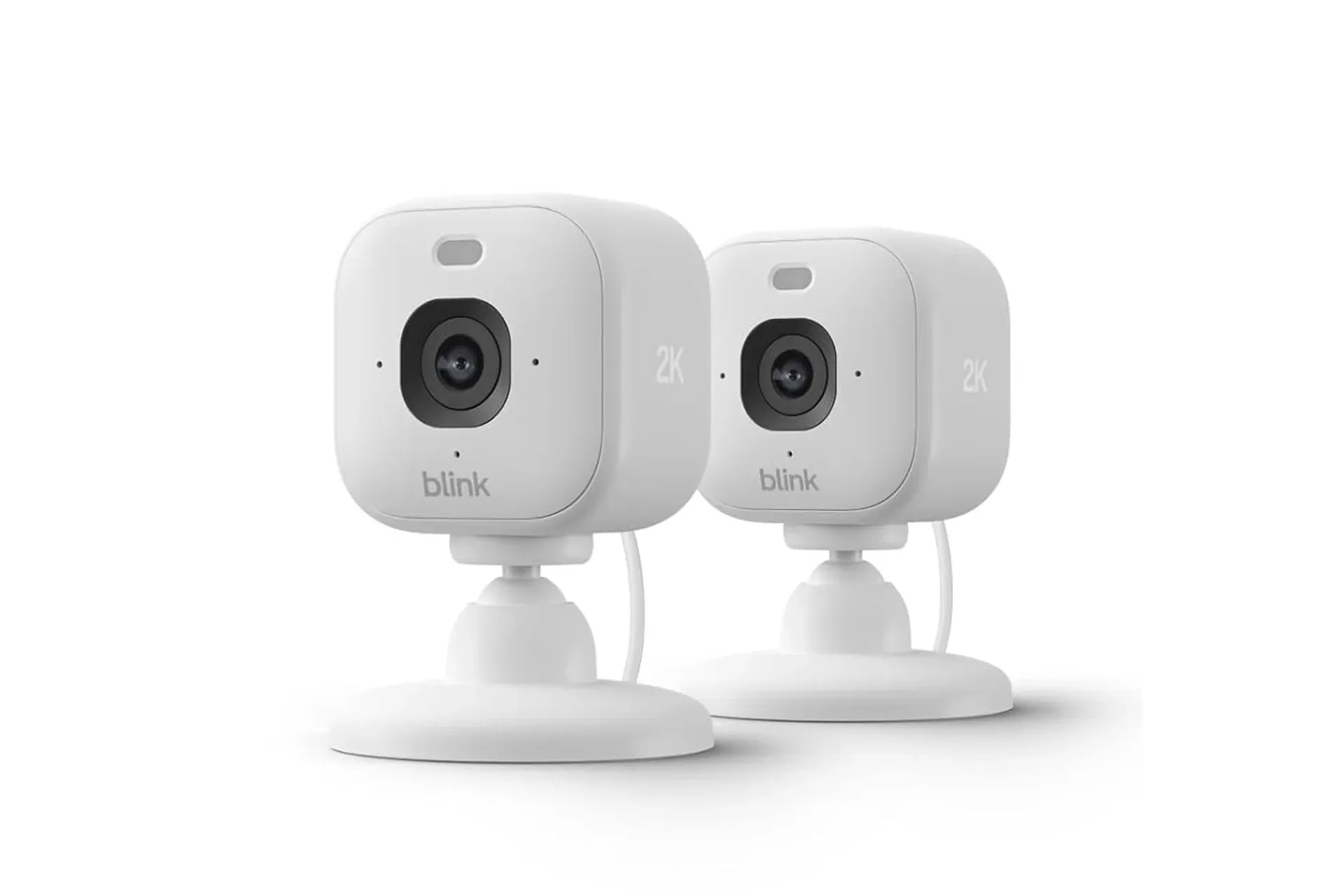
It also puts SmartTag 3 in a broader smart-home context. For readers following devices that turn everyday observation into app-based information, Samsung’s new tag takes a small, portable version of that approach. A recent indoor camera deal illustrates the adjacent home-monitoring category, while SmartTag 3’s emphasis is specifically on a mobile object or pet and the signals it carries with it.
Price, colors and timing
The Galaxy SmartTag 3 is set to cost $30 for one device or $100 for a four-pack. Samsung plans to offer black and white versions, with availability slated for early November.
The four-pack pricing makes the product’s multi-purpose pitch easier to understand. A household could divide tags among bags, keys and pet collars, though the best choice depends on whether every item genuinely needs tracking. The pet features will be the distinctive reason for some buyers to choose the new model, while the longer battery claims, expanded range guidance, UWB precision and iPhone compatibility broaden the appeal beyond that use case.
SmartTag 3 is therefore not a reinvention of the tracker form. It remains a compact accessory built to help find attached belongings. Samsung’s update is more interesting because it layers practical functions on that base: more ways to search, a boundary alert, access across iPhone and Android, and a modest activity record for an animal that cannot exactly explain how its day went. For pet owners, the most useful expectation is also the most grounded one: a location tag that can provide a little more context about routine, without pretending to be a veterinary instrument.