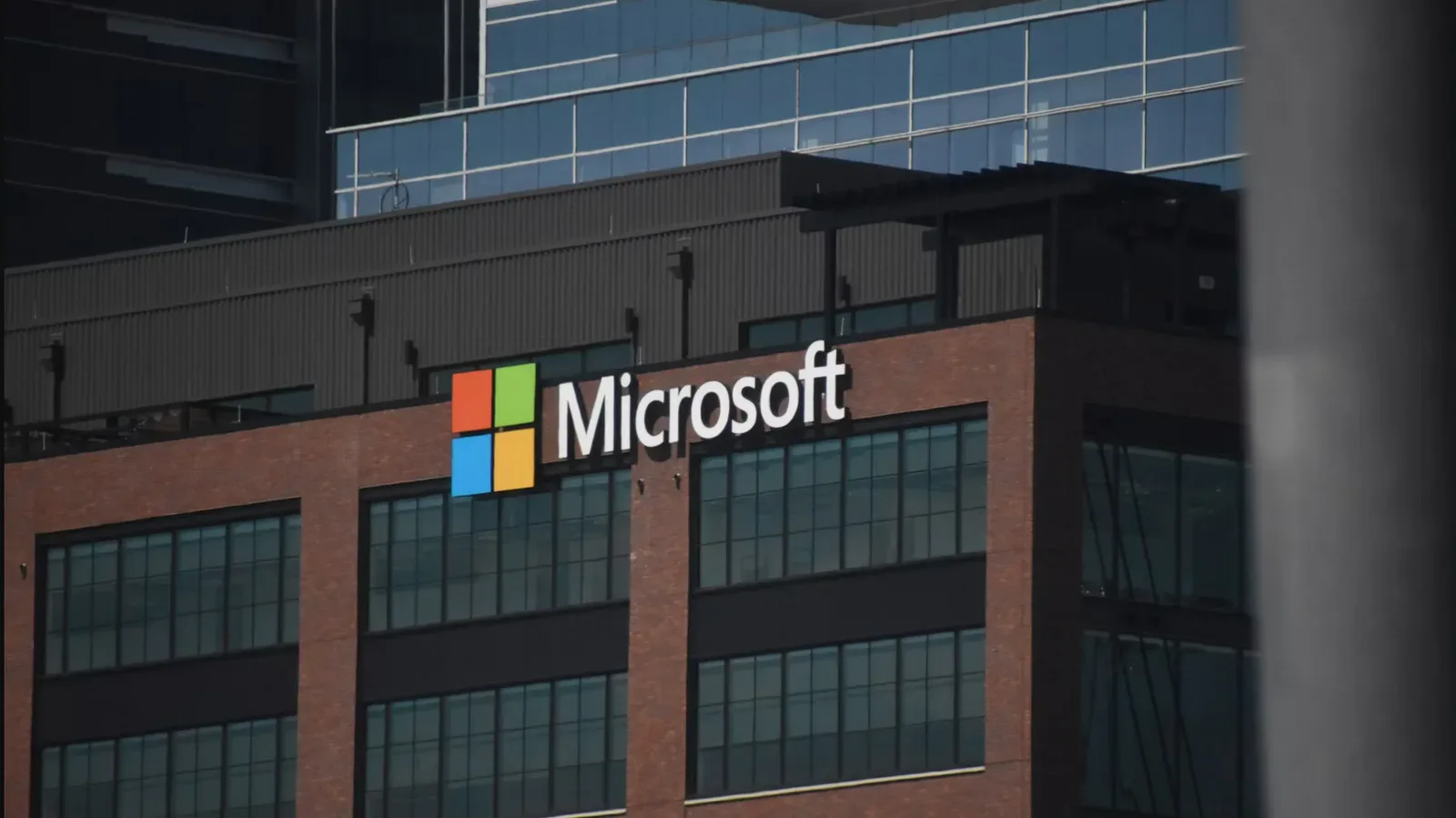

Roughly 100 protesters entered a Microsoft construction site in Amsterdam on November 6, with some climbing a crane and attaching a banner reading “FCK AI.” Footage circulating online shows people scaling the site’s gates, moving through the construction area, marching and chanting.
The demonstration combined more than one grievance. Alongside the anti-AI message, protesters displayed banners reading “Microsoft powers genocide,” “Free Palestine,” and “Microsoft has got to go.” The latter messages framed Microsoft’s alleged connection to the Israeli government and the war in Palestine as part of the action. Those are protesters’ claims and political messages; the available details do not establish the specific nature of any relationship or address Microsoft’s position.
What is clear is that the Amsterdam action placed a highly visible symbol of AI infrastructure—a construction-site crane—at the center of a broader fight over where data centers go, how much electricity and physical space they require, and who gets a say before a project advances.
What happened at the site
Video of the protest depicts participants getting through the perimeter of the Microsoft construction site. A group then climbed the crane and fastened the anti-AI banner across its arm, while people on the ground moved through the site and chanted. The banner’s blunt phrasing made the immediate target unmistakable: AI as an industry, and the large-scale computing facilities associated with its expansion.
It is important not to flatten the protest into a single demand. The visual messaging points to two connected but distinct campaigns:
- opposition to the rollout of large data centers, particularly those linked to AI computing; and
- protest against Microsoft over its perceived role in relation to Israel’s actions in Palestine.
That overlap reflects a wider reality of modern technology protests. A data center is not just a building full of servers in public debate. It can become a symbol of a company’s environmental footprint, land use, corporate power, government contracts, and international political ties. Supporters of a project may view it as digital infrastructure. Opponents may see a resource-intensive development imposed on a community. In Amsterdam, the arguments are colliding in one very physical place.
Why data centers are becoming a local flashpoint
A data center is a facility that houses the computing equipment used to store, process, and transmit digital information. That basic description covers a broad range of sites, but the current backlash is focused on very large projects. These facilities need substantial, dependable electricity capacity and occupy significant physical space. When a company presents an AI-related expansion, local residents and governments may therefore judge it not only on what the technology can do, but on the direct demands the site may make on the local grid and available land.
The Amsterdam protest came against a policy backdrop that is already unusually restrictive. The city said last year that it would no longer approve data-center proposals submitted after the end of 2023. It also said it would not allow expansions of projects that had already been approved. The stated reasoning was straightforward: Amsterdam lacks both the space and the power capacity to support them. The city indicated that it would not begin considering new proposals until 2030.
That does not mean every project in the area is interchangeable, nor does it settle the status of the Microsoft site involved in the protest. It does show why a construction project can attract such intense attention. Amsterdam’s stated limits make power and space more than abstract planning concerns; they are explicit constraints shaping the city’s stance on future data-center development.
The clash also illustrates the difference between a city-wide policy and a public argument. Planning restrictions are an administrative response: they set rules around applications, dates, expansions, and future consideration. Protest is a political response: it tries to make the stakes visible, urgent, and harder to ignore. Raising a banner from a crane is plainly designed to generate that visibility, even as entering an active construction site creates serious safety concerns for everyone present.
“AI data center” is shorthand for an infrastructure debate
“AI data center” can sound like a neat, self-contained technical phrase. In public life, it carries a much larger set of questions. Critics use it to ask whether the digital services and AI systems people encounter on screens are being built on infrastructure that strains finite local resources. Companies and public officials must then contend with the practical question underneath: can a community accommodate another large facility, and under what limits?
The Amsterdam policy puts two terms at the core of that question:
- Space: land is finite, particularly in a dense city. A major facility has a footprint and competes with other possible uses of that area.
- Power: data centers require electricity capacity. A city that says it lacks power to support further development is saying that grid capacity is a limiting factor, regardless of a project’s commercial rationale.
These are infrastructure questions rather than arguments about whether people enjoy individual AI products. Someone can use cloud software, play online games, stream video, or follow consumer-tech news while still asking how the physical machinery behind such services is planned and governed. That distinction matters for readers of technology coverage. The devices and services sold to consumers are only one visible layer of the system; the facilities processing data behind them are another.
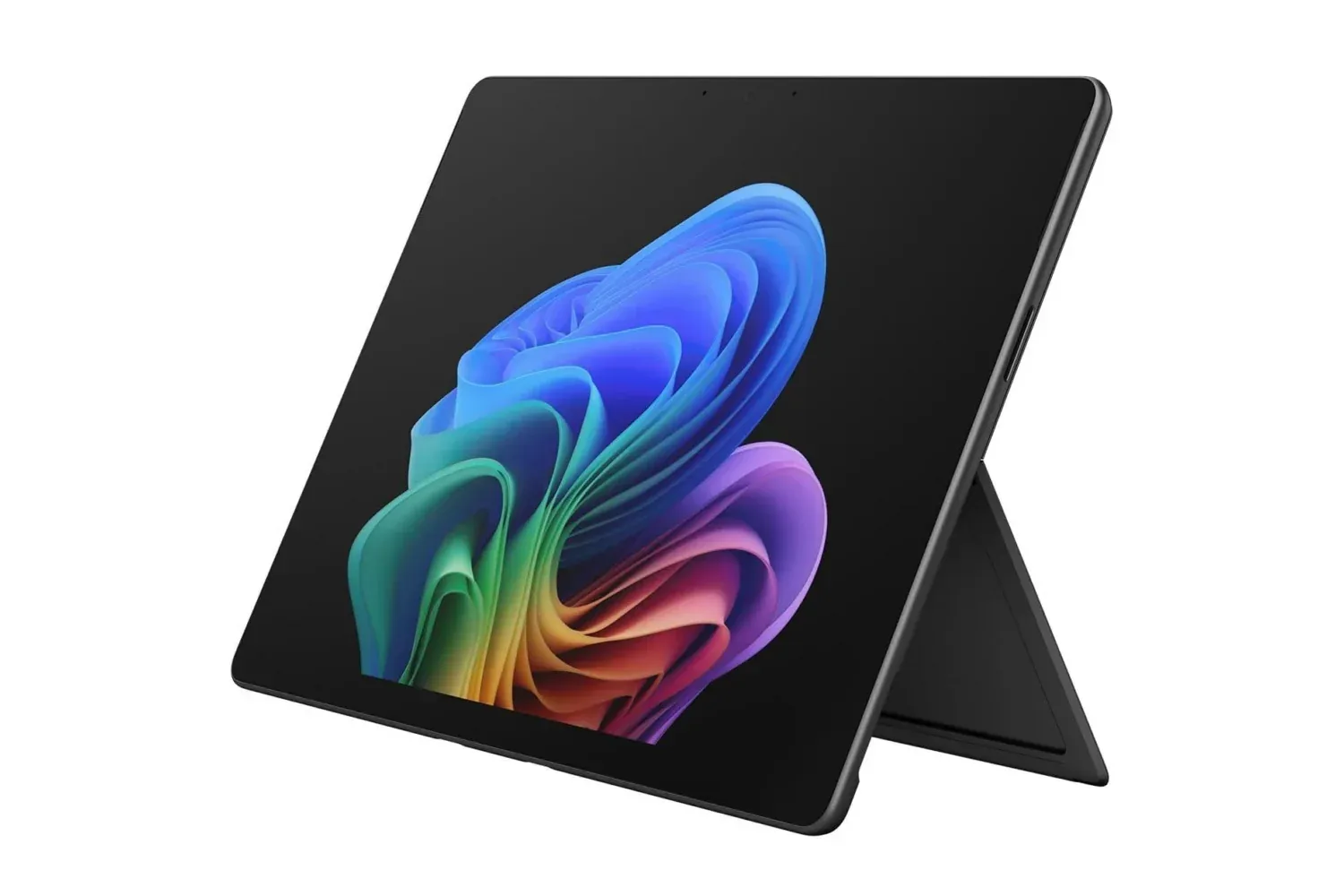
Microsoft, of course, is familiar to a broad consumer audience through products that range from software and gaming to hardware. Its latest products can draw attention for everyday features and pricing, as with the Microsoft Surface Pro 13-inch OLED model. A construction-site protest is a reminder that the company is also scrutinized as an operator and customer of much larger computing infrastructure—an arena where the public concerns are land, electricity, municipal policy, and accountability rather than a product specification sheet.
The political messages should not be treated as the same claim
The demonstration’s signs deliberately joined anti-data-center activism and pro-Palestinian messaging, but each needs to be understood on its own terms. The “FCK AI” banner criticizes AI and the infrastructure enabling it. The banners referencing genocide, Palestine, and Microsoft’s departure communicate protesters’ political accusations about the company and Israel’s conduct.
Reporting that distinction carefully is important. A banner is evidence that protesters made a statement; it is not, by itself, evidence that the statement has been proven. Similarly, the existence of a data-center site does not, by itself, answer every environmental, planning, or political concern being raised. It establishes that a project has become a focal point for public opposition.
There is still a meaningful connection in the protesters’ choice to put those messages together. Large technology firms increasingly operate across many areas at once: consumer software, cloud services, enterprise computing, government work, AI, and physical infrastructure. Activists may therefore direct multiple concerns at the same corporation, even where those concerns involve different evidence, institutions, and remedies. The Amsterdam protest made that convergence visible rather than tidy.
U.S. polling suggests data-center development has electoral weight
The conflict over large facilities is not limited to Amsterdam. In U.S. polling cited in connection with the midterm elections, 56% of respondents said data centers were a crucial or major factor in their voting choice. A further 76% said they opposed data centers being built in their own community.
Those figures should be read with precision. They do not show that data centers determined the election outcome, nor do they establish that every voter opposed every project. They do indicate that the issue was salient for a substantial portion of people surveyed and that opposition becomes particularly strong when development is framed as local.
That local framing is central. National discussion about AI can be broad and speculative, often focused on jobs, creativity, education, or future technological change. A proposed facility near one’s community makes the conversation concrete. Residents may ask what the site will require from the grid, how it will fit into planning priorities, and whether their area has enough capacity for it. Amsterdam’s decision to cite space and power directly speaks to exactly that kind of concern.
There is a practical lesson for companies and policymakers in the contrast between a global technology story and a neighborhood-scale reaction. It is not enough to describe a project as serving a digital future. Communities may expect clear answers about physical constraints, timing, approval rules, and how expansion affects existing local priorities. Where those answers are absent, disputed, or viewed as inadequate, a development can quickly become a symbol of broader dissatisfaction with AI’s rapid buildout.
What the Amsterdam action signals
The protest does not by itself resolve the questions around Microsoft’s construction site, Amsterdam’s data-center restrictions, or the issues invoked by the demonstrators’ Palestine-related banners. It does, however, demonstrate the intensity surrounding all three. Around 100 people entering a site and scaling a crane is an escalation in visibility, not a quiet objection filed through a planning process.
For Amsterdam, the episode reinforces that its stated pause on new and expanded data-center projects exists in a highly charged public environment. For technology companies, it underscores that AI infrastructure is now subject to scrutiny far beyond technical performance or business demand. And for local communities elsewhere, the U.S. polling suggests that the question of whether to host a data center may continue to move from planning meetings into electoral politics.
The essential point is less the slogan on the crane than the pressure behind it. AI is often discussed as software, models, and devices. The Amsterdam demonstration focused attention on its physical foundation: the buildings, power capacity, land, and corporate decisions required to keep the technology running.