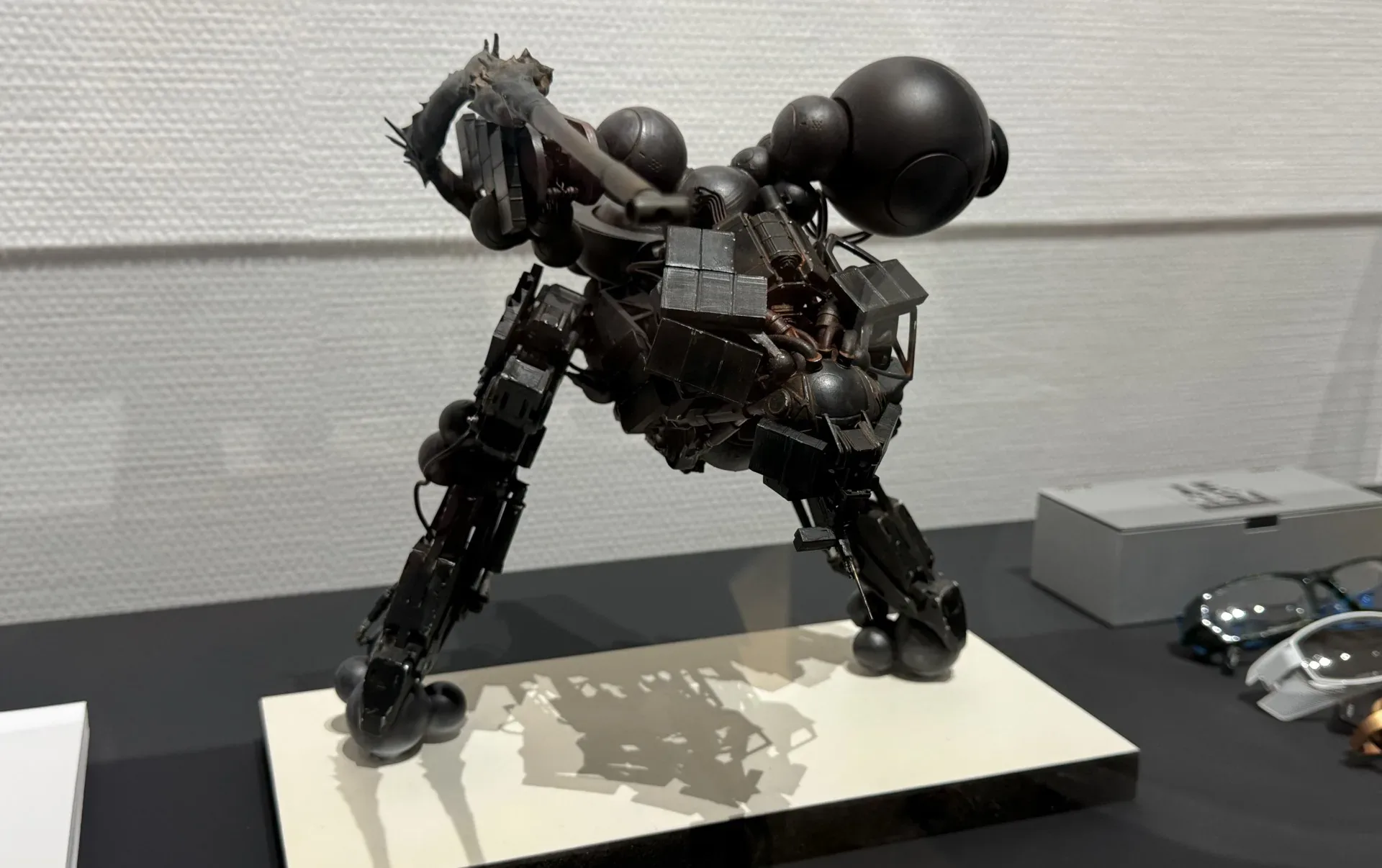
Kojima Productions’ Tokyo exhibition, open through December 20, offers an unusually detailed look at both the studio’s past decade and several projects that remain firmly in development. The show’s most substantial reveals concern Physint, the studio’s stealth-oriented project, and OD: Knock, its Xbox-partnered horror game. It also presents development artifacts that clarify how Death Stranding’s ideas, production methods and eventual sequel changed over time.
There is a consistent thread running through the material: Kojima Productions is treating technology, filmmaking techniques and physical objects as parts of the same creative pipeline. Scripts, motion-capture recordings, 3D scans, real-world camera tests and early game prototypes all appear to be informing how its projects are made. That does not tell players exactly how Physint or OD: Knock will play, but it provides a more concrete picture of the questions each game seems interested in asking.
Physint is framed around intelligence in a “Next Cold War”
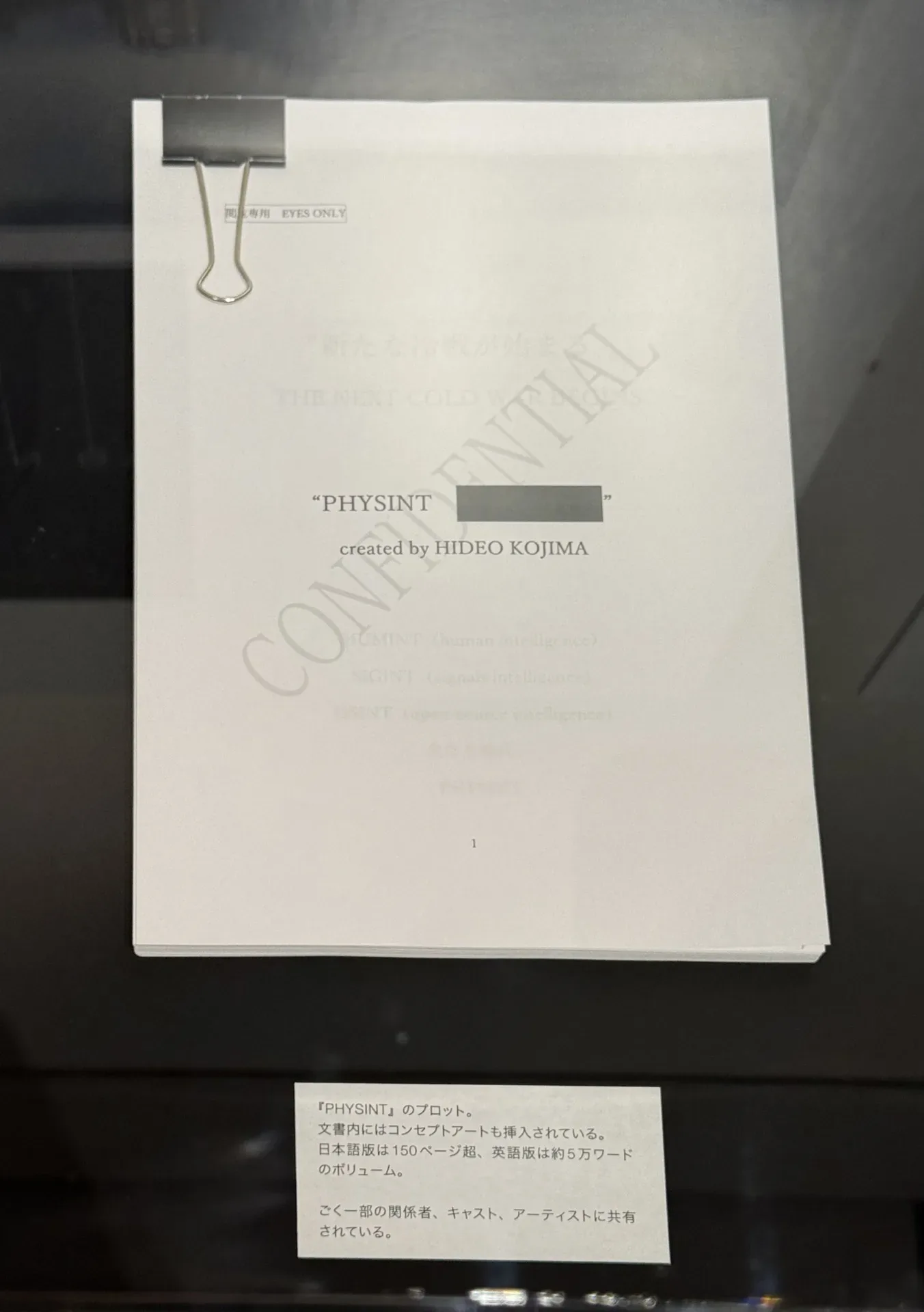
The clearest new detail for Physint comes from a displayed script. Its setting is described as “The Next Cold War”, a phrase that suggests geopolitical tension and covert competition rather than a conventional battlefield conflict. The script organizes that conflict around three intelligence concepts: HUMINT, SIGINT and OSINT.
- HUMINT means human intelligence: information obtained from people.
- SIGINT means signals intelligence: information derived from signals and communications.
- OSINT means open-source intelligence: information gathered from publicly accessible material.
Those definitions matter because they point to possible themes without confirming game systems. A story built around these categories could examine spies, surveillance, communication networks and publicly available information, but no gameplay mechanics tied to them have been established. Likewise, the title Physint may evoke “physical intelligence,” yet that interpretation has not been confirmed.
The script cover appears to contain a redacted word after Physint, so the publicly known name may not be the game’s final complete title. Displayed models also included mechs whose silhouette recalls the machinery associated with Kojima’s earlier stealth work. That visual resemblance is notable, especially since Physint has been characterized as being in a similar vein to that earlier series, but the exhibition does not establish what role the machines have in the finished game.
For now, the strongest takeaway is one of direction rather than specification. Physint appears to be rooted in an espionage vocabulary that is broader than a single operative sneaking through guarded compounds. Intelligence work involves people, intercepted signals and open information; putting all three at the center of its setting gives the project a potentially contemporary framework for its stealth ambitions.
OD: Knock is using camera language and scanned places to build horror
OD: Knock’s material was shown under photography restrictions, but the production work described at the exhibition is revealing. To refine the game’s first-person presentation, the team recorded a walkthrough of a real environment using GoPro cameras, then recreated the resulting fisheye look and framing inside the game engine.
A first-person camera is not simply a viewpoint positioned where a character’s eyes would be. Lens distortion, framing, field of view and camera motion all shape how a space feels. A fisheye image bends straight lines near the edge of the frame and can make rooms feel warped or uncomfortably close. Using GoPro footage as a visual reference therefore suggests an effort to reproduce a specific sense of presence rather than merely place a standard game camera in a room.
Related coverage includes Physint’s ‘Next Cold War’ and OD: Knock Scanning Work Revealed at Kojima Productions Exhibition.
One comparison paired dual-GoPro footage of a grimy kitchen counter and a window facing a wet British street with a similar in-engine image. The practical implication is not that OD: Knock will be a direct reconstruction of that location. Rather, the footage gave the developers a reference point for how a real space reads through the intended camera setup: where the viewer’s attention lands, how cramped surfaces feel and how an exterior view is framed.
The studio’s 3D-scanning work reaches beyond performers. It scanned sets from the 2024 television drama Sayonara, Maestro!, including a family-home interior, for use as reference in modeling a home environment for OD. The original drama follows a conductor named Natsume, played by Hidetoshi Nishijima, returning to Japan and trying to repair his relationship with his daughter. Its domestic setting is obviously far removed from an unrevealed horror narrative, which makes the reuse of its scanned environments a useful illustration of the process: production assets can provide material detail without carrying over the original story or mood.
Vintage furniture, including old dressers, was digitized as well. For a horror game, worn furniture is more than background decoration. Its surface texture, proportions and age can help make a room appear lived-in and specific. Still, the exhibition does not reveal how the scanned house or furniture will function in OD: Knock, nor whether the GoPro-based perspective will be maintained throughout the game.
Death Stranding documents show ideas changing before and after release
The exhibition’s Death Stranding archive demonstrates how much of a large game exists before its familiar final form. An early prototype already had a character carrying cargo through a sparse, mountainous landscape. In other words, traversal—the act of moving across difficult terrain—was established early as a central design problem. The prototype’s rough character and basic cargo interaction show that this core loop was in place before the polish of the final release.
Footage from a later stage showed BTs behaving more aggressively than they ultimately did in the released game. That difference indicates combat pressure was adjusted during development. It is a useful reminder that enemy behavior is not a fixed technical detail: changing its aggression changes a player’s pace, risk assessment and willingness to explore. A more threatening enemy can push a traversal game toward confrontation; easing that pressure can better preserve an emphasis on planning and movement.
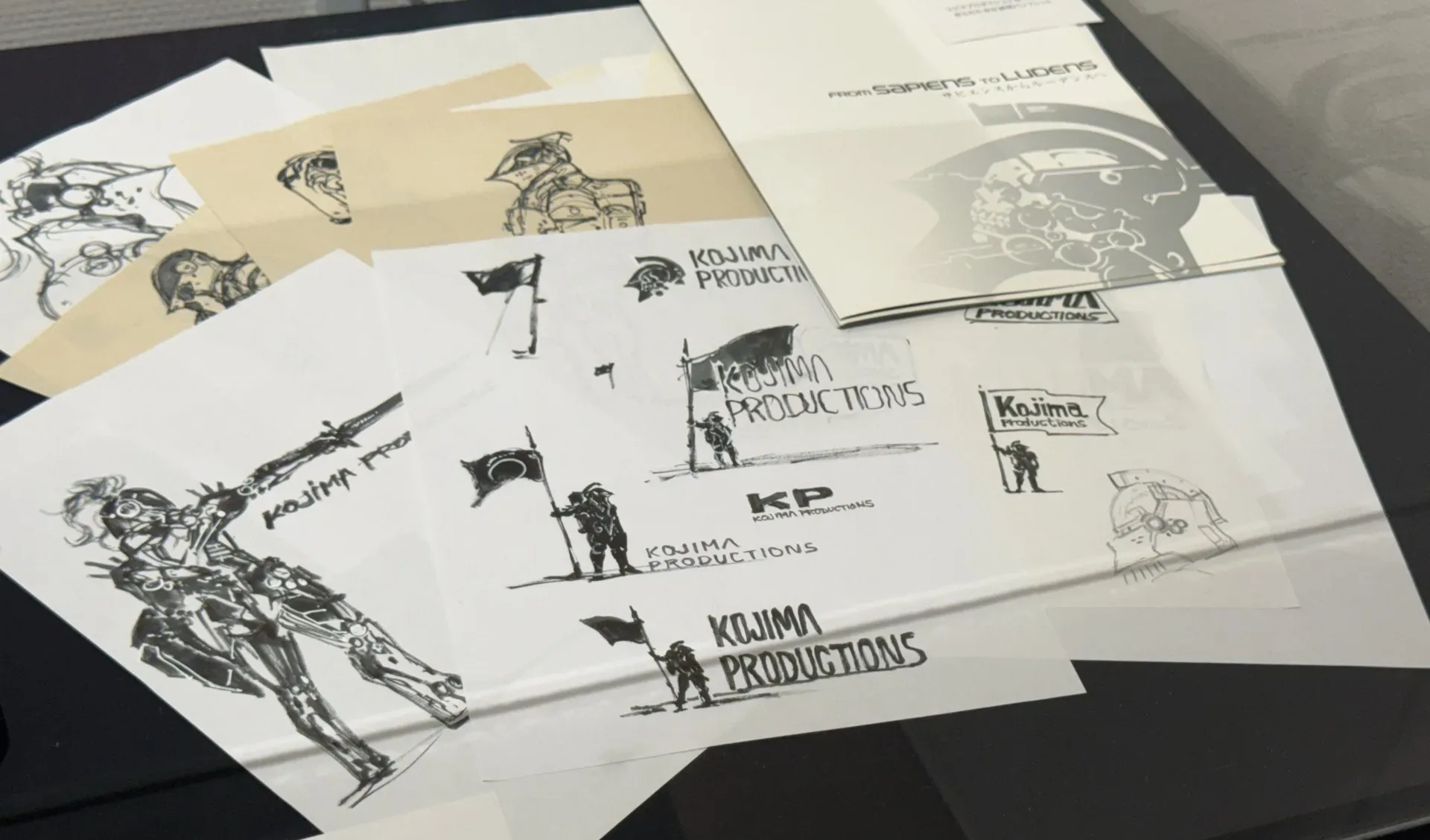
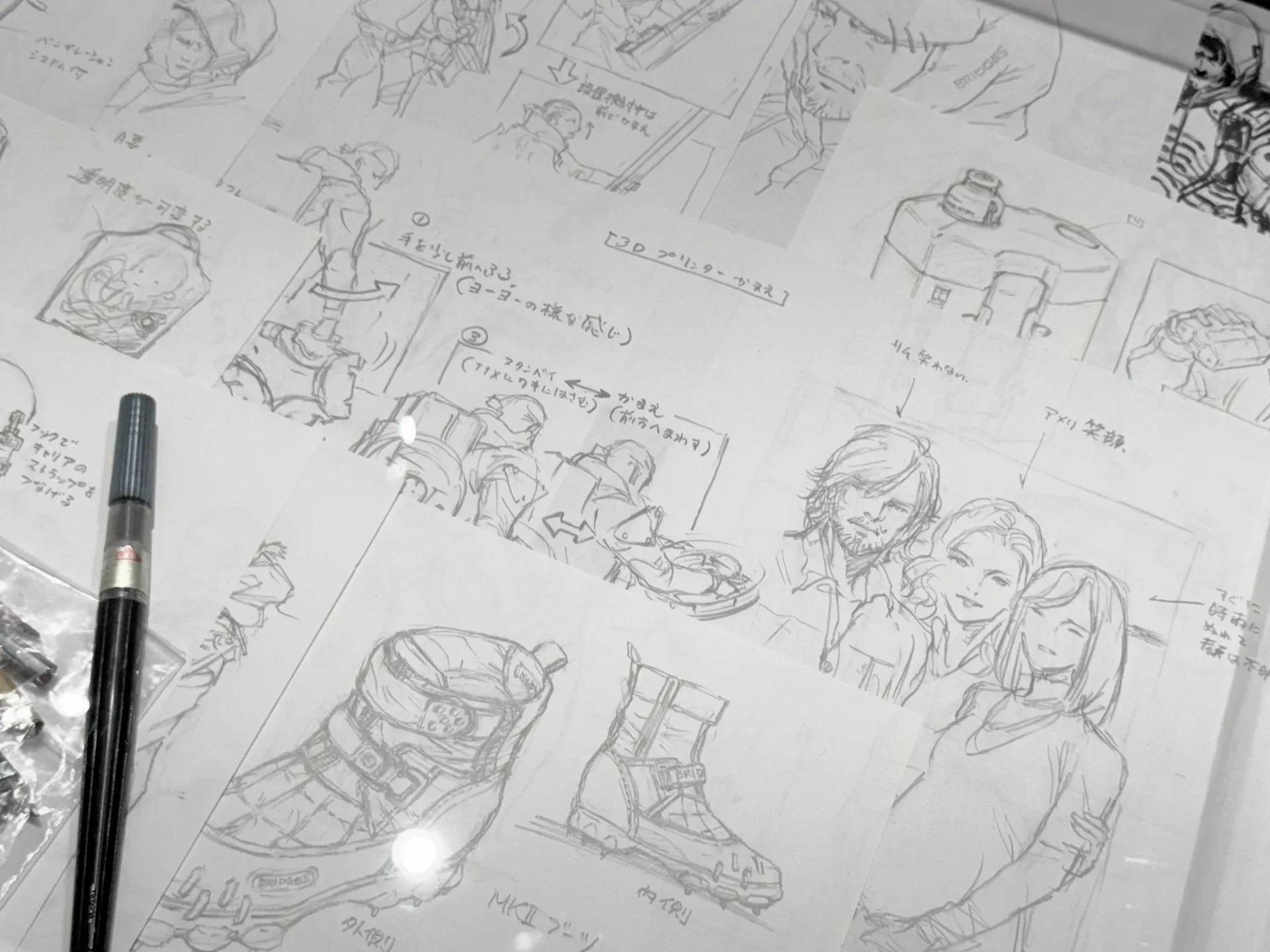
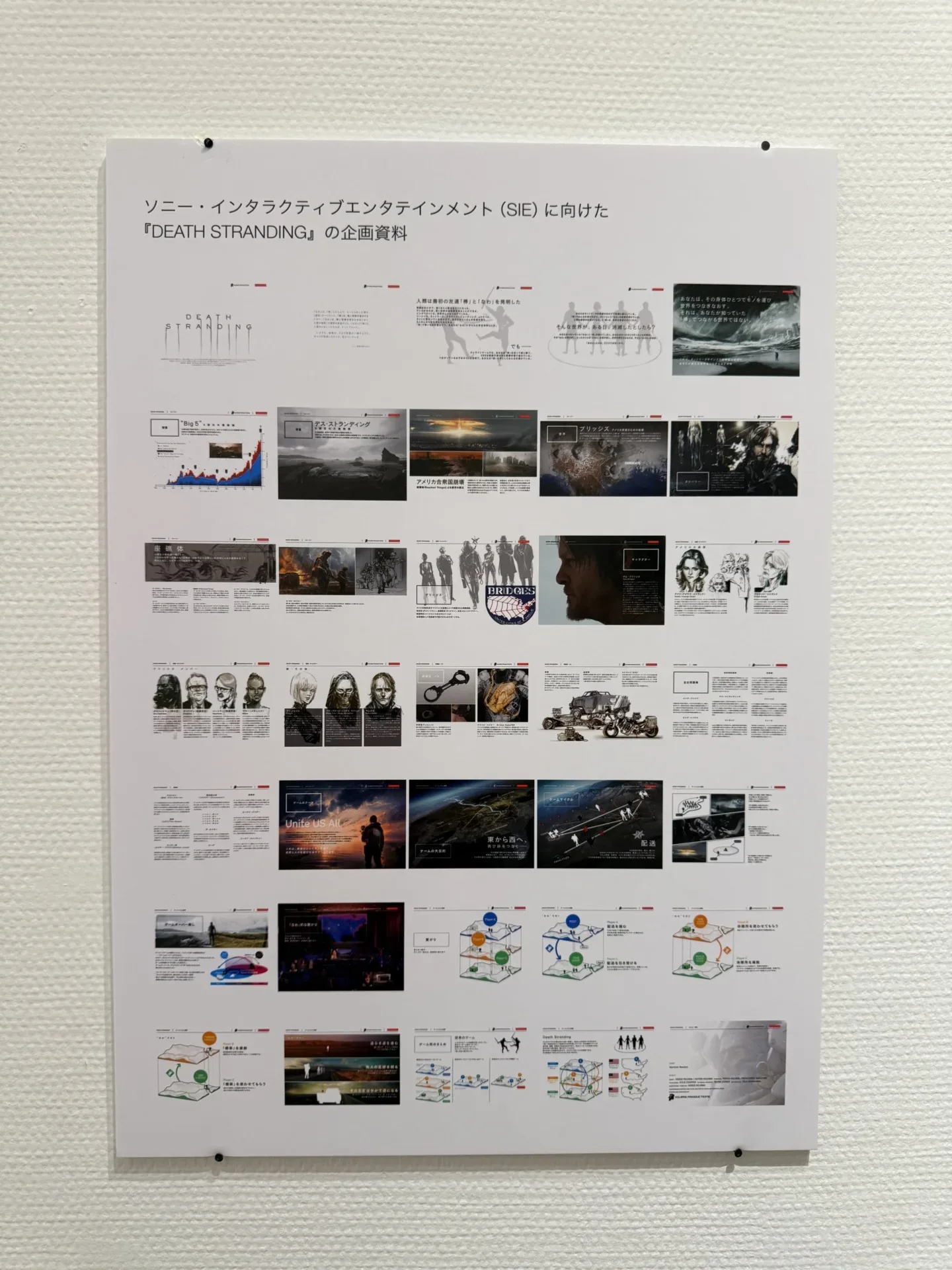
Planning material also explains the original game’s “Strand” concept as a form of indirect interaction between players in the same world. The idea was to unite players through their actions while they crossed the United States. In plain terms, players are not necessarily sharing a space at the same moment, but can encounter useful traces or assistance left by others. The exhibition material puts that philosophy alongside early logo work, Yoji Shinkawa sketches, evolving character designs, motion-capture footage and the 3D-printed prototype for the BB pod.
Such artifacts also make the AAA production pipeline easier to understand. A game of this scale is not developed in a single sequence where writing ends before art begins and art ends before animation begins. Character design, performance capture, environmental work, mechanics, cutscene planning and technical implementation advance in overlapping stages, each affecting the others. That interplay is relevant well beyond one studio; as our look at team continuity and scope discipline in major game development notes, continuity and clear limits can be crucial when many disciplines have to move together.
Death Stranding 2 was substantially reconsidered during the pandemic
The displayed material says an initial concept for Death Stranding 2 was produced in 2017, late in the original game’s development. That early version already included the broad notion of connecting a world, while proposing subterranean gameplay to create more variety in traversal. Elle Fanning’s name was also mentioned in connection with Tomorrow at that early stage.
Its ending was markedly different from the eventual version. The earlier document laid out a more openly optimistic outcome, including Fragile leading a delivery team and Rainy and Tomorrow raising a baby. The story was then radically reworked in response to the changed world created by the Covid-19 pandemic.
It is tempting to frame this solely as a case of fiction anticipating reality because the first Death Stranding focused on delivery and connection before pandemic restrictions reshaped everyday life. The more grounded point is that the sequel’s team did not treat that overlap as a reason to leave its plans untouched. The work on the second game changed substantially after the pandemic. That is an important distinction: the documents show adaptation, not a static story that simply arrived unchanged.
Remote performance work required more than an ordinary video call
The pandemic also altered the practical work of making games. Kojima Productions used Mado, a system developed by MUSVI Corporation, to connect staff, remote workers and performance-capture studios when travel and borders posed obstacles. “Mado” is Japanese for “window,” a fitting label for a system intended to offer a more immersive connection than a standard video call.
The technology helped the studio communicate with motion-capture facilities in Los Angeles while directing actors across countries and time zones. Motion capture records an actor’s physical performance so it can be translated to a digital character; that process benefits from close discussion of movement, timing and scene direction. A more immersive remote connection cannot erase distance, but it can make feedback and collaboration more workable when the director, actor and capture stage are not in one room.
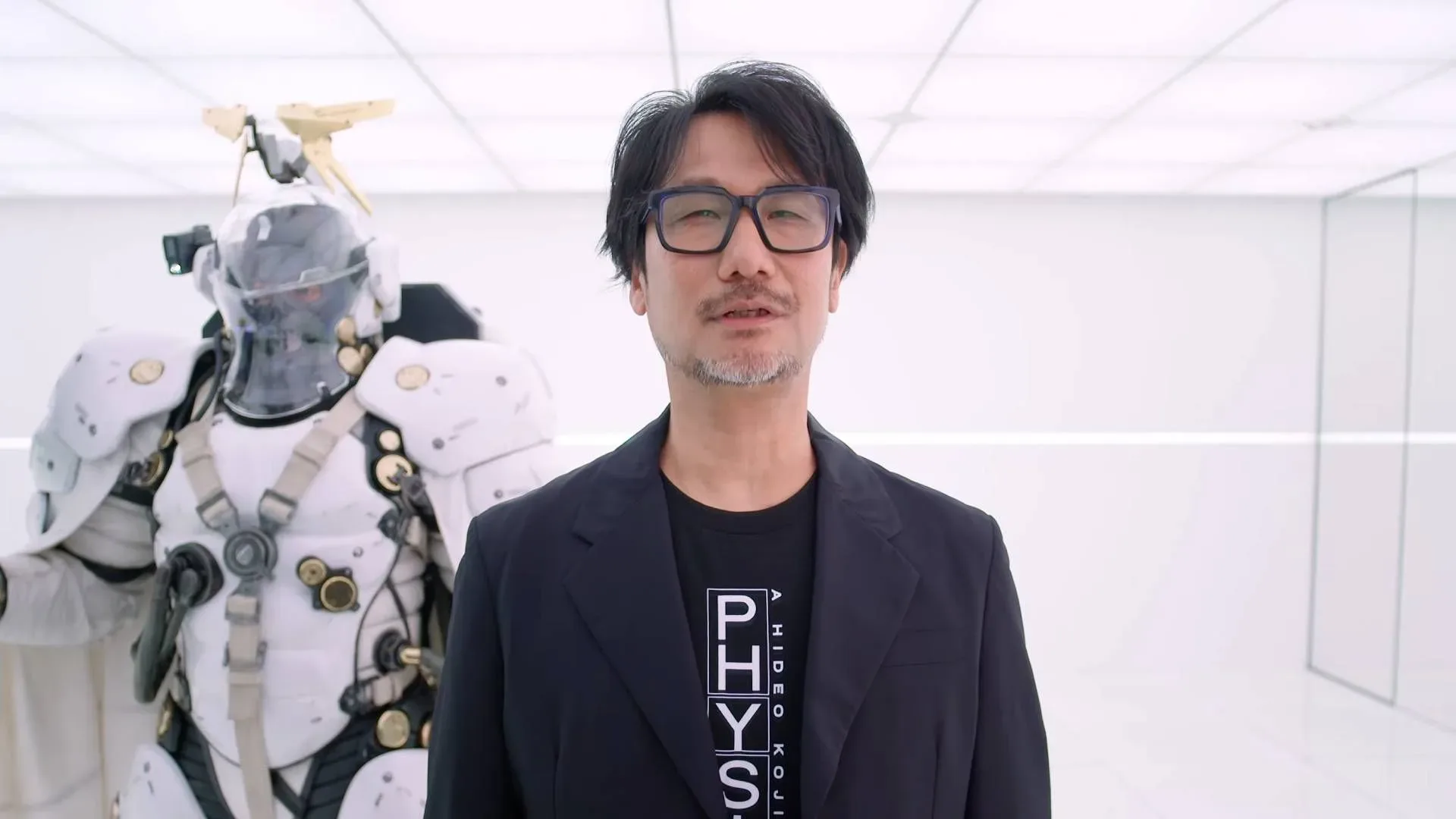
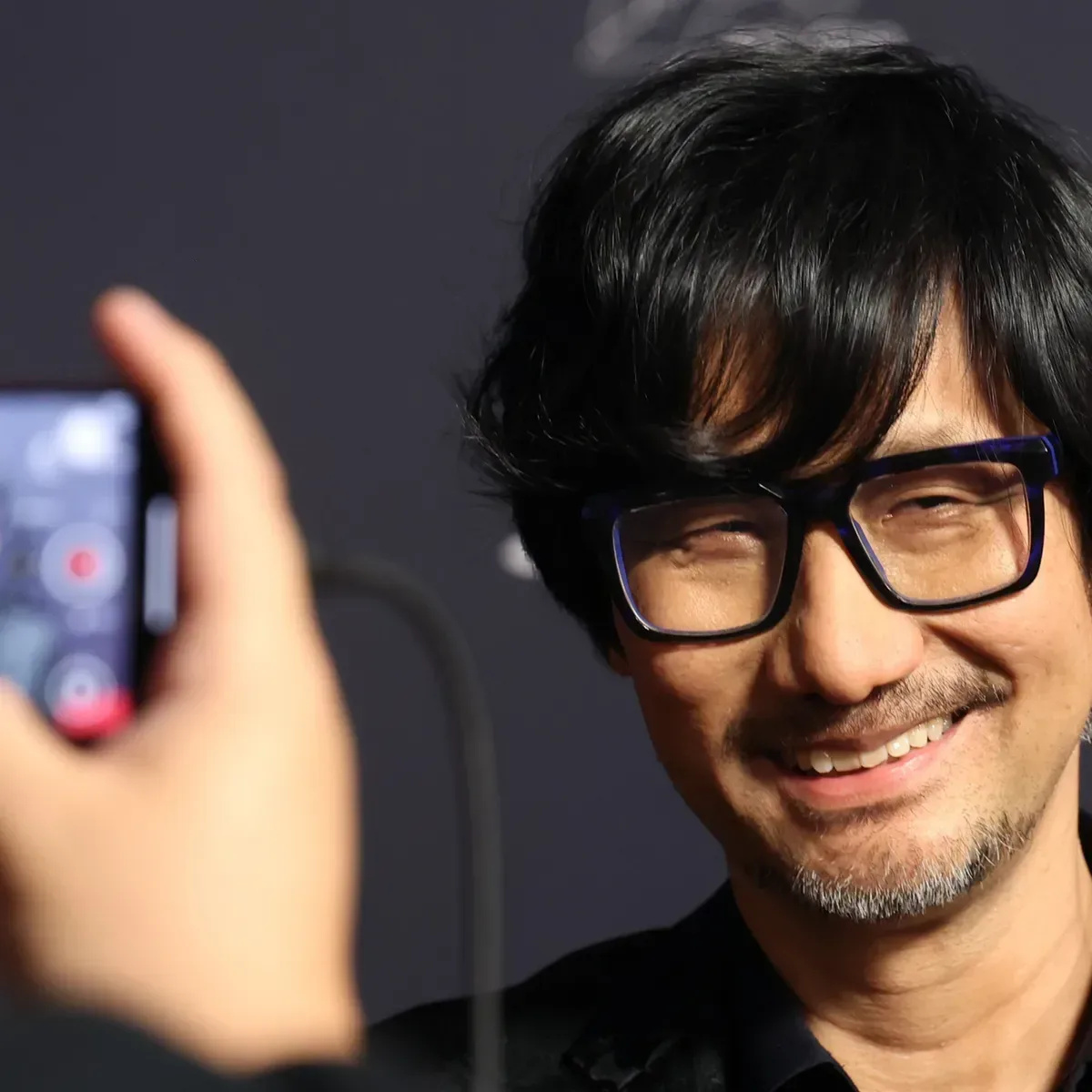
At the exhibition, Mado was presented with a live connection to the studio, including its actor-scanning area. Staff appearances were unscheduled, and Hideo Kojima briefly spoke with attendees in Japanese and English during one appearance. Visitors should not treat that as a promise of a similar encounter, but the installation turns a normally hidden production space into part of the exhibition itself.
Strand ideas are also being tested in augmented reality
Exhibition attendees can try an early mobile augmented-reality prototype called Death Stranding: Odradek (Tokyo Prototype), made with Niantic Spatial. It uses technology associated with Pokémon Go to turn real-world parcel deliveries into a Death Stranding-inspired activity. The current version is deliberately limited: available deliveries are scripted around the Azabudai area near the exhibition.
The prototype includes a BB to care for and uses the phone camera to locate signs and player guidance in the physical environment. Players can “like” useful guidance and may encounter BTs through the camera view. These details translate the original game’s indirect player-help systems into an AR framework, where the surroundings are not a rendered landscape but the player’s actual location.
That is an intriguing proof of concept, not confirmation of a wider release, global delivery generation or a final feature list. The distinction matters because early prototypes are meant to test an idea under controlled conditions. Here, the test is whether Strand-style assistance and unease can function when digital markers are layered onto an ordinary neighborhood.
An exhibition about games, and about the studio as a wider brand
The show is also explicit about Kojima Productions’ cross-media ambitions. It includes storyboards for anime projects, including Death Stranding Isolations, musical collaborations connected with Death Stranding, clothing collaborations with F.C. Real Bristol, a RIMOWA case made for a statue of OD: Knock’s protagonist, and credit cards created with Japanese bank MUFG. A chibi-style Kojima plush is among the event merchandise.
The studio logo’s development fits that broader approach. Earlier versions of its Lumens mascot depicted the full figure holding a flag, while another concept resembled a knighted character. The familiar final mark centers the skull-like head inside a spacesuit. Showing those alternatives underlines that the studio identity was designed as something more durable and recognizable than a name in a game’s opening credits.
There is no contradiction in an exhibition giving games, merchandise, film-related work and partnerships significant room. For a AAA studio, these are different expressions of a public identity that can sustain interest between major releases. The more important question for players is whether that expanded identity remains anchored by distinctive games. On the evidence here, development craft is still central: Physint has a new espionage premise but many unanswered questions; OD: Knock is narrowing in on a deliberately unsettling first-person language; and Death Stranding’s archive shows that its unusual systems emerged through years of revision rather than appearing fully formed.