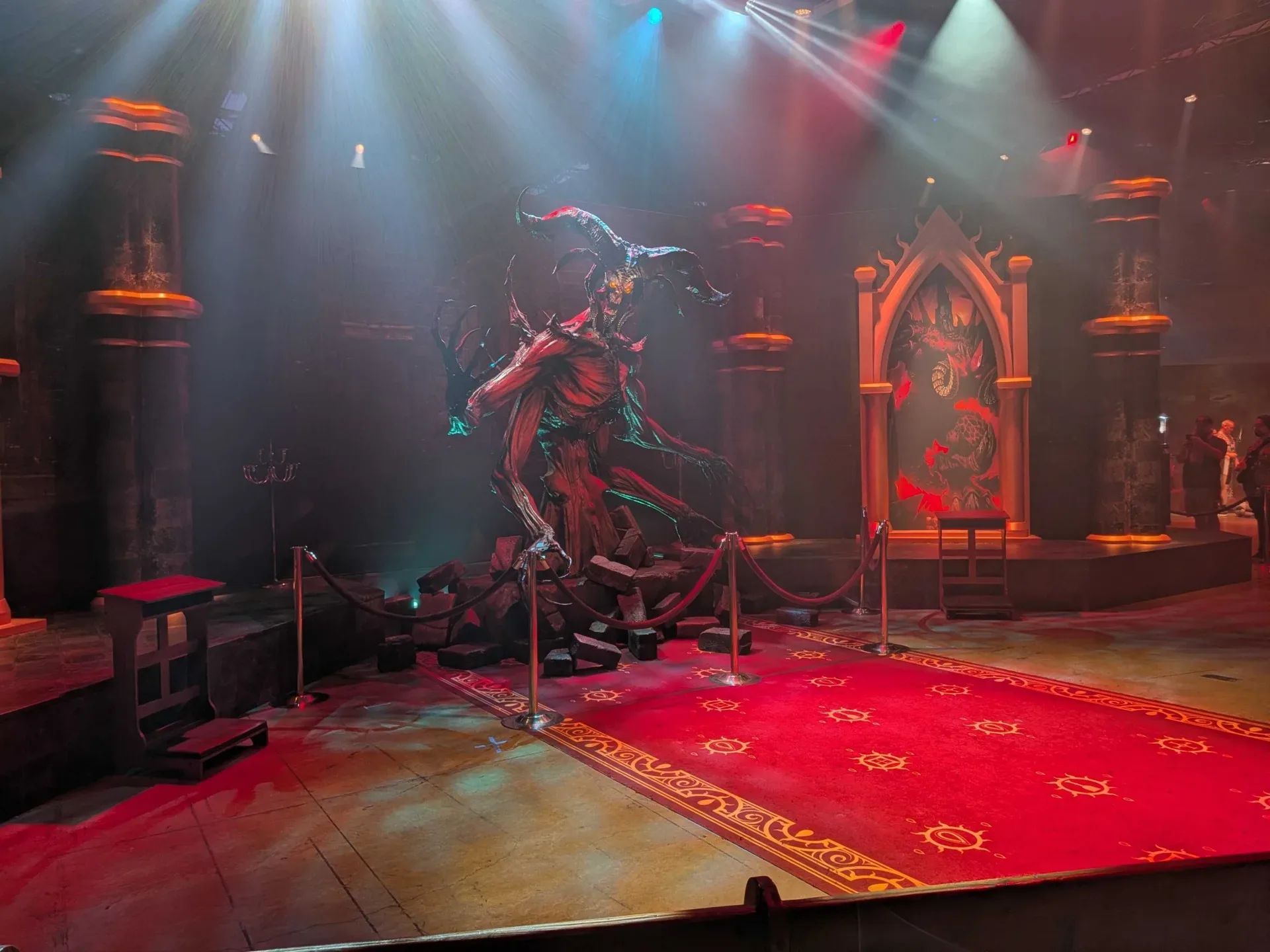
Diablo 5 has shown relatively little beyond its BlizzCon 2026 cinematic reveal, but its early presentation has already prompted close reading from a major figure in action RPG design. Chris Wilson, the Path of Exile co-creator, says he is “tentatively hopeful” that Blizzard’s next Diablo could move closer to the design values he associates with Diablo and Diablo 2.
That optimism is deliberately qualified. Wilson is not treating a logo treatment or a handful of interface concepts as proof that Diablo 5 has solved the harder questions of action RPG design. Instead, he sees those details as potentially intentional signals: a suggestion that the new game may be reconsidering systems that changed substantially in Diablo 3 and Diablo 4.
For players who prefer the earlier games’ tension, friction and long-term theorycrafting, that distinction matters. Diablo 5’s apparent direction includes a more linear world structure, procedurally generated spaces in both dungeons and the overworld, and inventories where equipment occupies differently sized spaces. Each choice sounds modest in isolation. Together, they point toward a different relationship between player, world, loot and progression—provided the rest of the game follows through.
Why the small visual and inventory clues matter
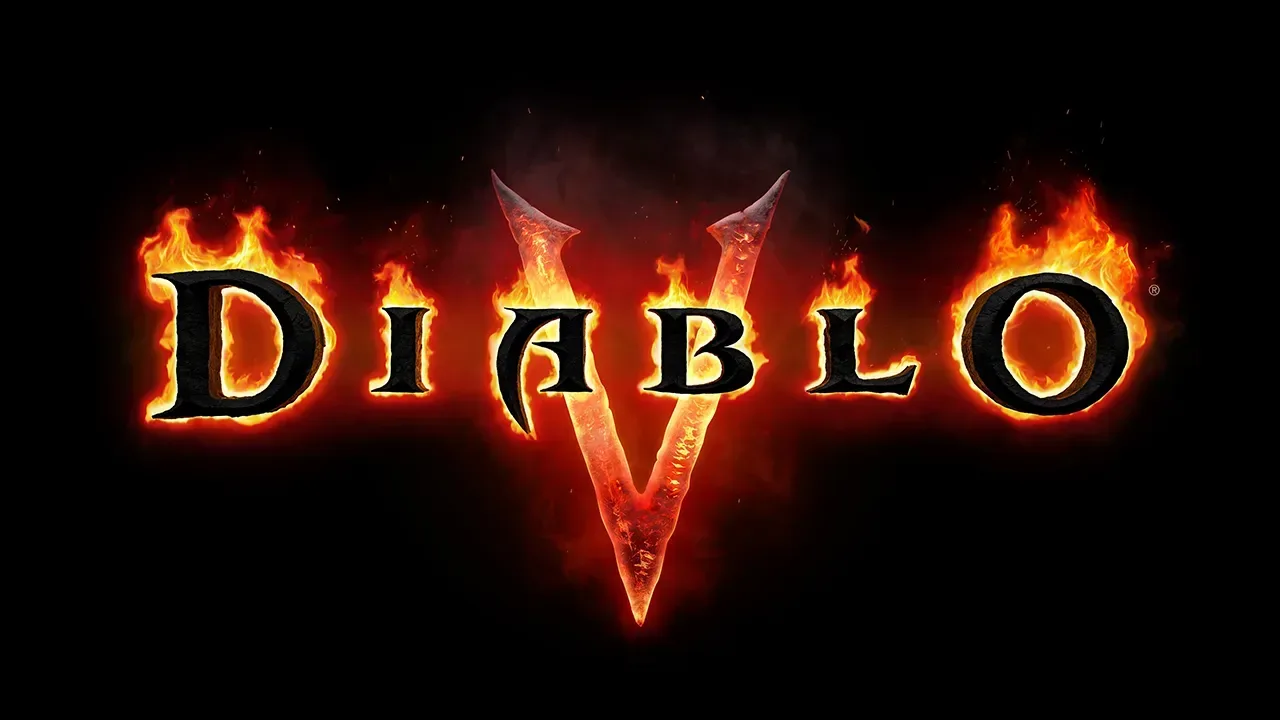
Wilson’s reading starts with presentation. Diablo 5’s fiery title treatment evokes the first two Diablo games more than the flameless logos used for Diablo 3 and Diablo 4. A font cannot establish how an RPG will play, of course, but it can communicate what era and atmosphere a team wants players to associate with the project. The renewed emphasis on the series’ darkness likewise makes the early Diablo games an obvious reference point.
More consequential are the revealed inventory concepts. Diablo 5 items are shown with distinct sizes, rather than every object occupying the same uniform space. Diablo and Diablo 2 used this approach: a piece of gear’s footprint was part of the decision-making, because carrying a large item could reduce the capacity available for other drops. Diablo 3 and Diablo 4 instead use standard-sized item slots, removing that form of spatial management.
Wilson welcomes the return of variable item sizes, but he also notes a crucial wrinkle: Diablo 5’s revealed inventory has 84 slots, while Diablo 2 had 40. The new game may therefore preserve the visual language and a measure of choice without necessarily reproducing the old frequency of difficult packing decisions or return trips. More room could mean players can remain in the field longer before sorting, selling or stashing loot.
That matters especially because Diablo 5’s version of town is a mobile caravan shared with traveling companions. The caravan idea was inspired by narrative director Jennifer Hepler’s time at BioWare. It suggests the practical act of unloading items may be framed differently from the fixed-town loops of earlier Diablo games, even if the underlying inventory grid carries an old-school flavor.
In other words, the number of slots is not a trivial footnote. Inventory design determines how often a game interrupts combat, how selective players must be with drops, and whether loot feels like an immediate reward, a logistical problem, or both. Diablo 5 appears to be borrowing a familiar mechanic while adapting it to a larger and differently structured adventure.
Related coverage includes Path of Exile Co-Creator Sees Encouraging Signs in Diablo 5's Old-School Direction.
The level-scaling question is the real test
Wilson’s largest concern is enemy scaling. In broad terms, level scaling is a system that changes opponents’ power in relation to the player’s level. In Diablo 4, monsters remain proportionate to a character’s advancement. This can help preserve challenge across broad swathes of the game and let players adventure together across different levels, but critics argue it can also weaken the sensation of outgrowing earlier dangers or making a risky push into a region above one’s current strength.
Wilson argues that Diablo 5 should use a more traditional arrangement: a world containing progressively stronger monsters, where players decide their pace of advancement and select places to grind based on what their current character can handle. Grinding, in this context, means deliberately repeating combat or areas to gain experience, equipment or other progression resources before attempting a harder challenge.
“In my opinion, Diablo 5 absolutely must use a traditional system where the world has progressively more powerful monsters and you can choose how fast you progress through it and where to grind based on your current capabilities.”
The appeal of that model is not simply that enemies hit harder. Fixed or region-led difficulty makes geography meaningful. A dangerous destination can become a milestone, a familiar early area can become genuinely safe, and a player’s build can be judged against a world that is not constantly recalibrating around them. It also gives retreat and preparation a stronger purpose: if an area is too difficult, the player can change equipment, reconsider skill choices, seek upgrades or farm elsewhere.
There is still no confirmation that Diablo 5 will fully discard scaling. However, Wilson considers the planned return to a linear world structure an encouraging indication. Game director Joe Shely has said the sequel will take a “somewhat different approach” to level scaling. That wording leaves substantial room for interpretation, so it should not be read as a firm promise of the exact progression model Wilson wants.
The distinction is central to why the debate has become more than nostalgia for Diablo 2. A linear campaign can direct a player through escalating regions, yet still scale enemies in many ways. Conversely, a more open game can establish areas with distinct danger levels. What players need from future Diablo 5 updates is clarity on how character level, location, difficulty and multiplayer groups affect the strength of monsters.
Procedural generation could restore uncertainty
Diablo 5 is confirmed to bring procedural generation back to dungeons and the overworld, a decision Wilson says excites him. Procedural generation means the game uses rules and systems to vary the layout of environments rather than relying entirely on one fixed arrangement. The result is not necessarily infinite novelty, but it can make repeated exploration less dependent on memorizing a single route.
For an action RPG built around repeated runs, shifting layouts can affect far more than scenery. Navigation becomes a live part of each expedition; routes to exits, objectives and rewards may change; and familiar zones retain a degree of uncertainty. Combined with a progression system that has real regional danger, procedural environments could make each trip feel less like running a known corridor and more like investigating a hostile space.
It is worth separating what is confirmed from what is inferred. The return of procedural environments is confirmed. Whether their variation will be extensive, how objectives will be placed, and how the system will interact with the campaign and endgame have not been established here. The mechanical potential is clear, but the eventual results will depend on implementation rather than the label alone.
Accessibility versus mystery is not a simple divide
Wilson also draws a contrast between the early Diablo games’ obscure mechanics and interactions and the more polished systems of Diablo 3 and Diablo 4. In his view, the older titles remained compelling for years because players could keep uncovering how their systems worked. Their opacity could be frustrating, but it also created room for discovery and community knowledge-building.
This is not necessarily an argument that Diablo 5 should be intentionally incomprehensible. Clear explanations, reliable interfaces and approachable early hours are useful. The unresolved design challenge is whether a game can be readable without making every meaningful answer immediate. Deep buildcraft often relies on combinations, trade-offs and exceptions that take time to understand. If every system is smoothed into a straightforward upgrade path, players may have less reason to revisit and rethink a character.
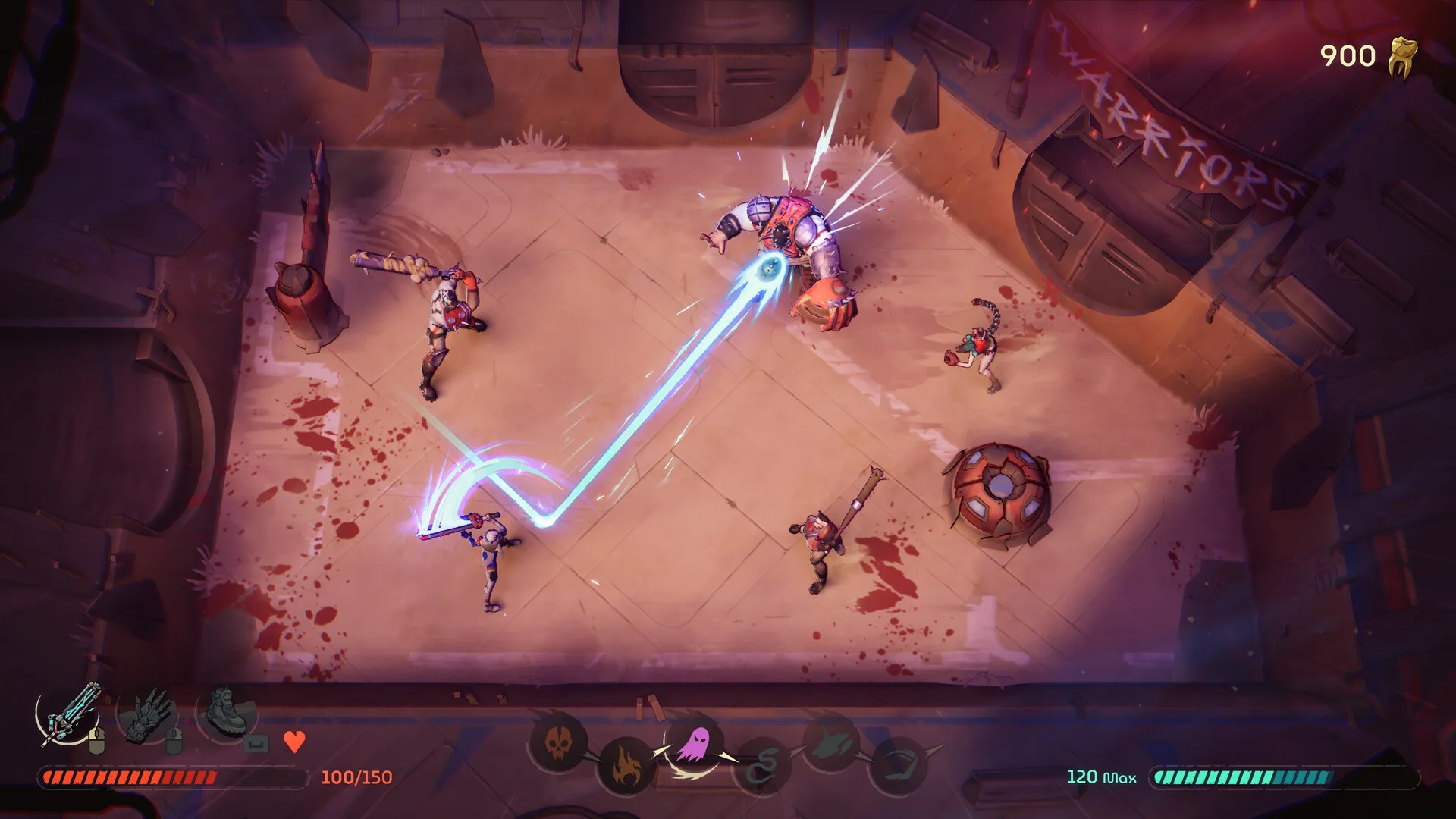
That conversation extends beyond one franchise. Genre competition can be productive when major releases make audiences more interested in distinct approaches to loot, builds and repeatable progression. A recent look at Furyball: Rogue Revenge’s central design question similarly illustrates how much an action game’s identity can hinge on the systems surrounding moment-to-moment combat, not merely the spectacle of its attacks.
Offline play, trade and combat remain unanswered
Wilson’s optimism has clear limits because several high-impact choices remain unsettled. He wants to know whether Diablo 5 will be online-only or offer offline single-player; what form item trading will take; and whether combat will emphasize physical dexterity through dodge-and-attack execution or carefully assembled character builds.
These questions overlap. An offline mode determines whether a player can experience the game without a persistent connection and how self-contained a solo character may be. Trading rules determine whether useful equipment is principally earned through play, exchanged with other players, or constrained by account and item restrictions. Combat priorities decide whether a powerful build can offset imperfect execution, or whether rapid reactions and positional play remain the dominant measure of success.
None of those approaches is automatically right for every player. The important point is that they define the game’s core audience and rhythm. Diablo 5 can feature an inventory grid, fire in its logo and randomized maps while still making choices that sharply separate it from Diablo 1 and Diablo 2 in practice.
A hopeful reading, not a verdict
Wilson has been candid that Diablo 3 and Diablo 4 did not align with his personal preferences, and his connection to the first two games is foundational to both his perspective and Path of Exile’s place in the genre. That makes his reaction useful as a clear articulation of what one segment of ARPG players is watching for, rather than a neutral prediction of Diablo 5’s final quality.
His broader position is also notable: he wants Diablo 5 to succeed even while working on an unannounced action RPG of his own. His reasoning is that a healthy genre helps all of its developers. If Diablo 5 gives players a strong new reason to care about action RPG systems, build depth and loot-driven adventures, the benefits need not stop with Blizzard.
For now, “tentatively hopeful” is the appropriate framing. Diablo 5 has displayed several signs that it is looking backward as well as forward: procedural spaces, a linear structure, variable-size inventory items and a darker visual identity. Whether those signs amount to a genuine return to the older games’ spirit depends on the decisions still to come—especially how enemies scale, how characters progress, and how much meaningful complexity survives beneath the presentation.