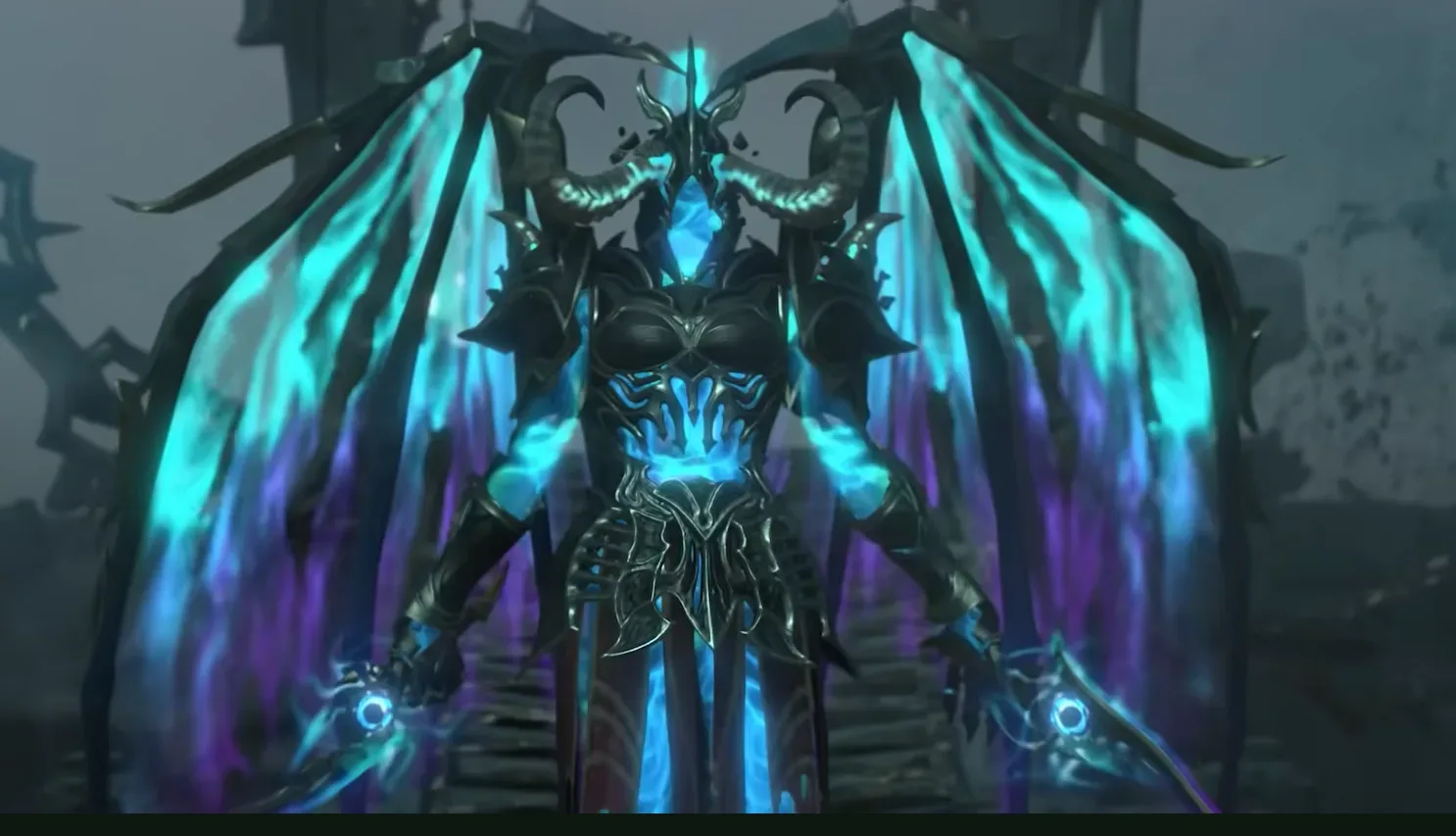
Diablo 4 is not being put in the crypt when Diablo 5 arrives. Blizzard has confirmed that seasonal support for the current action RPG is planned to continue after the next mainline game launches, even as Diablo 4’s expansion run comes to an end.
The key qualification is player participation. Game director Brent Gibson said the plan is to support Diablo 4 seasons for as long as the community keeps turning up, drawing a comparison to the long-running seasonal structures of Diablo 2 and Diablo 3.
“We are planning on supporting seasons as long as the community continues to show up for D4,” Gibson said. “Similar to what we have in D2 and D3.”
That is reassuring news for players who have built characters, routines and social groups around Diablo 4’s recurring seasonal resets. It is also deliberately not an open-ended guarantee of large-scale, permanently escalating additions. The statement commits to ongoing seasons, while making the scale and duration of that support contingent on an active audience.
For more context, explore macOS 27 Makes Mac Shortcuts Less Intimidating With AI-Prompted Automation.
What Blizzard has confirmed—and what it has not
The firmest part of the message is straightforward: Diablo 4 seasons are expected to continue following Diablo 5’s release. At the same time, Blizzard has said there will be no further Diablo 4 expansions. Those are two different forms of support, and the distinction matters.
An expansion is a major paid or standalone-style addition to a game’s overall framework, commonly associated with a substantial new campaign, territory, systems or progression. A season, in this context, is a recurring content cycle that gives players a reason to begin again within a fresh seasonal environment. Seasonal play can carry its own themes, mechanics, rewards and activities without requiring the same scope as an expansion.
Diablo 4’s recent seasons have been substantial enough that the question is not whether Blizzard can technically keep the season label alive. It is whether every future season could reasonably maintain the same ambition while Diablo 5 becomes the central focus for the franchise team. Season 15, for example, includes smaller-scale reworkings of legacy Diablo campaigns, illustrating the kind of material that has made Diablo 4’s seasons feel more consequential than a simple rotating modifier.
Related coverage includes Diablo 4 Seasons Set to Continue After Diablo 5 Arrives.
Blizzard has not specified how long Diablo 4 seasons will remain active after Diablo 5 launches, how frequently they will arrive, or whether their content model will eventually change. It also has not promised that future Diablo 4 seasons will always include brand-new narrative material, locations, items or major systems.
For a broader rundown of the player-dependent support plan, see this report on Diablo 4’s post-Diablo 5 seasons.
Diablo 2 and Diablo 3 provide the clearest precedent
Gibson’s comparison to Diablo 2 and Diablo 3 is useful, but it should not be read as a promise that Diablo 4 will keep receiving its present type of seasonal content indefinitely.
Both earlier games still have seasonal frameworks and still have players. Their ongoing treatment, however, is closer to maintenance support than a steady flow of entirely new seasonal concepts. Previous themes rotate back into use rather than each season arriving with a full slate of original content. Diablo 2 also received a new class this year, showing that an older Diablo game can still receive a meaningful addition; that exception does not establish a cadence for future major updates.
The practical reading is that Diablo 4 has a pathway to remain playable and seasonally relevant well beyond the arrival of its successor. Over time, though, it may move toward the older games’ model: seasons continuing, with the nature of their new material shaped by the remaining player base and the team’s priorities.
That is analysis rather than a declared roadmap. Blizzard’s statement is about continued seasonal support, not a detailed promise that Diablo 4 will adopt a specific rotation schedule or maintenance format. Still, the Diablo 2 and Diablo 3 comparison establishes the franchise’s existing approach to keeping older entries alive after newer ones take priority.
Why a seasonal runway matters to Diablo 4 players
For active Diablo 4 players, the announcement provides a measure of continuity. A sequel no longer automatically means the current game’s seasonal loop immediately stops. Players can expect the possibility of fresh seasonal starts after Diablo 5 launches, provided the community remains engaged.
That is particularly important in a game built around repeat progression. A seasonal reset asks players to create or advance within a new cycle, chase a changed set of goals and engage with the season’s central theme. The appeal is not just the arrival of another patch; it is the shared moment of beginning again with a large population pursuing the same seasonal activity.
Community participation is therefore more than a vague corporate metric in this case. It affects whether that shared seasonal environment remains worth operating and developing. Gibson’s wording puts that relationship plainly: Diablo 4’s ongoing seasonal future depends on people continuing to play it.
It also gives players a clearer way to separate two questions that were easy to conflate after Diablo 5’s announcement:
- Will Diablo 4 receive more expansions? No; Blizzard has confirmed the expansion cycle is over.
- Will Diablo 4 still receive seasons after Diablo 5 launches? Yes, Blizzard plans to continue them while the community remains active.
Neither answer means players are required to choose immediately between games. The stated plan leaves room for Diablo 4 to serve an audience that prefers its existing characters, systems and seasonal format, while Diablo 5 assumes the role of the franchise’s new focal point.
Diablo 5’s existence explains the shift in focus
Diablo 5 was announced at BlizzCon 2026 and is described as a notably dark entry for the series. The decision to make it, rather than continue building Diablo 4 through more expansions, is tied to Diablo himself. The project lead said the character needed a game of his own.
That framing makes the end of Diablo 4 expansions easier to understand as a creative and production decision, rather than evidence that the current game is being abandoned. A new numbered Diablo entry needs a clear identity and room to become the franchise’s primary forward-looking project. At the same time, the series has an established history of maintaining prior games through seasons, giving Blizzard a model for keeping Diablo 4 available to a committed audience.
Supporting two mainline games with equally ambitious, fully original seasonal campaigns, regions, items and other large additions would be a much bigger undertaking than keeping one older title in a sustainable seasonal rhythm. No exact staffing plan or content threshold has been announced, but the distinction helps explain why a continuing Diablo 4 season model and an end to new expansions can coexist.
What to watch next
The announcement settles the broad question of whether Diablo 4 has a life after Diablo 5: it does. The unanswered questions are about texture rather than survival.
Players will want to watch for details on the content scope of seasons closer to Diablo 5’s launch, whether Diablo 4 keeps introducing original seasonal mechanics at its current rate, and how Blizzard defines the community activity needed to justify continued work. None of those thresholds has been publicly outlined.
For now, the most accurate expectation is modestly optimistic. Diablo 4 is losing future expansions, but not its seasonal pulse. If its players remain present, Blizzard says it intends to keep making seasonal content—following a tradition that has allowed Diablo 2 and Diablo 3 to remain active long after newer chapters took the spotlight.