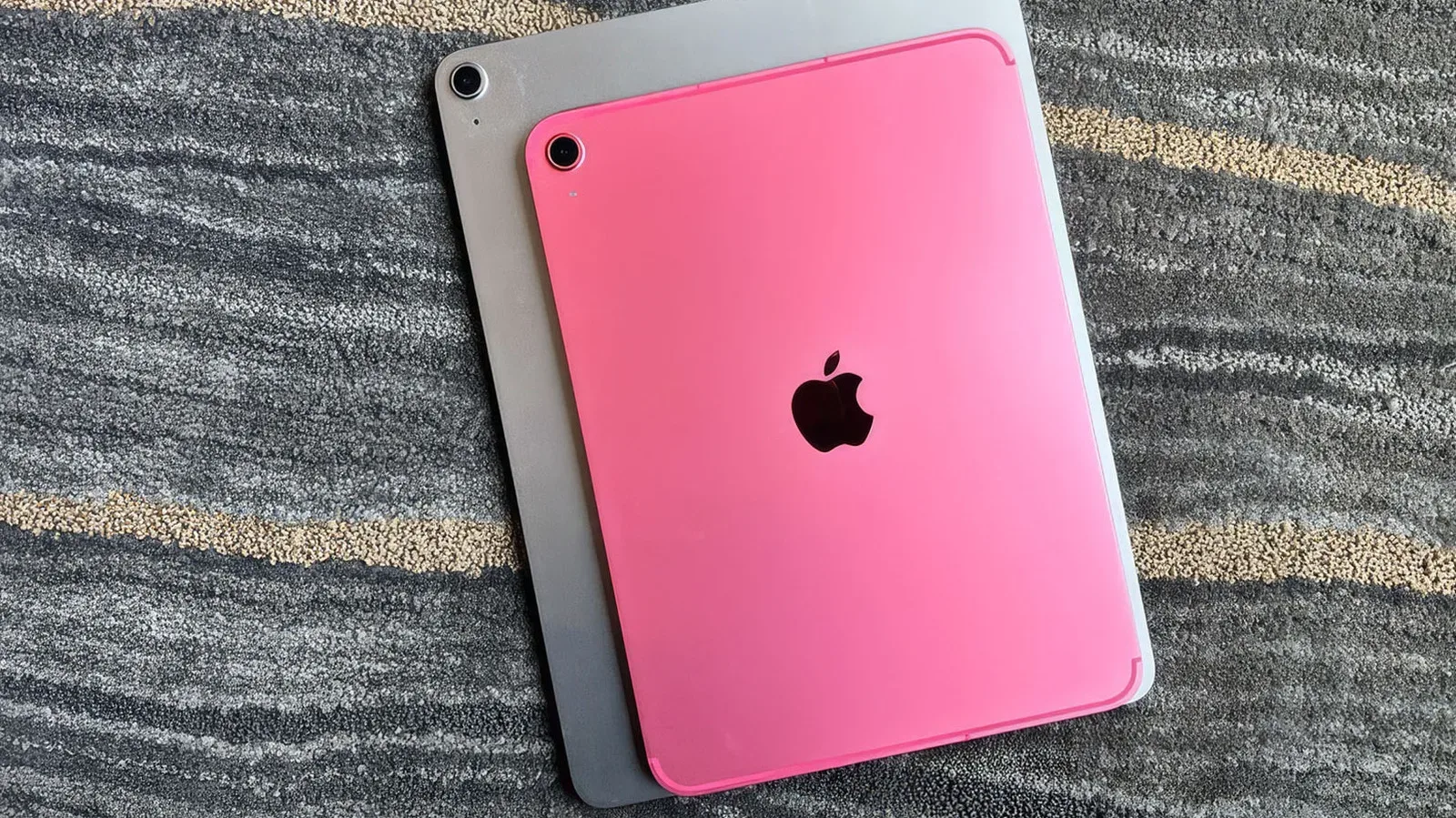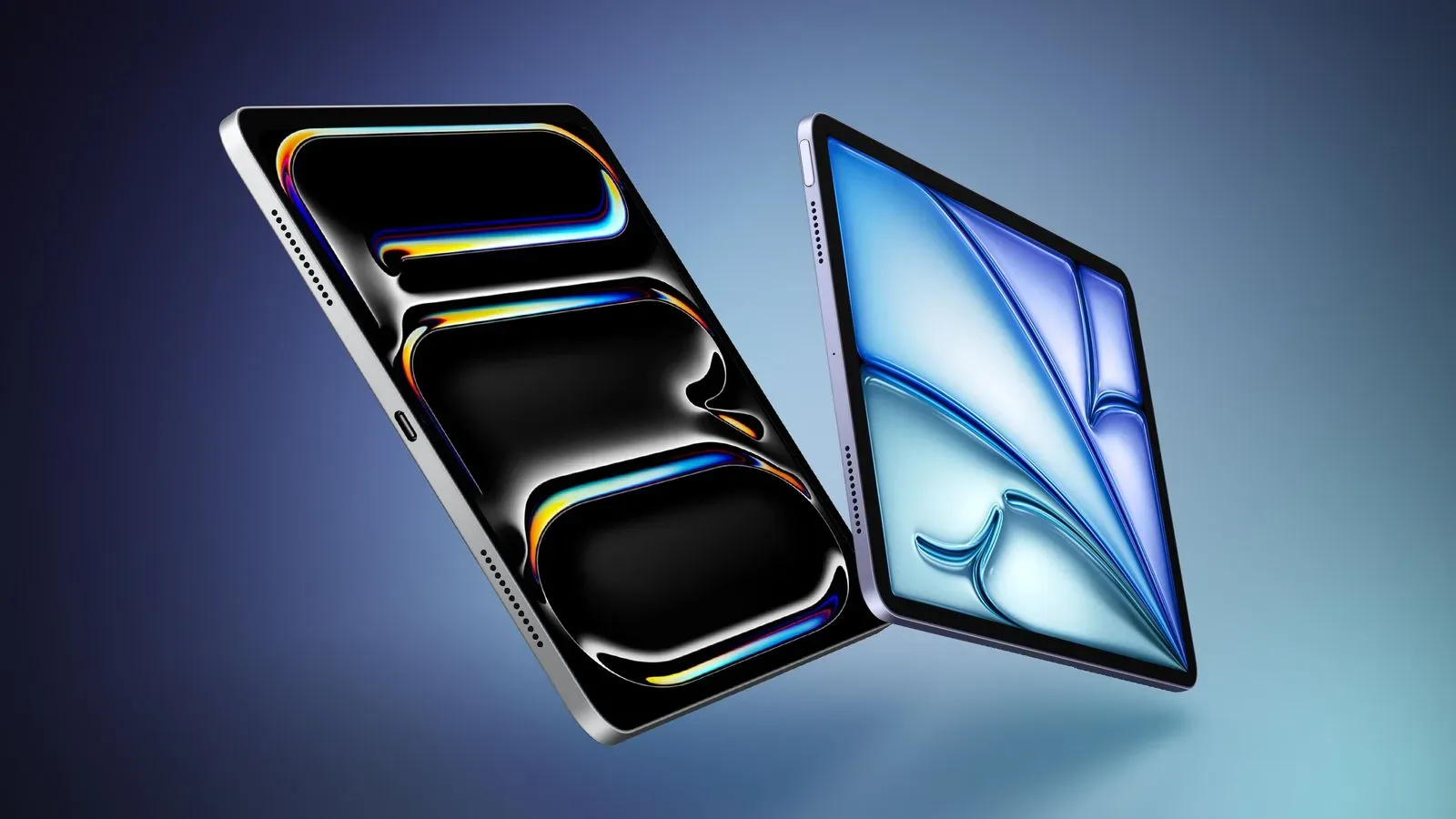

The next iPad Air is rumored to make a far larger jump than a routine chip refresh. The reported list includes an OLED display, the M5 processor, a substantially thinner and lighter body, water and dust resistance, quicker charging, an upgraded cellular modem and an unusual audio approach that could remove speaker holes altogether.
There is an important qualification hanging over every item: this is an unannounced product, and no firm launch timing has been reported. A spring 2027 reveal, potentially in March or April, is only a reasonable prediction at this stage rather than a confirmed plan. Still, the collection of reported upgrades sketches an interesting direction for Apple’s middle-tier tablet—one that could be especially relevant to players who use an iPad for streaming, touch games, remote play, guides and media alongside school or work.
The most consequential rumor is also the one with the most obvious caveat. OLED may bring a clear visual improvement to the iPad Air, but the display is still expected to operate at 60Hz.
OLED could be the headline upgrade, even at 60Hz
OLED is a display technology in which pixels emit their own light. In practical terms, that can deliver more vivid color and a stronger contrast ratio than a conventional backlit display. Contrast ratio describes the difference between bright and dark portions of an image; higher contrast can make dark scenes, interface elements and colorful art look more distinct.
For games, video and digital comics, those characteristics matter. Darker menus or night-time scenes can appear more convincingly dark, while bright effects and saturated environments may have more impact. It could also make a tablet more pleasant for watching trailers, following a livestream, or keeping a game guide open beside a console session.
Yet OLED should not be confused with a high-refresh-rate upgrade. Refresh rate is the number of times per second a display updates its image. The reported 60Hz figure means the screen would refresh 60 times per second. That remains a familiar baseline, but it would not provide the extra motion smoothness people associate with 120Hz panels.
That creates a straightforward trade-off in the rumor: potentially better image quality, but not necessarily a faster-feeling display. Players who value richer contrast and color may see OLED as a major step forward. Those hoping for especially fluid scrolling, interface animation or compatible gameplay should keep expectations in check until specifications are official.
A smaller footprint around the screen, and less tablet to carry
The next model is also expected to use thinner bezels. Bezels are the borders around the active portion of the display. Reducing them can make the screen feel more prominent without necessarily increasing the overall size of the device. It is a design change rather than a promised display-size increase, but it can improve the sense that the screen occupies the hardware rather than sits inside a frame.
More dramatic is the suggestion that the iPad Air could be approximately 15% thinner and 15% lighter than the current M4-based model. Those are substantial relative claims, although no dimensions or weights have been provided. Until those details emerge, it is best to understand the report as pointing to a noticeably more portable design, not to assume a particular thickness or mass.
Portability is one of the iPad Air’s most natural strengths. A lighter tablet is easier to hold while reading, watching media or playing touch-focused games. A thinner body also takes up less room in a bag with a controller, charging cable, headphones and other travel gear. The other side of that equation will be durability and battery life, neither of which can be judged from the current rumor list. A smaller, lighter enclosure is only an unambiguous win if it remains comfortable and dependable in daily use.
Nano-texture and IP67 target real-world friction
A nano-texture display option is reportedly under consideration. Its intended purpose is reduced glare. Glare is reflected light that can obscure what is on-screen, a particular annoyance near windows, outdoors or beneath strong overhead lights. For someone trying to read small UI text, follow a map, scan a document or play a visually dark game, less reflection could be more useful than a purely cosmetic screen upgrade.
The wording matters: this is described as an option, not a standard feature. No information has been provided about which configurations would receive it, so buyers should not assume every next-generation iPad Air would include nano-texture.
The rumored IP67 rating would be another practical change. An IP rating is a standardized shorthand for resistance to solids and water. In the reported rating, the “6” denotes dust protection, while the “7” refers to water resistance at the stated certification level. It should not be read as permission to treat a tablet as waterproof in every situation, nor does it settle questions around accidental damage or warranty treatment. What it would signal, if accurate, is a device better equipped for everyday exposure to dust and accidental contact with water than an unprotected design.
That may sound mundane beside an OLED panel, but it is arguably one of the most meaningful quality-of-life claims. Tablets move between desks, kitchens, backpacks and couches; a greater tolerance for ordinary mishaps could matter long after the novelty of a new processor has faded.
Acoustic Display could redesign the iPad Air’s audio hardware
The most unconventional item on the list is “Acoustic Display,” described as a system in which screen vibrations create sound and speaker holes are eliminated. The supplied details do not explain placement, loudness, stereo behavior, repair implications or how the system would compare with a conventional speaker arrangement. Those are major unanswered questions, and there is no basis yet to call the change better or worse for games, films or calls.
Its potential significance is clear, however. Speaker perforations are visible openings in a device chassis. Removing them could contribute to a cleaner external design and may fit with the rumored push toward IP67 resistance. That is analysis, not confirmation of a direct engineering relationship: the report says both features are expected, but does not state that one enables the other.
Audio is especially important for gaming hardware because it communicates more than music. It supplies environmental cues, dialogue, alerts and feedback from controls. Anyone who normally plays without headphones should treat Acoustic Display as a feature to evaluate carefully once official specifications and real-world demonstrations exist. An inventive mechanism is not automatically an upgrade if it changes sound directionality, volume or clarity in unwelcome ways.
M5 performance: the numerical claim needs context
The iPad Air is expected to move from the M4 in the current model to an M5 chip. The reported performance uplift is up to 20% versus M4. “Up to” is doing important work there: it is a ceiling, not a guarantee that every app, game or task will become 20% faster.
A system-on-a-chip, commonly shortened to SoC, is the central package that combines key computing components. In a tablet, its performance can affect app responsiveness, game processing, image work and more. But the experience in any one title depends on software optimization, display limits, network conditions for streamed play, thermal behavior and other factors not addressed by the rumor.
For players, an M5 iPad Air could mean more headroom for demanding games and creative tools, but the reported 60Hz screen remains relevant. Extra processing power and display refresh are separate attributes. A game can benefit from faster processing while still being viewed on a 60Hz panel. Likewise, streamed or remote-play performance can be constrained by the connection rather than local silicon.
The broader Apple development ecosystem has reason to pay attention to every new iPad-class device. Apple has already expanded the scope of its student coding initiative to apps for any platform, as covered in this look at the Swift Student Challenge’s 2027 changes. A more capable iPad Air could give developers another powerful target, but whether it changes the software landscape will depend on what they actually build for it.
Cellular uploads, document scanning and a faster top-up
For cellular configurations, the tablet is rumored to include Apple’s C2 modem. A modem is the component that handles mobile-network connectivity. The report points specifically to meaningfully faster uploads compared with the prior C1X modem. Upload performance matters when sending files, sharing media, backing up work or broadcasting from a cellular connection. It does not necessarily mean every aspect of mobile data will improve equally, and no numerical upload figures have been reported.
Another camera-related claim is an Adaptive True Tone flash, intended to improve photographs and document scans. The document-scanning angle is notable: iPads are often used to capture notes, forms and reference materials, so better lighting adaptation could be more practical than a specification-chasing camera change. At the same time, the available information does not spell out exactly how the flash adapts or quantify the improvement.
Finally, the tablet may support charging to 50% in 30 minutes when used with a 35W-or-higher adapter. Fast charging is a convenience feature with clear everyday value: a short charging window before travel, a class or a gaming session could restore a significant portion of capacity. But the claim is conditional. It depends on a compatible adapter rated at 35W or more, and no claim has been made that such an adapter is included.
What prospective buyers should take from the rumor list
If these reports prove accurate, the next iPad Air would not be defined by one isolated feature. It would combine a potentially more striking OLED image with a 60Hz limitation, more portable hardware, stronger environmental resistance, a different audio architecture, quicker charging and a newer chip. That is a more rounded package than a typical annual speed bump.
The clearest reason to wait would be the prospective hardware redesign and OLED screen. The clearest reason for caution is uncertainty: there is no confirmed announcement date, no official specification sheet, no pricing, no configuration breakdown, and no answer yet to crucial questions about the Acoustic Display, nano-texture availability or battery impact.
For now, it is sensible to separate the reports into two buckets. OLED, M5, the thinner and lighter construction, IP67 protection, C2 cellular connectivity, Adaptive True Tone flash and faster charging all point toward tangible day-to-day changes. The 60Hz report and the unknown behavior of screen-based audio are reminders that a long feature list does not automatically answer every buyer priority. The next iPad Air may be shaping up as a notably more polished tablet—but the details that decide its value remain unconfirmed.