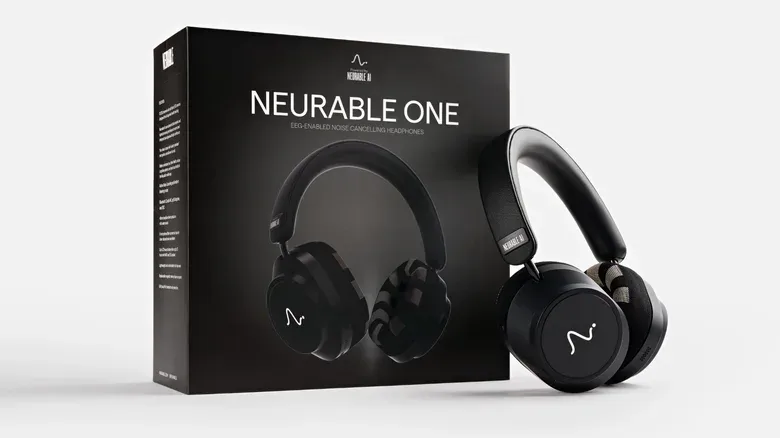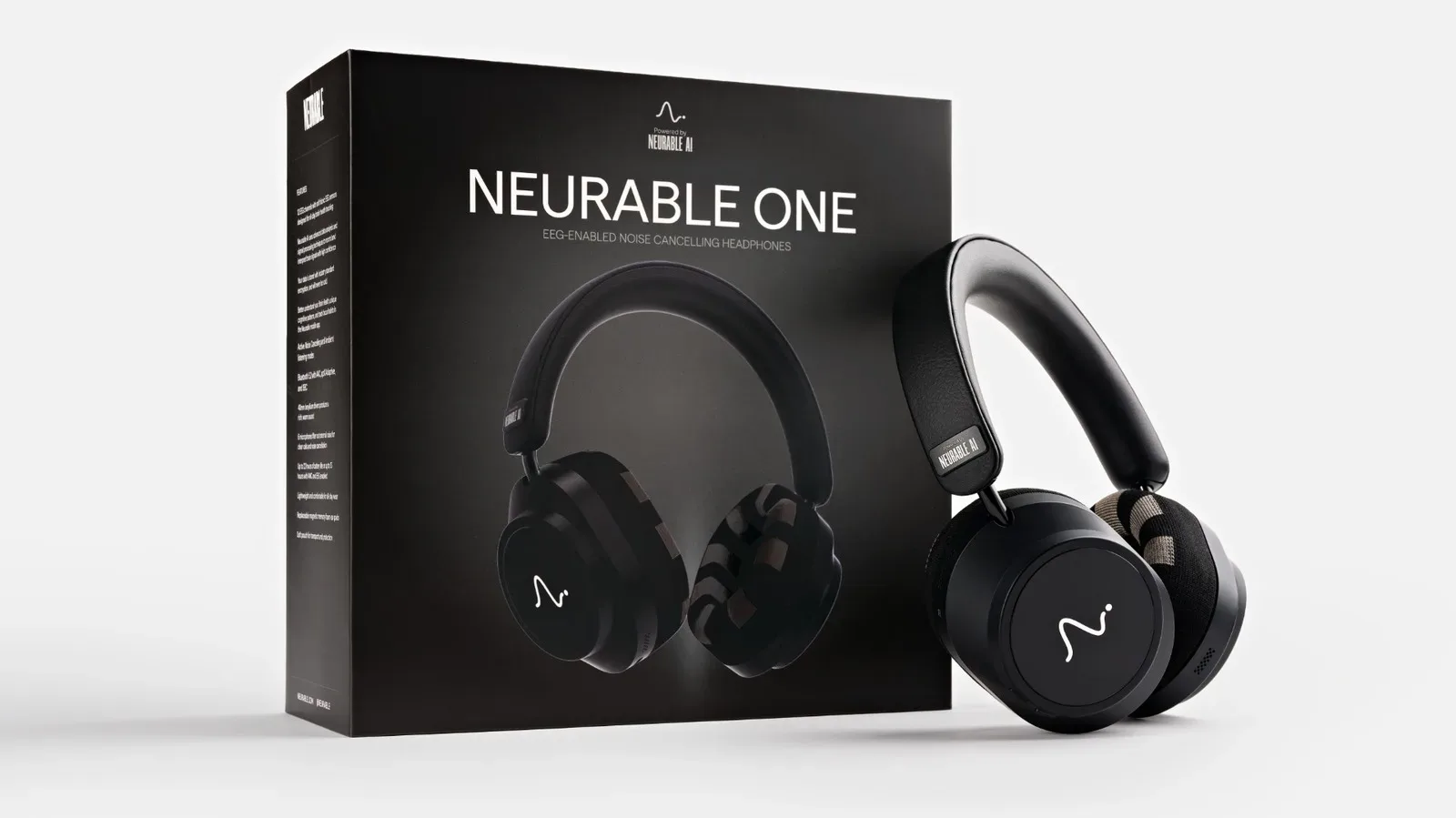
Neurable has released the Neurable One, a $499 pair of over-ear headphones built around an unusual proposition: listening gear that also monitors signals from the wearer’s brain. The company positions the new model as a productivity-focused wearable, using an integrated EEG system to estimate attention and identify periods when focus is strongest or beginning to fade.
For gaming audiences, the immediate question is not whether headphones can make someone better at a game. The information available does not establish that the Neurable One is a competitive-gaming headset or promise performance gains. Its more interesting connection to games is indirect: the same broader idea of understanding concentration, calm and fatigue could be relevant to long sessions, practice routines and the mental load of fast-paced play.
That distinction matters. The Neurable One is being presented primarily as a workday tool, one that encourages users to notice when their attention is dropping and take a break rather than continue burning through their energy. Still, the company’s existing relationship with HyperX and earlier work involving a first-person shooter point toward a possible gaming use case for brain-state feedback—particularly around remaining calm under pressure.
What the Neurable One is designed to measure
The headline technology is EEG, short for electroencephalography. In this context, EEG refers to hardware that senses electrical activity associated with brain activity. Neurable says users can activate the system at the beginning of their day, after which the headphones monitor brain waves and attention to identify high-focus periods and flag declines in focus.
The intended outcome is behavioral rather than dramatic. Instead of simply logging a number, the headphones are designed to recommend breaks when concentration begins to wane. That makes the product closer to a cognitive wellness wearable than a conventional audio accessory with a few fitness-style extras.
Neurable One will also provide an Alpha Peak Frequency reading. The company describes this as a broader cognition metric. The supplied details do not explain how users should interpret a particular result, what an ideal range might be, or whether the number should be compared with anyone else’s. As with many personal wearable measurements, its clearest practical value may be watching an individual’s own patterns over time rather than treating one reading as a complete verdict on mental performance.
Additional reported metrics include brain age, mental-processing speed and the next-day functional effects of good or poor sleep. These resemble familiar wearable dashboards in form, but the focus is cognition rather than steps, heart rate or exercise recovery. Brain age should therefore be understood here as a device-provided metric, not a clinical diagnosis. Likewise, a reported change in processing speed or focus should not be confused with a formal medical assessment.
A third premium EEG headphone, now under Neurable’s own banner
Neurable One follows two earlier headphone efforts. In 2024, Neurable partnered with Master & Dynamic on the MW75 Neuro, a high-end headphone model equipped with EEG technology. A lighter follow-up called the Neuro LT arrived afterward in response to user concerns about weight.
The new release is technically Neurable’s third premium headphone model, but it is the first of the group being launched without that outside audio-brand partnership. That shift is notable because the product’s challenge is twofold: it has to deliver meaningful brain-sensing data while also succeeding at the basic job people expect from $499 headphones.
Neurable says the hardware includes 40mm beryllium drivers, six microphones for active noise cancellation and an ambient passthrough mode. Active noise cancellation, commonly shortened to ANC, uses microphones and signal processing to reduce surrounding noise. Ambient passthrough does the reverse: it lets outside sound in, which can be useful when a wearer needs to hear their surroundings without taking the headphones off.
The driver specification describes the speakers inside each earcup. Beryllium is used here as part of the driver construction, while 40mm denotes the stated driver size. Specifications alone do not settle questions of sound quality, comfort or microphone performance, and no independent listening results are provided. They do establish that Neurable is attempting to pair its EEG system with the expected feature set of a premium wireless headphone rather than asking customers to accept a stripped-down sensor device.
Battery life is the practical trade-off
Neurable lists battery life at up to 22 hours for audio playback, falling to 12 hours when EEG is active. That gap is one of the product’s most important real-world details. Brain sensing is not a background feature with no apparent power cost; users who want the core focus-tracking experience need to account for a substantially shorter stated runtime.
Twelve hours is still framed as enough for a full workday, and it could cover an extended play session as well. But the split also creates a natural decision for owners: use the headphones as conventional ANC audio gear for maximum longevity, or enable EEG when tracking concentration is the priority. People who value uninterrupted playback above all else may see the sensing mode as an occasional tool. Those buying specifically for cognitive insights are more likely to view the 12-hour figure as the meaningful battery estimate.
It is also worth keeping expectations grounded. The available details describe focus monitoring, break recommendations and cognitive-oriented metrics; they do not say that Neurable One can read thoughts, diagnose conditions or replace professional care. The product’s stated purpose is detecting patterns related to attention and offering personal feedback, not delivering certainty about why a person feels tired, distracted or stressed.
Where gaming fits—and where it does not
Neurable has a partnership with HyperX, and an earlier experience involving the companies connected a better state of calm with improved accuracy in a first-person shooter. That is an intriguing signal for competitive players, particularly in genres where reaction, precision and composure all matter. It is not, however, proof that every player will see better results by wearing EEG-equipped headphones.
Gaming performance is influenced by far more than a single measure of calm or focus: game knowledge, input familiarity, connection quality, physical comfort, sleep, practice, teammates and the design of the game itself all matter. The more defensible use of these readings would be self-observation. A player could potentially notice that they tend to lose concentration after a certain span of time, or that poor sleep is reflected in how they feel during a session. The device may then encourage a pause before frustration turns into aimless queueing.
That is particularly relevant for players tackling difficult campaigns or ranked modes. Rather than treating every rough stretch as a mechanical failure, a cognitive-tracking device could prompt a more basic question: is this a moment to keep practicing, or is it time to reset? Games such as Gears of War: E-Day may put the focus back on campaign experiences, while competitive shooters put a different kind of pressure on players; either way, fatigue can change how a session feels.
There is also a key limitation in the present information: Neurable One’s listed features emphasize workday focus, not gaming-specific software, game integrations or player-facing coaching. Prospective buyers should not infer support for a particular platform, title, console or PC setup from the HyperX connection alone. None of those details are established here.
A niche wearable with a clear audience question
At $499, Neurable One sits in premium-headphone territory, and its appeal depends heavily on whether the EEG layer feels useful to an individual owner. Someone who only wants music playback, ANC and ambient sound may have little reason to prioritize brain-sensing hardware. Someone already interested in tracking attention, sleep-related functioning and work habits may find the all-in-one approach more compelling than adding another separate wearable to their routine.
The strongest argument for the product is convenience: headphones are already worn at desks, during travel and at home, which gives EEG monitoring a place in an existing routine. The hardest question is interpretability. Metrics are only beneficial when a person can understand them, notice a pattern and make a sensible adjustment. Neurable’s break prompts seem aimed at that practical loop, turning a focus signal into a simple decision rather than asking users to become experts in brain-wave analysis.
Neurable One is available now for $499. Its audio hardware and claimed full-day EEG runtime make it a more fully formed headphone than a bare technology demonstration, while its focus-centric data remains the reason it exists. For players, creators and desk-bound workers, the value proposition is ultimately not “your headphones know your brain.” It is whether a timely nudge to slow down, refocus or walk away proves useful enough to justify the premium.