The Motion Picture Association has attached its name to two international declarations at the Lumière Summit, placing the organization alongside governments and private-sector participants in a conversation that reaches well beyond a single premiere calendar or streaming release slate. One declaration addresses the future of cinema and the moving image; the other centers on reinforced international cooperation against film and audiovisual piracy.
For an entertainment business increasingly built around worldwide releases, multi-territory productions, library titles, and audiences who can discover a new favorite through a theater, television channel, subscription service, or social clip, the paired commitments make a certain amount of sense. The industry’s opportunities are global, and many of its challenges are too. That is less a plot twist than a very expensive recurring character.
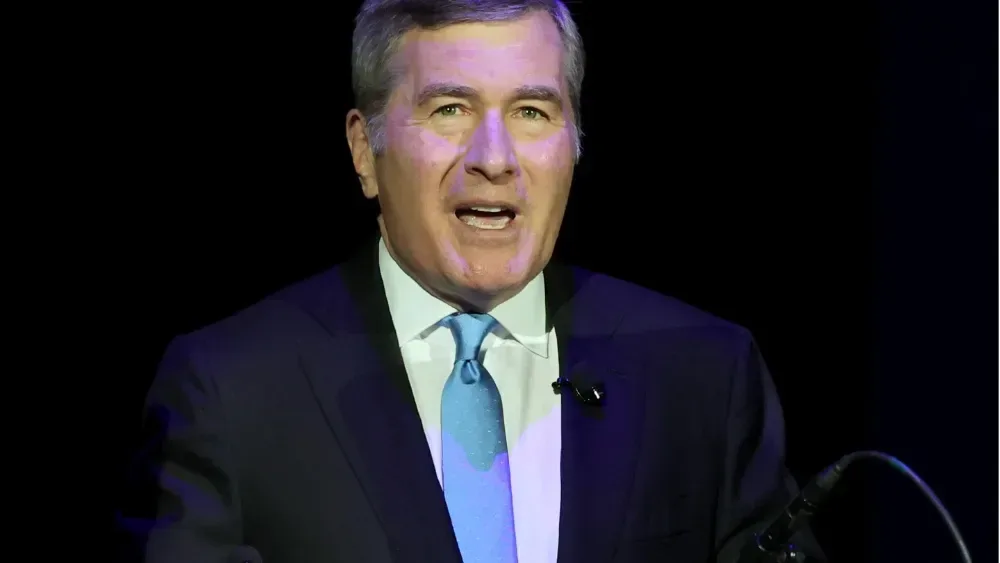
The summit was co-chaired by French President Emmanuel Macron and South Korean President Lee Jae Myung. The MPA’s participation included leadership discussions with both presidents, with chair and CEO Charles Rivkin joining separate business roundtables devoted to ties with France’s and Korea’s creative sectors.
Two declarations, connected concerns
The first agreement, the Lumière Declaration on the Future of Cinema and the Moving Image, addresses the broader question implied by its title: how cinema and screen storytelling can continue to develop in a rapidly changing media environment. The available details do not outline specific policy measures, funding commitments, or requirements for signatories. Still, the declaration’s focus puts the spotlight on the conditions needed for film and audiovisual work to remain culturally and economically durable.
That is a wide remit. “Moving image” encompasses a business in which theatrical features, prestige series, animation, documentaries, live events, short-form video, catalog restorations, and streaming originals may all compete for attention on the same devices. The shared challenge is not simply making more content. It is supporting the ecosystems that allow creative work to be financed, produced, distributed, discovered, and preserved.
The second declaration has a sharper target: strengthened international cooperation in the fight against film and audiovisual piracy. Content theft is inherently difficult to contain within a national border. An unauthorized upload, illicit streaming operation, or piracy-focused service can affect rights holders and audiences across numerous territories at once. That makes collaboration among governments, industry organizations, and enforcement partners particularly consequential.
The two texts also fit together. A healthy creative economy depends on investment, and investment depends on the expectation that films and shows can reach their intended markets through legitimate channels. The point is not that piracy is the only pressure facing entertainment. It plainly is not. But protection of intellectual property remains one of the foundations underlying jobs, financing, and the ability to keep taking chances on new stories.
Macron and Lee roundtables put France and Korea in focus
Rivkin participated in two business roundtables during the summit. One, held with President Lee, concerned the industry’s engagement with Korea’s creative sector. The other, with President Macron, looked at the future of the business and possibilities for deeper connections with France’s creative sector. Chief executives from MPA member studios were part of both sessions.
France and Korea are especially meaningful places for this sort of exchange. Both have significant creative industries and international cultural reach, while their film and television sectors operate in markets with their own histories, institutions, talent communities, and audience expectations. The summit’s format gave studio leadership and public leaders an opportunity to discuss those relationships directly rather than communicate only through press releases, trade-show panels, or the ancient ritual of everyone pretending a conference buffet is a meal.
Rivkin framed the discussion around the shared value of strong storytelling and an industry that remains open to cooperation and investment. He described the summit as a useful venue for translating common interests among the United States, France, Korea, and other participants into greater collaboration. His comments emphasized the sector’s capacity to support employment, growth, and opportunity alongside its cultural role.
There is a practical reason that message matters. Entertainment has become one of the clearest examples of a business where creative choices and industrial choices routinely overlap. A locally rooted production can find a massive international audience. A global company can invest in a local workforce. A franchise can move among screens, markets, formats, and generations. Even long-running studio properties remain subject to changing creative stewardship, as illustrated by the uncertainty surrounding the future of Matrix 5. Building durable links among creative sectors is therefore about more than moving capital; it is also about sustaining the people and structures behind the work audiences eventually see.
MPA’s regional leadership highlights Korea’s global role
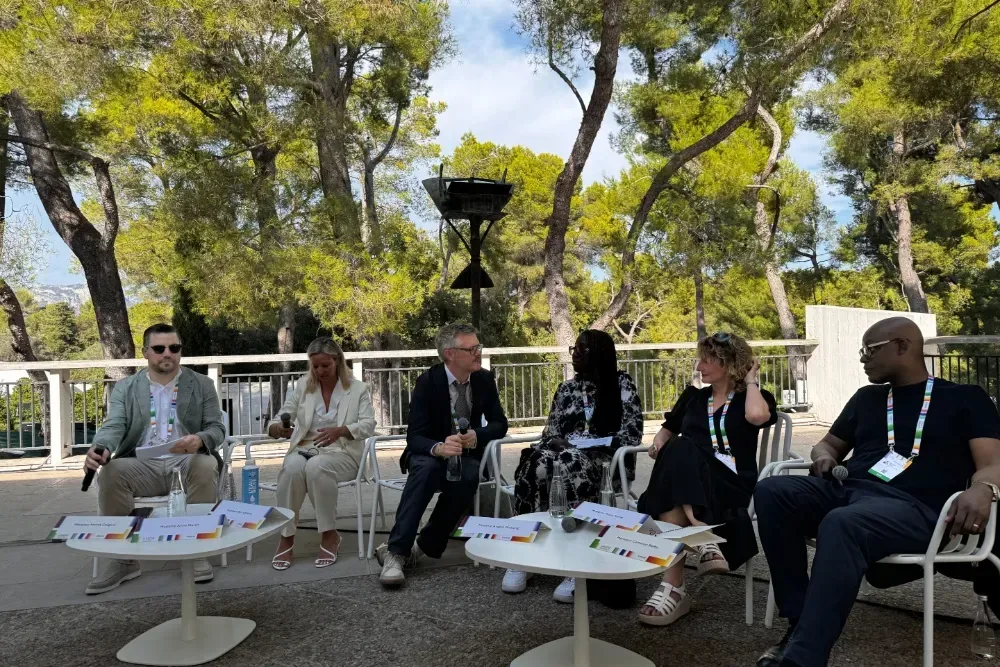
Emilie Anthonis, the MPA’s president and managing director for Europe, the Middle East, and Africa, also took part in summit programming. She joined a session examining Korea’s expanding position in the global film and television business, a discussion that included President Lee.
Korea’s role in worldwide screen entertainment has become impossible to reduce to a single genre, format, or breakout title. Its creative sector’s international presence spans film and television, and the summit’s attention to that growth reflects the broader reality that global entertainment is not flowing in one direction. Audiences are increasingly accustomed to following stories, performers, and formats across languages and borders, while studios and platforms are looking for partnerships and production relationships that can travel.
Anthonis also appeared on a session titled The Race Against Piracy: A Global Challenge. There, she addressed the anti-piracy work carried out by the MPA and the Alliance for Creativity and Entertainment, known as ACE. The coalition is described as the world’s leading anti-piracy coalition, and its work is oriented toward the cross-border nature of content theft.
Her participation connected the summit’s high-level declarations to the day-to-day issue behind them: piracy can undermine the creative economy across national boundaries and across distribution formats. A film does not stop being vulnerable because it changes from a theater release to a digital rental, a subscription title, or a library favorite. Nor does an illicit operation become a local problem merely because viewers happen to be scattered around the world.
Why anti-piracy cooperation remains central
Talk of piracy can sometimes become overly abstract, as if it were merely an invisible argument between corporations and the internet. The economic stakes are more concrete. Film and television productions involve writers, performers, crews, post-production teams, distributors, exhibitors, and many other workers and businesses. The revenue generated by legitimate distribution helps support future projects, including work that may be riskier, more regional, or less easily reduced to a familiar brand name.
That does not mean a declaration alone resolves the problem. The information provided about the summit does not claim it has created a universal enforcement system or ended piracy overnight. Such a claim would require a sequel nobody should greenlight. Instead, the significance lies in shared recognition: intellectual-property protection and international action against piracy are essential elements of sustaining the creative economy.
Cooperation can matter because the operating environment is fragmented. Laws, enforcement practices, technology, hosting arrangements, and consumer markets differ from place to place. A coordinated approach is better suited to a challenge that can move quickly across jurisdictions. The MPA’s signature on the piracy declaration places the group within that wider international effort.
The studios represented by the MPA
The MPA’s membership gives the organization a substantial presence across modern filmed entertainment. Its member studios are Netflix; Paramount Pictures; Prime Video and Amazon MGM Studios; Sony Pictures; Universal Studios; The Walt Disney Studios; and Warner Bros. Discovery.
Those companies do not all operate in identical ways, and they do not share exactly the same distribution models or corporate structures. Together, however, they represent major investments in theatrical filmmaking, television, streaming, physical and digital libraries, global marketing, and international production. Their participation through the MPA underscores why discussions about creative-sector partnerships and intellectual-property protection draw broad industry attention.
For viewers, a summit declaration may feel far removed from choosing a movie on a Friday night. Yet the themes on the table are tied to what ultimately reaches that screen: whether creative industries can attract investment, how productions connect with talent and partners in different countries, and whether the legal distribution system supporting films and shows can withstand cross-border theft.
The Lumière Summit did not present the MPA’s signatures as a new consumer product, a release-date reveal, or a promise that every streaming menu will suddenly stop asking whether someone is still watching. Its importance is more structural. By signing the declarations and participating in the France- and Korea-focused discussions, the MPA signaled support for international collaboration on cinema’s future and a coordinated response to audiovisual piracy.