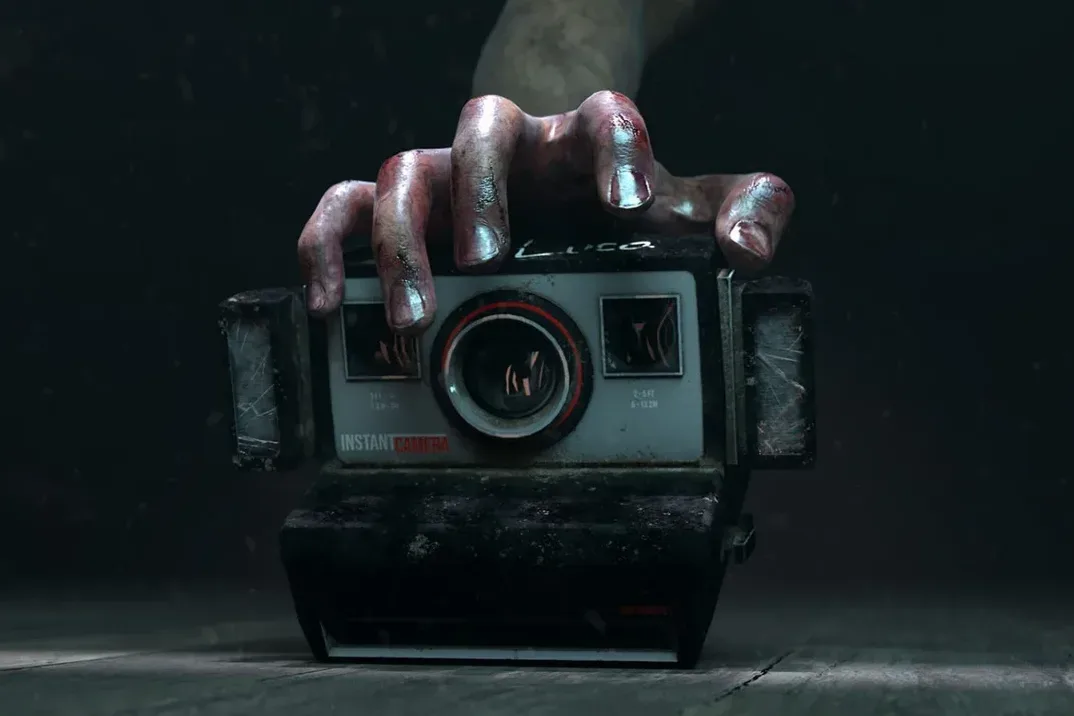
Madison, the first-person psychological horror game built around a cursed instant camera and a family ritual, is being developed as a feature film. Bloodious Games has partnered with Story Kitchen on the project, which is intended for theatrical release.
The news is an early development-stage announcement rather than a finished-production reveal. There is currently no announced director, screenwriter, cast, distributor or release date. That leaves the basic creative question—how closely the film will follow protagonist Luca Maxwell and the game’s events—unanswered as well.
What is clear is that the movie will be set within the existing Madison world. That distinction matters. A film set in a game universe can revisit recognizable people, places and supernatural rules without committing itself to a scene-by-scene transfer of the original plot. For a horror game whose tension comes from active exploration and puzzle solving, the approach could prove especially important.
What Madison brings to the screen
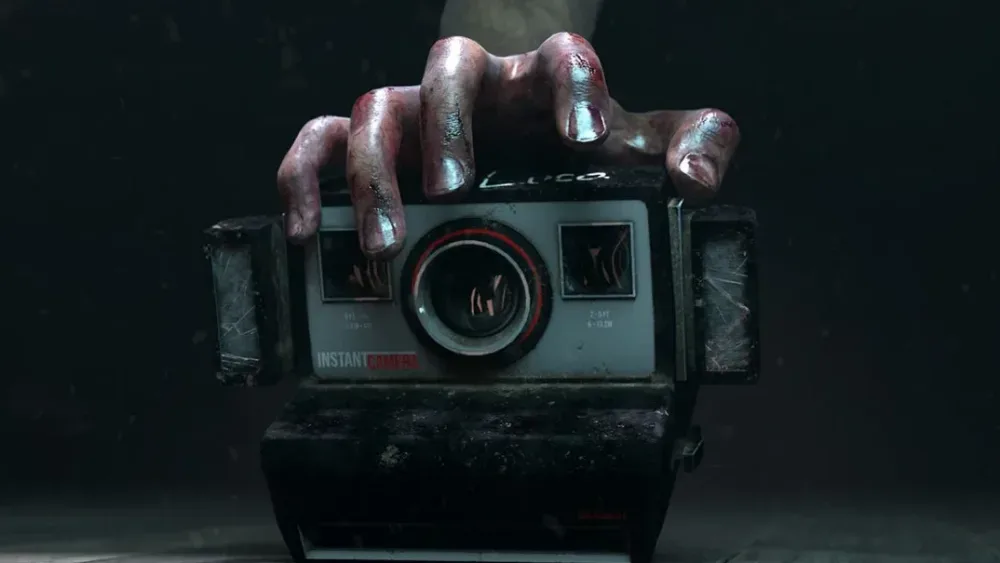
Launched in 2022, Madison follows Luca Maxwell after he receives an instant camera for his 16th birthday. The camera is inhabited by a demon, and Luca is drawn into completing a murderous ritual that began decades earlier with a satanist serial killer named Madison.
The game’s premise gives the adaptation a compact set of central story components: Luca, the Maxwell family, the house, the camera and the entities connected to the ritual. Players use the camera while solving puzzles and attempting to break a cycle of madness. Bloodious founder Alexis Di Stefano, who created and directed the game, has emphasized that these elements are not merely decorative details but the foundations of the franchise.
That makes the camera more than an easily marketable horror prop. In the game, it is an instrument of the player’s progress and a direct source of danger. It gives the story a visible mechanism for uncovering the supernatural threat, while its demonic presence makes every use potentially uneasy. A film cannot reproduce the literal act of a player deciding where to point the camera, but it can make the object a dramatic focal point: a way to reveal information, force a character toward a discovery or make an apparently ordinary room feel unsafe.
Psychological horror generally emphasizes fear shaped by perception, anxiety, uncertainty and a character’s mental state, rather than depending only on a physical monster. Madison adds occult ritual and demonic possession to that framework. The result is a premise that can support both tangible supernatural threats and the more subjective dread suggested by the game’s title and ritual-driven story.
The adaptation challenge: from interaction to cinema
Game adaptations face a basic structural hurdle. Games create tension through participation: players move through spaces, inspect clues, decide when to use an item and work through obstacles. Film viewers instead follow a fixed sequence of shots and choices made by the characters. The adaptation therefore has to find cinematic equivalents for the pressure created by a first-person game.
For Madison, the house and the camera appear to be the most natural tools for that translation. A confined location can establish geography, then gradually undermine the audience’s sense of what is stable or safe within it. An instant photograph can turn a moment into evidence, reveal a detail that was missed in real time, or provide a physical record that characters cannot easily dismiss. Those are general storytelling possibilities, not announced details of the screenplay, but they explain why the game’s premise has a clear visual identity beyond its game mechanics.
The film also has a potentially useful narrative engine in the ritual itself. A ritual connects present-day events to a past crime and gives a story a concrete stakes question: can the cycle be stopped before its demands are fulfilled? The game casts that problem through Luca’s puzzle-solving journey. A feature film may choose to keep Luca at the center, expand other members of the Maxwell family, or explore a different chapter inside the same world. None of those directions has been confirmed.
Story Kitchen co-founders Dmitri Johnson and Mike Goldberg have said their aim is to retain the physical impact that players associate with the game when moving the property into a theater. Di Stefano likewise said the project’s partners recognized the importance of the camera, house, family and supernatural entities. Taken together, those comments point to an adaptation interested in preserving the property’s core iconography and atmosphere, while the exact format remains to be revealed.
Who is making the movie?
Story Kitchen is a production company focused on adaptations of video games. It was co-founded by Dmitri Johnson, a producer on the Sonic the Hedgehog movie franchise, and is working across several other game-based projects. Its slate includes Tomb Raider: The Legend of Lara Croft, the animated series for Netflix, as well as projects tied to Life Is Strange and Streets of Rage.
The company also has a television first-look deal with Amazon MGM Studios and an animated-film first-look deal with DreamWorks Animation. Those deals do not identify a home for Madison; the horror feature does not yet have a distribution partner. They do, however, provide context for Story Kitchen’s broader business of developing game properties for screen formats.
Bloodious is continuing to build the game side of Madison at the same time. The studio has released an immersive VR version, which shifts the game’s horror premise into a more enveloping format. The original game has also received recognitions including the NYX Game Awards’ Best Narrative grand winner and Best Game at EVA 2022.
For readers interested in another recent horror-puzzle release moving across platforms, AYASA: Shadows of Silence reaching PS5 and Xbox Series X|S offers a separate example of how puzzle-led horror continues to be framed around a distinctive central mechanic.
The game’s universe is expanding before the movie arrives
The screen project is only one part of Bloodious’ current plans for the property. A new story expansion, The Maxwells’ Curse, is set for 2027 and will be free to existing Madison owners. Its title directly signals further attention on Luca’s family and the curse at the center of the game’s mythology, although no additional plot details were provided.
A free Halloween update also adds two difficulty options. The expanded Normal Mode is intended to be more approachable for people new to horror and puzzle games. Possession Mode is positioned as the more demanding alternative for experienced players.
Difficulty modes can serve different purposes in a puzzle horror game. An accessibility-minded setting can help players stay focused on the narrative and atmosphere when an obstacle would otherwise halt their progress. A tougher setting can increase pressure for people who already understand the game’s systems. Bloodious has described the revised Normal Mode in terms of accessibility and Possession Mode as an intense challenge, but has not detailed the individual changes those modes make.
For the movie, this ongoing expansion means the filmmakers are working with a property that is still active rather than a closed, static game release. It may give the team more world-building material to consider, but it also creates a need for clarity: the film’s place in the continuity, its relationship to Luca’s story and the extent of Bloodious’ creative involvement have not been specified.
What has—and has not—been confirmed
- Confirmed: Story Kitchen and Bloodious Games are developing a Madison feature film.
- Confirmed: The film is set in the world of the first-person psychological horror game and is being targeted for theatrical release.
- Confirmed: The original game centers on Luca Maxwell, a demon-inhabited instant camera and a murderous ritual tied to the serial killer Madison.
- Confirmed: The Maxwells’ Curse is planned for 2027 as a free story expansion for game owners, while a Halloween update adds expanded Normal and Possession difficulty modes.
- Not announced: A director, writer, cast, distributor, production timetable, release date, rating or plot outline for the film.
For now, the most reasonable expectation is not a release countdown but a development watch. The partnership identifies the creative teams and establishes the intended theatrical ambition. The decisions that will define the adaptation—especially who writes and directs it, and whether it tells Luca’s story or a new tale from the same supernatural setting—are still ahead.