Lyft is replacing Lyft Pink with Lyft Go, a subscription program built around a closer pairing with DoorDash. The headline plan costs $10 per month, matching the former Lyft Pink monthly price, while an annual subscription is priced at $96—$3 less than Lyft Pink’s annual rate. For people already paying for DashPass, there is a potentially more significant change: they can link their DoorDash account and receive Lyft Go at no additional cost.
The new program is available in the United States now and includes a one-month free trial. Existing Lyft Pink members will be moved to Lyft Go at the same price. Lyft Pink All Access, the higher-level version of the old program, will remain available for current members, but Lyft is no longer accepting new signups for it.
What Lyft Go includes for $10 a month
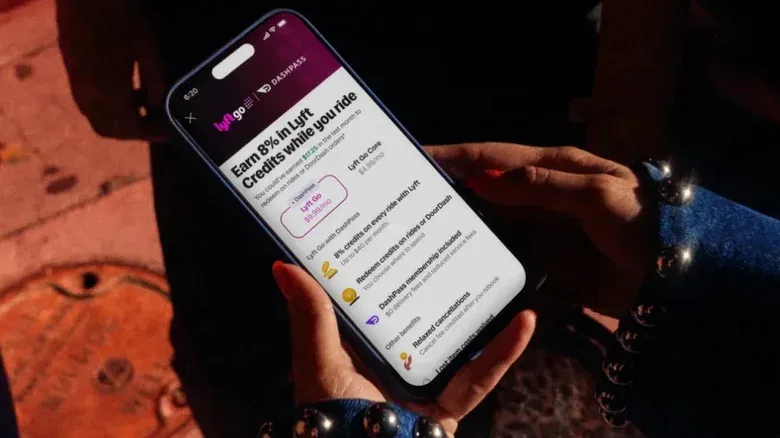
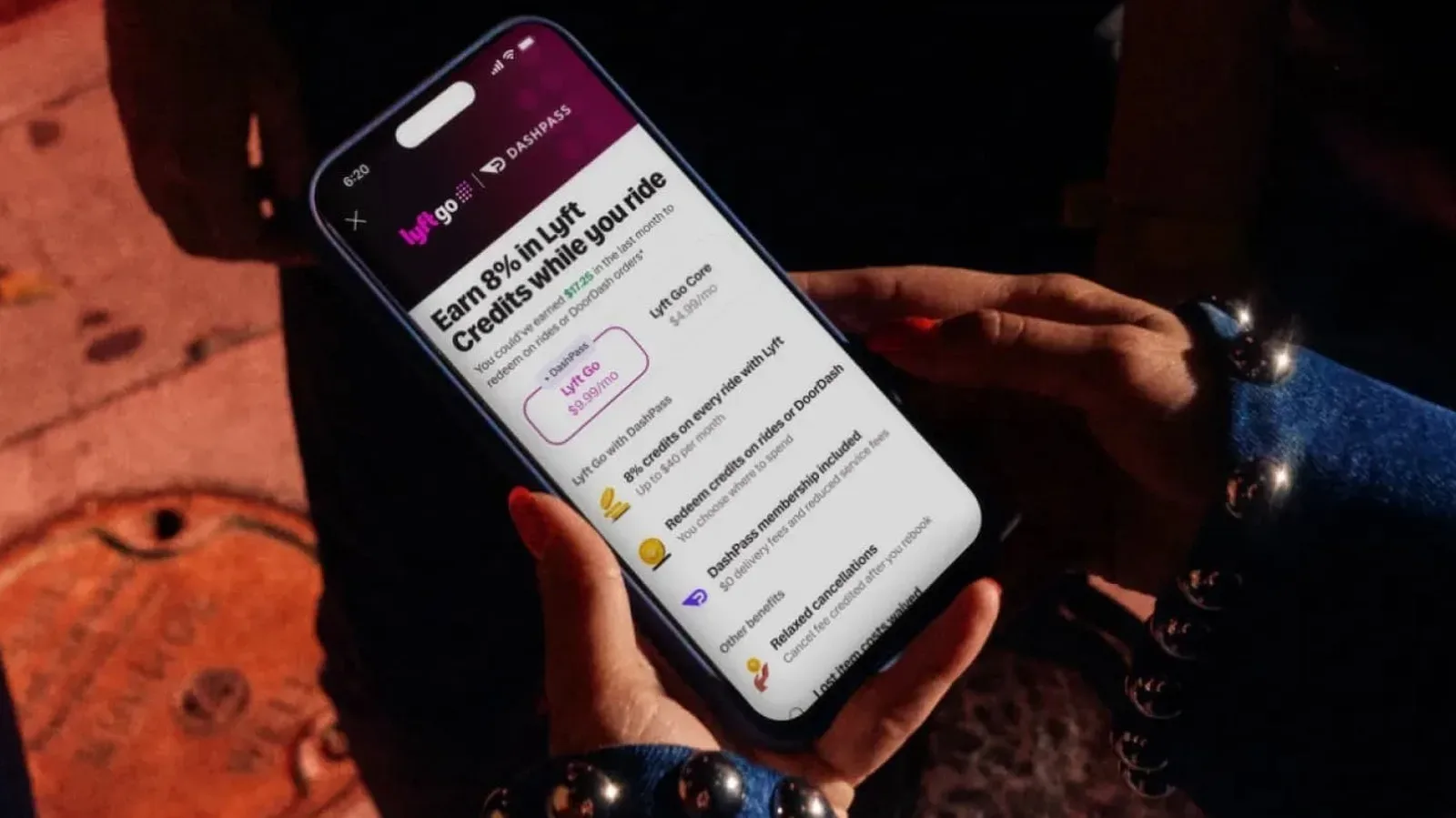
Lyft Go combines benefits from both companies rather than treating rides and delivery as entirely separate subscriptions. The DoorDash component is DashPass, which provides discounts and lower fees on eligible DoorDash orders. On the Lyft side, Go members receive credits worth 8% of each ride, capped at $40 in credits per month.
Those credits are not limited to another Lyft trip. They can be used toward future rides or DoorDash orders, giving the reward system some flexibility for people who regularly use both services. That distinction matters: a rider who earns credits during a busy stretch of travel can apply them to food delivery later, while someone who has fewer delivery orders can direct them back to rides.
The plan also includes three “relaxed cancellations” per month. In practical terms, if a member cancels a ride and books another within 15 minutes, Lyft will return the cancellation fee as credits. It is not a blanket removal of all cancellation fees, and the rebooking window is central to the perk. Members also receive waived fees for the return of lost items and donation matching for gifts made through Lyft’s Round Up & Donate option.
Round Up & Donate is the feature that lets riders round up ride costs for charitable donations. The matching benefit is therefore separate from ride credits, DashPass savings, and the lost-item policy. As with any app subscription, the useful comparison is not simply the sticker price: it is whether a customer will actually use enough of the included benefits for the recurring charge to make sense.
Lyft Go Core is the lower-cost option
Lyft is also introducing Lyft Go Core for $5 per month. Core does not include DashPass. In exchange, it offers 5% back in credits on rides, up to $20 per month, along with the donation matching and relaxed-cancellation benefits.
The two tiers make the choice relatively straightforward on paper:
- Lyft Go: $10 monthly or $96 annually; DashPass included; 8% back on rides as credits up to $40 monthly; relaxed cancellations, lost-item return-fee waivers, and donation matching.
- Lyft Go Core: $5 monthly; no DashPass; 5% back on rides as credits up to $20 monthly; relaxed cancellations and donation matching.
For a customer with an existing DashPass membership, the account-linking arrangement could be the clearest reason to look at Lyft Go, since the Lyft benefits come at no extra cost after the accounts are connected. For a rider who does not use DoorDash much, Core offers a less expensive way to get a smaller credit rate and the non-delivery perks.
The credit ceilings are worth reading as ceilings, not guaranteed monthly savings. Eight percent back can build up quickly for frequent riders, but Lyft caps Go’s credits at $40 per month. Core’s 5% benefit tops out at $20. The actual value depends on eligible ride spending and on whether the accrued credits are redeemed before a member changes or cancels a plan.
Why the DashPass partnership changes the pitch
Lyft Go is an example of two adjacent app services attempting to create a shared membership habit. Rides, restaurant delivery and convenience orders are different transactions, but they often happen around the same moments: commutes, events, late arrivals, airport trips, or evenings when cooking is not on the agenda. By attaching DashPass to Lyft’s flagship membership, Lyft can offer a benefit that may feel useful even in months when someone takes fewer rides.
Lyft and DoorDash are also broadening their relationship within the Lyft app. On certain rides, passengers will be able to browse DoorDash restaurants and place an order that begins heading toward their destination before they arrive. The available wording is important here: this functionality is planned for certain rides, rather than described as a universal option across every trip.
That feature is designed around timing. Instead of opening a delivery app only after reaching a hotel, home, or another destination, a rider could begin the order while still in the car. Whether that proves useful will depend on restaurant preparation times, delivery timing, local coverage, and the specific trip, but the intended convenience is clear: reduce the waiting period between arriving somewhere and receiving an order.
DoorDash is also set to buy Instacart in a $17 billion deal, a separate development that underscores how closely delivery, retail ordering and membership programs are becoming connected. Lyft Go does not turn Lyft into a grocery-delivery company, but it does place its paid tier inside a broader ecosystem where customers may increasingly expect one subscription to cover several kinds of on-demand spending.
How it compares with Uber One
Lyft’s most obvious competitor has a similarly priced membership. Uber One costs $10 per month and combines promotions and reduced fees with savings on Uber Eats. It also provides 5% back on rides and 10% back on car rentals. Uber Eats has additionally partnered with Amazon on discounts for Prime subscribers.
That makes the competition more complicated than a simple ride-credit comparison. Lyft Go’s top tier advertises 8% back on rides, compared with Uber One’s 5%, but each subscription connects to a different delivery ecosystem and set of additional benefits. Lyft’s Core tier also provides a lower $5 entry point for customers who want some ride-related extras without DashPass.
For consumers, the practical question is which app already handles the larger share of their routine activity. Someone who consistently orders through DoorDash and takes Lyft rides may find the Go bundle more coherent than maintaining separate memberships. A person whose transportation and meal orders mostly happen through Uber’s apps may see more value in Uber One. And anyone who uses either platform sporadically should be careful not to confuse a percentage reward with automatic savings: credits, lower fees and promotions only matter when the services are used often enough.
What existing Lyft Pink members should watch
Current Lyft Pink subscribers are being shifted to Lyft Go at the same price, so the immediate change is a reworked benefit package rather than a stated price increase. The annual Lyft Go price is $96, while the monthly plan is $10. Paying annually therefore represents a $24 difference relative to 12 monthly payments, provided a member expects to remain subscribed for the full year.
Existing members should still review how the new perks line up with their actual habits. DashPass is the standout addition, but only if DoorDash is a service they use. The new ride-credit structure has a defined monthly maximum, and relaxed cancellations only apply when a new ride is booked within 15 minutes. The lost-item return-fee waiver may be valuable in an occasional emergency, but it is not a reason most people should expect to recover the membership cost on its own.
It is also sensible to consider recurring app memberships as a combined budget category rather than judging each in isolation. A $5 or $10 plan can be easy to overlook alongside entertainment, cloud storage, game services and other recurring charges. Readers weighing the value of services like these may also find it useful to follow the broader discussion around tools designed to consolidate spending information, such as this look at read-only personal-finance account connections.
Lyft Go’s central proposition is ultimately simple: use a single membership to connect ride rewards with DoorDash benefits. The $10 tier will be strongest for people who regularly use both, while Go Core creates a cheaper option for Lyft riders who do not need DashPass. The one-month trial gives US customers an opportunity to determine which category they fall into before committing to an ongoing charge.