LEGO has appointed Kelsey Gray Sherman as its first head of celebrity talent and brand partnerships, establishing a dedicated leadership role for celebrity relationships within its Entertainment, Partnerships & Content division.
Sherman joins LEGO from WME, where she was vice president of the Entertainment Marketing & Advisory group. Based in Los Angeles, she will report to Jill Wilfert, LEGO’s senior vice president of Entertainment, Partnerships & Content, and join that division’s leadership team.
The new role signals an effort to make LEGO’s work with entertainers, brands and popular culture more deliberate than a conventional licensing arrangement. Sherman’s remit includes identifying talent and building relationships that can extend beyond putting a familiar name or fictional property on a product.
A new role for a long-running part of the LEGO business
LEGO is hardly new to entertainment partnerships. Its relationship with Star Wars, for example, has expanded across construction sets, television projects and video games. LEGO’s flagship theatrical films have also found major success, while its 2024 collaboration with Pharrell Williams resulted in a biographical animated film made entirely in LEGO-brick form.
What is new is the decision to place celebrity-talent and brand-partnership work under a specific executive. The distinction matters because broad entertainment licensing and celebrity-led partnerships can involve very different objectives.
Licensing generally means obtaining the right to use another party’s intellectual property: a franchise’s characters, settings, logos or stories. It can produce a LEGO set based on an established film, television series or game. A talent partnership, by contrast, can revolve around a person’s creative perspective, audience, cultural presence or ability to convene collaborators. It may still involve products, but it need not start or end there.
LEGO says Sherman will look for relationships that go beyond traditional licensing and product collaborations. That wording does not identify specific future projects, partners or formats, so it should not be read as confirmation of any particular celebrity set, game, film or campaign. It does, however, set a clear strategic direction: partnerships are being treated as a route into entertainment and culture, not solely as a means of adding another branded item to a catalogue.
Why Los Angeles is a fitting base
Sherman will operate from Los Angeles, a practical location for a role built around entertainment talent and brand connections. Her previous position in entertainment marketing and advisory work, alongside an existing history of working closely with LEGO, gives her experience relevant to an assignment that depends on both relationships and brand fit.
Wilfert described Sherman as someone with strong ties across talent and entertainment communities as well as a deep understanding of LEGO. That second element is essential. Celebrity partnerships can generate attention quickly, but attention alone does not make an idea appropriate for a brand whose identity is closely associated with creativity, building and play.
For LEGO, the challenge is not merely finding recognizable collaborators. It is finding a reason for a collaboration to exist that audiences can understand. A partnership is more likely to feel substantial when the talent involved brings a creative contribution, a distinct theme, an experience or an audience connection that suits LEGO’s core idea of making and imagining.
“Brand-first” is more than a job-title flourish
The role’s wording puts the brand before the partnership. In practical terms, that suggests the LEGO identity is meant to guide decision-making rather than be reshaped around whichever famous name is available. The company’s stated interest in work that feels fresh and authentic reinforces that point.
Brand-first partnership is a marketing and entertainment term for collaboration that begins with what a company stands for, what its audience expects and what it can uniquely make, rather than beginning with the fame of a potential partner. It does not guarantee that every project will resonate, but it establishes a useful test: would the idea still make sense as a LEGO experience if the celebrity’s name were removed?
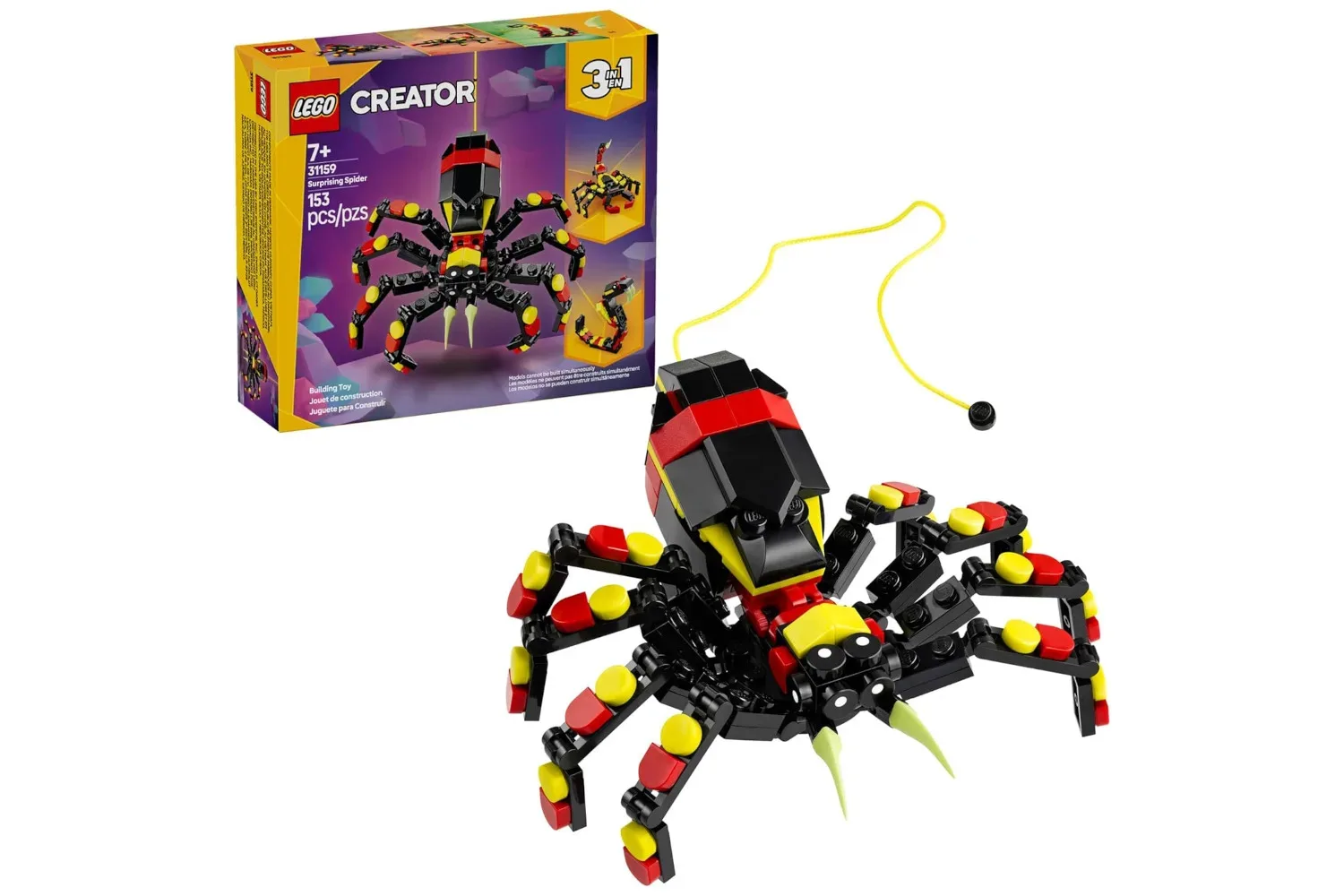
For an audience that already follows LEGO as a creative hobby and a collecting space, that approach could be important. Products can be exciting because of a franchise or famous collaborator, but long-term interest often comes from design, play possibilities and the degree to which a set or experience feels considered. LEGO’s broader product activity continues alongside its entertainment strategy, including items such as the LEGO Creator 3-in-1 Wild Animals set, which is built around alternate construction options rather than a celebrity tie-in.
Entertainment can take several forms
The company’s existing record demonstrates why “entertainment” should not be reduced to one medium. LEGO’s Star Wars work includes physical builds, screen projects and games. The Pharrell Williams collaboration showed that the LEGO brick aesthetic can also become the visual language for a feature-length biographical story.
Those examples do not reveal what Sherman’s future deals will be. They do show the range of forms LEGO has already used when working at the intersection of play and entertainment. A celebrity or brand relationship might potentially lead to content, live or experiential activity, creative programming, product or some combination of these approaches. LEGO has not announced any individual initiative under the new executive position, so the eventual mix remains unknown.
That flexibility is valuable, but it also raises the standard for execution. An entertainment project needs a purpose appropriate to its own format. A film needs a story worth telling; a game needs an engaging play experience; a physical set needs a compelling build and finished display or play value. Simply applying a partner’s identity across formats is not equivalent to creating something audiences will want to spend time with.
What the appointment means—and what it does not
The confirmed news is straightforward: LEGO has created a first-of-its-kind celebrity-talent and brand-partnership leadership job, filled it with Sherman, and placed it in its Entertainment, Partnerships & Content organization. The company describes the move as part of a growing focus on expanding the LEGO brand’s cultural and entertainment presence.
It does not confirm a slate of upcoming celebrity collaborations. There is no announced product line, franchise agreement, release window, platform, pricing or event tied to Sherman’s appointment. Treating the hire as evidence of a particular rumored tie-in would go beyond the available information.
The more grounded reading is that LEGO is formalizing a function that sits between talent relations, brand strategy and entertainment development. This can help a large company evaluate opportunities consistently: which collaborator makes sense, what form should the work take, what values should it reflect, and how can a project connect with audiences globally without losing the traits that make LEGO recognizable?
The practical test will be creative fit
Sherman said she has seen LEGO’s ability to bring together entertainment, experiences and culture through prior work with the company. Her stated aim is to build ambitious, distinctive partnerships with exceptional talent and brands that create fresh ways to inspire creativity and play.
That emphasis offers the clearest lens for judging whatever follows. The strongest projects will not only carry celebrity appeal; they will give people a meaningful LEGO-specific reason to participate. That could mean a story that benefits from brick-built animation, an experience that invites people to build, or a product concept with more imagination than a logo placed on a box.
LEGO has decades of experience turning major cultural properties into cross-media activity. Hiring a dedicated head of celebrity talent and brand partnerships suggests it wants to develop the next phase of that activity with a tighter focus on people, ideas and relationships that can travel across entertainment and culture. The appointments and projects that emerge from that strategy will determine how expansive the role becomes.