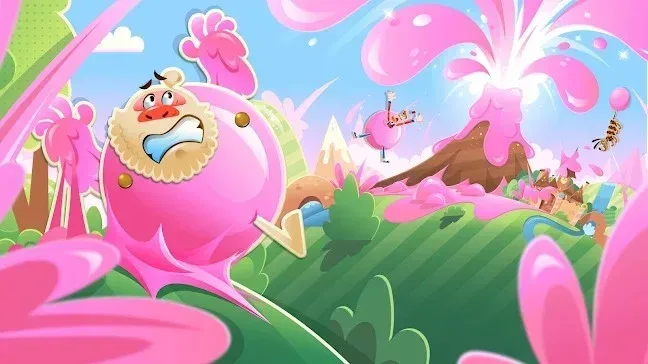
Workers at King’s Swedish operations could begin strike action on September 25 after two unions issued notices amid a long-running dispute over a collective bargaining agreement. The company is best known as the developer behind Candy Crush Saga and is the “K” in ABK.
Unionen and Swedish Engineers are pursuing an agreement after King’s workplace union club spent more than a year in negotiations. The immediate outcome remains undecided: mediators are attempting to bring the parties to an agreement before the stated deadline. If that effort does not succeed, the unions say their members at King will strike.
What the dispute is about
The central issue is not presented as a narrow pay dispute. The unions are seeking a collective bargaining agreement, commonly shortened to CBA, for workers at King. In this context, a CBA is a negotiated framework that establishes employment terms and protections collectively, rather than leaving the practical conditions of employment solely to an employer’s individual arrangements.
Unionen has framed the aim in terms of secure conditions, worker input and rules that apply consistently to everyone. Swedish Engineers has likewise emphasized that collective agreements can address pensions, insurance, working time and employees’ ability to influence their conditions at work. Those are substantial parts of day-to-day employment, even when they are less visible than a headline salary figure.
That distinction explains why King’s position on benefits has not settled the disagreement. In June, company executives declined the workers’ request, saying King’s existing benefits package was better for employees and that its current operating model was the appropriate fit, including for its Swedish operations. The unions’ position is that benefits offered at the company’s discretion are not equivalent to a collectively negotiated agreement covering clear, shared terms and a formal role for workers.
“A collective agreement is about more than pay,” Swedish Engineers said in explaining the notice. The union pointed to pensions, insurance, working hours and influence over workplace conditions as elements of the security such agreements provide.
Why a workplace union club matters here
The dispute sits within Sweden’s union structure. Employees may join a trade union that represents their profession more broadly. They may also organize in a smaller workplace-specific body, described here as a union club. King’s union club is the group that has negotiated with the company for more than a year, while Unionen and Swedish Engineers are now backing the escalation with strike notices.
That layered structure is worth separating from the idea that a strike notice automatically means work has stopped. It does not. A notice is a formal declaration that industrial action may begin on a specified date if the dispute remains unresolved. At present, the key facts are that notice has been issued, mediation is ongoing, and September 25 is the threshold named by the unions.
Arbiters are working on a mediated outcome. Mediation generally means an independent party seeks to help opposing sides identify terms both can accept; it is not, on the information available, a declaration that either King or the unions has already won the dispute. Nor does the existence of mediation guarantee a deal. Its importance is that there remains a route to settlement before any planned strike begins.
The timeline so far
- More than a year of talks: King’s workplace union club negotiated for a collective bargaining agreement.
- June: King executives rejected the workers’ request, arguing that the company’s benefits and operating model were already the better fit.
- September 17: Unionen and Swedish Engineers issued strike notices.
- Before September 25: Arbiters are attempting mediation.
- September 25: Strike action is planned to begin if no agreement has been reached.
The gap between a company saying its existing package is strong and workers seeking a CBA can sound technical, but it is the heart of the conflict. Benefits describe what an employer currently provides. A collective agreement concerns the negotiated rules, protections and processes that govern conditions over time. The unions’ demands therefore go beyond a comparison of perks.
What is known—and what is not
There are several reasons to be precise about the situation. At least two unions have issued notices, but no strike has begun as of the information provided. The available details do not specify the number of King employees who would participate, the exact work functions covered, the duration of any potential action, or how operations might be affected. It would be premature to treat a possible strike as a confirmed interruption to any particular game, team or service.
Likewise, there is no stated settlement proposal from the mediators, no announced agreement, and no indication that King has changed the position it set out in June. The next meaningful development is whether negotiation and mediation produce a collective agreement before the deadline.
For players, that means restraint is more useful than speculation. The dispute concerns labor conditions in Sweden and a possible work stoppage, not an announced change to Candy Crush Saga or a confirmed schedule disruption. For industry observers, however, it is a clear example of how the business side of games extends beyond releases and monetization: the work that sustains a major studio is also governed by contracts, benefits, insurance, retirement provisions, hours and employee representation.
Why the unions are escalating now
Strike action is the strongest step described in the unions’ public position, and Swedish Engineers stressed that it was not being undertaken casually. Its statement said members had signaled that they wanted the unions to move forward to secure their conditions and influence. That framing makes the escalation a response to the failed request and the length of the negotiations, rather than a sudden dispute over a newly announced company policy.
The unions are also presenting collective bargaining as a foundational form of security in the Swedish labor market. In practical terms, that perspective places value on a stable, written and negotiated baseline for workplace terms. King, by contrast, has argued that its present benefits and its existing operating approach are already preferable. The disagreement is therefore about both substance and control: what conditions workers receive, and whether those conditions should be formalized through a collective agreement negotiated with their representatives.
That is why the September 25 date matters. It is not merely a calendar marker; it is the point at which unresolved negotiations could become industrial action. Until then, the mediation process gives both sides an opportunity to avoid a stoppage. A deal would address the immediate strike threat. Failure to reach one would activate the unions’ announced next step.
The broader industry relevance
Employment disputes can be easy to flatten into a simple contest between a company and its workers. The facts here call for a more exact reading. King says its current benefits offering is better for employees and its operating model is suitable. The unions say workers need the security, consistency and workplace influence of a collective agreement. Those positions overlap in their stated concern for employees while reaching very different conclusions about what protections should look like and who should have a formal say in setting them.
For a game company, terms such as pensions, insurance and working hours may appear far removed from a game’s public identity. They are not remote from the people making, supporting and operating games. A collective agreement can establish the rules by which such conditions are handled, and the unions explicitly identify that predictability as a central objective.
The case also underscores an important practical lesson when following industry labor news: distinguish a notice, a negotiation, mediation and an actual strike. Each describes a different stage. Here, the process has advanced from more than a year of bargaining and a June rejection to formal notices from Unionen and Swedish Engineers. But the process has not yet reached a confirmed work stoppage, because a mediated agreement remains possible.
Labor conditions have become an increasingly visible part of the games business conversation, alongside the commercial questions covered in stories such as how a new game positions its price in a crowded release season. They are distinct subjects, but both affect the realities behind the products audiences eventually encounter.
What to watch next
The immediate watchpoint is simple: whether the arbiters can help King and the unions reach a collective bargaining agreement before September 25. If an agreement is reached, the announced strike action would no longer be necessary. If no agreement is reached by that date, the unions say workers will go on strike.
Until either outcome is confirmed, the most accurate description is that King faces a possible Swedish strike, backed by Unionen and Swedish Engineers, after the company declined a requested collective agreement in June. The dispute is ongoing, and its resolution will turn on negotiations currently underway rather than on assumptions about what happens next.