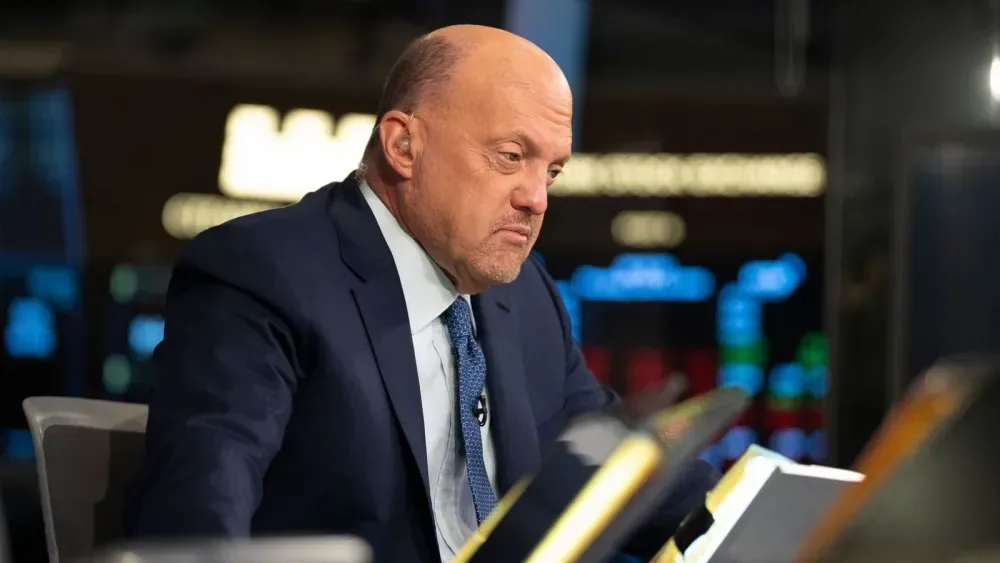
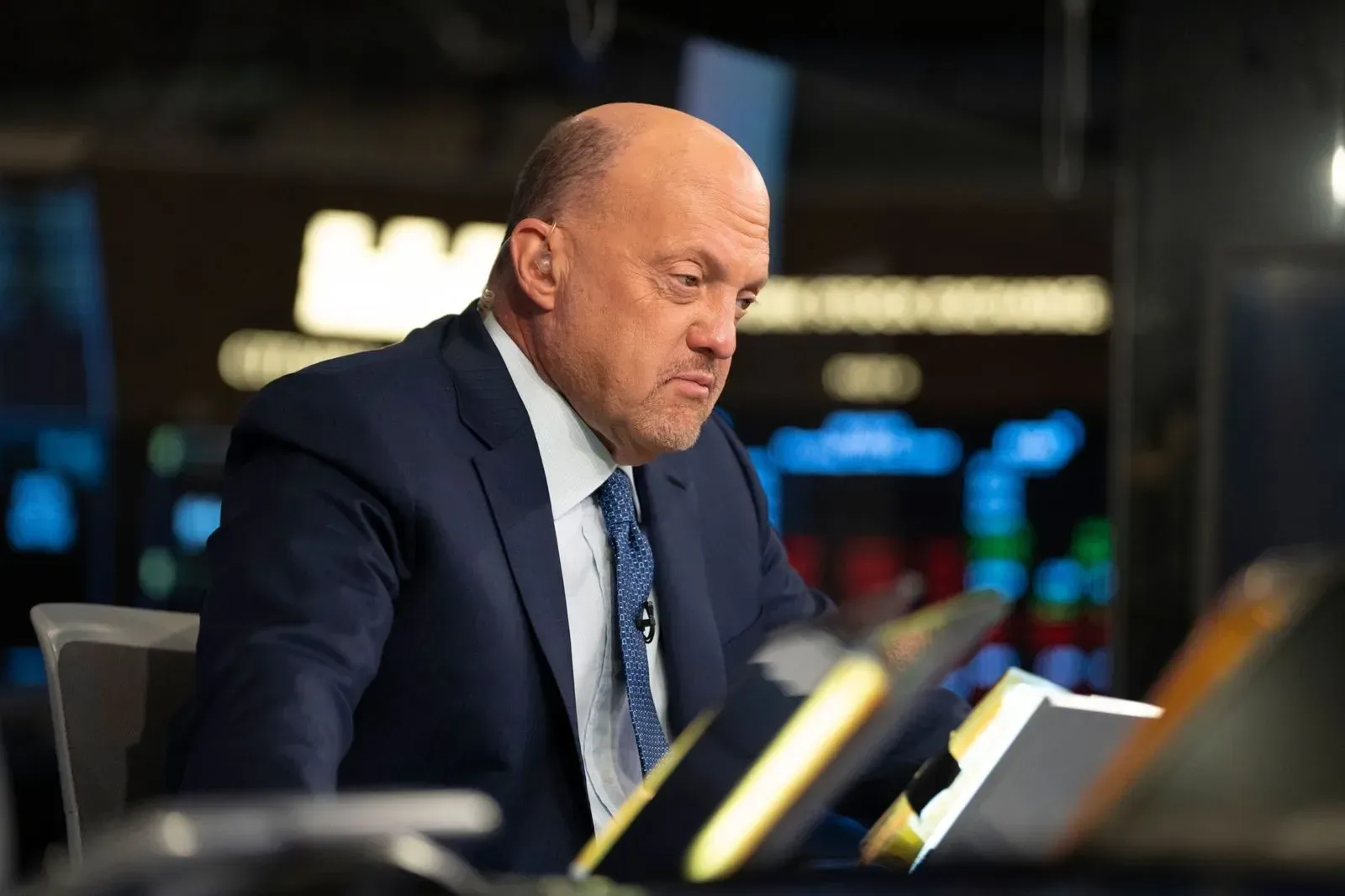
Jim Cramer’s renewed long-term agreement with CNBC is more than another talent contract. It is also a clear statement about the kind of media business CNBC and its Versant parent want to build: one in which a familiar on-air personality can anchor an ongoing, paid relationship with a highly focused audience.
The immediate product is an expansion of Jim Cramer’s Investing Club. CNBC plans to introduce a premium membership tier in 2027, giving subscribers access to additional live shows and workshops led by Cramer. Pricing and full membership details have not been announced. CNBC also intends to hire a general manager to help operate the club, an important detail that suggests this is being treated as a growing business rather than simply an add-on to a television program.
Cramer remains the host of Mad Money and a co-anchor of Squawk on the Street. But the planned club expansion changes the role of that visibility. Television can introduce viewers to a personality and establish routine; a membership operation can turn that routine into a more direct and interactive connection.
That model will be familiar to anyone watching the wider creator economy, where newsletters, podcasts, video channels and paid communities increasingly revolve around individual voices. CNBC’s play is distinct because it combines that creator-style closeness with the distribution, production capacity and brand awareness of an established network.
What the club already provides
Jim Cramer’s Investing Club has operated since 2022. Its existing members receive information on trades made for Cramer’s Charitable Trust, analysis of the stocks held there, videos, daily market analysis and monthly virtual meetings. Members are also scheduled to gather for an annual meeting in downtown Manhattan.
The coming premium level is expected to build on that foundation through live shows and workshops. Those two formats matter for different reasons. A live show is timely and communal: markets move, news breaks and members can share an event in the moment. A workshop is potentially more instructional, with space to focus on how an investor assesses a company, builds a portfolio, or thinks through a market situation.
CNBC has framed the club around education and the practical mechanics of markets, rather than solely around the possibility of making money. Cramer has similarly emphasized helping people understand investing and build positions over rapid, in-and-out trading.
That distinction deserves to be clear. A position is simply an investor’s holding in a security, while trading generally means buying and selling securities, often on a shorter time horizon. The club’s stated educational emphasis appears aimed at people who are not trying to make quick moves throughout a market day, but want to understand how a portfolio can be assembled and monitored over time.
Related coverage includes Jim Cramer’s CNBC Deal Sets Up a Premium Investing Club Tier for 2027.
That does not remove the risk inherent in investing. A media membership, live workshop or market commentary service is not a guarantee of financial results. For prospective subscribers, the practical question will be whether the premium tier delivers useful education, access and context at a price that fits their needs—not whether it promises a shortcut through a volatile market.
A creator business with institutional infrastructure
Cramer’s case illustrates an advantage traditional media companies still have when they decide to pursue direct-to-consumer products. A creator working independently may have total control, but also needs to handle marketing, technical systems, customer support, production, billing and the constant task of telling audiences where to find the work.
Cramer has said the CNBC structure lets him avoid spending as much time building and promoting a standalone platform, leaving more room for interaction with followers. CNBC programming also gives the company a powerful way to direct interested viewers toward the membership product. In return, the club can make members feel more invested in the broader CNBC ecosystem.
This is the central exchange behind the arrangement. CNBC supplies infrastructure and audience reach; Cramer supplies a recognizable identity, investing experience and a reason for members to show up repeatedly. The planned general-manager position makes that exchange even more concrete. Managing a paid community involves programming, operations, retention, member communication and product decisions that are separate from producing a daily TV appearance.
For media companies, this is increasingly valuable because audience attention is not the only thing at stake. A direct subscription or membership creates a relationship with the customer that is more immediate than traditional cable distribution and less dependent on advertising conditions.
The idea has parallels outside financial media. Gaming and technology coverage also often sits at the intersection of personalities, communities and purchase decisions. The commerce side can be seen in coverage such as this look at the GameSir G8 Plus MFi controller, where practical product information matters as much as the headline deal. Cramer’s club is not a shopping guide, of course, but it relies on a similar principle: people may pay attention to a trusted voice when that voice helps them make sense of decisions with real consequences.
Why CNBC is investing in direct memberships
The strategy sits inside a broader shift at Versant. Under CEO Mark Lazarus, the company has placed emphasis on digital and direct-to-consumer products, including offerings aimed at golf fans and services connected to Fandango, which has expanded into ad-supported streaming video.
Versant has said it wants half of its revenue to come from digital and direct-to-consumer businesses, reducing reliance on its traditional cable networks. Its most recent quarterly figures show why that diversification has urgency: traditional advertising revenue declined 5.3%, and distribution fees fell 5.8%. Revenue from non-TV operations rose 9.6%.
Those figures do not prove that any single club or subscription product will solve the pressure on cable. They do show the business logic behind testing more specialized offerings. Advertising revenue depends heavily on the advertising market. Distribution fees depend on the traditional television ecosystem. A membership product, by contrast, is paid for directly by people who consider the specific service worth keeping.
That is what CNBC president KC Sullivan means by serving intensely interested audiences. The goal is not merely the broadest possible audience for a general broadcast. It is to offer a dedicated service to people who care deeply about a specific subject—in this case, investing—and are willing to seek more than a conventional television segment.
There are already comparable experiments in the broader news landscape. Sky News has launched a defence and security-focused mobile subscription product, Defence Insider, priced at £14.99 per month. MS NOW has also launched a Membership service built around interactive chats with prominent hosts and programs. These efforts are not identical to Cramer’s club, but each places an expert or on-air talent closer to a paying audience.
What to watch before the 2027 launch
The most important unanswered question is price. Without it, it is impossible to judge the premium tier’s value proposition. The announced live shows and workshops could appeal to committed members, but their value will depend on details CNBC has not yet released: how frequently they occur, whether they are live-only or available afterward, how interactive they are and how they fit beside the existing membership benefits.
Another question is product separation. CNBC is developing a separate digital subscription product for retail investors that is also planned for early 2027. Retail investors are individual investors, rather than institutions such as banks, pension funds or large asset managers. CNBC will need to explain how that new product differs from the Investing Club, where the boundaries are, and whether one subscription complements or duplicates the other.
That clarity matters because specialized subscriptions can create confusion if their benefits overlap too much. A well-defined Investing Club premium tier could center on Cramer’s specific educational approach, live events and community. A broader retail-investor product could potentially serve a different range of needs. CNBC has not yet laid out that distinction publicly, so potential customers should wait for the actual product details.
Analysis: the real product is sustained attention
The strongest implication of the Cramer deal is not that every television personality can—or should—launch a paid club. The model works only when an audience sees durable value in a person’s expertise, perspective and ability to explain a subject over time.
Investing is particularly suited to that format because it produces an ongoing flow of questions. A company reports earnings, a sector changes direction, an investor wonders whether to add to a holding or simply wants help understanding why markets reacted. A weekly or monthly one-way program can address some of that demand. A membership product can create more regular touchpoints, deeper explanation and a stronger sense that the audience is part of an active learning environment.
For CNBC, Cramer is therefore both an established host and a test case for a modern media proposition: a legacy network can support a personality-led service without forcing that personality to become a fully independent operator. The company gets a more direct revenue opportunity and a closer relationship with a committed audience. Cramer gets the network’s promotional and operating machinery while continuing his television work.
The premium club is still a plan, not a finished product, and its eventual pricing and structure will determine how compelling it is. But the direction is unmistakable. In a media environment where traditional advertising and distribution are under pressure, expertise, interaction and trusted personalities are becoming products in their own right.