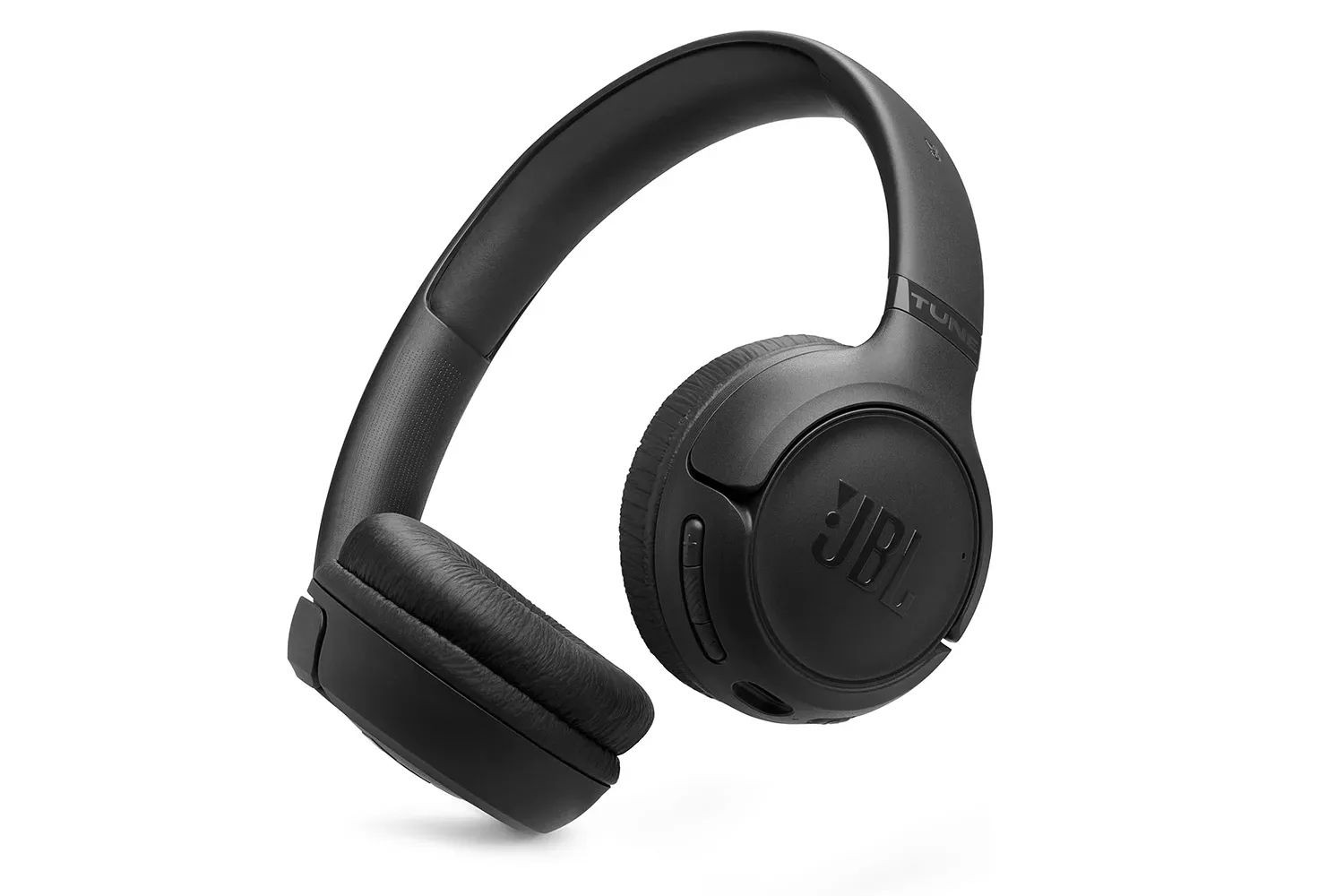
Cheap wireless headphones have traditionally been the backup controller of personal audio: useful when the main setup is charging, misplaced, or living dangerously at the bottom of a bag. JBL’s Tune 530BT makes a more persuasive case for the affordable second pair. The on-ear headphones have dropped to $40 at Amazon after a 33% reduction, their lowest listed price there in three months.
The notable part is not merely the number on the price tag. JBL positions the Tune 530BT with a claimed 76-hour battery life, Bluetooth 6.0, multipoint pairing, four beamforming microphones, folding earcups and controls through the JBL Headphones App. That is a substantial convenience-focused package for listeners who want one lightweight wireless headset for desk work, commuting, videos and casual music without paying for every premium feature in the catalogue.
There are important limits, though. The Tune 530BT is an on-ear model, not an over-ear design, and it does not claim active noise cancellation, a transparency mode or spatial audio. Those absences matter. The deal is best understood as a low-cost wireless headphone option built around endurance and everyday switching between devices, rather than an inexpensive substitute for feature-packed flagship headphones.
The headline feature is battery life
JBL’s claimed 76-hour figure is the specification that most changes the daily ownership experience. Battery estimates always depend on factors such as listening volume and connection use, so it is sensible to treat 76 hours as a manufacturer claim rather than a guaranteed real-world result. Even so, that stated capacity puts charging anxiety well down the priority list for the use cases these headphones target.
For a commuter or office worker, long endurance means the headphones can plausibly stay in a work bag rather than demanding a charging cable after every few sessions. It also makes them useful as a reserve pair beside earbuds: a set for longer listening, video playback, or calls when an in-ear design is not the preferred option. The Tune 530BT folds flat, reinforcing that portable, grab-and-go role.
There is a practical distinction worth making here. Long battery life does not improve sound on its own, and it cannot compensate for a fit that a buyer dislikes. But it is one of the few specifications that can reduce friction every single day. A headset that is ready when needed has value beyond a spec-sheet victory.
What Bluetooth 6.0 and multipoint actually mean
The Tune 530BT uses Bluetooth 6.0. In straightforward terms, Bluetooth is the short-range wireless connection carrying audio from a phone, computer or tablet to the headphones. JBL says this version provides lower latency than earlier Bluetooth generations. Latency is the delay between an action or video image and the audio reaching the listener. Lower delay is particularly useful for video, where poorly synchronized dialogue can become distracting.
That does not turn the Tune 530BT into a dedicated gaming headset, and no gaming-specific claims are attached to it. For ordinary video, however, a connection designed to reduce audio delay is a welcome part of an all-purpose listening setup.
Multipoint pairing is arguably the more immediately useful feature. It allows the headphones to remain connected to two devices at once. A listener could be watching something on a tablet or working from a computer while still retaining a live phone connection for an incoming call, without going through the nuisance of pairing again.
That is a small quality-of-life feature until somebody regularly moves between a laptop and phone. Then it becomes the difference between a headset that feels integrated into a routine and one that is constantly asking for attention. It is especially relevant for people splitting time among work calls, personal listening and portable devices.
Initial setup is also intended to be simple on supported systems: Google Fast Pair is listed for Android, while Microsoft Swift Pair is listed for Windows 10 and Windows 11. Both are designed to streamline discovery and pairing instead of requiring the user to hunt through a Bluetooth menu.
A bass-forward sound profile, with modest adjustment options
JBL fits the Tune 530BT with custom 33mm drivers tuned for its Pure Bass profile. A driver is the component in a headphone that produces sound. The 33mm measurement refers to its diameter, but it should not be taken as a standalone verdict on quality; tuning and overall implementation matter too.
The stated sound direction is bass-forward rather than flat or reference-oriented. In audio terms, a flat reference curve aims for a more even presentation across the frequency range. A bass-emphasized tuning instead gives more weight and impact to lower frequencies. That can suit pop, electronic music, action-heavy video and casual listening particularly well, while listeners seeking a highly neutral presentation may prefer something else.
The JBL Headphones App supplies three EQ presets. An equalizer, or EQ, changes the emphasis of selected frequency ranges. JBL’s Bass preset pushes further toward the low end, while the Vocal preset brings midrange frequencies forward. Midrange is where much of the presence of voices and many instruments sits, so a vocal-focused setting may be the sensible choice for podcasts, dialogue or music where singers should stand out more clearly.
Built-in voice prompts identify the selected mode. That is a minor feature with a real convenience benefit: it lets users know what setting is active without opening an app simply to check. The presets are not a claim of limitless sound customization, but they offer a practical way to make a bass-led default more suitable for different material.
Calls, comfort and the features buyers should not assume
JBL lists two beamforming microphones in each earcup for calls. Beamforming describes a microphone approach intended to concentrate on the speaker’s voice and reduce surrounding noise. It is relevant to call clarity, particularly when a listener is not in a perfectly quiet room. It should not be confused with active noise cancellation.
Active noise cancellation, often shortened to ANC, uses microphones and processing to counter external sound reaching the listener. The Tune 530BT does not claim that capability. Nor does it claim a transparency mode, a feature that deliberately feeds outside sound through the headphones so the wearer can hear their surroundings. Anyone shopping specifically for airplane noise reduction, a transparency mode for walking, or spatial audio should regard those as requirements that this model does not list.
The physical format matters as much as the omitted software features. On-ear headphones rest against the ears, rather than enclosing them as over-ear headphones do. JBL describes the Tune 530BT’s cushions and padded headband as designed for extended use, but fit and pressure are personal. Prospective buyers who know that on-ear designs become uncomfortable for them should not assume a low price will solve that preference.
Microphone-equipped headphones also sit in the wider conversation about how voice features and connected devices fit into personal privacy choices. The Tune 530BT’s listed microphones are relevant to calls, while device settings and services shape the broader data picture. For a useful example of why even small voice-related preferences deserve a second look, see this discussion of Apple’s Improve Siri & Dictation control.
Who the $40 Tune 530BT makes sense for
At its reduced price, the JBL Tune 530BT is most compelling for someone who values a dependable, portable wireless pair over premium isolation or an expansive feature list. Its claimed battery life, two-device connectivity, quick pairing support and fold-flat construction align well with work bags, travel bags and a simple home-office setup.
- A good fit: listeners who want very long claimed battery life, bass-forward music playback, basic EQ choices and the ability to stay connected to two devices.
- Worth considering as a backup: people who already own earbuds but want an on-ear alternative for calls, video or longer sessions.
- Less suitable: buyers whose priority is active noise cancellation, transparency mode, spatial audio, a neutral sound signature or the sealed feel of over-ear headphones.
The key is not to evaluate the Tune 530BT by features it does not advertise. Evaluate it by the unusually practical set it does: a $40 on-ear wireless design with a 76-hour claimed battery rating, multipoint Bluetooth connection, app presets, call-focused microphones and travel-friendly folding construction. For the right everyday use, that is a better proposition than the usual disposable-cheap-headphone stereotype.
As with any retailer reduction, the Amazon price can change. Buyers interested in the $40 listing should verify the current price and product details before ordering.
Shop the products
Check current price, model and availability at the retailer.