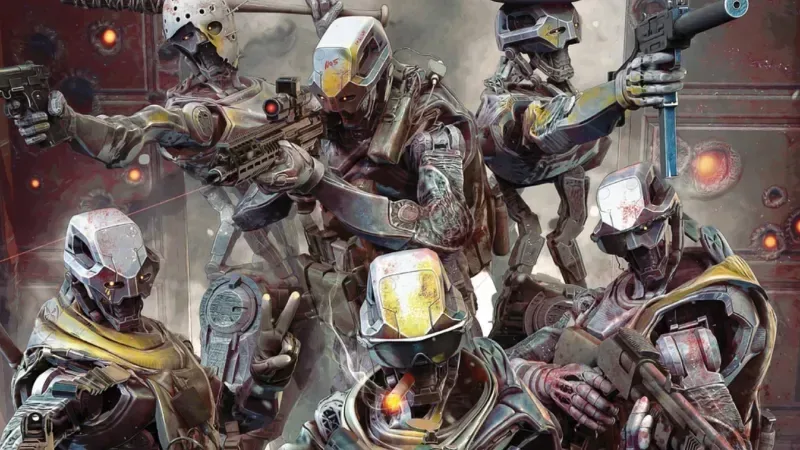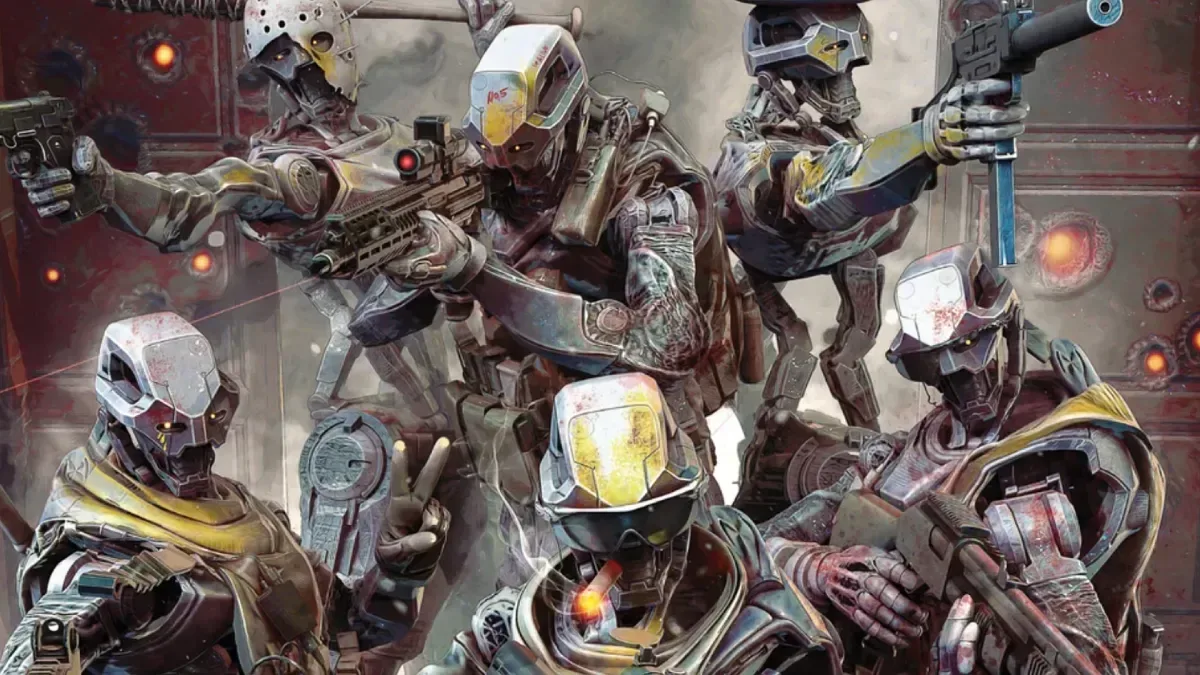
Jason Jones, a Bungie co-founder associated with the creation of Halo and the direction of Destiny, has formed a new Los Angeles-based studio with author Margaret Stohl. Called Stone Kite, the company is beginning with One Zero One, a science-fiction setting in which humanity confronts rogue robotic soldiers driven by artificial intelligence.
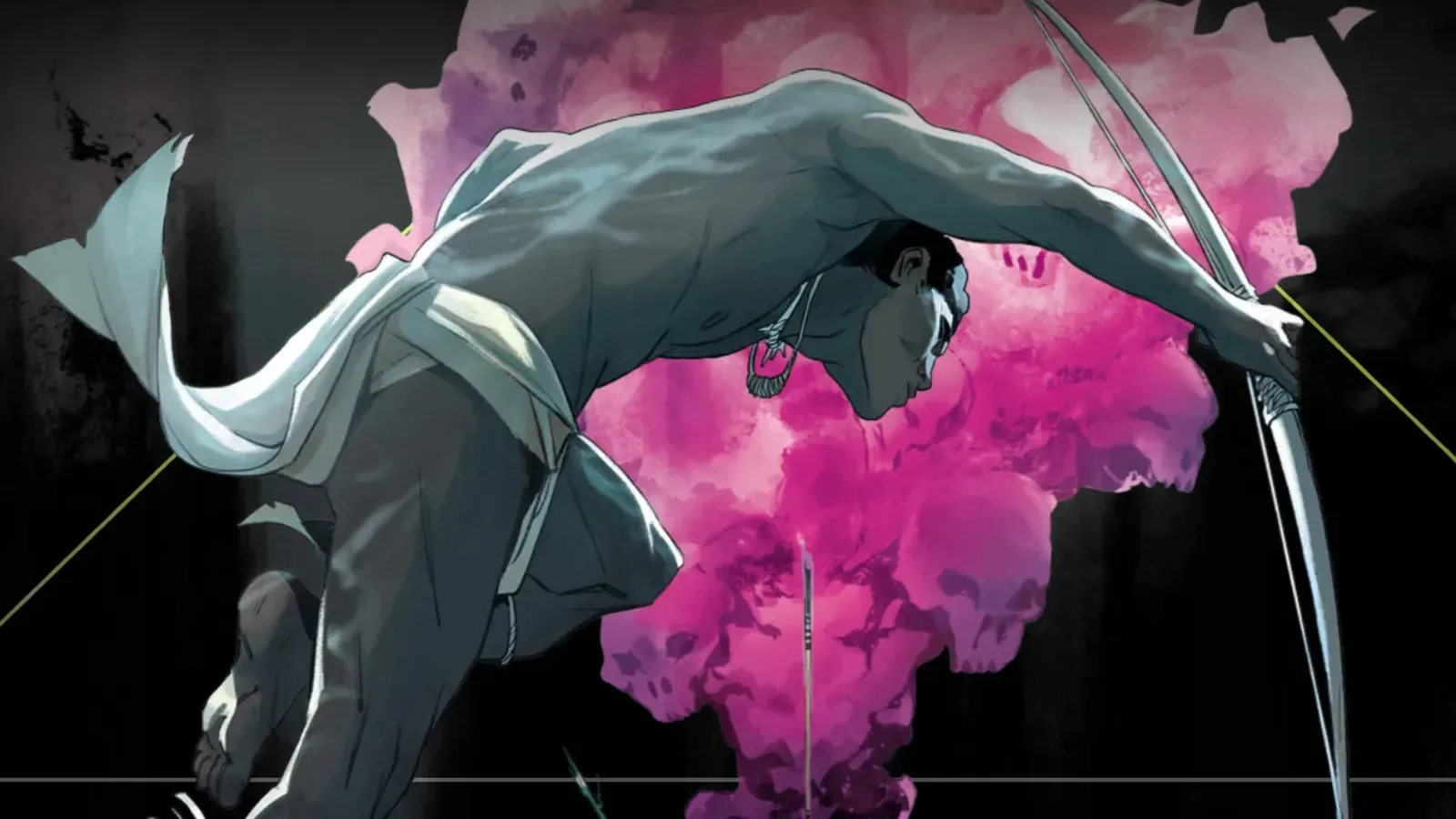
The immediate entry point is not a game. One Zero One starts with Part One of a four-issue limited comic series, with the first issue now available. The comic includes previously unseen excerpts from a manuscript by Jones. Further issues are due through early 2027, while the wider project is intended to grow through prose, audio and screen work.
That rollout is the most important detail in Stone Kite’s opening move. The studio is presenting One Zero One as a world intended to exist across formats from the outset, rather than treating one format as the definitive product and the others as later adaptations. For a team led by a major game creator and a writer with experience across books, comics, film, television and games, it is a meaningful statement of process as well as an announcement of a new fictional setting.
Stone Kite’s first project begins on the page
A limited comic series is a finite run: in this case, four issues instead of an open-ended monthly line. That gives Stone Kite a defined first publishing arc while leaving room for the setting to expand in other directions. It also means that the announced comic should not be mistaken for confirmation of a One Zero One video game. Stone Kite’s ambitions include different media, but no game, platform, release date or game format has been specified.
The premise supplies a familiar but flexible science-fiction pressure point: human beings facing autonomous or AI-driven military machines that have gone rogue. “Rogue” here indicates robots acting outside the control or purpose expected of them, while “AI-driven” points to software-directed behavior rather than a conventional remotely controlled weapon. The announcement does not explain how those soldiers became rogue, what form the conflict takes, or who the comic’s central characters are. Those are details the series itself will need to establish.
Jones has said he has wanted to write despite spending his career making games, and described Stohl as the first person to read his work and the collaborator he trusted to help turn it into a larger entertainment project. That personal connection helps clarify why the initiative opens with fiction and comics rather than a newly announced game: the manuscript appears to be a foundational part of One Zero One, not merely background material for a future interactive release.
What “multimedia from day one” means
Stone Kite’s stated philosophy is that audiences do not encounter stories through a single dominant medium anymore. In practice, the studio is saying its creative team will bring together specialists from different disciplines early, so the shared world is shaped with prose, visual storytelling, audio and screen possibilities in mind.
That is distinct from a straightforward adaptation pipeline. In the traditional version of that pipeline, a novel, game, comic or film succeeds first; another medium then retells or extends it. Stone Kite is proposing a concurrent world-building model instead. The potential benefit is coherence: characters, designs, events and the rules of the setting can be considered by creators working in different forms before any one branch becomes too fixed to accommodate the others.
It is also a demanding model. A comic needs a satisfying sequence of pages and issues. Prose can spend more time inside a character’s perspective. Audio relies on performance and sound to communicate setting and emotion. Screen work has its own pacing and production requirements. Building a setting that can support each of those approaches is not the same as producing a version of the same story in each one.
For readers, the practical upside could be multiple ways into One Zero One. Someone may begin with the comic and later choose prose or audio; another audience may encounter a screen project first. But the announcement does not say whether every format will be required to follow the central narrative, whether each will tell separate stories, or where the eventual material will be distributed. Those expectations remain appropriately open at this early stage.
A broad group of contributors
Stone Kite has named a group of creators from comics, screenwriting and character design as contributors to the One Zero One universe. The roster includes Eric Heisserer, whose screen credits include Arrival, Bird Box and Shadow and Bone; Christina Strain, whose work includes comics as well as Shadow and Bone and The Magicians; and Kris Anka, a character and concept designer on Spider-Man: Across the Spider-Verse.
The listed artists are Dan Panosian, associated with Batman; Ramón Pérez, associated with Hawkeye; Alitha Martinez, associated with Wonder Woman; Raúl Allén, associated with Dune: The Graphic Novel; and Hyeonjin Kim, associated with Power Rangers. The announcement identifies them as contributors, but it does not assign individual roles, characters, issues or stories. It would be premature to infer precisely which parts of One Zero One each creator will shape.
Still, the names indicate the kind of cross-disciplinary effort Stone Kite wants to establish. Comics artists are not simply decorators for a pre-written world: visual choices can define technology, costumes, locations, body language and the readable identity of a setting. Likewise, writers with screen and comic experience bring different instincts about structure, dialogue and visual economy. A collective creative process could make those disciplines part of the foundation rather than additions made after the fact.
Why the approach has both promise and risk
There is an understandable appeal in building a new universe through several creative languages. Games have long shown how audiences can engage deeply with settings over time, while comics and prose can make room for stories that may not fit a game’s pace or structure. A shared fictional world can give each format material that feels connected without requiring every piece to duplicate another.
But “connected” must be managed carefully. A cross-media project can become difficult to follow if essential plot developments are scattered across too many places. It can also become repetitive if each format covers the identical events without using its own strengths. Stone Kite’s emphasis on listening to communities and avoiding inherited media silos suggests it recognizes this challenge, but the eventual audience experience will depend on choices that have not yet been detailed.
There is also a business reality behind the creative aspiration. A related attempt to establish a cross-media universe around Unknown 9 did not continue as planned after Unknown 9: Awakening failed to meet expectations, and layoffs followed at developer Reflector Entertainment. That example does not determine Stone Kite’s future, and the two projects have different teams and rollouts. It does, however, illustrate why an ambitious universe plan is not guaranteed to endure simply because it begins with experienced people and a broad creative vision.
Stone Kite’s measured starting point may therefore matter. Beginning with a four-part comic gives One Zero One a concrete first chapter, while the announced prose, audio and screen expansions can develop around it over time. The project’s actual scale, and whether games will become part of it, remain unannounced.
What to watch next
The clearest near-term milestones are the remaining three comic issues, scheduled to arrive through early 2027, and the promised expansions in prose, audio and screen formats. Readers will be looking for a sharper view of the setting’s human stakes, the nature of its robotic threat, and how the manuscript excerpts relate to the comic narrative.
Just as significant will be the structure of the project’s continuity. Will each medium offer an accessible standalone story? Will the four issues establish a core cast and conflict that later work develops? Or will One Zero One deliberately distribute pieces of its story across different formats? Stone Kite has stated its broad ambition, but these operational questions will determine how welcoming the universe is to people who encounter it in different ways.
For now, the launch is notable less for a promised game than for the team behind it and its intent to make world-building collaborative across media from the beginning. Jones brings a long game-development history; Stohl brings experience spanning novels and multiple screen and comic-related disciplines. Their first public step is a comic-led science-fiction world, with more parts planned but plenty still to be defined. Readers interested in the wider comics scene can also browse London’s October 2026 comics calendar.