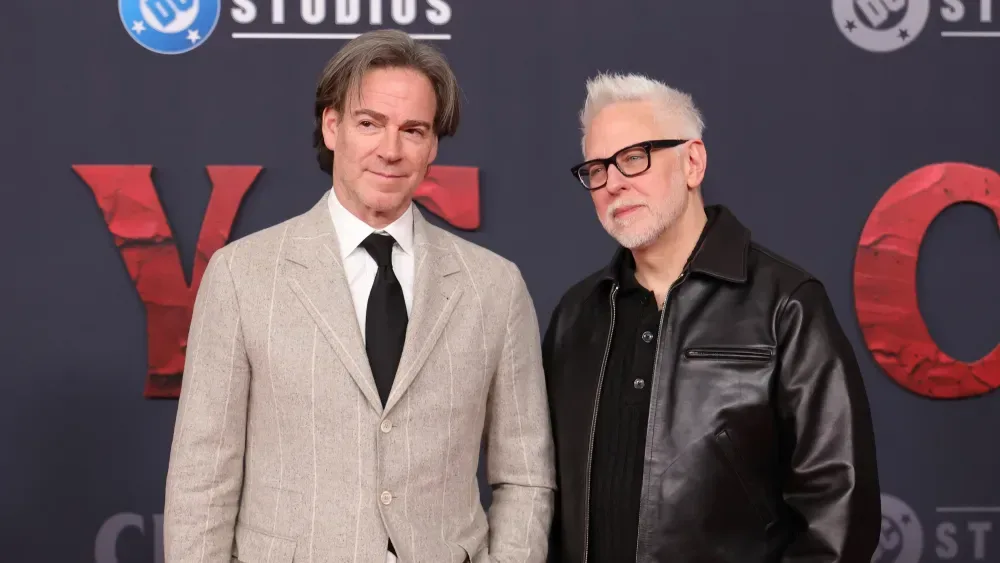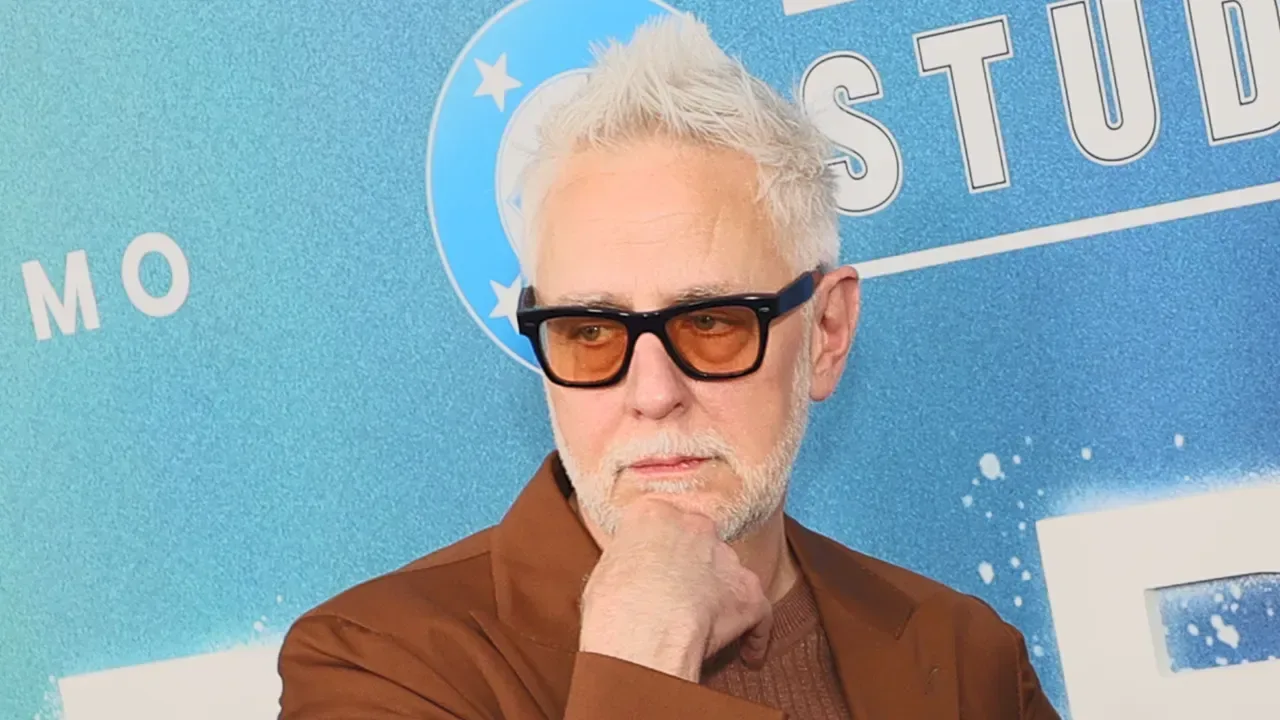
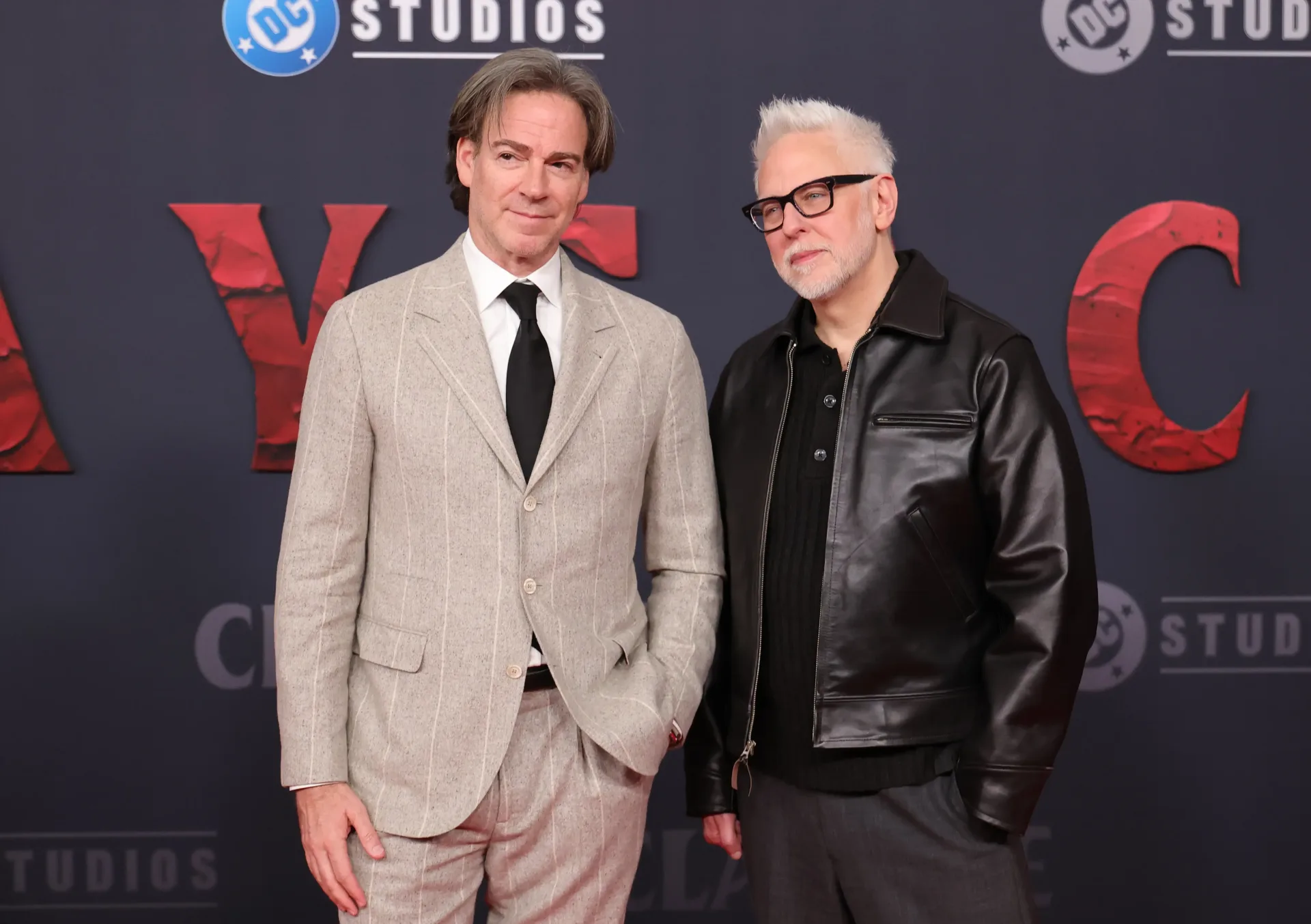
DC Studios is changing leadership again. James Gunn and Peter Safran are stepping down as the division’s co-CEOs and chairmen after four years in charge, and Jeremy Latcham will take over as president and chief creative officer.
The transition lands at an unusually consequential moment for the comic-book operation. Gunn and Safran were brought in during 2022 to consolidate DC’s screen ambitions under a single creative direction, a goal frequently compared with the interconnected Marvel Cinematic Universe model. Their tenure produced a new DC Universe launch, continued projects across film and streaming, and a mixture of commercial outcomes. Now, Latcham—whose career includes senior production and development work at Marvel Studios—will oversee DC’s film, television and animation slate.
For fans, the most immediate point is that this is a leadership change rather than a stated cancellation of the announced slate. Gunn is still set to write and direct Superman: Man of Tomorrow, due next summer, while The Batman: Part II, starring Robert Pattinson, remains listed for 2028. The 2027 series The People v. Gorilla Grodd is also still among DC’s television plans, with Skyler Gisondo returning as Jimmy Olsen and Jimmy Tatro playing Gorilla Grodd.
A leadership reset after four years of rebuilding
Gunn and Safran were appointed by then-Warner Bros. Discovery chief executive David Zaslav in 2022. Their mandate was ambitious: organize DC’s many famous heroes and villains into a clearer, more competitive screen brand. That assignment extended beyond producing individual movies. It meant setting a shared direction for theatrical releases, streaming series and animation while managing a catalogue that has long included both connected stories and stand-alone interpretations.
In studio language, a creative pipeline is the chain that moves a project from development through production and release: choosing material and filmmakers, refining scripts, assembling casts and crews, coordinating production, and maintaining a consistent strategy across titles. Latcham’s new remit covers that pipeline as well as production, talent and strategy. It is a broad role, particularly because DC’s output is spread across multiple formats rather than confined to a single run of films.
The departing executives described their work as an effort to place Superman back at the center of DC while opening room for projects including Peacemaker, Creature Commandos, Lanterns and Clayface. Their statement also stressed a collaborative handoff, noting their prior creative relationship with Latcham from their Marvel days.
That shared history may matter in practical terms. A change at the top can create uncertainty around works in development, especially when the outgoing leadership has been closely associated with the current creative plan. But the stated intention is for Gunn and Safran to help ensure continuity during the transition, rather than simply depart from the work in progress.
The scoreboard Gunn and Safran leave behind
DC’s recent results underline why a studio leadership story is rarely just about one opening weekend. The division’s slate has included films with sharply different budgets, tones and financial performances.
- Superman was a relative success, earning $618 million worldwide.
- Supergirl took in $126 million worldwide against a reported $170 million budget, making it the most difficult result in the group.
- Clayface, described as a darker R-rated body-horror thriller, earned $109 million worldwide on a $44 million budget and performed more modestly.
Those figures do not, by themselves, settle the health of a franchise. A production budget is not the same thing as a film’s total cost to a company, and box office gross is not the same as profit. The supplied figures also do not account for marketing, distribution arrangements, later viewing windows or revenue splits. What they do demonstrate is the difficult balancing act facing anyone charged with DC’s next phase: recognizable characters can yield very different outcomes depending on the project’s scale, positioning and audience response.
Clayface is especially illustrative of the range DC has pursued. A body-horror approach is a major tonal departure from a traditional all-ages superhero adventure, while an R rating narrows the potential audience compared with a broadly accessible release. Its $44 million reported budget also placed it in a different risk category from Supergirl. This is not proof that one type of DC film is inherently preferable to another; it is a reminder that the brand encompasses projects built for different audiences and cost structures.
DC also expanded its presence through HBO Max with Peacemaker and Lanterns. Streaming series cannot be evaluated using worldwide theatrical totals, so their role is different: they can deepen characters, keep an audience engaged between movies and establish parts of a fictional world at a longer-form pace. The new leadership will be responsible for connecting those distinct forms of storytelling without treating every project as though it must serve precisely the same purpose.
Why Jeremy Latcham’s background is notable
Latcham arrives with substantial experience in superhero filmmaking and franchise production. He joined Marvel Studios in 2004 and rose to senior vice president of production and development, working with Marvel Studios president and chief creative officer Kevin Feige during the launch of the MCU.
His credits include associate producer on Iron Man, co-producer on Iron Man 2, and executive producer on The Avengers, Guardians of the Galaxy, Avengers: Age of Ultron and Spider-Man: Homecoming. Those titles span foundational installments, team-up films and character-led stories, making his résumé directly relevant to the organizational demands of a major comic-book screen operation.
A producer’s credit can cover a wide range of responsibilities, and the supplied record does not assign Latcham authorship of individual creative choices within those films. Still, his experience is pertinent because DC’s top job calls for more than selecting stories. It combines development judgment with the practical work of getting large productions made, aligning talent and coordinating a release strategy.
After leaving Marvel in 2017, Latcham founded Latcham Pictures. The company held first-look arrangements with 20th Century Fox, Hasbro and Wonder Project, and produced Bad Times at the El Royale and Dungeons & Dragons: Honor Among Thieves. More recently, he had an overall deal at Hasbro Entertainment, where he was developing a Dungeons & Dragons sequel and an Action Man film, while also producing Lionsgate’s planned Naruto adaptation with director Destin Daniel Cretton.
That post-Marvel work is useful context because it points to experience outside one shared-universe system. A first-look deal generally gives a company the first opportunity to consider projects from a producer or production company; it is an industry business arrangement, not a guarantee that every proposed project will be made. An overall deal similarly describes a broader working relationship in which a producer develops material for a particular company. Both are indications of a producer’s development role, but neither tells audiences which specific projects will ultimately proceed.
What remains on DC’s calendar
Gunn’s continuing work on Superman: Man of Tomorrow is the clearest sign of continuity from the prior regime. He is writing and directing the film, which will continue the Clark and Lex storyline. Gunn and Safran said they were looking forward to returning full time to storytelling, and specifically referenced that next chapter.
The Batman: Part II occupies a separate place in the current slate as a 2028 release starring Pattinson. Meanwhile, The People v. Gorilla Grodd brings the focus to television in 2027 and centers on Gisondo’s Jimmy Olsen alongside Tatro’s Gorilla Grodd. Together with the established streaming projects, those plans show why Latcham’s responsibilities run across film, television and animation rather than one narrowly defined movie label.
It is worth separating announced projects from assumptions about their creative details. The leadership announcement confirms who will run the overall DC operation and identifies several forthcoming titles, but it does not specify changes to release dates, casts, scripts, continuity plans or new character projects beyond what has already been named. Fans looking for firm answers on those points will need to distinguish between confirmed plans and speculation generated by the executive change.
New reporting structure and the business context
Latcham will report to Dana Goldberg and Josh Greenstein, the co-chairs of Skydance Motion Picture Group. David Ellison and co-chief executive Ynon Kreiz credited Gunn and Safran with launching a new era for DC and leading it through a period of transformation, while Goldberg and Greenstein emphasized Latcham’s respect for DC’s fanbase.
The personnel move follows a broader corporate shift. Gunn and Safran had been named to Ellison’s business leadership team at the newly renamed Skydance after Paramount’s $111 billion acquisition of Warner Bros. Discovery closed in October. Their departure from the DC leadership posts was therefore unexpected, even as the public framing emphasizes collaboration and a smooth transition. For more on executive movement elsewhere in entertainment, see this look at a broader leadership reshuffle in the motion-picture business.
Latcham said he sees DC’s characters as central to American popular culture and framed the new post as a responsibility to both longtime followers and a new generation. That emphasis captures the core challenge ahead. DC is not one character, one tone or one audience. Its future slate has to make room for Superman’s centrality, Batman’s continued presence, streaming expansion, animation and more unusual genre experiments, while giving viewers a reason to believe the pieces belong to a deliberate larger strategy.
For now, the concrete takeaway is straightforward: Gunn and Safran are returning to creative work, Gunn remains attached to the next Superman film, and Latcham inherits responsibility for the whole screen operation. The next test will be how clearly that transition is reflected in the projects already on the calendar—and in the choices DC makes after them.