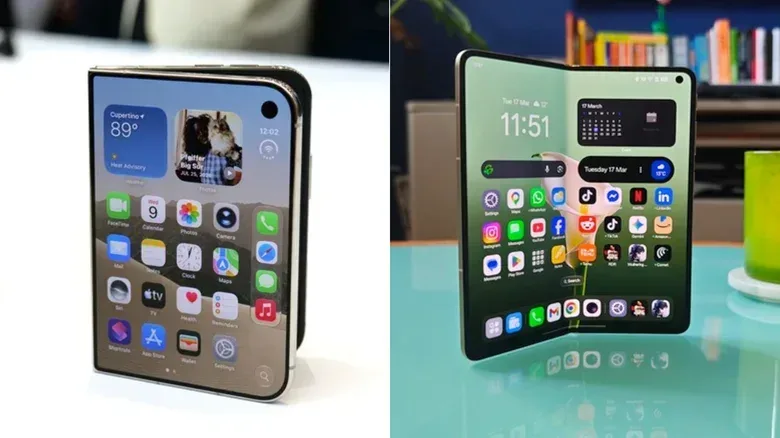
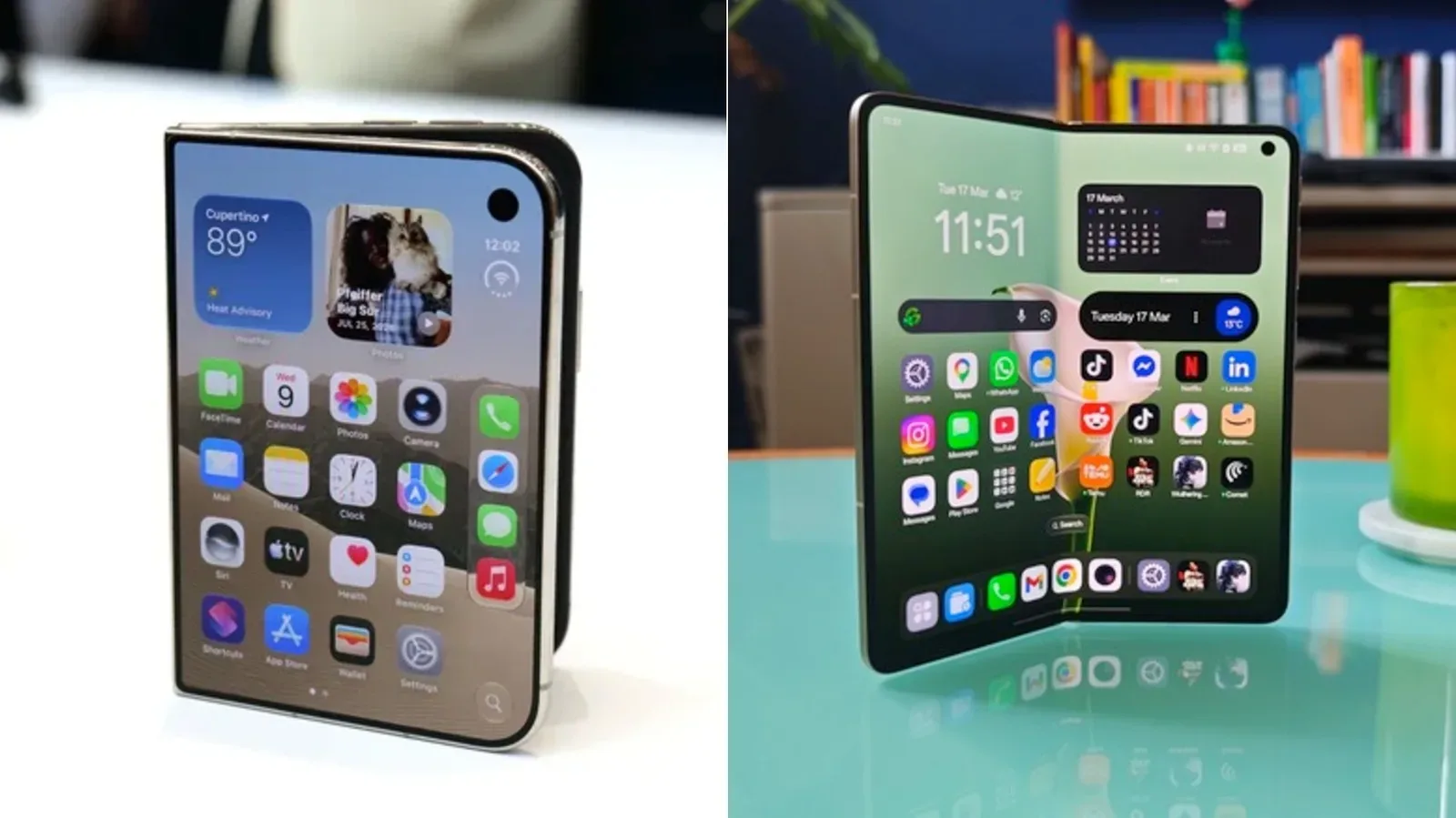
Book-style foldables all chase the same slightly ridiculous dream: carry a phone that can unfold into a small tablet without also carrying a small brick. Apple’s iPhone Duo and Oppo’s Find N6 pursue that goal with notably different compromises. The iPhone Duo emphasizes a compact outer screen, high-rated dust and water protection, and Apple-centric integration. Oppo’s Find N6 instead makes a case through a wider cover screen, a thinner and lighter body, a more expansive camera array, and unusually fast charging.
There is no clean spec-sheet winner, and that is more useful than it sounds. Foldables are intensely personal devices because the questions are practical: Is the cover display comfortable enough to use without unfolding? Does the open display suit video, documents, or split-screen work? Is the camera flexible enough for a trip? How much bulk is tolerable in a pocket or bag? The answer changes with the buyer.
The comparison also needs a major caveat. The iPhone Duo has limited real-world evidence available relative to a fully established device, and not every important characteristic—battery capacity, for example—has been disclosed. Claimed endurance, peak brightness and charging figures should therefore be treated as manufacturer targets rather than universal everyday results. Apps, signal conditions, display brightness, cameras and use of the large inner panel can all change battery life substantially.
Screen shape is the first real decision
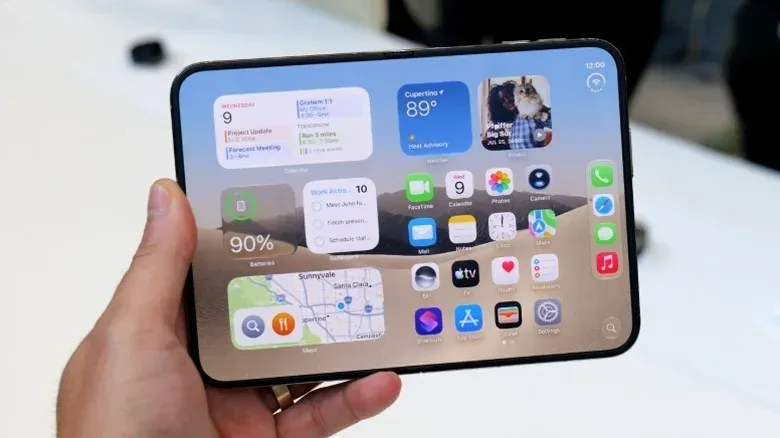
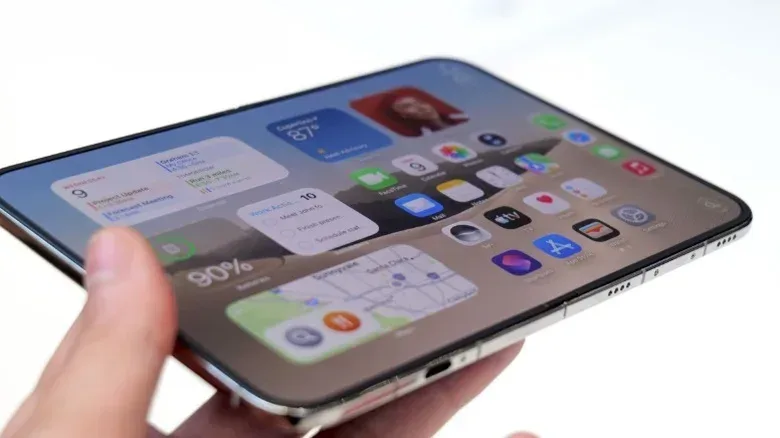
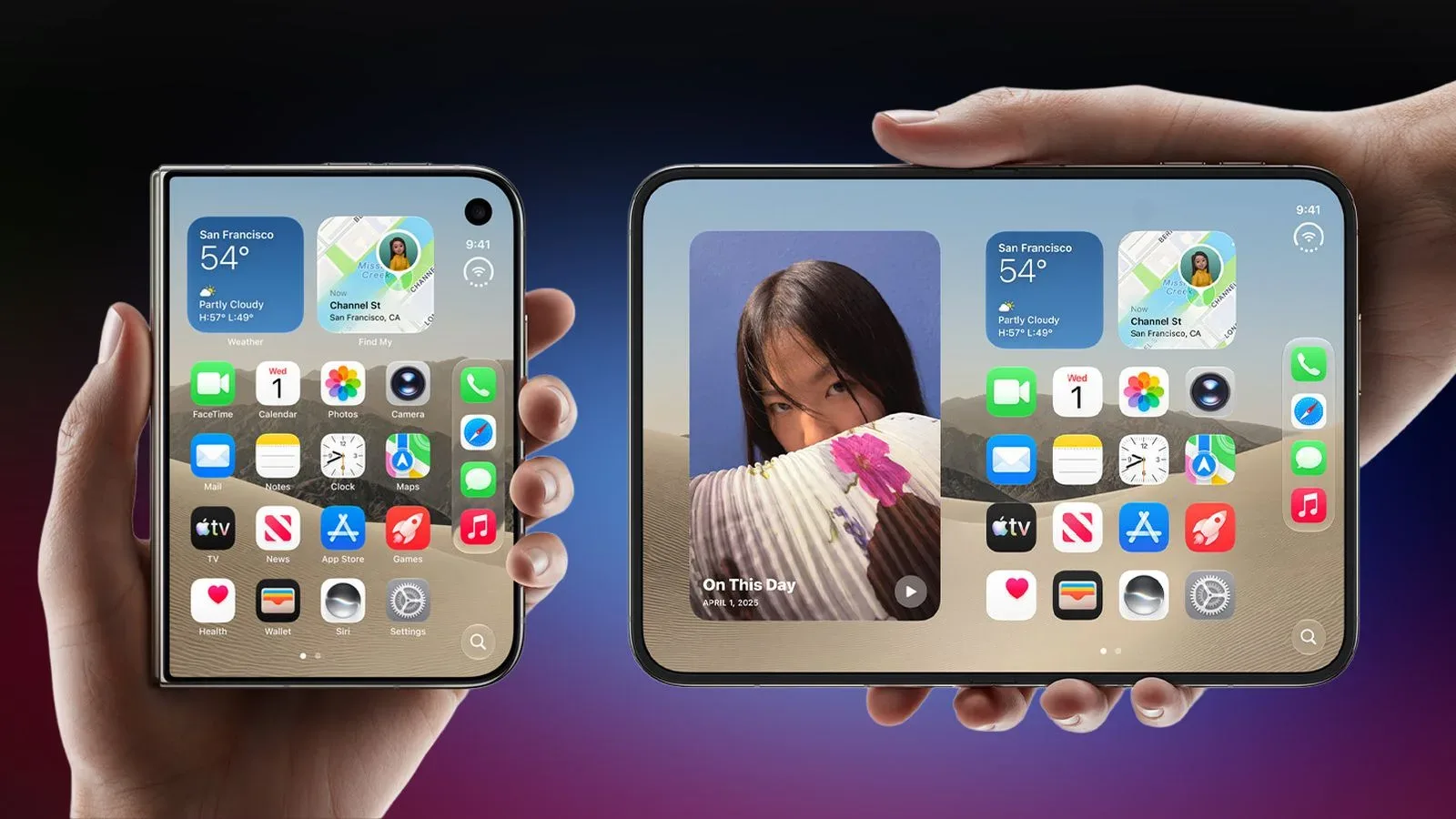
The iPhone Duo has a 5.4-inch outer OLED display and a 7.6-inch internal OLED panel. Apple lists a 120Hz ProMotion refresh rate, HDR10 and Dolby Vision support, plus up to 3,000 nits of peak brightness for the inside screen. Its two screens share a 1.4:1 aspect ratio.
Oppo takes the larger route. The Find N6 has a 6.62-inch cover display and an 8.12-inch inside display with a near-square 1.1:1 ratio when open. Both screens support 120Hz refresh rates. Oppo rates the cover panel at up to 3,600 nits peak brightness and the internal panel at up to 2,500 nits.
A 120Hz refresh rate means a screen can update its image up to 120 times per second. In plain terms, scrolling and interface motion can look smoother than at 60Hz, although the benefit depends on the software, content and power-management behavior. Peak brightness is a maximum figure measured under particular conditions, not a promise that a display will sit at that level throughout normal use. Still, the stated numbers suggest both are built to remain usable in bright environments.
The more consequential distinction is geometry. Apple’s matching 1.4:1 proportions are intended to make the outer screen and unfolded screen feel like variations of the same shape. That could appeal to someone who wants a familiar, tall phone-like layout closed, then a larger canvas for media or two apps side by side when opened.
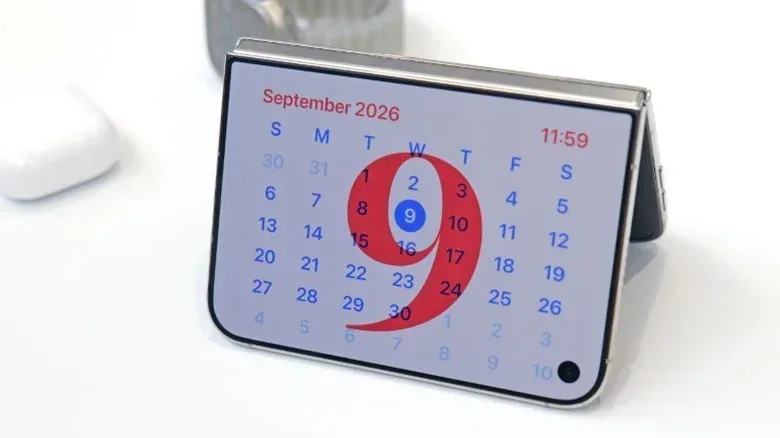
Oppo’s squarer inner panel is closer to a miniature book or tablet. That shape may better suit reading, browsing, documents and layouts where vertical and horizontal space are equally valuable. Its 6.62-inch outer display also gives the Find N6 a much larger closed-screen workspace than the iPhone Duo’s 5.4-inch panel. For people who expect to spend most of their time using the device folded, that difference may outweigh the larger internal screen.
Related coverage includes iPhone Duo vs. Oppo Find N6: Foldable Specs, Cameras, Battery and Price Compared.
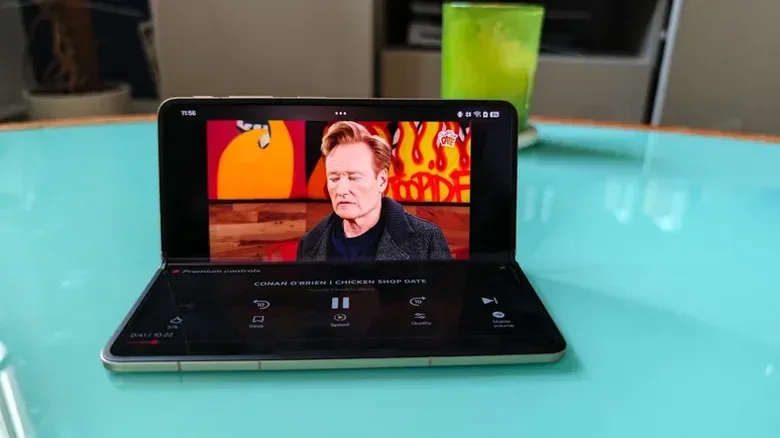
Both devices support tent and tabletop positions. These are partly practical and partly a welcome excuse to make a phone stand up on its own: the hinge can hold the device at an angle for video calls, streamed video, or a camera setup without a separate stand. The value is simple, but it is one of the clearest ways a foldable can offer something a conventional slab phone cannot.
Thinness versus stronger ingress protection
On the dimensions provided, the Find N6 is the easier device to carry. Oppo lists it at 0.35 inches thick when folded and 7.94 ounces. The iPhone Duo measures 0.44 inches folded, 0.21 inches unfolded and weighs 8.96 ounces. The roughly one-ounce weight gap will not decide every purchase, but it can matter on a device that is held one-handed, read in bed, and carried all day.
The 0.09-inch folded thickness difference is arguably more meaningful than it first appears. Foldables have two halves, so their closed thickness is the dimension a pocket, purse or hand encounters most often. A thinner device can feel substantially less cumbersome even when its open-screen dimensions are generous.
Apple counters with a much stronger stated resistance rating. The iPhone Duo is rated IP68, including dust resistance and immersion up to 19.7 feet for 30 minutes. The Find N6 carries IP56, IP58 and IP59 certifications, covering dust protection, resistance to powerful water jets, and submersion up to 4.9 feet for 30 minutes.
IP ratings are standardized shorthand for a device’s resistance to ingress—unwanted dust or water getting inside. They are not an invitation to casually treat any phone as diving equipment, but they do indicate different risk tolerances. The Duo’s stated rating is the more reassuring proposition for someone frequently exposed to dust, spills, rain or a deeper accidental dunk. Oppo’s mix of ratings remains substantial protection, particularly against jets of water and shallower immersion, but it does not match Apple’s quoted depth.
The key trade-off is unusually clear: the Find N6 prioritizes a svelte folded body; the iPhone Duo prioritizes a higher stated level of environmental resilience. Neither direction is inherently wrong. A buyer who rarely goes near water may notice thickness every hour and the rating almost never. Someone who works outdoors, travels frequently, or simply distrusts their own grip may reasonably choose the sturdier-looking option.
The crease is reduced, not defeated
Every folding OLED must bend in the same region repeatedly, so the center crease remains a core piece of foldable engineering. Oppo uses what it calls a Titanium Flexion Hinge and cites hinge-height variation of 0.002 inches. Its “zero-feel crease” language refers to the crease being difficult to notice in normal use, not to a physically nonexistent fold line.
Apple’s hinge contains more than 100 components designed to control how the Duo opens and closes. The resulting crease is described as very faint, though it can still be felt. That is the honest state of the category: less visible and less intrusive is achievable; total invisibility is not established here.
This is not a minor detail to dismiss in a store. Some people barely register a crease after a short adjustment period. Others will see it whenever a bright page, pale video scene or reflected light crosses the center of the internal display. Prospective owners should treat it as a design characteristic rather than a defect automatically erased by marketing language.
Oppo brings the more versatile camera hardware
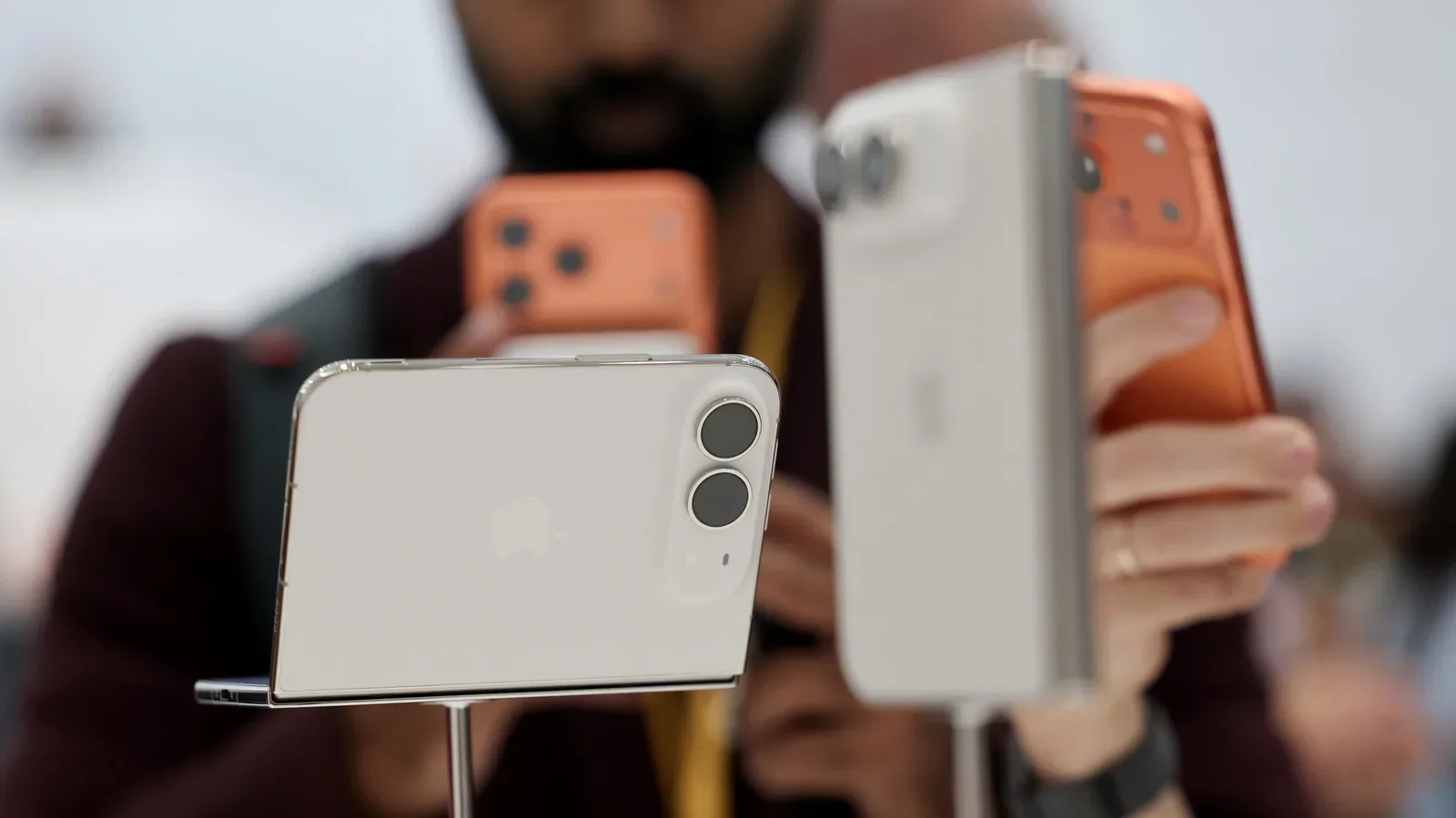
The iPhone Duo uses two rear 48MP cameras: a Fusion Main and Fusion Ultra Wide. It also includes Duo Preview, which allows a subject to see a live view on the exterior display while the rear cameras are used. That is a genuinely foldable-specific convenience for portraits, group images and self-framing with the higher-grade rear cameras.
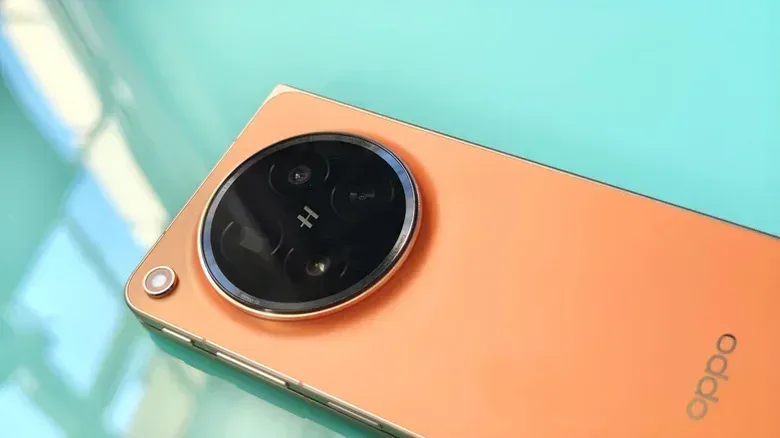
The Find N6 takes the traditional three-camera flagship route: a 200MP Hasselblad-branded main camera, a 50MP ultrawide, and a 50MP periscope telephoto with 3x optical zoom. The telephoto can also focus as close as 3.94 inches for tele-macro shooting. All three rear cameras support 4K video at up to 60 frames per second in Dolby Vision, while the main camera can reach 120fps.
A periscope telephoto uses a folded optical path inside the phone, allowing a longer focal length than a more conventional camera module can usually fit. Optical zoom means the lens itself changes the field of view; it is different from simply cropping into a main-camera image. That makes the Find N6’s 3x option the clear hardware advantage for distant subjects, travel details and portraits that benefit from a tighter perspective.
Megapixels deserve a little skepticism. A 200MP sensor can capture a great deal of information, but image quality also relies on lens quality, sensor size, processing, exposure, autofocus and conditions. The number alone cannot establish a winner. What it does establish is Oppo’s broader set of shooting options: ultrawide, main and dedicated telephoto coverage versus Apple’s main and ultrawide pair.
For people who rarely use zoom beyond casual cropping, the Duo’s dual-camera arrangement may be sufficient, and Duo Preview provides an especially useful framing tool. For buyers who specifically want optical reach and close focusing, the Find N6 has the more complete stated camera package.
Battery claims need context, while charging is a firm divider
Oppo fits a 6,000mAh battery in the Find N6. It supports 80W wired SuperVOOC charging and 50W wireless AirVOOC charging, both Oppo proprietary charging systems. Its claims include about 26 hours of video playback and 25.8 hours of social-media browsing on the larger display.
Apple has not provided a total capacity for the iPhone Duo battery. Its stated estimates are up to 31 hours of video playback on the internal display and up to 44 hours on the outer display. Wired charging is claimed to reach 50% in about 20 minutes.
Battery capacity, measured in milliamp-hours (mAh), is useful context but not a direct endurance score. The phone’s chipset, display size and brightness, refresh rate, software behavior and network use all affect how long it lasts. Playback tests and social browsing tests also represent different workloads, so the quoted figures should not be converted into a simplistic head-to-head victory.
Charging capability is easier to interpret. Oppo’s 80W wired and 50W wireless figures suggest the Find N6 is tailored for aggressive top-ups, although compatible proprietary equipment is relevant to reaching those maximums. Apple’s 50% in roughly 20 minutes is also a meaningful quick-charge target. The better fit comes down to routine: the Oppo has the stronger stated charging specification, while Apple quotes the longer video-playback totals.
Foldables can also serve as compact, flexible entertainment screens in a desktop setup. Someone repurposing an older handset for sound output may find this related guide useful: turn an old Android phone into a temporary PC speaker with AudioRelay.
Price, storage and regional availability change the equation
iPhone Duo sales began October 23 in more than 70 countries. It starts at $1,999 for 256GB and rises to $3,199 for a 2TB version. Available colors are Star White and Night Sky. That is premium pricing even within a premium category, and storage choice creates an enormous spread in the total cost.
The Find N6 has been available since spring 2026 but has not launched in the United States. Its Chinese launch configuration with 12GB of RAM and 256GB of storage costs ¥9,999, described as roughly $1,490. Global versions have been listed by some shops at $1,729.99 in Blossom Orange or Stellar Titanium.
That lower listed price comes with an important practical limitation: acquiring a device outside its official US launch market may require workarounds. Buyers should account for that situation before treating the price gap as the entire story. The Duo is positioned for official availability across many countries; the Find N6 is less straightforward in the US despite its attractive specifications and lower listed global-shop price.
Which set of compromises makes sense?
The iPhone Duo is the paper choice for a buyer who places a high value on IP68 protection, Apple ecosystem integration, a consistent display shape across open and closed use, and Apple’s claimed video endurance. It is also the more natural route for someone who wants broad official availability in supported markets and sees the outer display primarily as a quick-use screen rather than a full-sized phone screen.
The Oppo Find N6 is the paper choice for someone who wants the thinnest and lightest package listed here, a more spacious cover screen, a near-square internal workspace, dedicated 3x telephoto capability, and very fast wired and wireless charging. Its price can be lower, but the US availability situation is a real consideration rather than a footnote.
Neither phone makes the crease disappear, neither is inexpensive, and each asks buyers to pick priorities rather than accept a perfect all-in-one device. That is ultimately the useful distinction. Apple has aimed for ruggedness and continuity within its device ecosystem. Oppo has aimed for portability, camera range and charging speed. The foldable that belongs in a pocket is the one whose compromises will be least noticeable after the novelty of opening it wears off.