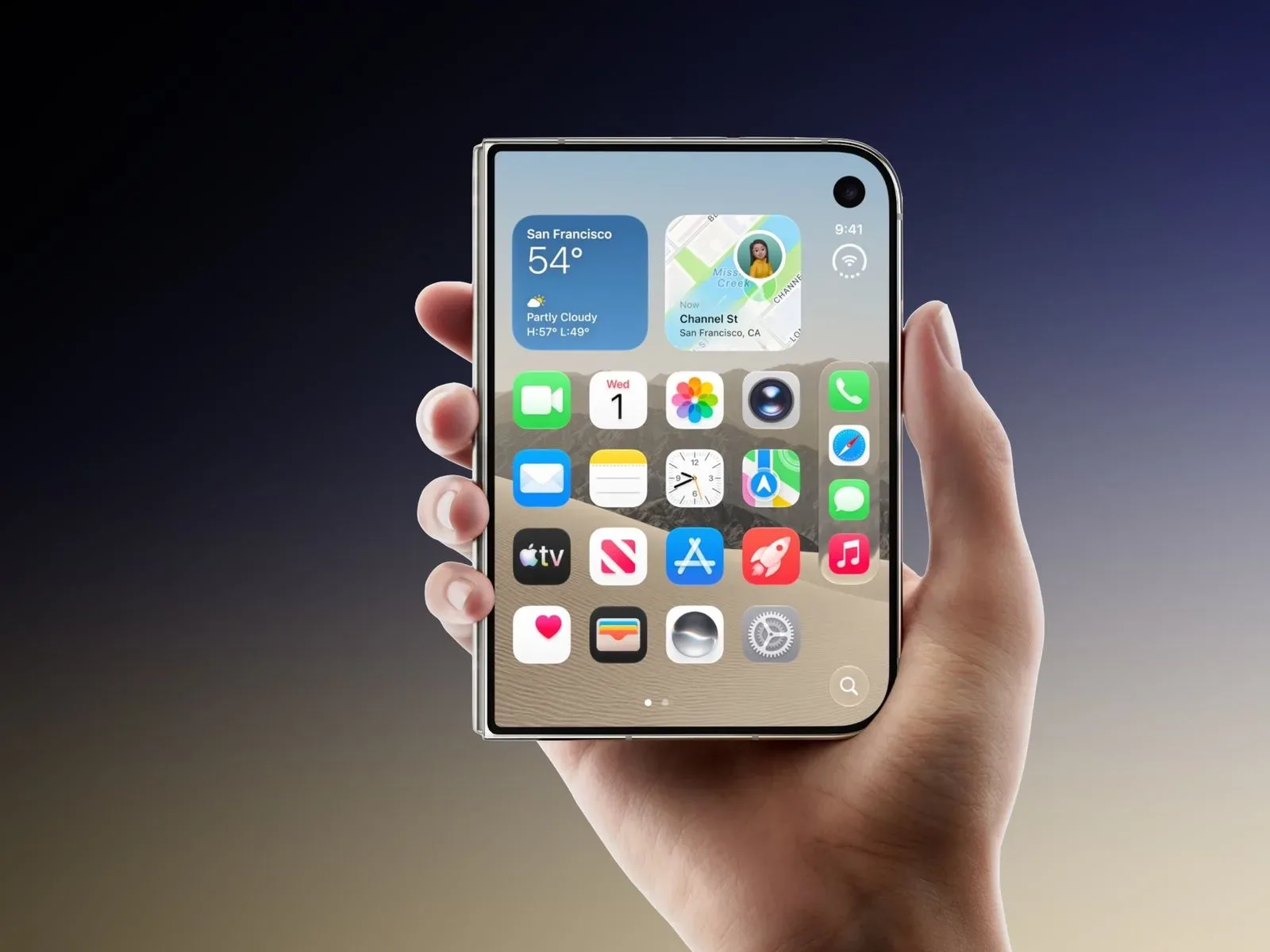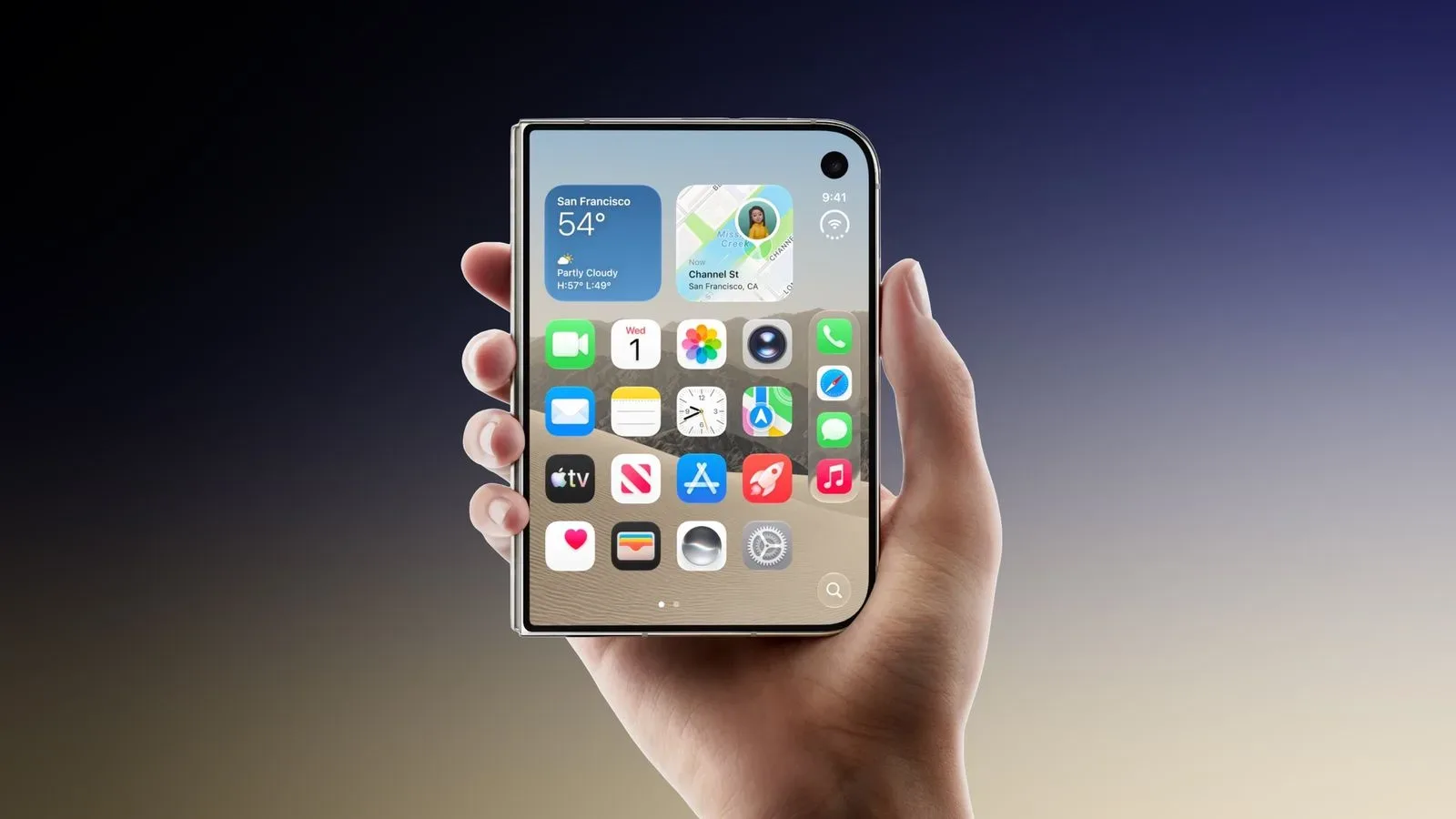
Apple’s iPhone Duo has reached launch day, and the early bargains are arriving in the familiar modern-phone formation: a potentially enormous carrier credit in one lane, a modest accessory bundle discount in another, and enough qualification language to make a player pause before hitting “accept.” AT&T and T-Mobile are advertising up to $1,200 off an iPhone Duo with an eligible trade-in and one of their qualifying plans.
That “up to” matters. The stated maximum is not a universal cash reduction from the phone’s price. It is tied to the model and condition of the traded device, as well as plan eligibility. Anyone sizing up the iPhone Duo deal should treat the headline as a ceiling, then confirm the actual value offered for their particular trade-in and the requirements of the service plan before regarding it as a $1,200 win.
The launch also comes with a smaller but more straightforward option for people who need protection immediately. ZAGG is offering 20% off an order containing two or more items, including iPhone Duo cases and screen protectors. Meanwhile, the week’s wider hardware list includes reduced prices on an M5 Max Mac Studio, two Mac mini configurations, and a 16-inch M5 Max MacBook Pro.
Carrier savings can be substantial, but eligibility is the actual deal
AT&T and T-Mobile each list offers of up to $1,200 off the iPhone Duo when shoppers trade in an eligible device and enroll through a qualifying plan. Trade-in promotions are a common way for carriers to reduce the apparent upfront cost of a new handset: the customer provides an older phone that meets the promotion’s conditions, while the carrier applies its advertised benefit under the deal’s terms.
For prospective buyers, the useful distinction is between maximum promotional value and the value available to them. An eligible trade-in is one that satisfies the carrier’s requirements, while a qualifying plan is a service plan approved for the promotion. The supplied deal information does not specify which older phones, condition grades, plan tiers, installment arrangements, or other criteria unlock the full $1,200. Those details are therefore essential checkout reading rather than trivia for the fine-print speedrun.
A practical pre-purchase checklist
- Confirm the trade-in value attached to the exact phone being surrendered.
- Check that the intended carrier plan qualifies for the promotion.
- Read the offer terms to understand how the discount is applied.
- Separate the value of the hardware promotion from the ongoing cost and suitability of the service plan.
- Compare the final arrangement with buying the device without a carrier promotion if flexibility is a priority.
This is not an argument against the promotion. A trade-in offer can be meaningful for someone who already wants the relevant service plan and has a device that receives strong value. It is simply a reminder that a big headline number describes the best possible branch of the decision tree, not necessarily every shopper’s result.
Bundle a case and screen protection for the clear accessory discount
New-phone protection is often the first add-on purchase, and the iPhone Duo already has a broad field of case and screen-protector sellers. Brands named in the current retail listings include OtterBox, Speck, ZAGG/Mophie, Spigen, dbrand, Kate Spade, Case-Mate, ESR, Nomad and Burton Goods.
Among the offers described here, ZAGG’s is the most explicit: buy any two items and receive 20% off the order. That includes iPhone Duo cases and screen protectors, making a case-plus-protector pairing the obvious use case. A shopper who was going to buy both anyway gets a defined discount without needing to infer one from a broad retailer sale page.
Other stores and brands have iPhone Duo options listed, but most are not yet described as running discounts on cases. Availability is not the same thing as a sale, a distinction especially useful when new-device accessories begin appearing all at once and every product page feels like a side quest with a checkout button.
Where iPhone Duo accessories are listed
- Amazon: Cases from Spigen, Speck, ZAGG and other brands.
- AT&T: Deals on cases and screen protectors from Speck, Spigen and more.
- Best Buy: Cases from dbrand, OtterBox, Spigen, Kate Spade and others.
- Burton Goods: Leather iPhone Duo cases.
- ESR: A Silicone Leather case with Flex Stand.
- Nomad: Leather Folio cases.
- OtterBox: Defender cases.
- Speck: Presidio cases.
- Target: Cases from ZAGG, Case-Mate and Kate Spade.
- ZAGG: 20% off when purchasing two items, including cases and screen protectors.
There is no supplied evidence here to rank these cases by protection, materials, fit, or durability. The sensible route is to choose the form factor first—such as a folio, leather design, stand-equipped case, or more protective style—then compare the exact seller terms. If purchasing a case and screen protector together, the ZAGG promotion is the clearly stated percentage saving in this launch roundup.
Mac discounts: configurations matter more than product-family labels
The accompanying desktop and laptop discounts are highly configuration-specific. That is important because names such as “Mac mini” and “MacBook Pro” describe product lines, while RAM and SSD capacity describe the included memory and storage in the particular machine. Two computers with the same family name can be materially different purchases depending on those specifications.
The M5 Max Mac Studio configuration with 36GB of RAM and a 512GB SSD is listed at $2,299, down from $2,499. That is a $200 reduction. RAM, or random-access memory, is the working memory used while software is running; an SSD, or solid-state drive, is the internal storage for files and applications. The information available does not make claims about performance, so the decision should begin with whether the stated memory and storage fit the buyer’s own workload and file needs.
Two Mac mini deals are also available:
- The 16GB RAM/256GB SSD Mac mini is $779.99, reduced from $899, a savings of $119.01.
- The 16GB RAM/512GB SSD Mac mini is $949.99, reduced from $1,099, a savings of $149.01.
Both Mac mini options carry 16GB of RAM, but the second doubles SSD capacity from 256GB to 512GB. That makes this less a contest over memory and more a storage decision. Buyers should compare the extra $170 against how much local storage they expect to use, rather than assuming that a higher-capacity model is automatically the better bargain for every desk.
The largest stated dollar cut belongs to the 16-inch M5 Max MacBook Pro with 36GB of RAM and a 2TB SSD. It is now $3,499, down $900. The configuration and price place it in a distinct category from the Mac mini deals: a 16-inch laptop with substantially more listed storage and a higher overall cost. The $900 reduction is described as the steepest currently available for a 16-inch model, as well as one of the standout 2026 MacBook Pro deals so far.
Samsung’s event expands the week’s screen shopping
Apple products are not the only hardware in the sale rotation. Samsung has started an event called Samsung Week, covering multiple categories including monitors and TVs. Several The Frame TV models are reduced, including low prices on the latest 2026 models.
Exact TV models and prices are not included in the available details, so this is a category-level signal rather than a recommendation of a particular screen. Buyers should verify the size, model year, and price of any individual The Frame TV before comparing it with other offers. “The Frame” is a product family name, not enough on its own to identify a single television or its sale value.
The practical theme across this week’s deals is specificity. The iPhone Duo carrier headline hinges on trade-in and plan eligibility; the accessory promotion hinges on buying at least two ZAGG items; and the Mac savings apply to clearly named RAM and storage configurations. Shoppers who match every advertised number to the exact device, configuration, and conditions in their cart stand the best chance of avoiding an expensive surprise at the final boss: checkout.
Portable-tech shoppers exploring alternatives beyond phones may also want to see the details around the AYN Odin 3 Portal’s four storage tiers, another reminder that configuration names and capacities can shape a purchase as much as the product label itself.
Shop the products
Check current price, model and availability at the retailer.