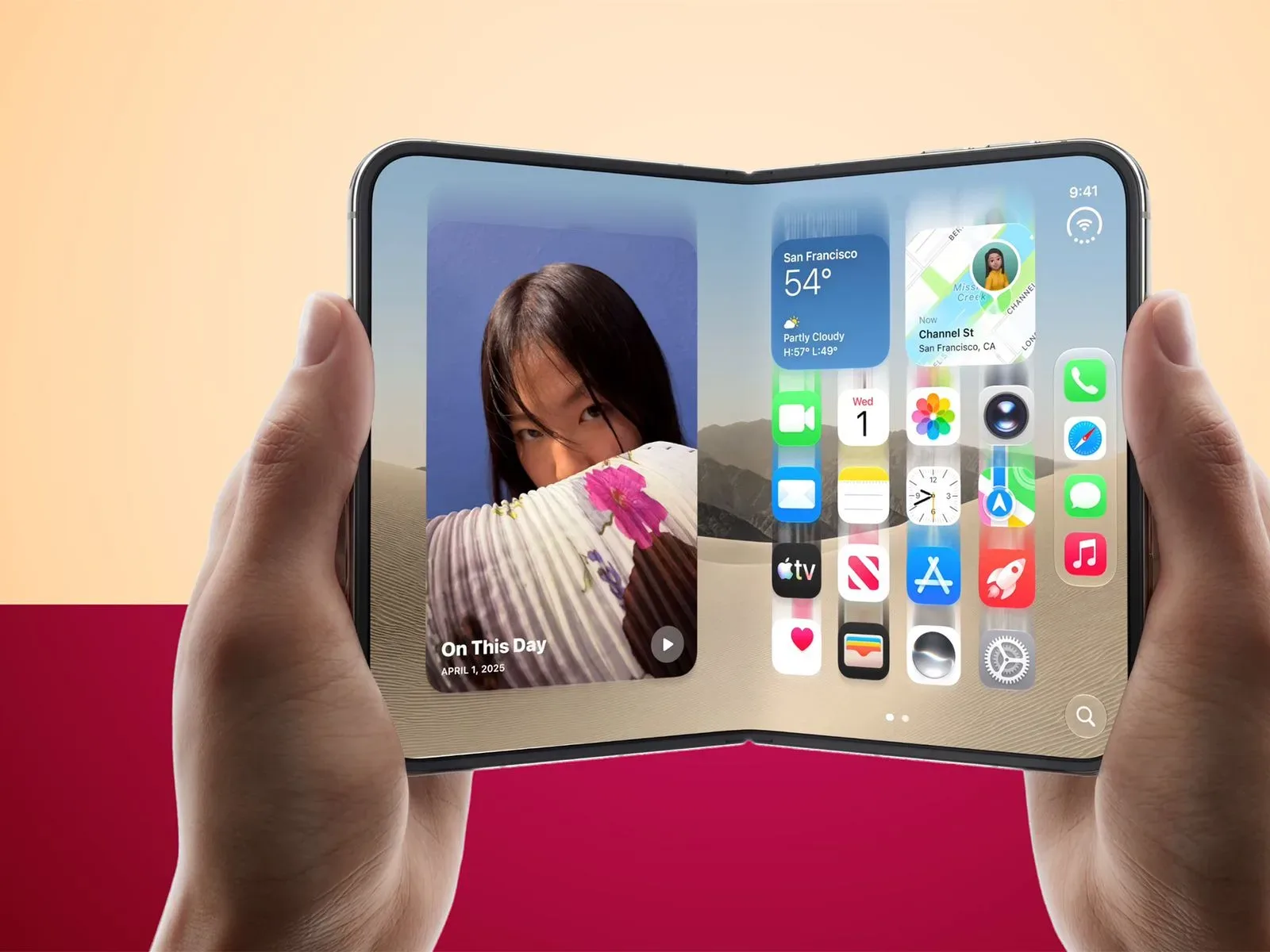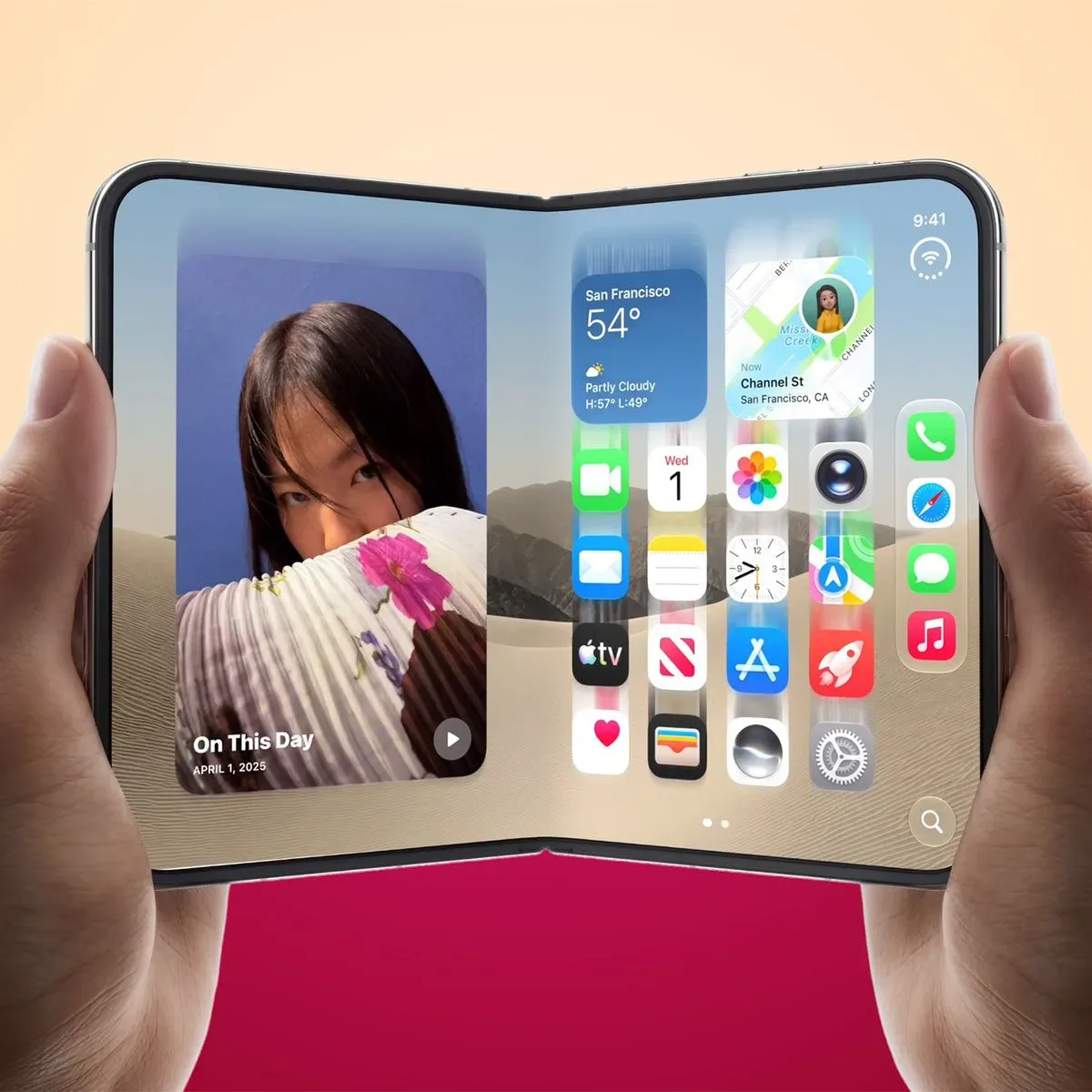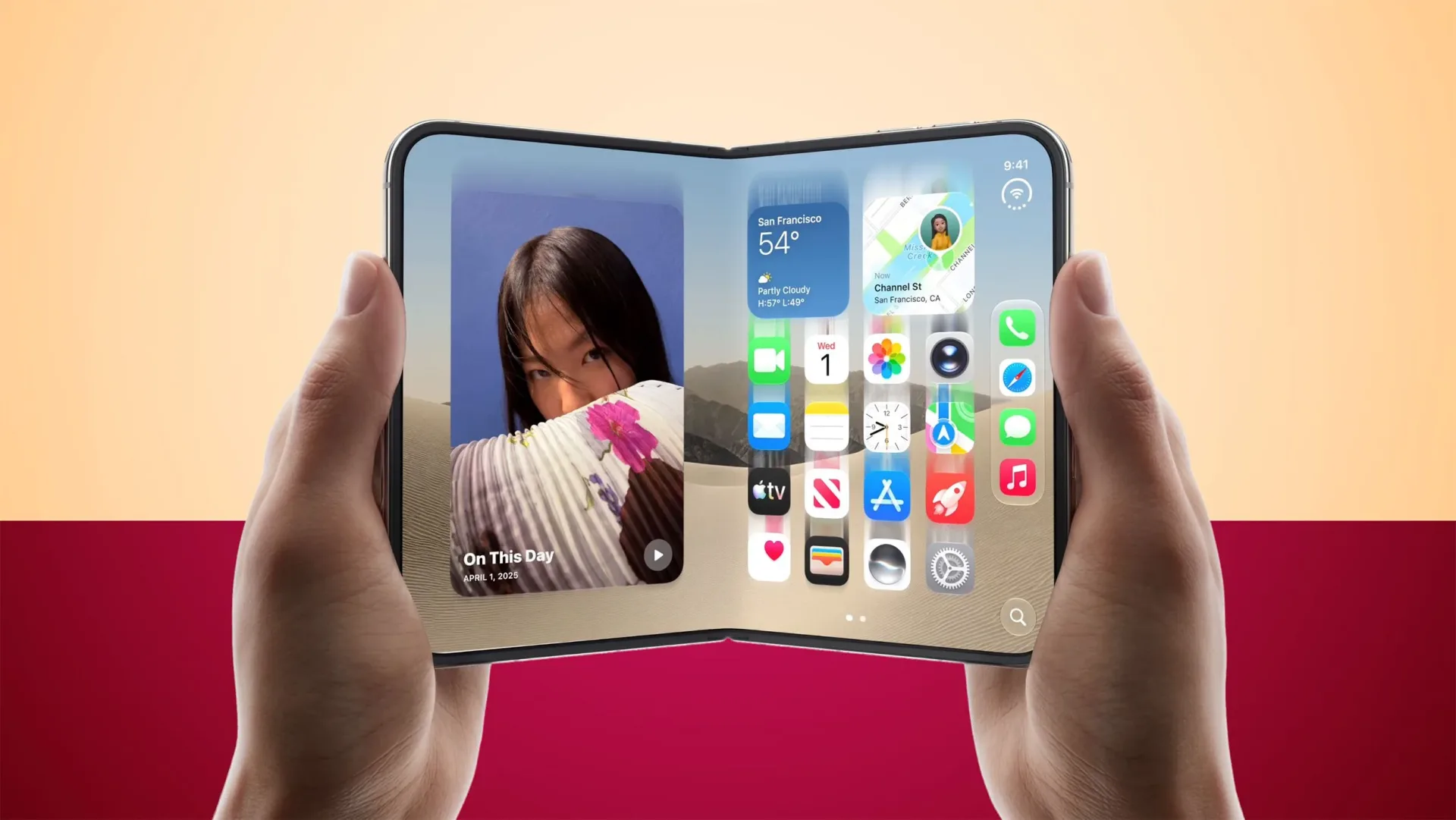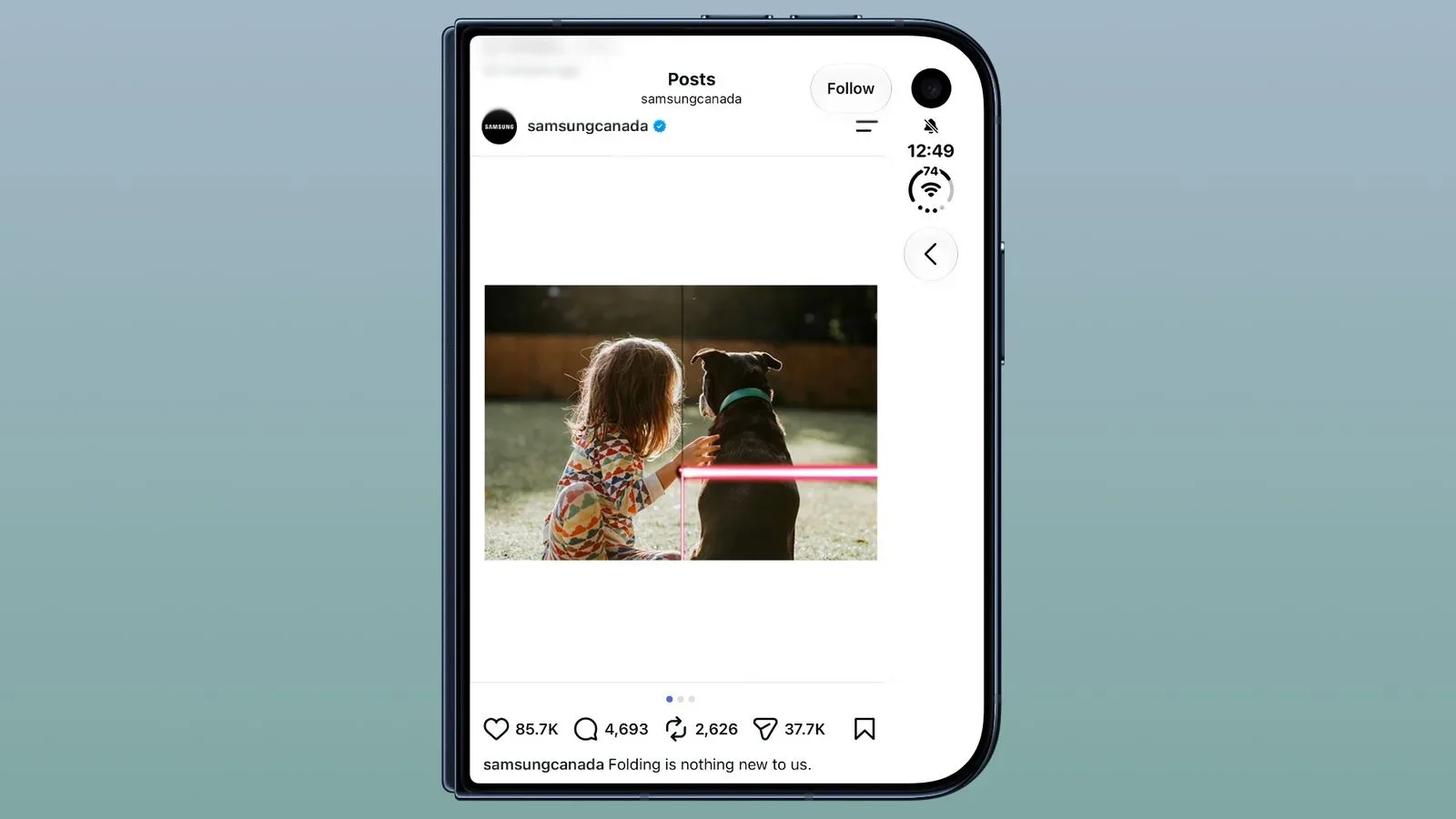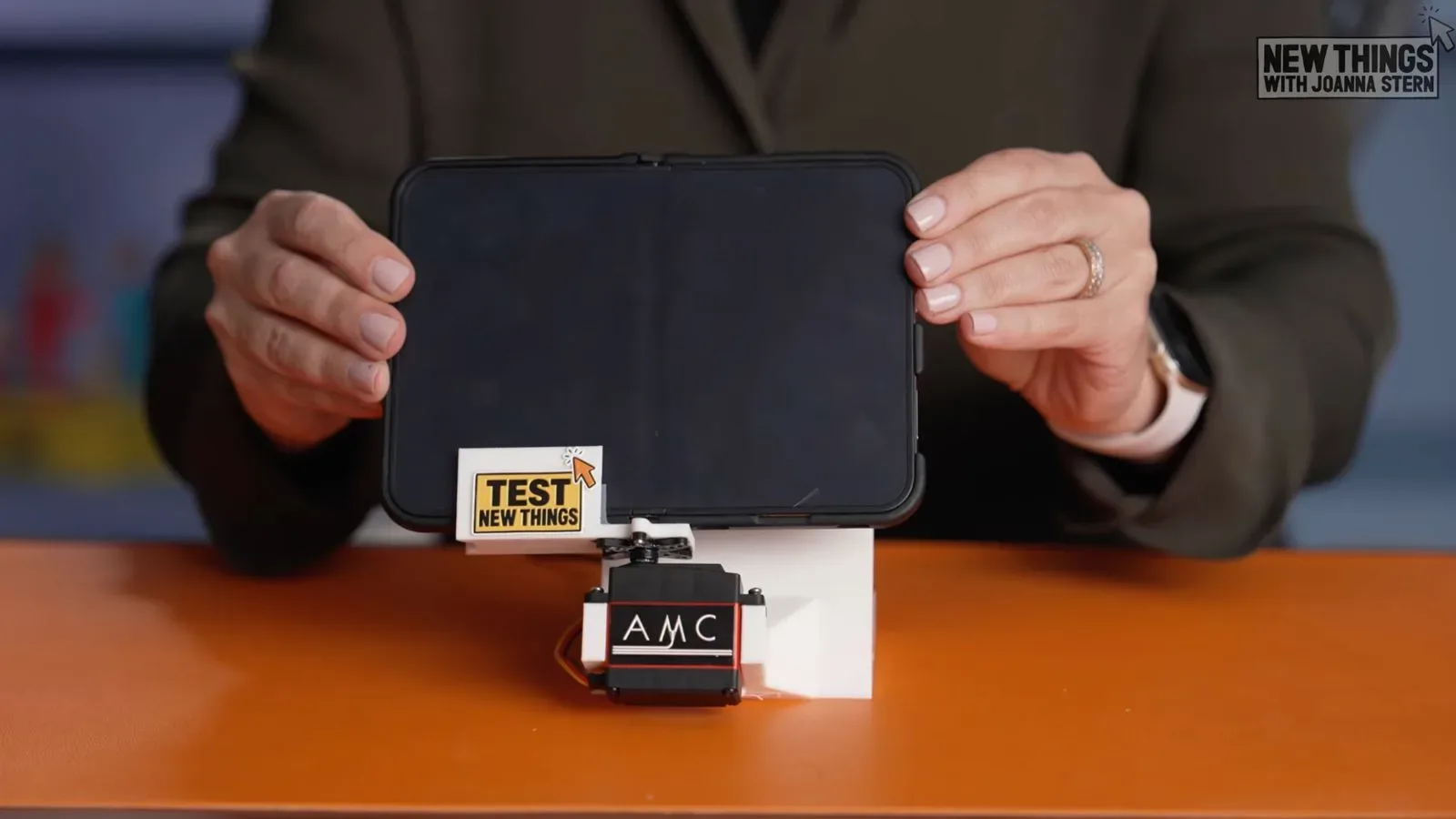
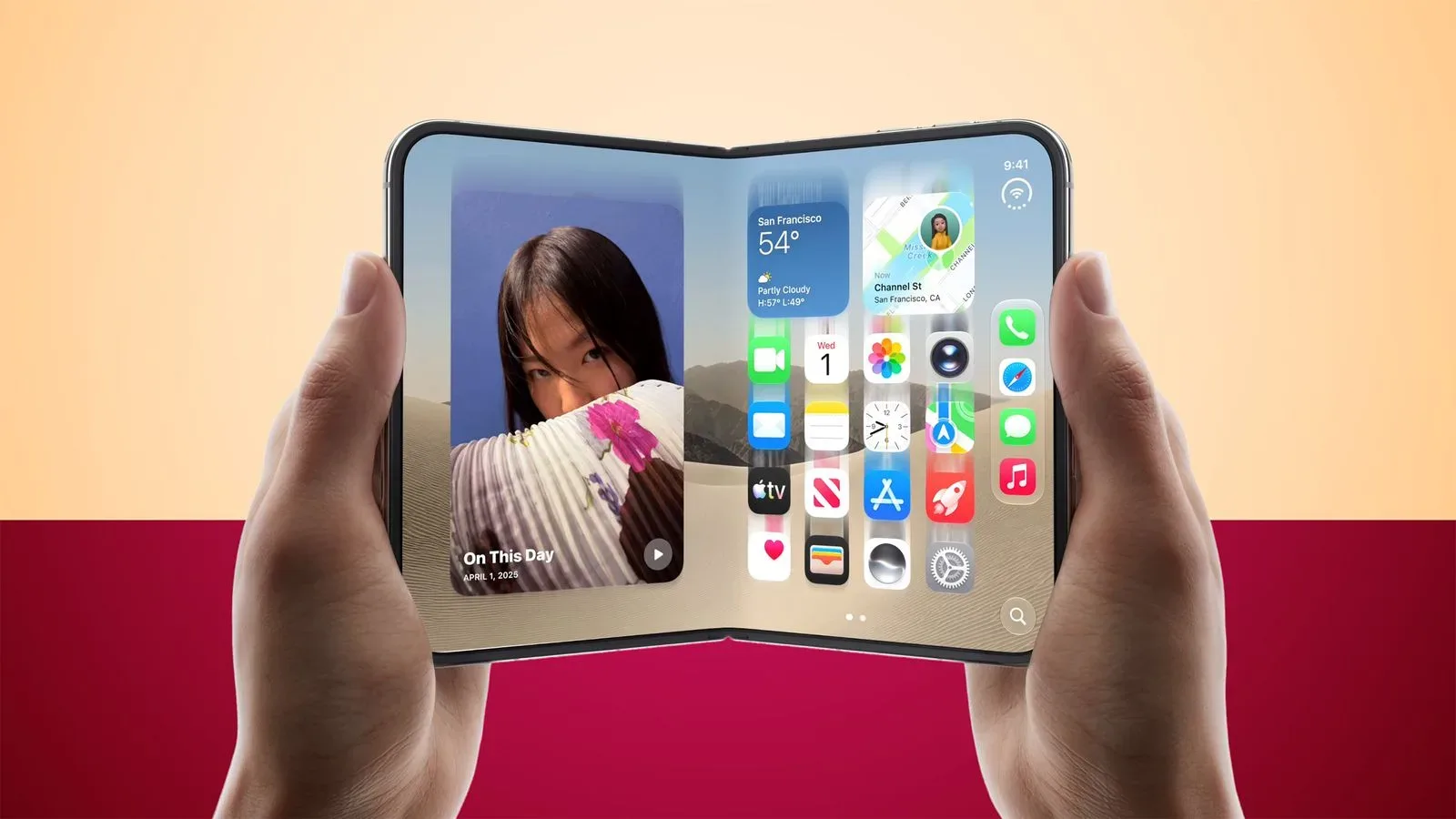
The iPhone Duo has passed 451,000 mechanical folds in an ongoing livestreamed durability test, and the headline is a mixed one: the foldable remains operational, its display has not cracked, and it can still hold other screen positions. But its hinge has begun to show a meaningful change in behavior.
At roughly 440,300 cycles, the test operator observed that the device could no longer finish opening flat before the automated folding apparatus started its next closing motion. Earlier in the run, the mechanism that pulls the screen open would retract before the iPhone Duo reached its fully open position, after which the handset would continue—or coast—into that last portion of travel. Now, it does not complete that motion quickly enough.
In other words, this is not yet a dead phone, a dark display, or a cracked panel. It is a sign that a highly used moving part may be losing some of the behavior it had when new. For a foldable, that distinction matters. A device can remain powered on and visually intact while the hinge, rather than the screen, becomes the first component to demonstrate long-term wear.
A durability milestone with an asterisk
Passing 451,000 folds is a substantial result for any device built around repeated mechanical movement. At a simple rate of 100 folds per day, 450,000 folds works out to more than a decade of opening and closing. That conversion is useful as a scale reference, not a promise of real-world lifespan.
Machine cycles are controlled, repetitive events. Actual ownership introduces variables this kind of test does not establish: how a phone is handled, what may reach the hinge area, how forcefully it is opened, and whether ordinary daily use produces the same mix of stresses as a dedicated rig. Nor does a fold tally reveal how the phone will feel after long use. A handset may technically open and close while becoming slower or less assured at lying flat.
That is why the current finding is more informative than a clean pass/fail count. It suggests that the iPhone Duo’s panel has endured an enormous number of cycles so far, while the hinge system is emerging as the part worth watching as testing continues.
What the “coasting” behavior tells us
A hinge does more than connect two halves of a folding phone. It governs the path of the display, the force required to open and close the device, and the positions at which the device can remain standing or partially folded. The observed change does not identify a precise internal cause, and it should not be treated as proof of a particular broken part. Still, it is evidence that the open-cycle behavior has changed under repeated use.
Earlier, after the opening wire withdrew, the device could complete its last bit of travel to fully open on its own. At around 440,300 folds, that final movement became slow enough that the folding rig reversed direction first. Since the phone is reported to maintain other positions, it would be premature to describe the hinge as failed. It is more accurate to call this wear: a departure from its prior motion under the same automated procedure.
That difference is important for prospective foldable owners. “Still working” and “unchanged” are not the same standard. This test currently supports the former, while challenging the latter.
The display is still the encouraging part of the story
The iPhone Duo uses OLED panels supplied by Samsung Display. OLED, short for organic light-emitting diode, is a display technology in which pixels produce their own light. In a foldable product, the panel must also repeatedly bend without developing visible damage or losing functionality.
So far, there are no reported cracks or other display failures in this test. That does not establish that every component will survive equally well, but it is favorable evidence for the screen at this stage. The panel’s condition is especially notable because the test has now moved beyond 450,000 folds.
There is a relevant comparison point, with limits. The display used in Samsung’s Galaxy Z Fold7 passed a certified third-party 500,000-fold durability test. The iPhone Duo is not described as using an off-the-shelf version of that display, so the Galaxy result cannot be transplanted directly onto Apple’s phone. Different implementations and the hinge surrounding the panel can affect the end result. But the ongoing iPhone Duo run indicates its OLED is, at minimum, holding up in a range that makes that 500,000-fold benchmark a useful point of context rather than a distant target.
The more consequential lesson is that foldable durability is a system question. A resilient OLED does not automatically guarantee an equally resilient device. The display, hinge architecture, sensors, and power system all have to keep functioning together.
What has not failed—and what the test will still measure
The phone has not been removed from the machine, and the test is continuing. The stated failure conditions go beyond whether the hinge opens flat. They include the loss of power, sensors no longer correctly detecting the screen, and a display blackout.
Those criteria are useful because they separate cosmetic or mechanical degradation from a failure that blocks core use. Sensors are particularly relevant to a foldable. They help the device understand the state of its screen, and sensor trouble could affect how it responds as the handset is opened or closed. A blackout is the clearest visible display failure, while loss of power would obviously end normal operation regardless of the panel’s physical condition.
Until one of those conditions is reached, the current state should be read carefully: the iPhone Duo has developed a hinge-related change in the test but remains functional. There is no supplied evidence of a cracked display, power loss, failed sensors, or screen blackout.
Why an independent stress run still matters
Apple has not published its own hinge-test results for the iPhone Duo or offered an estimated fold lifespan. That leaves a public endurance run valuable as an additional data point, especially because its procedure is visible and continues past the first observed sign of wear.
It is not a substitute for a manufacturer’s full validation process. A fold count by itself does not explain the effects of temperature, contaminants, drops, twisting forces, or the many other conditions a company may examine internally. It also does not tell buyers whether a change in hinge motion at a given number of cycles would be noticeable in normal use. But it does offer a plainly understandable question: after hundreds of thousands of repeated open-and-close actions, what still works and what begins to change first?
For the moment, the answer appears to be that the OLED panel remains healthy while the hinge is no longer completing its fully open motion at the same pace it once did. That makes the continuing test more valuable than a single dramatic number. Whether the device eventually reaches a defined failure condition—and which condition arrives first—will determine how the 451,000-fold milestone should be remembered.
Practical takeaway for foldable buyers
Anyone evaluating a folding phone should avoid treating an advertised or observed cycle count as a personal-use guarantee. Instead, it is one indicator of design endurance. The practical questions are broader: does the screen remain intact, do the sensors continue to behave correctly, does the device retain power, and does the hinge preserve usable positions and a reliable fully open state?
The iPhone Duo test currently offers reassurance on several of those fronts, particularly panel integrity and continued basic operation. It also offers a reminder that a foldable’s hinge is not background hardware. It is the repeatedly stressed centerpiece of the product, and it can become the limiting factor even while the screen itself looks fine.
The livestream is scheduled on weekdays from 10 a.m. to 2 p.m. Pacific and will continue until its predefined failure conditions are met. As with other technology stories where reliability is the issue rather than the feature list, the useful update is the one that distinguishes a partial degradation from a complete outage—a distinction also relevant in this look at Microsoft 365’s recovery after a widespread interruption.
For now, the iPhone Duo has survived the folding equivalent of an extremely long campaign. The screen appears to be holding its ground. The hinge, however, has started giving the machine a small but unmistakable “not so fast.”