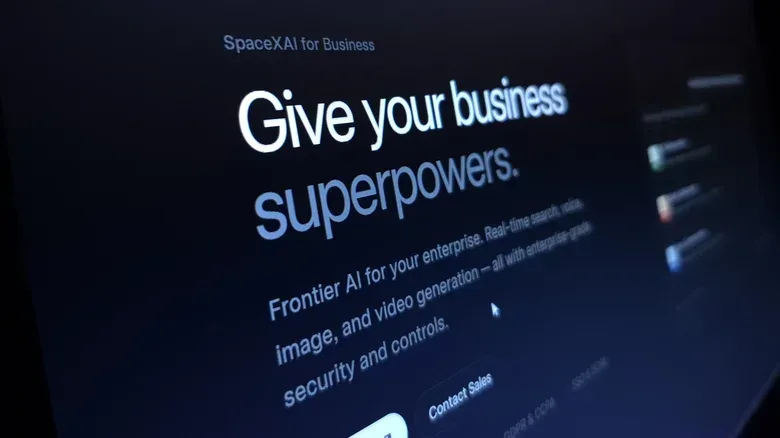
Grok Bot is becoming available through a widening range of subscriptions, but the growing access list comes with an important asterisk: this is not simply a chat feature added to every eligible account. It is a beta-stage agent designed to perform multistep work in a cloud computer environment, with usage allowances, human approval points and plenty of real-world obstacles still in play.
Access now stretches across qualifying Cursor subscriptions, all self-serve Cursor Teams plans, several SuperGrok tiers and X Premium+ accounts that link to the service. Enterprise access is also available through organizational channels. For someone trying to decide whether their current plan includes the tool, the clearest answer is that the entitlement depends on which product family they use—and paid access does not mean an unlimited number of jobs.
What Grok Bot is meant to do
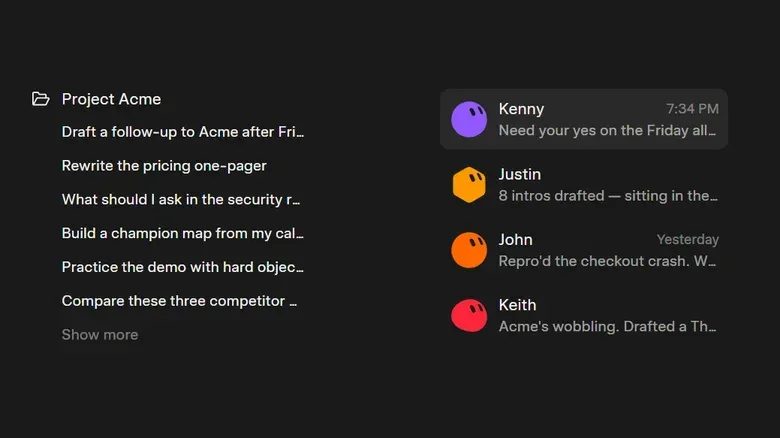
Grok Bot is presented as an agent: software given an objective and access to tools so it can attempt the steps required to reach that result. That differs from the simpler prompt-and-response model people associate with an AI chatbot. Instead of asking for a draft, copying it elsewhere, opening several pages and checking the results manually, a user could assign a broader outcome and allow the bot to work through portions of that process.
Each bot operates on a persistent computer in Cursor’s cloud. Its available tools include a browser, a file system and a terminal. A persistent computer is significant here: the work environment can remain active after the user closes their own computer. A terminal, meanwhile, is a text-based interface commonly used to run commands and work with files or software tools.
The supplied examples span business and software tasks. A bot could research prospective sales contacts, check a CRM for existing records, prepare customized outreach and then pause for approval. A CRM, or customer relationship management system, is the database businesses use to track contacts and interactions. Other proposed work includes recreating software bugs, producing customer-health reports and compiling executive summaries from material such as email and calendars.
The useful distinction is not that the bot can generate text; many AI tools can do that. The more ambitious element is its ability to move among software tools and carry out a workflow. It can also retain context across conversations and run workflows on a schedule. Those two capabilities make it potentially more useful for recurring tasks, but also make careful setup more important. A vague task can produce a vague or unsuitable result at greater scale than a single one-off prompt.
Eligibility and monthly prices
On the Cursor side, Grok Bot is included with the following individual plans:
- Cursor Pro: $20 per month
- Cursor Pro+: $60 per month
- Cursor Ultra: $200 per month
For teams, every member of a self-serve Cursor Teams plan receives access:
Related coverage includes Grok Bot Access Expands Across Cursor, SuperGrok and X Premium+ Plans.
- Cursor Teams Standard: $40 per user, per month
- Cursor Teams Premium: $120 per user, per month
Cursor Enterprise customers do not rely on the self-serve route; they can request access through their account team.
The service is also available through qualifying Grok plans:
- SuperGrok: $30 per month
- SuperGrok Plus: $100 per month
- SuperGrok Heavy: eligible, with no monthly price specified in the supplied details
- X Premium+: $40 per month in the United States, with account linking required for access
Grok and Cursor Enterprise customers can use Grok Bot through their organizations as well. There is also a usage-based free trial lasting seven days.
That list is best read as an eligibility map, not a recommendation to upgrade. Someone already on Cursor Pro or a self-serve Cursor Teams plan may already have the relevant access. Someone considering an X Premium+ subscription should understand that access depends on connecting that account. And a business using an Enterprise arrangement will need to handle availability through its organization rather than assuming each employee can turn it on individually.
Included access is metered, not limitless
The most important purchasing detail is that subscription access comes with weekly-resetting included usage. Once that allowance is used, additional work can continue via shared on-demand spending if that option has been enabled on the account.
For the seven-day free trial, there is no fixed number of bot jobs listed. Its credit is measured in agent steps and tokens, rather than message count. In practical terms, an agent step is a unit of work the bot takes while trying to complete a task. A token is a chunk of text processed by an AI system. Neither measurement translates cleanly to a predictable number of finished assignments, because workloads can differ dramatically.
A short request involving a few straightforward actions may consume much less than a task requiring repeated browsing, file work, terminal commands or revisions. That makes the free trial useful for testing a specific workflow, but less suited to treating as a guaranteed allotment of projects. Likewise, a paid subscriber evaluating value should consider how often they expect to delegate extended workflows, not just how frequently they expect to ask questions.
Why human approval is still part of the product
Automation is rarely frictionless once it leaves a controlled demo. Websites may block automated behavior, present a CAPTCHA, demand a login or otherwise require a person to intervene. A CAPTCHA is a challenge intended to separate humans from automated systems. These barriers mean an apparently end-to-end task can still stop midway and wait for the user.
Potentially consequential actions can be held for approval before the bot continues. That is a practical safeguard: a user may want research and draft preparation automated, but not want a tool to send outreach, modify records or make a decision without a final check. The sensible division of labor is to define which actions are preparatory and which ones must stay under human control.
Reports from early users also indicate that certain workflows need more supervision than the hands-off premise might imply. That is not surprising for a beta product working across browsers, files, terminals and services that may each have different interfaces and permissions. It does mean prospective users should judge the tool by whether it reduces the repetitive portion of their own process, rather than expecting it to run indefinitely without intervention.
A more realistic way to test a bot workflow
- Choose a bounded task. Start with an outcome that has clear limits and a clear way to inspect the result.
- Set permissions deliberately. Give only the tool access needed for that task, particularly where files or connected work systems are involved.
- Identify approval gates. Decide in advance what the bot may prepare versus what should wait for a person.
- Expect authentication interruptions. Logins, CAPTCHAs and automation blocks are normal constraints, not necessarily a sign the workflow has failed.
- Watch usage during the trial. Because credits are based on steps and tokens, a narrowly scoped test offers a clearer picture of consumption than a sprawling assignment.
That approach also helps separate the compelling promise from the practical value. If a bot reliably gathers inputs, organizes them and produces a reviewable draft, it may still save time even if it cannot complete the final action. Conversely, a workflow that repeatedly stalls at a website challenge or demands constant corrections may not justify using more of the weekly allowance.
How the access expansion fits together
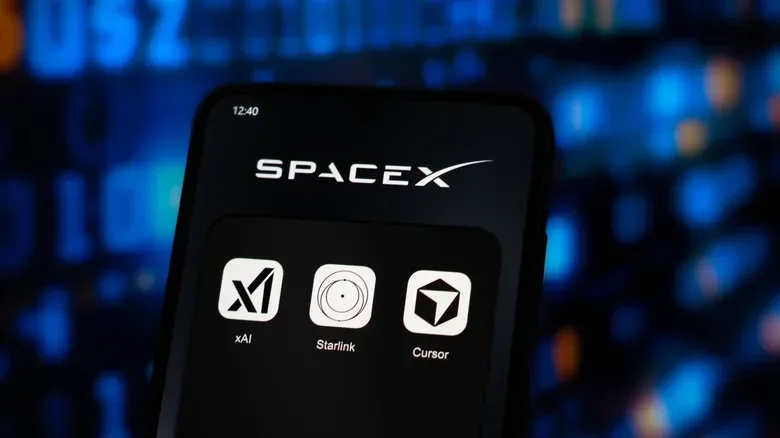
The availability across Cursor, Grok and X Premium+ reflects the business links behind the initiative. In April 2026, Cursor partnered with SpaceX to accelerate model training on SpaceXAI’s Colossus infrastructure. SpaceX acquired Cursor in August 2026, the same month Grok Bot was officially introduced.
That sequence provides context for why a single agent appears across multiple subscription systems rather than living in one neatly isolated product. It may be convenient for existing subscribers, but it also requires users to compare plan eligibility, account linking and usage rules before assuming they need a new subscription.
The broader development arrives while AI’s role in creative and professional work continues to generate scrutiny. The question is not only whether a system can create an output, but what it is permitted to access, what decisions it can make and when a person remains responsible for the result. Those concerns also appear in entertainment, as explored in a separate look at objections to AI-generated filmmaking and likeness use.
For Grok Bot, the immediate takeaway is straightforward. Eligible users now have several paths to try an agent that can operate through a cloud-based browser, file system and terminal. But it remains beta software with weekly usage limits, optional extra spending, login and CAPTCHA roadblocks, and human approvals built into its intended workflow. The strongest case for it is a well-defined, repeatable task where the time saved on routine clicks is worth the oversight still required.