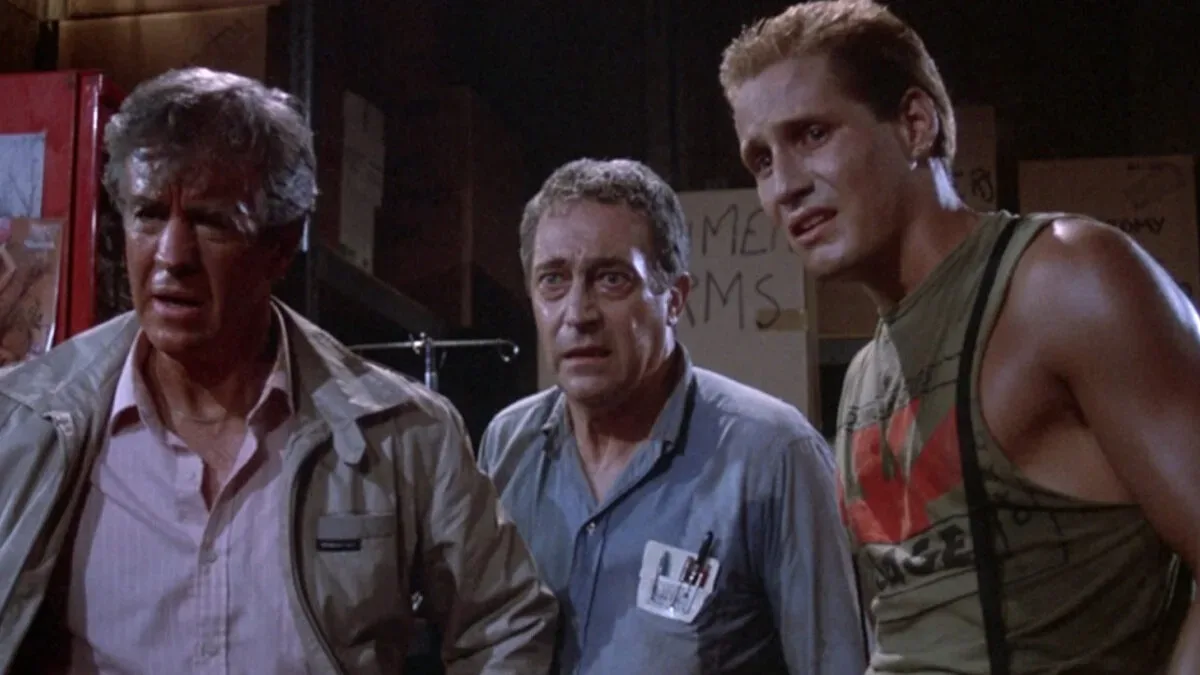
Members of the Return of the Living Dead cast are publicly distancing themselves from The Return of the Living Dead: Aftermath, an online project described as almost entirely AI-generated. Beverly Randolph and Linnea Quigley, both connected to an earlier crowdfunding effort for a proposed follow-up, say the released film was not what they believed they had agreed to make.
The dispute centers on a project connected to Richard Driscoll, who ran a 2024 Indiegogo campaign titled TRASH’s REVENGE Return of the Living Dead Universe. That campaign involved Randolph and Quigley as producers, and also listed Michelle Bauer and Eric Roberts. The intended production, as Quigley described it, had a markedly different concept: a horror-comedy built around Trash, Quigley’s character from the 1985 cult movie, living as a Norma Desmond-like recluse and looking back on her former zombie notoriety.
Instead, Driscoll published The Return of the Living Dead: Aftermath through his own DragonFLIX service. Cast members say they did not film the material, while objecting that their likenesses appear in it. That difference is the heart of the controversy. This is not merely a disagreement over a sequel’s creative direction; it is a dispute over participation, representation and whether familiar performers can be visually inserted into a project they did not perform in.
What Beverly Randolph and Linnea Quigley have said
Randolph addressed the situation on the Caffeinated Horror Dude podcast, saying,
“This is not what we signed up for.”She also said the people involved needed to speak out because they had received significant backlash.
Quigley similarly characterized the outcome as a failure. She said she had warned against using AI, arguing that fans would not welcome it:
“It turned out to be a fiasco. I warned him, ‘Whatever you do, don’t do any AI, because people don’t like it, the fans don’t like it.’”
The comments do not establish every contractual or legal detail behind the production. They do establish a sharp public divide between the people associated with the crowdfunded sequel concept and the person who released Aftermath. For viewers, backers and horror fans, that distinction matters: an actor’s name, character association or image in a release does not necessarily mean the actor made, approved or endorses the finished work.
The planned Trash project appears to have been very different
The earlier TRASH’s REVENGE idea was tied to a recognizable part of Return of the Living Dead history. Quigley played Trash in the 1985 film, a punk-zombie horror favorite that developed its own identity and fanbase rather than simply existing in the shadow of George A. Romero’s zombie movies.
Quigley’s description of the prospective follow-up pointed toward a self-aware, performance-driven horror project. Comparing its tone to Sunset Boulevard and The Rocky Horror Picture Show suggests a story designed to use the legacy of an iconic character as material for camp, melancholy and theatrical excess. The concept reportedly placed Trash in seclusion, recalling the chaos of her past.
That proposed premise is important because it explains why original-cast involvement was a major draw. A legacy sequel is generally a new story that builds from an older property, often by bringing back characters or performers from the original. Here, the performers were not incidental casting: the proposed concept appeared constructed around Quigley’s relationship to Trash and the original film’s cult standing.
By contrast, Aftermath has prompted objections not only over its AI-driven presentation but over the apparent use of alumni likenesses despite the cast not having filmed its footage. Randolph has also warned that the earlier TRASH’s REVENGE concept may now have been redirected into another project, raising further concern among the performers about how their identities could be used going forward.
Why the franchise history is more complicated than “the zombies are public domain”
Part of the confusion around the dispute comes from the unusual legal history of Night of the Living Dead. George A. Romero’s 1968 film entered the public domain after a paperwork error. In practical terms, public domain status means a work is not protected by copyright in the usual way, allowing others to use that specific work without needing the original copyright holder’s permission.
But that status does not automatically make every related movie, character, title, sequel or franchise element free for anyone to use. Return of the Living Dead is a separate 1985 film with its own standing, and Randolph has emphasized that it is not public domain.
This is a useful distinction for fans, especially when a production markets itself with words such as “universe,” “sequel,” “tribute” or “fan project.” A public-domain predecessor can create room for new interpretations of that predecessor. It does not erase rights connected to later films. It also does not settle separate questions involving an individual performer’s name, voice, face or reputation.
None of that, on the available information, determines the result of any potential claim involving Aftermath. Legal outcomes depend on facts not publicly established here, including agreements, permissions, ownership and the exact content used. However, the cast’s objections show why broad claims about public-domain horror can be misleading when a project also invokes a later cult movie and recognizable actors associated with it.
AI likenesses are the practical flashpoint
Generative AI refers to software that produces new images, audio, video or text from patterns in data and user prompts. In an audiovisual project, that can mean generating a character who resembles a known person, creating synthetic dialogue, or assembling scenes without conventional filming.
For audiences, a generated likeness can blur a basic line: whether a performer actually appeared in a movie or whether the movie produced an imitation of their appearance. That ambiguity can be particularly damaging in cult cinema, where fans frequently follow actors across conventions, sequels, independent productions and fan-funded projects. Familiarity is part of the appeal, but it can also make an unauthorized or disputed association look credible at a glance.
Reports about Aftermath have focused on automated-looking voices, erratic visual continuity and images of Return of the Living Dead performers despite their lack of filmed participation. Those reported qualities have fueled criticism of the film itself. More significantly, they have made the performers’ complaint easier to understand: the issue is not just that a low-budget horror sequel took an experimental production route, but that the route allegedly put their recognizable images into a finished release without the collaboration audiences expected.
The argument also undercuts an assumption sometimes made about AI production: that generated material is a simple shortcut around the ordinary costs and logistics of filmmaking. It may reduce certain production demands, but it can introduce new risks around consent, public confusion, ownership and audience trust. When a project’s appeal depends on legacy talent, replacing that talent with synthetic imagery can change the nature of the product entirely.
What crowdfunding backers should take from the dispute
Randolph has encouraged people who contributed money to seek refunds through their credit card companies. That is a direct response to the gap between the original project’s apparent cast-driven pitch and the ultimately released AI-oriented work.
For anyone backing a film campaign, the case is a reminder to preserve campaign pages, contributor updates, promotional posts and receipts. Those materials can document what was promised at the time money changed hands, including named participants, planned formats and the stated scope of a production. They can also help backers understand whether a later release reflects the campaign they believed they were funding.
- Keep records: Save a copy of the campaign description, payment confirmation and material claiming a particular actor, creator or premise is involved.
- Read updates closely: A project can change during production, but substantive changes should be clearly communicated rather than inferred after release.
- Separate marketing from participation: A likeness or a recognizable legacy character may create the impression of official involvement even when a performer says otherwise.
- Use payment protections promptly: If a backer believes what arrived materially differs from the campaign, they should review the dispute and refund options offered by their payment provider.
The situation lands during a broader entertainment-industry debate over synthetic media and performer consent. It also echoes concerns raised in other creative fields about whether AI output can imitate the work or identity of a human contributor without preserving that person’s control. For more on that wider cultural anxiety around machine-made writing, see this look at Jesse Eisenberg’s skepticism toward AI writing.
A cult-horror legacy now faces a trust problem
Return of the Living Dead earned a devoted following through its punk energy, comic bleakness and distinctive take on zombies. Its reputation also rests on people: the cast, the character work and the mixture of horror and personality that made the 1985 movie memorable enough to inspire later sequels.
That is why the reaction to Aftermath is so intense. The controversy is not simply an argument over whether AI can make a convincing monster movie. It is about whether a project tied to a cherished cult property can use the image of legacy performers while sidelining the actual performers and the production they expected to help create.
Randolph has called for Amazon, which acquired MGM in 2022, to take action. Whether any rights holder responds, whether backers secure refunds, and whether further projects use the TRASH’s REVENGE name or related imagery remain unresolved. What is already clear is that Randolph, Quigley and other alumni do not want audiences to mistake Aftermath for the cast-supported return they had envisioned.