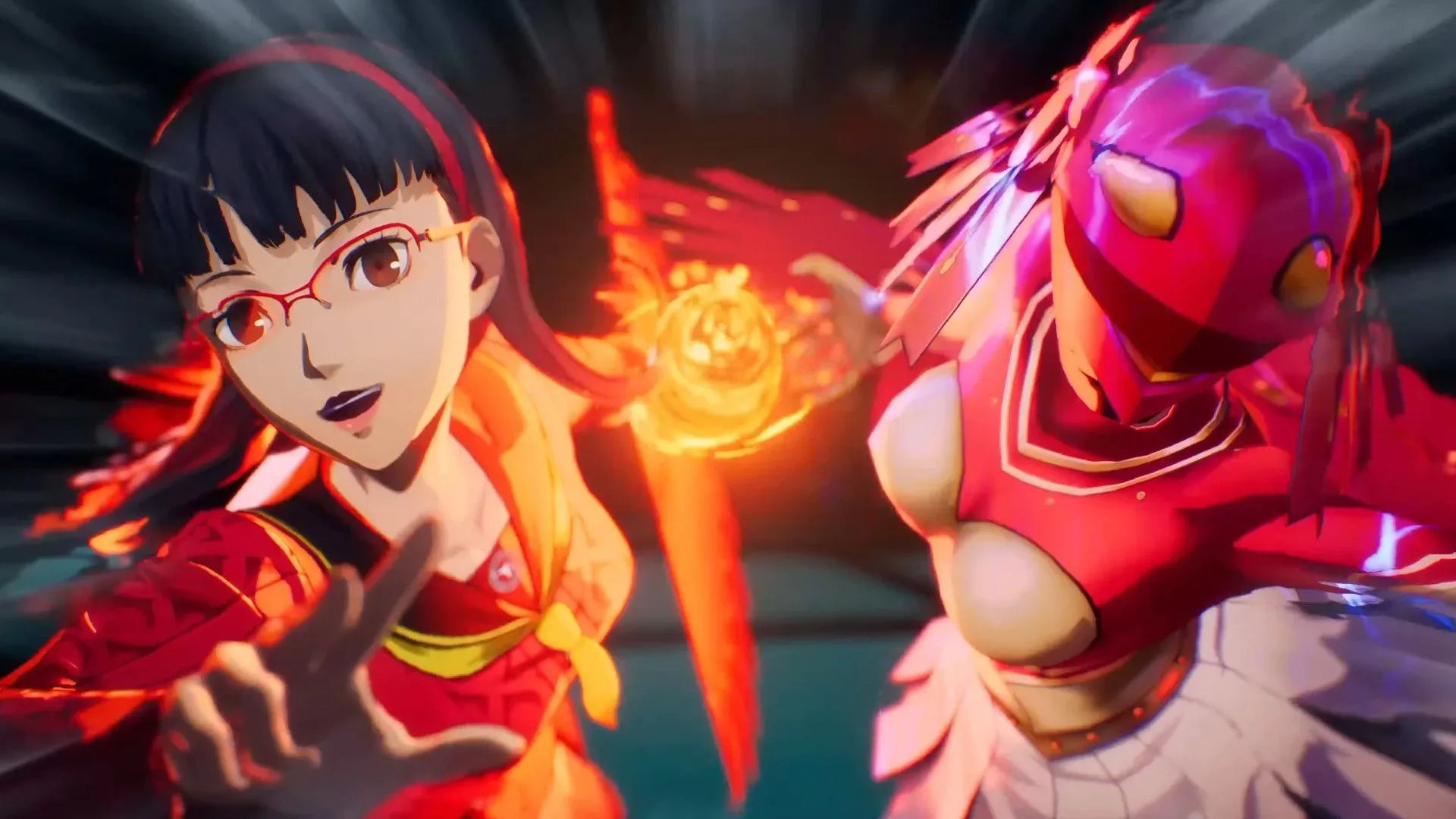
Persona 6 remains largely a blank page, but a recent discussion featuring several key figures from Persona 3, Persona 4 and Persona 5 offers a useful, if necessarily unofficial, framework for thinking about where the series could go next.
At the games culture and arts festival The Tenth Mosaic, director Katsura Hashino, character designer Shigenori Soejima and composer Shoji Meguro reflected on the identity of Persona. Their answers do not reveal a setting, characters, release window or gameplay systems for the next game. They do, however, point toward a creative priority that is more demanding than simply repeating the familiar image of supernatural high-school drama.
The central ideas are change, a willingness to embrace the messiness of adolescence, and a belief that a role-playing game should leave players with something meaningful after the credits. For a series that has become enormously recognizable, that is an important distinction. Recognition can become a formula. These developers’ comments argue that the series has to resist becoming one.
“Chaos” as a way of depicting adolescence
When asked what makes a Persona game feel like Persona, Hashino’s answer was “chaos.” That word is not a genre label, and it should not be read as confirmation that any future entry will be more mechanically unruly or narratively abstract. In this context, it speaks to an approach: not being overly selective about the influences used to portray adolescence.
That matters because adolescence is rarely tidy. It involves shifting friendships, social expectations, anxieties about the future and the pressure of figuring out an identity while the world keeps intruding. Persona’s broad premise has often been understood through its school-life setting and supernatural conflicts, but Hashino’s description suggests that the emotional texture is at least as important as the surface ingredients.
“Chaos,” then, is less a checklist item than a creative permission slip. It allows disparate elements—ordinary routines, heightened drama, social observation and fantasy—to sit beside one another. A future Persona title need not discard the series’ established appeal to feel different. But neither should it treat those recognizable components as fixed decorations that can be arranged the same way forever.
For players, this is a useful guardrail against reading too much into the absence of Persona 6 details. The roundtable does not establish what the next game is. It explains why an attempt to predict it purely from prior entries may miss the point.
Why reflecting the times is part of the series’ identity
Soejima identified another major principle: changing to reflect the times. He specifically connected that need for renewal to Persona’s settings and stories, arguing against stagnation and in favor of work that speaks to contemporary audiences through modern society and culture.
Related coverage includes Former Persona Leads Say Reinvention and Lasting Impact Should Define the Series' Future.
That idea is easy to flatten into “make it current,” but it is more useful to understand it as creative observation. A setting is not contemporary merely because it contains the latest technology or fashionable language. A story feels connected to its moment when it recognizes the pressures, habits and assumptions shaping the people within it. The goal, as described here, is resonance rather than a cosmetic update.
For a long-running Japanese role-playing game series, this presents a balancing act. A JRPG, or Japanese role-playing game, is commonly associated with character-driven stories, progression systems and long-form adventures. Yet those broad genre expectations do not dictate a single thematic approach. Soejima’s comments suggest Persona’s distinctiveness depends on filtering its role-playing framework through observations about the present, then transforming those observations through the series’ own stylized lens.
That does not mean a future game is obligated to chase every current trend. In fact, chasing trends is one way a work can age quickly. The more meaningful reading is that its creators must keep looking outward rather than simply inward at the franchise’s previous successes. The series’ identity, in this view, is not immobility. It is a process of reinterpreting a core sensibility for a different moment.
A game that should not feel disposable
Hashino also addressed a wider question: what an RPG should accomplish amid the enormous volume of entertainment now available. His concern was that a game should make enough of an impact not to become fleeting—something easily substituted by putting on television. Instead, he said, players should have something they can draw upon as they continue living their lives.
It is a high ambition, and notably it is not restricted to spectacle, scale or sheer hours of content. “Lasting impact” can describe a game whose ideas, characters, music or emotional situations remain useful to a player later. The statement does not claim every player will take the same lesson from an RPG. It sets a more difficult target: make the work substantial enough to become part of someone’s ongoing reflection rather than a momentary diversion.
That target is especially relevant to the modern discovery problem facing games. With more releases and more competing forms of media vying for attention, visibility alone does not guarantee a durable connection. The growing volume of releases on Steam is one illustration of that broader challenge: players have more options, but finite time and attention. Hashino’s argument is not a market forecast. It is a creative response to the same environment—make an experience worth carrying forward.
There is also a practical implication for how audiences discuss big RPGs. Feature lists and familiar branding can generate anticipation, but they cannot by themselves account for the kind of impact Hashino describes. A game might be remembered because it gave its players a compelling way to think about friendship, uncertainty or the world around them. That is harder to quantify than a map size or a count of activities, but it is plainly the standard being articulated here.
What this does—and does not—say about Persona 6
The safest conclusion is that the conversation offers principles, not Persona 6 information. There is still little known about the next numbered installment, and the participants’ reflections should not be mistaken for a formal blueprint from its current development team.
Hashino is no longer leading Persona. He is heading a different team within Atlus, which most recently released Metaphor: ReFantazio. He also said his team has not yet fully achieved the vision of an RPG that delivers the enduring value he described, while expressing motivation to continue pursuing it in future work. That makes his comments simultaneously reflective and forward-looking, but not a direct statement of Persona 6’s design.
Likewise, Soejima’s emphasis on reflecting the times does not confirm a particular location, era, subject or plot direction. It indicates the kind of question a Persona team may need to ask: what does adolescence, society and culture look like now, and what fictional form can make that observation feel distinctly Persona?
Another previously reported comment from Persona 6’s producer provides a complementary note of caution. The producer said the goal is not to make games for “the global market,” but to make something the team itself genuinely finds exciting. Put beside the former leads’ remarks, that suggests a potential creative throughline rather than a corporate mandate: resonance with players is not necessarily achieved by designing around the broadest imaginable audience. It may come from a team pursuing a specific point of view with conviction.
The harder path is avoiding repetition without losing the series
Long-running series are often judged by two opposite standards at once. Fans want the qualities they love preserved, while also expecting a new installment to justify its existence. The former Persona leaders’ comments make that tension explicit. If the series must change with the times, it cannot only reproduce an old cultural snapshot. If it needs to offer players something enduring, it cannot settle for novelty alone.
This is where the idea of “chaos” becomes especially useful. It allows for a Persona work to be recognizable without being rigidly predictable. The constant may be the willingness to combine everyday life, social observation, personal growth and imaginative upheaval in a way that feels emotionally charged. The variables can be the setting, themes, visual direction and the contemporary concerns that give those elements urgency.
There is no guarantee that Persona 6 will follow every principle voiced at The Tenth Mosaic, and no responsible reading of this discussion can fill the current information gap with invented specifics. Still, the comments offer a clearer measure for what a worthwhile successor could attempt. Not merely a return to a beloved pattern, but a work alert to its moment, unafraid of adolescent disorder, and ambitious enough to remain with players after they have put the controller down.