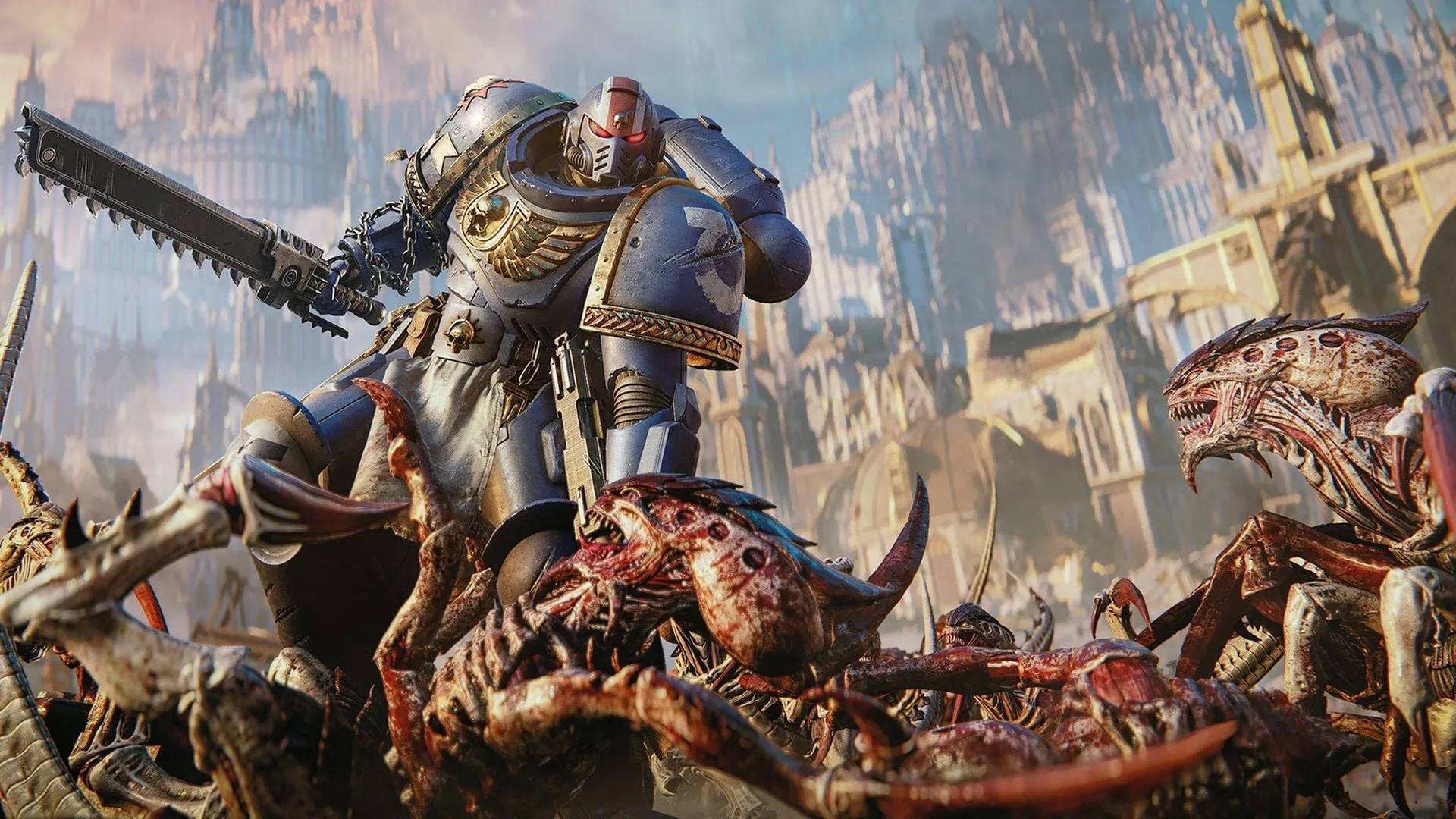
Focus Entertainment says it has filed formal legal complaints after an escalation in messages directly threatening members of its team. The publisher shared the statement on September 15 across social media and several Discord communities, including the Discord for Space Marine II.
The company did not identify the people targeted, the individuals facing complaints, the countries or legal systems involved, or the events that preceded the reported increase. It also did not describe the alleged threats in detail. That lack of specifics matters: the public statement establishes that Focus says it has taken legal action, but it does not allow outsiders to determine the scope of the cases or connect them to a particular game, update, policy, or community dispute.
Focus draws a line between criticism and threats
At the center of the message is a reminder that community spaces include more than players talking among themselves. Moderators, developers, and publisher staff also read, manage, and participate in those spaces. Focus said it expects people in its networks and hubs to help maintain an environment where community members and employees are welcomed, respected, and included.
The publisher said it has received toxic messages over a period of years, but characterized the recent situation as an escalation. Its statement specifically says it will not tolerate violent or sexist comments and reserves the right to take necessary legal action to protect staff.
“Our networks and hubs are about passion, not hatred,” Focus said in its community message.
That wording is important because gaming communities can be intensely invested without being hostile. Players can object to a balance decision, criticize a technical problem, dislike a monetization choice, or argue for a different feature. Those are ordinary forms of feedback, even when forcefully expressed. Direct threats and targeted abusive messages are different: they turn a dispute over a product into conduct aimed at people.
For a publisher, drawing that distinction publicly can serve two functions. It restates the expected conduct for the broader community, and it puts potential abusers on notice that a moderation action is not necessarily the only possible response when threats are involved. Focus did not say which steps it took before filing complaints, whether any accounts were removed, or whether the complaints followed investigations by the company or platform operators.
What a “formal legal complaint” does—and does not—tell us
“Formal legal complaint” is a broad phrase, particularly without a jurisdiction. In everyday terms, it means a company has moved beyond a public warning or internal report and submitted a matter through a legal channel. Depending on local law and the facts of an individual case, that could involve a report to authorities or another formal legal process. The statement does not specify which applies here.
Related coverage includes Focus Entertainment Files Legal Complaints Following Threats Against Staff.
It also does not establish an outcome. Filing a complaint is not the same thing as proving an allegation in court, identifying a suspect publicly, or obtaining a judgment. Focus has not publicly provided case numbers, charges, names, or a timeline for any proceedings. Readers should avoid filling those gaps with speculation, even if arguments around a particular game are visible online.
That restraint is especially useful in fast-moving Discord and social-media discussions. Community moderation often deals with content inside a platform: deleted posts, warnings, temporary restrictions, bans, or reports. A legal complaint is separate from those tools, though an organization may preserve records from online spaces when it believes content warrants escalation. Focus has not detailed its evidence-handling procedures or moderation process in this instance.
Why the statement extends beyond one Discord server
Focus’s note was posted across social channels and some of its Discord servers rather than being framed solely as a message for one game. That suggests the company is addressing conduct across its community presence, though it has not said whether the alleged threats came from one hub or multiple platforms.
The publisher’s catalog association with Space Marine II and A Plague Tale gives the message broad visibility among different audiences, but it would be inaccurate to infer that either franchise caused the escalation. No trigger was identified. The practical takeaway for any game community is simpler: criticism should stay focused on decisions, systems, communications, or products—not on threats or harassment directed at the people working on them.
That is relevant to players as well as companies. Community spaces are often where people look for fixes, patch information, matchmaking help, and discussion of an evolving game. When a server or forum becomes dominated by hostility, those useful conversations become harder to find, moderators have less room to do their work, and other players are more likely to disengage. A rule against abuse is therefore not merely about public relations; it is part of maintaining a functional space where information and feedback can circulate.
Practical boundaries for players and community members
Focus’s message does not lay out a new public code of conduct. It is a reminder of existing expectations paired with a warning that serious conduct can prompt legal action. Players who want to voice dissatisfaction without crossing that boundary can keep feedback specific and verifiable:
- Describe the issue: identify the feature, behavior, communication, or decision being criticized.
- Explain the impact: say how it affects a match, purchase decision, accessibility need, schedule, or experience.
- Ask for a change or clarification where appropriate.
- Do not direct violent, sexist, or threatening language at developers, moderators, staff, or other players.
- Report content that appears to threaten someone instead of amplifying it through screenshots, quote-posts, or retaliatory replies.
The final point can be easy to overlook. Repeating abusive material to condemn it can still spread the original message and invite pile-ons. Platform reporting tools and moderator channels exist so that threats can be assessed by people responsible for enforcing rules or, where necessary, passing matters to the appropriate authorities. Focus has not provided a special reporting route tied to this announcement, so community members should use the reporting options available in the relevant space.
A broader pressure point for game companies
Focus is not the only company to publicly address abusive messages aimed at staff. Sony recently introduced a policy intended to protect support workers after an increase in threats and toxic communications following its controversial plan to end physical game production in 2028. The circumstances are separate, but both situations show why companies are emphasizing protections for the people who answer customers, moderate communities, and make games.
The details should not be collapsed into a single narrative. Focus has not linked its complaints to any product decision, and Sony’s reported policy concerns support staff in a different context. Still, the recurring need for public reminders reflects a basic issue in online entertainment spaces: the people who represent a company are individuals, not stand-ins for every frustration a player may have with an industry decision.
For now, the confirmed information is limited to Focus’s own statement. The company says threatening messages against team members recently escalated, it says formal legal complaints have been filed, and it says violent or sexist comments will not be accepted in its communities. Until Focus offers further detail, claims about a specific cause, case outcome, or game-related catalyst remain unsupported.
Gaming discussion does not need to be bland to be constructive. Strong opinions, detailed criticism, and even sharp disagreement are all compatible with a community that treats the people on the receiving end as human beings. Focus’s warning makes clear where it believes the non-negotiable boundary lies.
For another example of how game-company decisions can generate intense community scrutiny, see our coverage of Xbox’s response to Game Pass change rumors.